
Search Results:
Search Results:
Search Results:
Search Results:
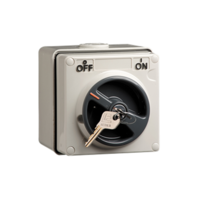
Find the best industrial key lockable isolator switches here at Sparky Direct. [ Read More ]
An IP66 key lockable isolator switch is a fixed disconnect device for industrial and commercial circuits. Electricians install these units to isolate motors, pumps, conveyors, HVAC plant, compressors and outdoor machinery from supply. The key mechanism restricts who can return the switch to ON, so maintenance teams stay in control during service, fault finding and shutdown windows.
These switches suit licensed electricians, contractors, facility managers and industrial buyers fitting out factories, workshops or plant rooms. They support safe isolation practices but are not a complete lockout/tagout system on their own. Site procedures, padlocks and tags still apply where required.
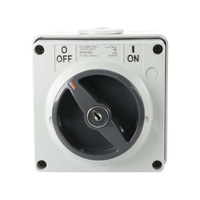
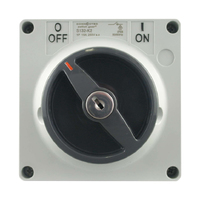
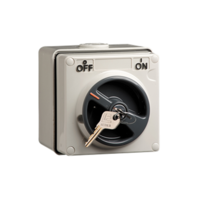
Most units use a rotary handle linked to internal switch contacts. Turning to the OFF position breaks the circuit and isolates the load. A removable key locks the handle so it cannot be moved without authorisation. ON/OFF status is shown on the front of the unit, often through clear markings or a position indicator.
Some products lock in the OFF position only. Others lock in both ON and OFF. Final selection depends on the circuit rating, pole count, breaking capacity, IP rating and the installed environment.
Key lockable isolators appear across motors, conveyors, pumps, compressors, fans, HVAC plant, washdown lines and outdoor machinery. Electricians also fit them near switchboards, distribution boards and process equipment for local isolation.
Practical use cases include factory maintenance, service isolation, restricted access points and tamper resistance on shared sites. Australian electricians and small contracting businesses often quote these units when isolating gear in workshops, plant rooms, farm sheds and food processing areas.
The main benefit is preventing unauthorised re-energisation during servicing. A removed key means a passerby cannot flick the switch back on. That improves maintenance control, makes isolation status clearer and reduces risk while gear is open or partly dismantled.
Lockable isolators also support workplace health and safety duties around safe isolation. Use of these switches does not replace site-specific procedures or licensed advice. Any fixed electrical installation or replacement must be assessed by a licensed electrician.
A standard rotary isolator simply disconnects supply when turned to OFF. A key lockable isolator does the same job but adds built-in access control through a key barrel on the handle. Both are used by electricians for local isolation, but the key version becomes the better fit when unauthorised switching is a concern.
The right choice depends on risk level, equipment access, site procedures and how exposed the isolator is. A workshop bench saw inside a locked premises may only need a standard isolator. A 3-phase pump on the outside of a building, accessible to public or non-trade staff, usually justifies a key lockable unit.
Standard isolators suit lower-risk areas, supervised locations and simple local isolation. They also work well where separate lockout/tagout systems are already in place and the isolator itself does not need to carry the access control function.
Suitability should be confirmed by the licensed electrician designing the installation or the responsible safety manager on site.
A key operated isolator is the better choice where maintenance teams need controlled access, where equipment must not be restarted casually, or where unauthorised access is possible. That covers a lot of real-world sites, including factories, warehouses, schools, commercial plant rooms, production lines and outdoor machinery.
Tamper resistance is the other key benefit. A removed key gives an electrician confidence the gear stays off until authorised work is finished.
It helps to keep two ideas separate. The key lockable isolator is the installed switching device on the wall or panel. Padlocks, hasps and dedicated lockout devices are procedural LOTO accessories that lock out the handle, breaker or valve as part of a documented isolation procedure.
Key lockable isolators can complement LOTO programs but do not automatically replace site-specific isolation procedures. Some sites use both: a key locked isolator for routine control plus a padlocked LOTO hasp during high-risk maintenance work.
IP66 is an ingress protection rating defined under IEC 60529. The first digit (6) means the enclosure is dust-tight. The second digit (6) means the enclosure resists powerful water jets from any direction. In practical terms, an IP66 isolator handles outdoor weather, hose-down cleaning and dusty industrial environments without water or dust reaching the live parts.
Australian electricians often choose IP66 for outdoor pumps, washdown lines, agricultural sheds, food processing rooms and exposed plant. IP66 sits above IP54 and IP65 in water resistance, but it is not always required. A sheltered indoor switchboard may be fine on a lower rating, depending on the site assessment.
Note that the IP rating only holds when the unit is installed correctly. Cable entries must be sealed with the right glands, knockouts must be closed off, and the enclosure must be mounted so the gasketed lid seats properly. A poor installation can drop a rated IP66 unit to a much weaker effective seal.
Weatherproof performance comes from several features working together. The sealed enclosure and gasketed lid keep water out. Protected cable entries with the correct glands maintain the seal at the wiring point. UV-stable plastics resist breakdown in the Australian sun. Corrosion-resistant screws and a robust rotary handle hold up over years of outdoor use.
An IP66 rating only applies when the unit is installed correctly. All entries need the right cable glands fitted and tightened, and any unused knockouts must be closed off properly.
IP65 and IP66 are both dust-tight. The difference is in water-jet protection. IP65 is rated against low-pressure water jets. IP66 is rated against powerful water jets and heavier rain. For exposed outdoor locations, washdown areas, coastal-adjacent environments and industrial sites with routine cleaning or heavy dust, IP66 is the safer specification.
IP65 may still be suitable for sheltered industrial use where the site assessment supports it. The decision should sit with the licensed electrician designing the installation. Over-specifying costs more than it needs to. Under-specifying can shorten the service life of the gear.
IP66 isolators suit factories, workshops, agriculture, water treatment, food processing, car washes, marine-adjacent installations, construction sites and plant rooms. UV exposure, moisture, dust, chemicals and physical impact all factor into the right enclosure choice. Sites near salt air or with regular hose-downs benefit most from the stronger water rating.
Before purchasing an IP66 key lockable isolator, four electrical specifications need to be matched: current rating, voltage rating, number of poles and load type. Breaking capacity and utilisation category also matter on motor and inductive loads. Selecting an isolator on enclosure style or price alone is risky and can lead to nuisance failures or unsafe service conditions.
| Rating | Typical use | Common pole counts |
|---|---|---|
| 20A | Air conditioners, small motors, light industrial gear | 1P, 2P, 3P |
| 32A | Larger single-phase loads, mid-size 3-phase motors | 2P, 3P, 4P |
| 40A | Heavier single-phase plant, commercial HVAC | 2P, 3P, 4P |
| 50A | Larger 3-phase machines, industrial pumps | 3P, 4P |
| 63A | High-load 3-phase plant, sub-mains isolation | 3P, 4P |
The 20A and 32A ratings cover most light industrial and single-phase applications. 40A suits heavier single-phase plant and many mid-range 3-phase machines. 50A and 63A handle larger 3-phase loads, industrial pumps and high-draw plant.
Buyers searching for a 63A key lockable isolator are usually working on larger 3-phase plant or sub-mains isolation. Equipment nameplate data and the original circuit design should drive the final selection. Avoid sizing the isolator based on enclosure stocked sizes or supplier convenience.
Pole configuration is dictated by the supply type and the isolation strategy in the circuit design.
A licensed electrician should confirm pole configuration before installation. Sparky Direct also stocks 2 pole switches and 3 pole switches for related circuit work.
Isolators on motor circuits need to handle inrush conditions and fault levels at the point of installation. AC utilisation categories such as AC-22 and AC-23 indicate suitability for switching motor loads under load. Product datasheets list the relevant categories, fault ratings and maximum operating voltage.
Treat this as a specification check rather than a marketing detail. Electricians and project buyers should match the utilisation category and breaking capacity to the load type before installing the unit.
Several features separate a durable industrial isolator from a basic switch. Enclosure material, impact resistance, UV stability, corrosion resistance, handle quality, key mechanism reliability and terminal design all affect service life. The right combination keeps the unit working safely for years and reduces unplanned replacement labour.
Total value goes beyond the upfront price. A cheap unit that fails a seal test or shows heat marks within a year costs more in callouts than a slightly dearer product fitted once and left alone. When comparing options, look at compliance evidence, materials and the quality of the moving parts as well as the headline current rating.
UV-stabilised thermoplastic and polycarbonate are common for general outdoor and industrial use. Polyester and fibreglass enclosures suit harsh chemical or coastal environments. Metal enclosures appear on heavy-duty switchgear assemblies where impact resistance is the priority.
Enclosure condition affects more than weatherproofing. A faded, cracked or chalky enclosure also makes ON/OFF status harder to read, which slows down maintenance teams.
Clear ON and OFF markings, an ergonomic rotary handle and smooth key operation all matter to electricians and maintenance teams. Status needs to be readable at a glance, even from a distance or in low light.
Locking behaviour also varies between models. Some lock in OFF only, others in both ON and OFF. Removable key behaviour, where the key only releases in a specific position, is worth confirming on the datasheet before installation.
Terminal capacity, gland compatibility, conduit entries, mounting holes and internal wiring space all affect installation practicality. Cramped enclosures increase labour time and the risk of poor terminations. Generous terminals and clean entry points help electricians work faster and finish neater.
It is worth checking the rated cable size at the terminals, the size and number of cable glands the unit accepts, and whether spare entries are provided for future expansion.
Installation, replacement and wiring of fixed isolator switches must be carried out by a licensed electrician in Australia. Owners and facility staff can plan and order the gear, but final installation is regulated work. The relevant standards are AS/NZS 3000 for wiring installation requirements and IEC 60947 for low-voltage switchgear and controlgear products.
Where the isolator forms part of a larger switchgear or controlgear assembly, AS/NZS 61439 also applies. Site requirements, switchboard design, circuit protection, cable sizing and isolation procedures all influence the final compliant installation. Decisions about pole count, breaking capacity, IP rating and enclosure material flow from this design context, not from a generic rule of thumb.
Sparky Direct stocks main switches and isolators alongside this category for buyers fitting out boards and switchgear.
Before installing any isolator, check the manufacturer datasheet, current and voltage ratings, IP rating, utilisation category, pole count and enclosure material against the design requirement. Look for RCM compliance evidence or other relevant compliance markings where applicable.
Imported or unknown-brand products should be checked carefully before being installed in Australian workplaces. Missing compliance evidence is a red flag worth raising with the supplier before fitting the unit.
Electricians need to confirm supply type, load, cable size, protection device, installation method, mounting location and environmental exposure before starting work. The mounting position should keep the enclosure entries downward where possible and allow service access to the key barrel and handle.
Customers can save time and labour by ordering the correct rated product before booking the install. That avoids site delays caused by mismatched current ratings, pole counts or enclosure entries.
Routine inspection should look for cracked enclosures, faded or unreadable markings, stiff handle operation, damaged key locks, water ingress, heat marks, loose mounting and corroded hardware. Degraded seals and gaskets are common failure points on older outdoor units.
Damaged isolators should be assessed and replaced where safety or IP integrity is compromised. A replaced unit with new glands and a fresh seal is far safer than a patched-up older unit on a critical circuit.
Use case is the simplest way to narrow product choice. Once the application is clear, the right current rating, pole count and enclosure follow naturally. The sections below cover the main areas where IP66 key lockable isolators earn their place on Australian industrial and commercial sites.
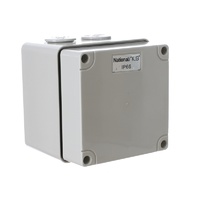
For exposed outdoor work, also consider a dedicated weatherproof box for ancillary connections sitting alongside the isolator.
On factory floors and production lines, key lockable units help reduce the risk of unauthorised restart during maintenance. Electricians use them for machinery isolation on conveyors, mixers, fans and process equipment. Visibility of the handle and clear ON/OFF marking help shift teams confirm isolation at a glance.
Outdoor equipment, pumps, wash bays, agriculture and water treatment all benefit from the IP66 enclosure. UV-stable materials, sealed cable entries and corrosion-resistant hardware extend service life in harsh environments. The key lock adds tamper resistance for gear that sits outside controlled areas.
Three-phase motors and heavy machinery typically need a 3-pole or 4-pole isolator at higher current ratings. Common selections sit at 32A, 50A and 63A, depending on the motor and circuit design. A robust handle and a reliable key barrel become more important as the load and duty increase.
Buying online suits trade buyers who already know the rating and pole count they need. Electricians and contractors can compare specs side by side, confirm stock and place the order without leaving the job. Before ordering, check current rating, pole count, IP rating, locking type, enclosure material, cable entry options, dimensions and compliance documentation.
Sparky Direct stocks IP66 key lockable isolators across major brands including Clipsal, NHP, Hager, GEN3 and NLS. Trade-friendly purchasing, fast Australia-wide dispatch and bulk order suitability help contractors keep jobs moving.
Before placing the order, confirm the product rating, pole count (2P, 3P or 4P), AC voltage, IP66 rating, key lock type, enclosure size, gland or conduit entry, brand, certification evidence and stock availability. Match those specifications against the site requirement and the original electrical design.
For buyers ordering a 63A key lockable isolator or a higher 3-phase rating, double-check the utilisation category and breaking capacity on the datasheet before committing.
For larger fit-outs and maintenance contracts, standardising on one product family saves time. Electricians, facility managers and contractors managing multiple sites benefit from consistent terminals, gland sizes and accessories.
Other practical points include allowing for spares, confirming current stock levels, matching accessories such as glands and locks, and checking dispatch timeframes against the project schedule. Bulk ordering reduces site delays during fit-out and maintenance windows.
Cheap industrial isolator switches can look attractive on price alone. Total value depends on compliance, enclosure integrity, switching performance, brand availability for spares, and long-term replacement risk. A unit that fails the IP seal early or shows arcing on the contacts costs more in callbacks than a quality product fitted once.
The better question is best value, not lowest price. Compare datasheets, compliance evidence and brand support, then weigh those against the upfront cost.
Club Clipsal is Australia's largest electrician community offering trade rewards, business support, and exclusive benefits. When you nominate Sparky Direct as your preferred wholesaler, we automatically apply your Clipsal spend points to your Club Clipsal account daily.
Entry-level offering coaching, mentoring, and training discounts
Unlock exclusive industry tools and networking events
Access Toyota fleet offers and business software discounts
Maximum benefits, including VIP experiences and rewards
1. Sign Up: Create your Club Clipsal account at clipsal.com/club-clipsal or via the iCat mobile app
2. Nominate Sparky Direct: Select Sparky Direct from the wholesaler dropdown menu in your profile
3. Add Email: Enter your Sparky Direct account email address in the membership number field
4. Start Earning: Every dollar spent on Clipsal products earns points automatically
Redeem points from the rewards store, including gift cards, tools, and experiences. Access business summits, product training, and industry networking events. Receive early access to new product launches and special promotions. Connect with fellow electricians via the Club Clipsal community app.
Watch CLIPSAL Isolating Switch 1P 15A 250V Key Operated Grey | 56K2SW115 video
Watch CSG S332-K2 | 32 Amp Isolating Switch Key Operated | 3 Pole 250V AC IP66 video
Watch CSG S232-K2 | 32 Amp Isolating Switch Key Operated | 2 Pole 250V AC IP66 video

I looked in a number of locations for a 32amp Weathproof Isolating Switch with a Key Lock capability, I found this one at Sparky Direct at a very competitive price and with a short delivery time enabling me to purchase two of these switches and have them installed by and Electrician soon after receiving them. Thanks Sparky Direct.
Outstanding isolators at a great price, thanks sparky direct Nicely engineered, sensibly sized and located terminals, clearly marked For efficient fitting-off
great isolator plenty of space robust design We have used these for years to long to remember
Quality products in stock • Fast Australia-wide delivery • Competitive trade pricing
Browse IP66 Key Lockable Isolator Switches → Get Expert Advice →Yes, they are widely used where safety and controlled access are required.
Sparky Direct supplies IP66 key lockable isolator switches Australia-wide, offering robust industrial isolation solutions with convenient delivery.
They are securely packaged and delivered via standard courier services.
Unused products are generally eligible for return according to the seller’s returns policy.
Warranty coverage varies by manufacturer and typically covers defects in materials or workmanship.
Yes, they are typically sold as individual industrial switch units.
Yes, correct placement ensures accessibility and compliance with safety requirements.
Yes, their enclosure rating makes them suitable for wash-down environments.
They are designed for straightforward operation using a dedicated key.
Yes, they are commonly surface mounted near equipment being isolated.
Quality units are built for long service life in industrial conditions.
They are typically clearly labelled and designed for quick recognition.
Yes, they play an important role in safe isolation procedures.
They are electrical isolation switches designed for industrial use, featuring a key lock mechanism and IP66-rated protection against dust and powerful water jets.
Yes, they are designed to perform reliably in dusty, wet, and demanding environments.
It improves safety by preventing accidental or unauthorised re-energising of equipment.
Yes, they are suitable for both commercial and industrial applications.
Yes, they are available in a range of current ratings to suit different applications.
Yes, they are designed for isolating industrial machinery and electrical equipment.
Yes, the IP66 rating makes them suitable for outdoor and wash-down environments.
It helps control access and ensures equipment remains isolated during maintenance or servicing.
They are commonly installed in industrial plants, factories, outdoor installations, and commercial facilities.
Quality isolator switches are manufactured to meet relevant AS/NZS electrical and safety standards when installed correctly.
They are used to safely isolate electrical equipment while preventing unauthorised operation.
IP66 indicates complete protection against dust ingress and strong water exposure, making them suitable for harsh environments.