
Search Results:
Search Results:
Search Results:
Search Results:
A 3 pole switch holds three separate switched poles inside one device, and each pole connects to a single conductor that usually carries one active phase of a three-phase supply.
When the handle moves, all three poles open or close together, which gives coordinated switching and isolation across the full set of conductors in a single action.
This category covers the products built for that job, including isolators, main switches and changeover units for commercial and industrial boards.
Product selection and installation must suit the circuit design, the connected load, the enclosure and the relevant Australian electrical requirements for the site.
Each pole switches its own conductor along an isolated current path, yet all three poles share one operating mechanism so they always move together.
Because the poles act as a single unit, the device suits any circuit where three conductors must connect or disconnect at the same moment.
Coordinated operation removes the risk of leaving one phase live while the other two sit open, which keeps maintenance safe and predictable.
Electricians fit 3 pole switches in switchboards, distribution boards, machinery, pumps and HVAC plant across many commercial and industrial sites.
These installations use the switches to control or isolate three-phase loads as one clean action rather than handling each conductor on its own.
A 3 pole device suits circuits where the three active conductors need to operate together, although the exact requirement depends on the equipment and the circuit design.
Switch rating, pole count, enclosure type and wiring method must be confirmed by a licensed electrician wherever fixed electrical work is involved on the installation.
This page supports product selection and planning only, so it deliberately avoids installation steps and leaves the wiring decisions with the qualified installer.
Confirm suitability against the manufacturer datasheet and the site conditions before you order, because compliance with the Australian wiring rules rests with the installing electrician.
Pole count describes how many conductors a switch controls at once, and choosing the wrong count creates real problems on the board.
Too few poles can leave a conductor unswitched, while too many add cost and space you do not actually need for the circuit.
The notes below help you compare formats before buying, though the circuit design and connected load still drive the final decision.
Single pole switches control one conductor only, while a 3 pole switch controls three conductors together as a single coordinated unit.
A single pole option cannot switch or isolate three conductors at once, so it suits only the circuits where a single conductor needs control.
Double pole switches control two conductors at once, which suits circuits where two poles need switching or isolation in many single-phase setups.
A 3 pole switch adds a third switched conductor for three-phase work, so the connected load and the circuit configuration decide which format fits.
A 4 pole switch adds a fourth switched pole, which is often used where a neutral or an additional conductor must also be switched.
Many three-phase plans compare 3 pole and 4 pole formats on whether the neutral needs switching alongside the three active conductors.
View 4 pole changeover switches for the jobs that genuinely require that fourth switched pole.
A switch handles switching and isolation, while a breaker provides circuit protection when it has been correctly selected for the load and fault level.
The two devices are not interchangeable, so treating a switch as a breaker can leave a circuit without the protection it needs.
Compare three pole circuit breakers and the wider circuit breaker range when protection rather than isolation is the goal.
A licensed electrician should confirm all protection, isolation and switchboard design decisions before the work proceeds on site.
Selecting a 3 pole switch means matching the device to both the circuit and the site conditions where it will operate.
The factors below cover the main decision points for electricians and contractors planning a switchboard or industrial job.
Check each factor against the manufacturer datasheet before you commit to a purchase for the installation.
Amp rating must match the circuit load and the application, because an undersized switch can overheat and fail well before its expected life.
Common selection factors include full-load current, switching duty, fault level context, voltage and the manufacturer specifications for the chosen product.
There is no single universal amp rule that fits every job, so confirm the rating against the datasheet and a licensed design check before you order.
Three-phase systems, motor loads, resistive loads and inductive loads can each affect the switch you choose for a given circuit.
Equipment isolation duty also shapes the selection, because a motor circuit stresses a switch very differently to a simple resistive heater.
Check the product specifications for voltage and load suitability carefully before you confirm the purchase for the application.
Products arrive in panel mount, DIN rail, surface mount and enclosure-mounted formats to suit different boards and installation methods.
Physical size, terminal arrangement and accessories all affect the fit, so confirm there is enough space inside the board before you order.
Plan mounting carefully for switchboard upgrades and retrofit work, and review electrical enclosures where extra mounting space is needed.
Outdoor and harsh sites call for the right IP rating and a durable enclosure that can resist the local conditions over time.
UV exposure, dust, moisture and vibration all shorten the working life of an unsuitable product, so the environment guides the format.
Weatherproof isolator switches and heavy-duty formats suit these demanding conditions far better than standard indoor units.
For lockable outdoor duty, review IP66 key lockable isolator switches designed for exposed and secured locations.
Compare product range, compliance documentation, stock levels and pack quantities across the brands you are considering for the job.
Trade buyers also weigh repeat ordering, bulk purchase planning and project scheduling when they choose a supplier for a project.
Stocked brands include Clipsal, Hager, NHP and National Light Sources across several switching and isolation formats.
Clear range data and reliable stock both help match the right product to the job without delay.
The scenarios below map products to real job types across commercial, industrial and construction work in Australia.
Use them to match the right format and rating to a specific project before you order the parts.
Industrial sites use 3 pole switches for machinery isolation, motor circuits, control panels and plant rooms across the facility.
Coordinated switching across three conductors keeps maintenance safe and predictable for the people working on the equipment.
Robust construction, enclosure protection and clear access all matter in these demanding environments, so the build quality counts.
Browse the wider industrial supplies range for related equipment that supports the same installations.
Switchboard replacement and distribution board upgrades often call for new switching and isolation devices that fit the existing layout.
Board space, existing equipment compatibility and future maintenance access all shape the products you choose for the upgrade.
Pair the switch with the right main switches and isolators so the board operates as one coherent system.
Switchboard work must always be completed by a suitably licensed electrician under the relevant standards.
Contractors value consistent product selection across a construction project from the first fix through to handover.
Brand consistency, order quantities and delivery planning all support repeatable results across larger and multi-stage sites.
Buying spare stock reduces costly delays when a unit needs replacing partway through a busy job.
Choose products for fit-for-purpose value rather than unit price alone, because reliability protects the build schedule.
Pumps, motors, HVAC equipment and workshop machinery often need all three active conductors switched or isolated together.
A 3 pole switch suits this isolation duty well when it carries the correct rating for the connected load.
Solar arrays use similar devices, so review solar isolator switches when the duty involves direct current.
Suitability always depends on the connected equipment and the surrounding circuit design for the installation.
This section gives compliance-aware planning guidance rather than installation steps for the electrical work involved.
Fixed electrical work in Australia must always be performed by a licensed electrician under the relevant standards.
The notes below help with safe, high-level planning before a job begins on the site.
Terminals must suit the conductor size, the load rating and the manufacturer requirements for the specific device.
Secure termination and correct conductor identification both support a safe and lasting result on the installation.
These points sit at a planning level only, so the licensed electrician carries out the actual wiring and termination.
Plan for enclosure space, circuit identification, isolation needs and compatibility with the existing equipment on the board.
A weatherproof box may be needed where the mounting point sits outdoors or in a wet area.
Distribution board and switchboard installation always requires licensed electrical work, and datasheet checks belong in the product selection stage.
Switches play a central role in safe shutdown and maintenance workflows on commercial and industrial sites.
Lockable handles and isolator formats support lockout planning wherever the product design allows for that approach.
Site safety procedures should follow the relevant workplace requirements, and the format should match the maintenance plan for the equipment.
Operation, isolation, continuity and load suitability must all be verified by qualified personnel once the work is complete.
Diagnostic testing is not a task for unlicensed users, so leave it with the qualified electrician on the job.
Commercial and industrial work should include documentation and commissioning checks that confirm the installed product performs as the design intended.
Buying online works well once you confirm the right specification before you place the order for the job.
The guidance below keeps the purchase practical, informed and matched to the switchboard or industrial application.
It helps you order with confidence rather than guessing at the rating or the format you need.
Confirm current rating, voltage rating, pole count, mounting type and enclosure suitability for the circuit you are supplying.
Check terminal capacity, compliance markings and datasheet availability before you add the item to the cart.
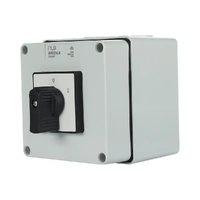
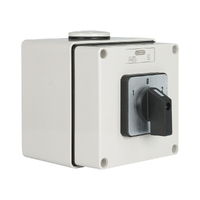
Product photos and descriptions help you confirm the physical format and any accessories included with the switch.
Verify suitability carefully before ordering for switchboard or industrial applications where the duty is demanding.
Low cost should never override the correct electrical rating, durability or environmental suitability for the circuit.
Compare total fit-for-purpose value rather than unit price alone when you weigh up the available options.
An affordable switch still needs the correct rating and protection for the circuit and the load it serves.
The right product reduces rework and replacement costs across the full life of the installation.
Urgent replacement parts and full project quantities both depend on reliable stock levels and clear dispatch.
Consistent product selection and careful delivery planning keep a job running on schedule across the program.
Stock availability supports both single repairs and larger orders for active construction and maintenance sites.
Plan delivery timing around the project program so materials arrive when the trades actually need them.
Adjacent ranges help you complete a board or finish a job in a single coordinated order.
Useful categories include changeover switches, RCBOs and three pole main switches for related switchboard duties.
Brands such as Connected Switchgear and GEN3 add further isolator and changeover options to compare.
Use these links to move quickly between related product families across the site.
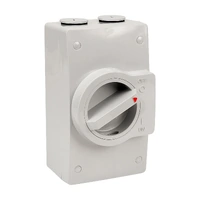
Watch NLS 30258 | Three Pole 63Amp Isolating Switch | IP56 Weather Protected video
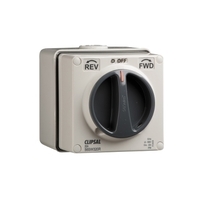
Watch Clipsal WHB320-RG | Weatherproof Switch 3 Pole 20 amp IP66 video
Watch HAGER SBR380 | Main switch three pole 80 amp video

These isolating switches make great on /off units for machinery that runs on banks of 250 watt grid connect wired in parallel for specialised machines that are designed and manufactured to run on 36 volt systems as they are of good quality and excellent finish and never used to make or break under load with the exception of air compressors and the 2 pole or 3 pole are able to switch both positive and negative leads they handle the DC current well with no voltage drop or overheating under load and there not Chinese.
I looked in a number of locations for a 32amp Weathproof Isolating Switch with a Key Lock capability, I found this one at Sparky Direct at a very competitive price and with a short delivery time enabling me to purchase two of these switches and have them installed by and Electrician soon after receiving them. Thanks Sparky Direct.
I purchased two 20A WHB320RG Isolators in Jan 2017. I have purchased another 2 of the same item New year's Eve 2017. These are all used on my own home, so I prefer to use a well known reliable brand name.
Trusted brands • Expert advice • Fast Australia-wide delivery • Trade pricing
Browse 3 Pole Switches → Get Expert Advice →