
Search Results:
Search Results:
Search Results:
Search Results:
LED highbays are high-intensity light fittings designed for mounting at elevated heights — typically 6 m to 15 m or more above the floor. They are engineered to project a high lumen output downward across large floor areas, making them the standard choice for warehouses, factories, distribution centres, large workshops and indoor sports facilities.
Unlike standard commercial downlights or battens, LED highbays incorporate a high-power LED array (typically 100 W to 240 W+), an integrated driver, and a precisely engineered reflector or lens to control beam spread and minimise light loss at the sides. Most modern units comply with IP65 or IP66 ratings for protection against dust and water ingress — essential for industrial environments.
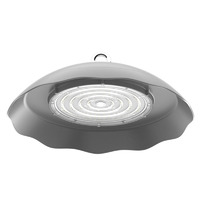
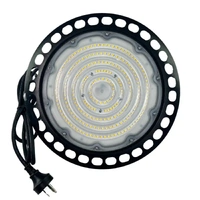
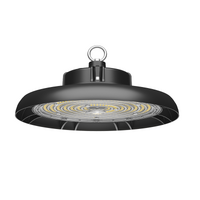
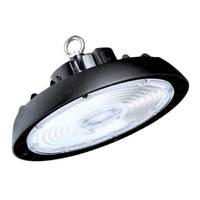
The two main form factors available from Sparky Direct are UFO (round, compact, pendant-hung) and linear (rectangular, similar in footprint to a fluorescent batten). Both deliver excellent lumen output per watt when compared to the metal halide and fluorescent highbays they replace.
Sparky Direct stocks UFO and linear LED highbays from trusted brands including Ensa, SAL Lighting and ILD, with fast dispatch Australia-wide and competitive trade pricing on bulk orders. Our range includes UFO and linear LED highbays from 100W to 240W (13,000–31,000 lumens) in IP65-rated housings. Brands like Ensa, SAL Lighting and ILD offer instant-on operation, 5-year warranties, and zero warm-up delays. Most models retrofit into existing highbay mounts.
LED highbays achieve 130–170 lumens per watt, compared to 70–100 lm/W for metal halide. Across a 20-bay warehouse with 400 W metal halide fittings, switching to equivalent 150 W LED highbays can reduce lighting energy by more than 60%, with a typical payback period of 2–4 years including energy savings and reduced lamp replacement costs.
Selecting between a UFO and a linear highbay comes down to ceiling height, bay spacing, required beam pattern and the existing mounting infrastructure. Both types are available with interchangeable lenses on select models, giving installers flexibility on a single SKU.
| Feature | UFO LED Highbay | Linear LED Highbay |
|---|---|---|
| Form Factor | Compact round disc | Long rectangular batten |
| Best Mounting Height | 6 m – 15 m+ | 4 m – 10 m |
| Beam Pattern | Round, adjustable with lens | Elongated, even spread |
| Installation | Hook/chain pendant or surface | Surface mount or pendant |
| Typical Applications | Warehouses, factories, aircraft hangars | Workshops, retail back-of-house, gyms |
| Heat Dissipation | Fin-style aluminium heatsink | Aluminium housing across length |
| Wattage Range | 100 W – 240 W+ | 80 W – 200 W |
For very high ceilings (10 m+) in warehouses or distribution centres, UFO highbays with a 60° beam angle are typically preferred — the concentrated beam pushes adequate lux levels down to the working plane. For sports halls and gyms with lower clearance heights (typically 5 m – 8 m), linear highbays or UFO models with a 120° lens offer more even spread and fewer shadows on court surfaces.
The required lumen output depends on the application, ceiling height, reflectance of the floor and walls, and the relevant Australian Standard for illuminance. AS/NZS 1680.2.4 specifies minimum maintained illuminance levels for industrial and warehouse environments. As a general guide:
| Application | Recommended Lux (AS/NZS 1680) | Typical Highbay Wattage |
|---|---|---|
| General storage / bulk handling | 100 – 160 lux | 100 W UFO |
| Order picking / general warehouse | 200 – 300 lux | 150 W UFO or linear |
| Manufacturing / assembly | 300 – 500 lux | 200 W – 240 W+ |
| Fine assembly / quality inspection | 500 – 1000 lux | 240 W+ with task lighting supplement |
| Indoor sports / gymnasium | 300 – 500 lux | 150 W – 200 W UFO or linear |
Typical lumen output by wattage from stocked LED highbays:
Note: Lumen output figures should always be verified against the product data sheet for the specific SKU you are specifying. Sparky Direct product pages include downloadable data sheets for this purpose.
Getting the wattage and beam angle right in the design stage avoids costly over- or under-lighting. Higher ceilings require a narrower beam to concentrate the lumens at floor level, while lower mounting heights benefit from a wider beam for even spread with reduced hot-spots.
Several highbay models stocked at Sparky Direct support switchable wattage — a single SKU can be set to operate at 100 W, 120 W, 150 W or 200 W by adjusting a DIP switch or selector before installation. This is particularly useful for projects where the final mounting height is uncertain, or where future expansion may require a different output level.
For industrial and warehouse applications, colour temperature has a direct bearing on worker alertness, visual clarity and task accuracy. The two most common options in the LED highbay range are:
All LED highbays should carry a minimum CRI (Colour Rendering Index) of 80 for general industrial use. Applications involving colour inspection, quality control or fine assembly should specify CRI 90+. Confirm the CRI value from the product data sheet before specifying for these environments.
Low CRI light sources can cause colours to appear distorted, making it harder to identify warning labels, differentiate product grades or read safety signage accurately. Specifying CRI 80+ in industrial environments is considered best practice under AS/NZS 1680.
Indoor sports centres and commercial gyms present specific lighting challenges: even illuminance across a large floor area, minimal glare for athletes looking upward, adequate vertical illuminance for court sports, and robust fittings that resist vibration from ball sports and exercise equipment.
Key considerations for gym and sports hall highbay selection:
For lighting controls in sports facilities, integrating occupancy sensors with dimmable highbays can reduce standby energy consumption significantly, particularly in facilities with irregular usage patterns.
Industrial environments impose demands that go beyond basic lumen output. Factories, manufacturing plants and distribution centres require fittings that maintain performance across temperature extremes, withstand dust, moisture and chemical vapours, and survive the mechanical stresses of vibration and intermittent impact.
For large industrial projects, bulk pricing tiers are available — contact the Sparky Direct trade team for project quotes on orders of 10 or more highbay units. Data sheets and IES photometric files can be provided on request for lighting design software.
The energy and maintenance savings from replacing metal halide or fluorescent highbays with LED are among the most compelling in commercial lighting. The table below illustrates a typical comparison based on a 200-fitting warehouse installation:
| Technology | Efficacy (lm/W) | Rated Life | Start-Up Time | Maintenance |
|---|---|---|---|---|
| LED Highbay | 130 – 170 lm/W | 50,000 – 100,000 hours | Instant on | Minimal — no lamp changes |
| Metal Halide | 70 – 100 lm/W | 10,000 – 15,000 hours | 3 – 5 min warm-up | High — frequent relamp, ballast failures |
| Fluorescent Highbay | 80 – 100 lm/W | 15,000 – 30,000 hours | Near instant | Medium — ballast and tube replacements |
Consider a warehouse currently operating 50 × 400 W metal halide highbays, running 12 hours per day, 6 days per week.
Energy costs vary by state and tariff structure. The above is indicative only — use actual tariff rates and installation costs when preparing client proposals. The Sparky Direct team can assist with preliminary lumen calculations and product selection for project work.
All electrical installation work in Australia must be carried out by a licensed electrician in accordance with AS/NZS 3000:2018 (Wiring Rules). This applies to mounting, wiring and connection of LED highbay fittings regardless of whether the fitting itself includes an Australian standard plug.
Licence Requirement: LED highbays must be installed by a licensed electrician. DIY installation of 240V fittings is illegal in all Australian states and territories and may void product warranties and building insurance. For lighting controls including DALI and 1–10V dimming integration, additional competencies may apply.
Modern LED highbays are compatible with a range of control technologies that reduce energy consumption well beyond simple switching. For large warehouses and distribution centres, smart lighting integration can deliver an additional 30–50% reduction in energy use on top of the LED efficiency gain.
For facilities integrating highbay lighting with a building management system (BMS), confirm the protocol supported by the BMS before specifying control gear. DALI-2 certified drivers provide the broadest interoperability. Sparky Direct stocks a range of lighting controls and sensors compatible with LED highbay installations.
LED highbays are among the lowest-maintenance light fittings available for industrial use. With rated lifespans of 50,000 to 100,000 hours, a fitting running 12 hours per day would theoretically operate for 11 to 22 years before reaching its L70 lumen maintenance point (the point at which output has depreciated to 70% of initial). In practice, driver life is often the limiting factor in high ambient temperature environments.
LED driver life is rated at a specific maximum ambient temperature — typically Ta 45°C or Ta 50°C. In poorly ventilated roof spaces or in regions with extreme summer temperatures, ambient temperatures above this rating will significantly accelerate driver degradation. Ensure adequate ventilation above highbay fittings and confirm the Ta rating against your site's peak ambient conditions.
Queensland and other Australian states have operated energy efficiency incentive schemes that can partially offset the cost of LED lighting upgrades. Eligibility, certificate values and scheme details change periodically, and specific program availability should always be verified directly with the relevant authority before including rebates in project cost estimates.
Sparky Direct can supply the product data sheets and compliance documentation typically required by accredited providers when submitting for energy efficiency certificates.
A simplified zonal cavity calculation can provide a reliable starting point for the number of highbays required in a rectangular space. Lighting design software (such as DIALux or AGi32) should be used for formal specifications, but the following method is a useful site estimation tool.
Scenario: A 40 m × 25 m (1,000 m²) warehouse with 8 m ceiling height. Target illuminance: 200 lux for order picking. Assumed coefficient of utilisation (CU): 0.7. Assumed maintenance factor (MF): 0.8.
This method assumes an even grid layout with no major obstructions and adequate reflectance from the floor and walls. Always verify the final design with a photometric calculation, particularly for racking installations where vertical illuminance in aisles is as important as horizontal floor illuminance.
Free Calculation Assistance: For project-scale installations, the Sparky Direct trade team can assist with preliminary lumen calculations and wattage selection. Contact us with your floor area, ceiling height, target lux and application, and we'll help you arrive at a suitable product and quantity.
LED highbays sold in Australia for permanent installation must comply with relevant Australian Standards. When purchasing for a commercial or industrial project, always request the Regulatory Compliance Mark (RCM) documentation and product data sheet, and confirm the fitting is listed on the relevant GEMS (Greenhouse and Energy Minimum Standards) register if applicable.
All LED highbay products supplied by Sparky Direct carry RCM certification. Data sheets, IES files and compliance documentation are available on product pages or from the trade team on request. For switchboard and distribution questions related to your lighting circuit design, Sparky Direct's electrical team can also assist.
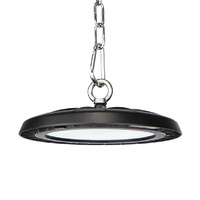
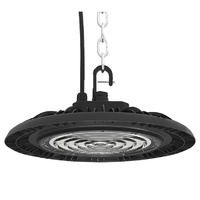
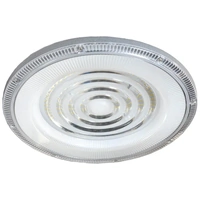
ENSA LHB-D100-C Commercial LED Highbay 100W 5700K
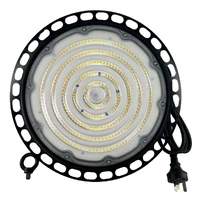
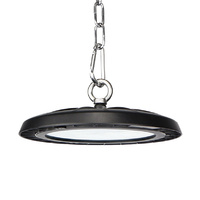
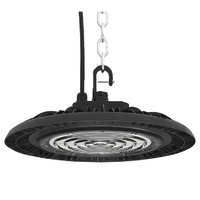
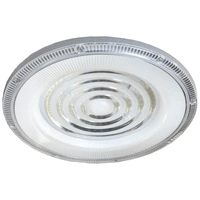
ENSA LHB-E100-C Commercial LED Highbay 100W 6000K IK07
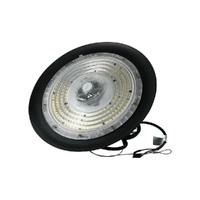
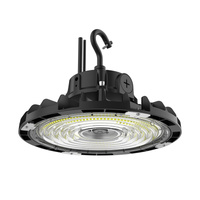
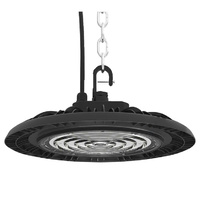
XLED XHB100-200W Switchable Quad Power LED Highbay 5000K IP66

Fantastic highbay with great light output. Easy to change to wide spread lens. Customer very happy. Will be purchasing more.
Great product for the price paid. Has a good lumen output and has a good distance coverage if used in a warehouse.
A great light with fantastic luminosity.
Trusted brands • Expert advice • Fast Australia-wide delivery • Trade pricing
Shop LED Highbays → Get Expert Advice →Yes, they are one of the most common lighting solutions for warehouse environments.
Sparky Direct supplies LED highbays Australia-wide, offering reliable high-output lighting solutions with convenient delivery.
LED highbays are securely packaged and delivered via standard courier or freight services.
Unused products are generally eligible for return according to the seller’s returns policy.
Warranty coverage varies by manufacturer and typically covers defects in materials or workmanship.
LED highbays are available individually.
Yes, correct layout and selection ensure optimal light distribution and efficiency.
Some models can be used with motion sensors or control systems where suitable.
Good lighting helps improve visibility, productivity, and workplace safety.
Yes, they are often used in gyms and indoor sports halls.
Quality LED highbays provide stable light output when installed correctly.
Yes, they provide clear lighting that supports safe and efficient working conditions.
Yes, their long lifespan reduces the frequency of lamp replacements.
LED highbays are high-output lighting fixtures designed to illuminate large spaces with high ceilings.
Yes, they are designed to deliver strong, uniform illumination across large areas.
They offer lower running costs, longer lifespan, and improved light quality.
Most are designed for indoor use, while some models are rated for covered or outdoor applications.
Yes, they are designed for long operating hours in commercial and industrial environments.
They are commonly available in cool white and daylight colour temperatures.
Yes, they are available in a range of wattages to suit different mounting heights and space sizes.
Common types include round (UFO-style) highbays and linear highbay fittings.
Yes, LED highbays provide high light output while using significantly less energy than traditional metal halide or fluorescent fittings.
They are typically used in areas with ceiling heights above around 6 metres.
Quality LED highbays are manufactured to meet relevant AS/NZS electrical and safety standards when installed correctly.
They are commonly used in warehouses, factories, workshops, gyms, and large commercial spaces.