
Search Results:
Search Results:
Search Results:
Search Results:
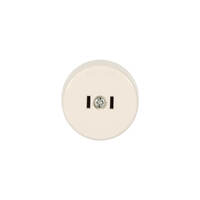
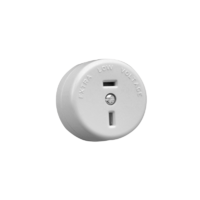
Surface socket outlets sit on the face of the substrate rather than inside a wall cavity. They suit garages, sheds, workshops, warehouses, concrete walls, older buildings, retail fit-outs, and staged or temporary works. Electricians, contractors, builders, property managers, and informed buyers reach for them when chasing the wall is impractical or wasteful.
Surface sockets are fixed electrical accessories. In Australia, installation, replacement, and rewiring must be carried out by a licensed electrician under AS/NZS 3000 Wiring Rules.
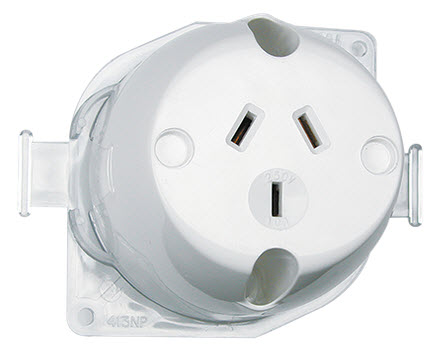
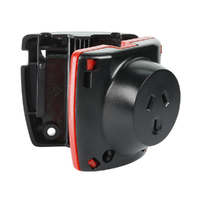
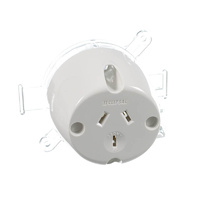
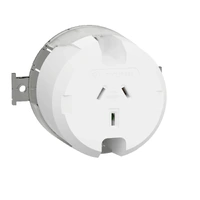
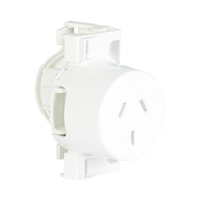
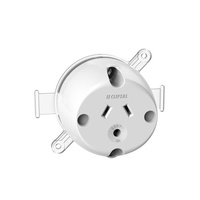
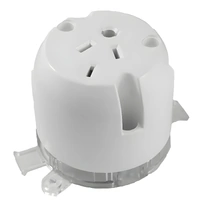
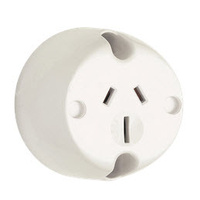
A surface-mounted socket outlet is a power point fixed to the outer face of a wall, column, panel, bench, or surface-mounted box. The outlet, back box, and cable enclosure all sit above the substrate. The same product family is searched for under several names: surface mount sockets, surface power points, surface mounted outlets, and surface GPOs. The function is identical: deliver mains power at the point of use without cutting into the wall.
Flush sockets sit inside the wall cavity behind a mounting block. They suit new builds, plasterboard linings, and finished interiors where the cover plate sits close to the wall face. Surface sockets sit on the wall and bring cabling along the face of the substrate, usually via conduit, mini-trunking, or duct.
The trade-off is straightforward. Flush sockets give a cleaner finish but require wall chasing, patching, and longer install time. Surface sockets install faster, expose less of the substrate, and stay accessible for future work. They suit concrete, brick, masonry, and heritage walls where chasing is destructive or prohibited.
Typical applications include garages, laundries, sheds, workshops, warehouses, plant rooms, service areas, retail back-of-house, schools, server rooms, and heritage buildings. Small electrical contractors handling upgrades, maintenance, and tenant-requested power additions use surface sockets where speed, neatness, and minimal disruption matter more than a flush wall finish. They also suit staged works where the final wall finish is yet to be installed.
Surface sockets are available in a range of configurations. The right choice depends on the appliance load, the environment, the number of outlets needed, and any additional features such as USB charging or weatherproofing. Compare the variants below before specifying or ordering. The broader power points range covers flush variants for comparison.
Single surface sockets suit dedicated appliances or locations with low demand, such as a fixed exhaust fan or a downlight feeder. Single power points are the common choice where only one outlet is needed.
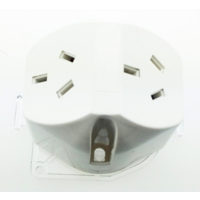
Double surface sockets are the most common general-purpose option in homes and light commercial spaces. Compare the double power point range for two-outlet variants.
Multi-gang or higher-density outlet layouts cover workbenches, offices, AV areas, commercial counters, and workshops. Quad power points deliver four outlets in one assembly where multiple tools or devices need permanent power.
Switched outlets are the standard preference across most Australian residential and light commercial installations. The switch isolates the outlet locally without unplugging the appliance. Unswitched outlets see use behind controlled equipment or in specialist commercial applications where local switching is undesirable. Final selection sits with the electrician based on circuit design and the appliance being served.
USB-integrated surface sockets combine a mains outlet with USB-A, USB-C, or both. They reduce adaptor clutter in offices, hospitality spaces, workstations, and homes. The USB powerpoint range covers the common combinations.
Smart surface sockets add scheduling, remote control, automation, and energy monitoring where a compatible system is installed. Browse smart power points for connected variants.
Outdoor and damp locations require weatherproof surface socket outlets with a suitable IP rating. Common environments include garages, covered patios, external walls, sheds, service yards, and washdown-prone areas. The full weatherproof GPO range covers single, double, and industrial variants. Outdoor circuits also need RCD protection and a licensed installer.
Selecting the right surface socket comes down to four practical specifications: current rating, ingress protection, enclosure material, and cable entry orientation. Matching these to the circuit, the appliance, and the site environment prevents nuisance faults and rework.
10A outlets suit most general-purpose Australian appliances, including downlights, small tools, kitchen appliances, and office equipment. 15A and 20A outlets handle higher-draw equipment such as workshop tools, some air conditioners, and commercial appliances. Higher-rated outlets typically need dedicated circuits, correctly sized cable, and matched protective devices. Compare ratings in the 10 amp range and 15 amp range.
IP20 suits dry indoor environments. Higher ratings such as IP44, IP55, IP56, and IP66 handle moisture, dust, and harsher exposure. The word "weatherproof" on a product listing should always be backed by a stated IP rating in the datasheet. IP-rated surface sockets cover workshops, covered outdoor areas, industrial spaces, and service zones. For heavy industrial environments, the industrial outlets range includes IP66 options.
PVC and polycarbonate enclosures suit standard residential and light commercial use. Heavy-duty polycarbonate and metal-bodied enclosures suit workshops, industrial sites, and vandal-prone locations. UV stability matters in direct sun. Chemical and corrosion resistance matter in coastal, washdown, or industrial areas. Impact resistance becomes critical wherever knocks from trolleys, tools, or vehicles are likely.
Surface sockets must match the conduit, mini-trunking, cable duct, or surface wiring system used on site. Entry options include rear, side, top, bottom, knockout, and gland entry. Confirming entry orientation before ordering prevents rework during fit-off. The wider conduit fittings range and cable glands range cover the common entry components.
Surface socket installation in Australia is licensed electrical work. The points below cover the regulatory framework and the testing duties an electrician performs before energising a circuit. They do not constitute a wiring guide.
Two standards matter here. AS/NZS 3000 Wiring Rules set the installation, protection, and earthing requirements. AS/NZS 3112 sets the requirements for socket outlets and plugs. Socket outlets used in Australia must be compliant, correctly rated for the circuit, and suitable for the installation environment. RCM-approved products from reputable Australian electrical suppliers carry the compliance markings electricians and inspectors look for.
Installing, replacing, or rewiring a fixed socket outlet in Australia must be performed by a licensed electrician. The risks of unlicensed work include electric shock, fire, non-compliance with state regulations, voided insurance, and failed inspection. The role of an informed buyer ends at correct product selection. The role of the licensed electrician covers the installation, the test, and the certificate.
Before energising, an electrician tests polarity, earth continuity, insulation resistance, RCD operation, and circuit suitability. Depending on state or territory, a Certificate of Electrical Safety or equivalent compliance document may be required. Clear labelling at the switchboard and on dedicated circuits supports future maintenance and fault-finding. The RCD range and RCBO range cover the protective devices that work with surface socket circuits.
Surface sockets win on speed, accessibility, and minimal wall damage. They also lose on visual finish compared with flush installs. The trade-off varies by project and substrate.
Key benefits include faster installation, reduced wall damage, easier cable routing, lower disruption, and easier future modification. Electricians often reach for surface sockets on concrete, brick, masonry, heritage, industrial, and commercial walls. Anywhere the substrate resists chasing, or where the finish needs to stay intact, surface mounting is the practical choice. It also suits sites where power additions must be completed quickly without major building works.
Recessed sockets deliver a flush finish that suits premium interiors and finished plasterboard walls. They take longer to install, need wall chasing, and often require patching and painting. Surface sockets install faster, leave the wall intact, and stay accessible for future maintenance. They protrude from the wall and can be more exposed to impact. Use recessed for premium finishes and surface for practical or exposed installations.
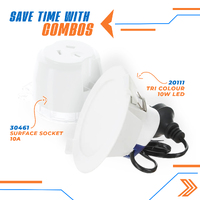
The external back box, visible cable path, compatible conduit entries, and accessible terminations all speed up the fit-off. Quick-connect surface sockets reduce termination time on downlight feeder runs. Correct mounting, cable protection, and full testing remain essential regardless of how fast the housing fits.
The right surface socket depends on the application. The four scenarios below cover the most common buying questions.
For garages, laundries, sheds, home offices, and older homes, neat compact white or neutral surface sockets handle most needs. USB-integrated variants reduce adaptor clutter near desks, bedside tables, and kitchen benches. Consider the visible profile and the wall finish before specifying. On heritage walls or older brick, surface mounting avoids damaging the substrate.
Workshops and garages need impact-resistant housings and, depending on dust and moisture exposure, an IP rating to match. 10A outlets cover general tools and lighting. 15A or 20A outlets serve higher-draw equipment, but only where the circuit and appliance require it. The outlet, cable, breaker, RCD, and enclosure must all match the actual load.
Warehouses, retail back-of-house, offices, plant rooms, service benches, and schools all benefit from a consistent range across the site. Bulk ordering from the same range simplifies spare part availability, labelling, and future expansion. For demanding industrial environments, pair surface sockets with appropriate circuit protection and surface mount enclosures.
Outdoor selection depends on exposure: covered, semi-exposed, fully exposed, dusty, coastal, or washdown. Higher IP ratings handle harsher conditions. RCD protection is mandatory on outdoor and wet-area circuits. A licensed electrician should assess the location before specifying. The weatherproof switches range often pairs with weatherproof outlets for full external setups.
Brand choice and supply route both shape the final cost and the long-term serviceability of an installation. The notes below cover what to compare without making unsupported claims about individual products.
The common compliant brands stocked across Australian wholesalers include Clipsal, HPM, Legrand, Trader, NHP Electrical, Hager, and National Light Sources. Brand choice often comes down to the existing site standard, the matching accessories already in stock, warranty terms, and the electrician's familiarity with the range. Datasheets and approval markings should be checked before ordering for any compliance-critical job.
Price alone is not a value indicator. Compare price against current rating, enclosure material, number of outlets, switch type, IP rating, USB or smart features, warranty, and accessory compatibility. The cheapest option is rarely the best value for high-use, exposed, or commercial locations. For low-risk standard residential applications, affordable compliant options often deliver good service life.
Online electrical suppliers give broad range access, transparent pricing, and quick delivery for project quantities. Sparky Direct is one practical option for electricians and informed buyers comparing surface socket outlets. Before ordering, confirm amperage, IP rating, brand, colour, and back box depth against the site requirement.
Fit-outs, maintenance runs, shed upgrades, and multi-site commercial work all benefit from bulk buying. Keeping the same brand and range across a project keeps the visual look consistent and makes future servicing easier. Related accessories often ordered together include surface boxes, conduit, mini-trunking, cable glands, labels, and safety switches for circuit protection.
Surface sockets are durable but not indestructible. Knowing the signs of a failing outlet and when to call an electrician prevents larger faults and reduces fire and shock risk.
Watch for cracked housings, loose outlets, discolouration, burn marks, buzzing, heat, corrosion, broken switches, damaged conduit, or visible water ingress. Continued use of a damaged outlet creates fire and electric shock risk. Isolate use at the circuit breaker and arrange a licensed inspection.
The common causes are impact damage, moisture ingress, loose terminations, sustained overloading, poor enclosure sealing, UV degradation, and unsuitable product selection for the environment. Outdoor and workshop installations face the most physical and environmental stress. The user does not open the outlet or work on the wiring. That work belongs to a licensed electrician.
Replacement is the right moment to consider an upgrade. Options include moving from single to double outlets, adding USB variants, fitting weatherproof models, or specifying a more durable housing. Matching the existing conduit entry and back box footprint simplifies the swap. Related upgrades often involve the switch mechanisms range and junction boxes behind the wall or panel.
Club Clipsal is Australia's largest electrician community offering trade rewards, business support, and exclusive benefits. When you nominate Sparky Direct as your preferred wholesaler, we automatically apply your Clipsal spend points to your Club Clipsal account daily.
Entry-level offering coaching, mentoring, and training discounts
Unlock exclusive industry tools and networking events
Access Toyota fleet offers and business software discounts
Maximum benefits, including VIP experiences and rewards
1. Sign Up: Create your Club Clipsal account at clipsal.com/club-clipsal or via the iCat mobile app
2. Nominate Sparky Direct: Select Sparky Direct from the wholesaler dropdown menu in your profile
3. Add Email: Enter your Sparky Direct account email address in the membership number field
4. Start Earning: Every dollar spent on Clipsal products earns points automatically
Redeem points from the rewards store, including gift cards, tools, and experiences. Access business summits, product training, and industry networking events. Receive early access to new product launches and special promotions. Connect with fellow electricians via the Club Clipsal community app.
Watch Clipsal 413WE | Surface Socket Back Wired 10amp video
Watch NLS 30461 | Surface Socket Outlet 10amp video
Watch Double Surface Socket | 30107 video

NLS stuff is always reliable out of the box and these are no different. These LED downlights have a great beam spread and are very bright so are excellent for task lighting in kitchens or other work areas. Colour rendering is good and the only deficiency I would say is the colour temp selector switch is a bit fiddly, but as it is a once-off activity to set it, it is hardly worth mentioning.
Very easy to mount for exhaust fans and not taking short cuts with cutting without cutting wiring or plugs off exhaust fan Make it easy to take down exhaust where customer is complaining about exhaust fan is making noise as bearing have worn out So you unscrew at 12am and customer can sleep and you can get bad It cheap for to alway pay to have standbys in the van.
Excellent product at a good price not yet installed as waiting for electrician to fit. Ordered and paid for on line with paypal. I live locally and wish to support local businesses as much as possible. Not my first purchase and I usually get notification the next day that my order is ready for pickup .Excellent service.
Quality products in stock • Fast Australia-wide delivery • Competitive trade pricing
Browse Surface Socket Outlets → Get Expert Advice →Yes. Their external mounting makes them easy to access, especially in work areas and garages.
Surface Sockets are available from Sparky Direct, offering a convenient way to purchase compliant electrical products with Australia-wide delivery.
Consider the location, environment, and required rating, and confirm suitability with your electrician before purchasing.
Returns depend on the seller’s return policy and whether the product is unused and in original packaging.
Most surface sockets include a manufacturer’s warranty, provided they are installed correctly and used as intended.
Surface sockets are usually sold individually, allowing you to order only what is required.
Yes. Additional surface sockets can be installed later, subject to electrical capacity and compliance checks.
Yes. An electrician may recommend surface sockets based on wall construction, access, and intended use.
Yes. Their exposed housing can be wiped clean as part of regular maintenance.
Many surface sockets are available in a range of colours and designs to suit different environments.
Yes. They are often used in renovations where wall structures cannot be modified.
Yes. They are a popular choice in garages, sheds, and workshops where surface wiring is common.
Yes. Safety depends on correct installation and appropriate use, which should always be handled by a licensed electrician.
Surface sockets are power outlets that are mounted directly onto the surface of a wall, rather than being recessed into the wall cavity.
Modern surface sockets are available in compact designs that suit functional and utility spaces.
Surface sockets are ideal when cutting into walls is not practical or would cause unnecessary disruption.
They can be installed on most wall types, subject to suitable fixings and assessment by a licensed electrician.
Yes. Some surface sockets are designed with higher IP ratings for outdoor or damp locations, depending on the model.
Yes. They are widely used in commercial, industrial, and utility spaces due to their practicality and durability.
Yes. They are commonly used in homes where wall cavities are inaccessible or where surface wiring is preferred.
Most surface sockets are rated at 10 amps for general-purpose use, with higher-rated options available for specific applications.
Surface sockets are designed for standard Australian mains supply of 230–240V AC.
Yes. Installation or replacement must be carried out by a licensed electrician in accordance with AS/NZS 3000 Wiring Rules.
Yes. Quality surface sockets are designed to comply with relevant Australian standards, including AS/NZS 3112, when installed correctly.
They are typically used where recessed wall installation is not possible, such as on concrete, brick, masonry walls, or in garages and workshops.