
Search Results:
Search Results:
Search Results:
Search Results:
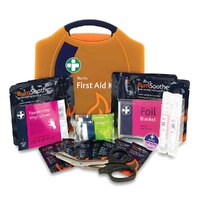
A first aid kit is a portable or wall-mounted container holding the supplies needed to manage minor injuries and stabilise serious ones. The core function is simple: deliver immediate, basic medical care to reduce harm in the minutes before professional help arrives. Contents vary by kit type, but every kit covers wound care, burn treatment, and protection against cross-contamination.
The first few minutes after an injury are critical. Bleeding, burns, electric shock, and breathing problems all worsen rapidly without intervention. A first aid kit lets a worker, supervisor, or bystander act immediately. On electrical worksites, this matters more than most people realise. A serious cut from a wire stripper or a burn from a live cable can become life-threatening if treatment is delayed.
Ambulance response times in Australia vary widely. In metro areas, the average response is around 10 minutes. In regional and remote sites, it can stretch to 30 minutes or more. A stocked, accessible first aid kit bridges that gap. The goal is not to replace professional care; it is to keep the patient stable until paramedics arrive.
Dedicated safety suppliers and electrical wholesalers both stock first aid kits, but the trade-focused range tends to differ. Electrical wholesalers like Sparky Direct stock kits sized and configured for the realities of electrical work: vehicle kits for service vans, workshop kits for assembly areas, and wall-mounted cabinets for fixed sites. The benefit of buying from a trade supplier is that the kits sit alongside the rest of your PPE and safety equipment in one order.
Reliable suppliers stock kits that comply with Australian workplace standards, list the contents clearly, and ship from Australian warehouses. Avoid suppliers that hide content lists or use generic packaging. Trafalgar is one of the most recognised first aid brands in Australia, and Sparky Direct stocks Trafalgar first aid products alongside other compliant ranges.
Workplaces with multiple vehicles, multiple sites, or high staff numbers benefit from bulk first aid orders. Buying several kits at once standardises contents across the team, simplifies restocking, and reduces freight cost per unit. Sparky Direct ships first aid kits across Australia with the same fast turnaround as the rest of the range.
A basic first aid kit covers the four most common injury types: cuts and grazes, burns, sprains, and shock. Contents are grouped by treatment function so a non-expert can find what they need under pressure.
First aid kits in Australian workplaces should not contain prescription medications or over-the-counter painkillers unless specifically authorised. Workplace health and safety guidance keeps medication out of standard kits to avoid liability and adverse reactions. Stock topical and treatment items only.
Home kits are sized for households of two to six people and cover everyday injuries: kitchen cuts, scrapes, minor burns, and bee stings. A home kit lives in a fixed, easy-to-find location, usually in the kitchen or laundry. Contents skew toward plasters, antiseptic, and pain relief.
Workplace kits are scaled to the number of workers and the assessed risk level of the site. A small office kit looks very different to a kit on a high-voltage substation. Compliance kits are sold pre-stocked to align with Safe Work Australia first aid guidance. The advantage is that the buyer does not have to interpret the standard themselves.
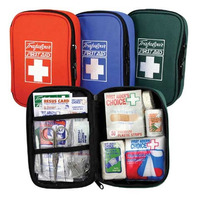
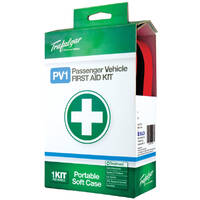
Vehicle kits live in the cab or rear of a service van and serve the driver, the crew, and the public if needed. They are smaller, more compact, and weather-resistant. For trade vehicles, vehicle kits sit alongside tool bags and other gear in the load area.
Trade and industrial kits are built for higher-risk environments. Contents lean heavier on burn treatment, eye irrigation, and trauma management. A construction site kit, for example, will include more conforming bandages and a snake bite kit. An electrical contractor kit will include a CPR mask and may sit alongside a Volt Safety low voltage rescue kit.
Kit size scales with the number of people the kit needs to cover. A two-person ute kit is undersized for a 20-worker construction site. As a guide, sites with one to ten workers use a small to medium kit. Sites with 25 or more workers usually need a large workplace cabinet, often supplemented with portable kits at remote work points.
Risk level is the second factor. Low-risk environments like offices need basic wound care and burn treatment. High-risk environments like construction, manufacturing, and live electrical work need expanded contents covering severe trauma, electrical burns, and eye injuries. The risk assessment for the site dictates the kit, not the other way around.
A kit that is too big to carry stays in the office. A kit that is too small to be useful covers nothing. Most trade situations need two kits: a portable kit that travels with the worker, and a fixed kit on the wall at the main work area. This balances response speed with comprehensive coverage.
Over-stocked kits waste money and create clutter that slows response time. Under-stocked kits fail when they are needed most. Stick to a documented contents list, restock used items immediately, and remove anything that is not part of the standard kit specification.
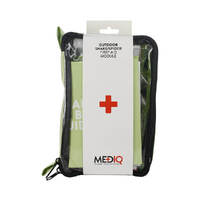
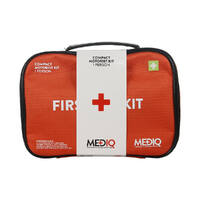
Compact personal kits fit in a glove box, tool bag, or backpack. They cover one or two people in a remote work situation: a service tech on a regional job, an electrician on a roof, or a homeowner on a road trip. Their advantage is that they actually travel with the user instead of being left behind.
Larger workplace kits cover multiple people across multiple incident types. A wall-mounted cabinet can hold 250 or more individual items, including burn dressings, eye irrigation, splints, and trauma supplies. The cabinet itself acts as a clearly marked landmark on the site.
Multiple kits are required when a site is large, when work happens in spread-out locations, or when one kit cannot reach an incident in a reasonable time. Safe Work Australia guidance suggests that first aid equipment should be reachable within a few minutes from any work area. On a sprawling site, one central kit is not enough.
Cost scales with size and content depth. A small ute kit may run under fifty dollars; a fully stocked workplace cabinet can cost several hundred. The right answer is not always the cheapest or the most expensive. It is the kit that matches the assessed risk of the site.
| Kit Type | Typical Items | Best For |
|---|---|---|
| Compact personal | 20 to 50 | Vehicle, home, single user |
| Workplace medium | 100 to 150 | Small workshop, low-risk site, 5 to 15 staff |
| Workplace large | 200 to 280 | Construction site, factory, 15 to 50 staff |
| Industrial cabinet | 250 plus | Multi-trade site, high-risk environment |
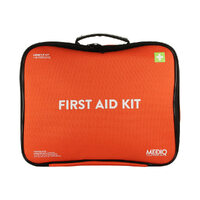
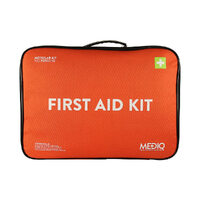
Portable kits suit mobile work, vehicle storage, and any situation where the kit needs to come to the patient. They are sealed, weather-resistant, and built to handle being thrown in and out of a service van for years. For electricians working across multiple sites in a week, a portable kit per vehicle is the standard.
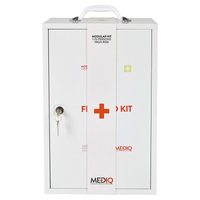
Fixed wall-mounted kits suit fixed worksites with a known layout. The cabinet is visible, sign-posted, and always in the same place. Workers know where to go without thinking. Wall-mounted cabinets also tend to hold larger contents lists than portable kits, which makes them better suited to higher-risk environments.
Response time is the deciding factor. If a wall-mounted cabinet is more than three minutes away from a typical work point, it is too far. Either move the cabinet, install a second cabinet, or provide portable kits at remote work points.
Environment dictates the format. A switchboard workshop with five fixed work benches needs one wall-mounted cabinet. A construction site spread across two acres needs multiple cabinets and additional portable kits in each work zone.
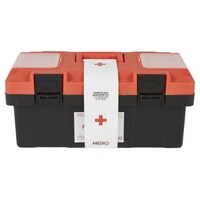
The case protects the contents. A flimsy case fails after a few months of being thrown into a van or knocked off a shelf. Look for kits in hard plastic cases, reinforced soft bags, or steel wall cabinets. The case should also be water-resistant or sealed to keep dressings sterile.
Quality kits group items by treatment type and label each compartment clearly. A worker under stress should not have to dig through unlabelled pouches looking for a burn dressing. Modular cabinets with labelled drawers are the gold standard for fixed workplace kits.
Consumable quality varies between brands. Cheaper kits often include thin, low-tack plasters and undersized dressings. Trade-grade kits include conforming bandages, sterile non-adherent dressings, and quality nitrile gloves. The price difference reflects the quality of what is inside the box.
Established Australian brands like Trafalgar design kits to meet Safe Work Australia first aid guidance. Buying from recognised brands reduces the risk of getting non-compliant or substandard contents.
Supplies grouped by treatment type are faster to find under pressure. Wound care goes together. Burn treatment goes together. Eye care goes together. PPE (gloves and masks) sits at the top of the kit so it is the first thing reached during an incident.
Labels should be in plain English, large enough to read quickly, and visible without removing the contents. Modular kits use coloured pouches or printed labels to make this easy. A first responder should be able to find the right item in seconds, not minutes.
Most quality kits include a basic first aid instruction card. The card covers CPR steps, recovery position, bleeding control, and burn treatment. The card is for non-expert responders and acts as a memory aid in a stressful situation.
Most workplace incidents are dealt with by colleagues, not by trained first aiders. The kit must support a non-expert user. That means clear labels, an instruction card, and a layout that does not require prior knowledge to navigate.
Consumables expire. Antiseptic wipes dry out, hydrogel sachets degrade, and adhesive on plasters loses tack. Inspect the kit at least every six months and replace anything past its expiry date. A first aid kit full of expired supplies is worse than no kit at all because it gives a false sense of preparedness.
Restock used items the same day. A common failure pattern is using a dressing on a small cut, intending to restock it later, then forgetting. The next user finds an empty slot when the next emergency hits. Keep a running checklist taped inside the lid and tick off restocks as they happen.
Workplaces should run scheduled first aid inspections quarterly at minimum. The inspection covers expiry dates, restock status, kit condition, and access. Document the inspection so there is a record for compliance audits.
High-use sites need more frequent inspections. A construction site cabinet that gets opened weekly needs a monthly check. A van kit that has not been opened in six months still needs a six-monthly check because dressings degrade in heat regardless of use.
Australian workplace health and safety law requires every workplace to provide first aid equipment, facilities, and trained personnel. The specific requirements depend on the size of the workplace, the nature of the work, and the assessed risk level. The model WHS Regulations and the Safe Work Australia first aid Code of Practice are the primary references.
Low-risk workplaces (offices, retail) need a basic kit, an appointed first aider for sites of 25 or more, and clear signage. High-risk workplaces (construction, manufacturing, electrical) need expanded kits, multiple trained first aiders, and additional equipment such as eye wash stations and AEDs depending on the risk assessment.
Employers are legally responsible for providing and maintaining first aid equipment. Workers are responsible for knowing where the kit is, knowing how to access it, and reporting injuries and used supplies. Both sides need to play their part for the system to work.
First aid kits sit within the broader site safety system, which includes risk assessments, safe work method statements, and emergency response plans. The kit is a tool. The plan is what tells you when and how to use it. Workplaces with a documented emergency response plan respond better than those without.
Electricians face cut, burn, and electric shock risks daily. A vehicle first aid kit covers immediate response on a mobile job. For live work, a kit alongside lockout equipment and a low voltage rescue kit gives a complete safety setup.
Construction sites combine multiple trade hazards in one location: falls, cuts, eye injuries, crush injuries, and electrical incidents. The first aid setup needs to be sized for the workforce and stocked for the worst likely injury, not the most common one.
Workshops have predictable hazards: cuts from sharp tools, burns from welding or soldering, and eye injuries from grinding or chipping. A wall-mounted workshop cabinet with eye irrigation, burn dressings, and a CPR mask covers the standard incident profile.
Remote work magnifies the importance of a stocked vehicle kit. A worker thirty minutes from the nearest hospital needs supplies that can stabilise a serious injury for the duration of the drive. Vehicle kits for remote work should include trauma dressings, snake bite bandages, and a thermal blanket.
Budget kits cover the basics for low-risk environments where the kit is a backup, not a primary safety tool. Premium kits use better consumables, more durable cases, and broader content lists. For trade and worksite use, the premium tier almost always returns its cost in reliability and longer service life.
Bulk buying makes sense for any workplace with multiple sites, multiple vehicles, or staged restocking needs. Standardising on one kit specification across the business simplifies training, simplifies restocking, and reduces the chance of someone reaching for the wrong item.
Pre-stocked kits save the buyer from interpreting the standards. Custom kits suit workplaces with unusual hazards: chemical handling, remote sites, or specialised trade work. For most electrical and trade applications, a pre-stocked kit configured for the site type is the faster, cheaper choice.
Restocking is the largest ongoing cost of a first aid programme. Consumables expire on a two to three year cycle even if the kit is never opened. Plan for restocking in the safety budget so it is not skipped when budgets tighten.
The kit is only as useful as the person using it. Workplaces should have at least one trained first aider on shift at all times, with refresher training every three years. Provide CPR training every year. The kit and the trained responder work together.
Every worker should know where every first aid kit is, before an emergency happens. Cover this in site induction. Mark kit locations with the standard green and white first aid sign. Re-orient new staff and contractors as part of their site walkthrough.
Workplaces should normalise reporting and treating minor injuries. If workers feel discouraged from reporting, small injuries become big ones, and the safety culture degrades. A well-stocked kit and a no-blame reporting policy support fast response behaviour.
The first aid kit is one component of the site emergency plan. The plan covers who responds, who calls 000, who meets the ambulance at the gate, and who handles communications. Without a plan, even a perfect kit produces a chaotic response.
Electrical Incident Reminder: For electric shock victims, the first action is always to isolate power before touching the patient. Use lockout equipment to prevent re-energisation. Begin CPR if the patient is unresponsive and not breathing normally. Burns from electric shock often look minor on the surface but can be severe internally; always seek professional medical assessment.
Watch MEDIQ FAMKC | 5 Module First Aid Cabinet Wall Mount | 257 Pieces video
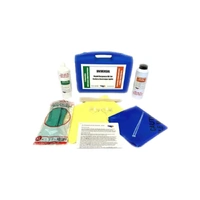
Watch Volt Safety LVR-KIT | Low Voltage Switchboard Rescue Kit video
Watch Volt Safety LOCKOUT-KIT-M | Electrical Contractor Lockout Tagout Kit | Medium video

Easy to mount, good quality bandages. Perfect for in your shed and cheaper then going to bunnings.
This kit offers a great selection of components and comes with a spacious, well-designed bag. The bag includes convenient storage pockets for tags and other accessories, with ample room to accommodate additional items.
Easy company to deal with. Received the items fast and one of the clips was found missing a screw, no questions asked and they shipped a replacement immediately. Highly recommended.
Quality kits in stock • Fast Australia-wide delivery • Competitive trade pricing
Browse First Aid Kits → Get Expert Advice →Some contents, such as antiseptics and medications, have expiry dates and should be checked regularly.
Sparky Direct supplies first aid kits Australia-wide, offering reliable safety solutions with convenient delivery.
First aid kits are securely packaged and delivered via standard courier services.
Unused first aid kits are generally eligible for return according to the seller’s returns policy.
Warranty coverage varies by manufacturer and generally covers defects in the kit container.
First aid kits are available in various sizes to suit homes, vehicles, and workplaces.
Yes, readily available first aid equipment is an important part of workplace safety planning.
Yes, refill packs are available to restock used or expired items.
Many kits are designed with durable cases suitable for outdoor environments.
They should be stored in a clean, dry, and easily accessible location.
Yes, first aid kits are suitable for use by all workers when needed.
Yes, compact first aid kits are commonly kept in vehicles for emergencies.
Yes, first aid kits are suitable for home use to manage everyday injuries.
Yes, they are designed for straightforward use, even by people with basic first aid knowledge.
First aid kits should be checked regularly to ensure contents are complete and in date.
A first aid kit allows quick response to injuries, helping reduce severity and support recovery.
It's best to avoid using expired supplies, as their effectiveness may be compromised. Regularly check and replace expired items.
Most kits include basic first aid instructions or guides for emergency reference.
Many first aid kits are designed to be portable for easy access in vehicles or on job sites.
Some kits can be customised or replenished to suit specific workplace risks.
Yes, first aid kits are essential on electrical work sites to support workplace health and safety requirements.
Workplaces are required to provide appropriate first aid equipment based on risk, size, and type of work.
Yes, first aid kits are available for workplaces, vehicles, homes, construction sites, and specific industries.
Many first aid kits are assembled to align with relevant Australian workplace first aid guidelines, depending on the intended use.
Common contents include bandages, dressings, adhesive strips, gloves, antiseptic wipes, scissors, and basic medical supplies.
A first aid kit is used to provide immediate treatment for minor injuries and medical emergencies until professional help is available.
Absolutely! Knowing how to properly administer first aid can significantly enhance the effectiveness of your First Aid Kit.
Yes, you can find specialised kits for activities like hiking, camping, boating, and more. These kits cater to the unique risks associated with each activity. For example: first aid passenger vehicle kit
While a First Aid Kit can provide initial care, it's not a substitute for professional medical attention. Seek medical help for serious injuries.
Inspect your kit every few months and replace items as needed to ensure it's always ready for use.
For outdoor adventures, consider adding insect repellent, sunscreen, blister treatment, and emergency signalling devices.