

Class 0
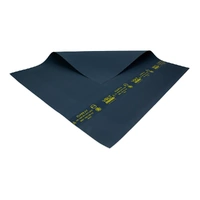
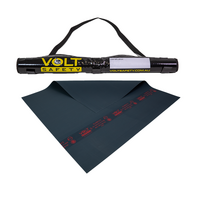
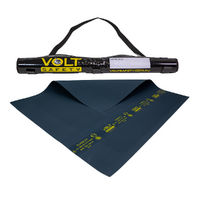
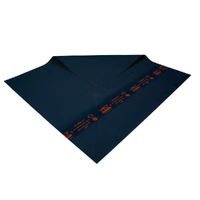
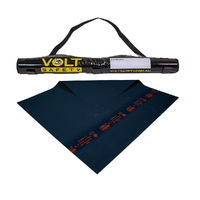
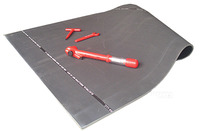
Volt Safety MAT-0 | Insulated Mat Class 0 1000V AS/NZS IEC 61111 | 1x1m
$144.36
$131.24 ex. GST
Search Results:
Search Results:
An insulated safety mat is a dielectric rubber sheet engineered to resist the passage of electrical current. The mat sits on the floor in front of switchboards, control panels, and high-voltage equipment. Workers stand on the mat while operating, inspecting, or testing live gear.
The mat acts as a barrier between the worker and the building's earth path. If a fault occurs and a person makes contact with a live part, the mat reduces the current that would otherwise flow through the body to ground.
Electric current needs a complete circuit. When a worker touches an energised conductor while standing on conductive flooring, the worker's body becomes part of that circuit. Current flows from the conductor, through the body, and into the earth.
An insulated mat breaks this loop. The high resistance of the rubber prevents current from passing between the worker's feet and the floor. The result is a much safer working position when full isolation is not possible.
Insulated mats are a secondary control. They do not replace isolation, lockout, or proper test-for-dead procedures. AS/NZS 3000 and WHS guidance both rank de-energisation as the primary control for electrical work.
Mats sit alongside insulated gloves, insulated tools, and approved test equipment in a layered defence-in-depth system. Each layer reduces residual risk when the main isolation control cannot be applied.
Insulated safety mats are sold through both general safety suppliers and specialist electrical wholesalers. Electrical wholesalers usually carry product ranges that match Australian site voltage requirements, with stock matched to the standards electricians work to every day.
Sparky Direct supplies trade-grade insulated safety mats alongside the broader PPE catalogue for switchboard and panel work.
A reliable supplier provides clear voltage class information, manufacturer certification, and full product specifications on every listing. Ask for the test certificate or compliance statement before placing a bulk order.
Look for suppliers that stock recognised brands such as Volt Safety, with a clear returns policy and Australia-based support.
Trade buyers value supply continuity. Stock availability matters when a switchboard upgrade or substation maintenance window cannot wait. Sparky Direct ships nationwide and supports trade accounts for repeat purchasing across multiple sites.
The key performance metric is dielectric strength: the maximum voltage the mat can withstand without electrical breakdown. A mat rated to 1000V will resist that voltage across its thickness without allowing current to pass.
Dielectric strength is measured in volts per millimetre. Manufacturers test mats at proof voltages well above the working voltage class, then certify the working class for site use.
Three voltage hazards exist around faulted equipment. Step voltage is the difference in potential between a worker's feet on the ground. Touch voltage is the potential between a hand on equipment and the feet on the ground. Transferred voltage reaches the worker through a conductive path from a remote source.
Insulated mats reduce all three by isolating the feet from earth potential. The worker becomes electrically separated from ground while standing on the mat.
Mats do not protect against arc flash thermal energy or pressure waves. Arc flash protection requires rated PPE such as flash suits, face shields, and hoods. The mat's role is electrical isolation only.
That said, an insulated mat is a useful element of the broader switchboard work plan. It supports safer body positioning during the live work that arc flash assessments are designed to control.
Insulated mats are graded into voltage classes that define the maximum working voltage. The international standard IEC 61111 sets the framework. The same class system applies to insulated gloves and other dielectric PPE.
| Class | Maximum AC Working Voltage | Typical Application |
|---|---|---|
| Class 0 | 1000 V | Low-voltage switchboards, residential and commercial panels |
| Class 1 | 7500 V | Light industrial distribution |
| Class 2 | 17,000 V | Industrial and utility distribution |
| Class 3 | 26,500 V | High-voltage switchgear |
| Class 4 | 36,000 V | Substation work, transmission |
Two voltage figures appear on mat documentation. Working voltage is the maximum voltage the mat is rated for in service. Proof voltage is the higher test voltage the mat is verified against during factory and routine testing.
For example, a Class 0 mat has a 1000 V working rating but is proof tested at around 5000 V. The gap provides a safety margin against transient over-voltages and minor degradation.
The selected class must equal or exceed the highest voltage present in the work area. A 415 V switchboard requires Class 0 or higher. An 11 kV substation requires Class 2 or higher.
Selecting a Class 0 mat for medium-voltage switchgear is a serious error. The mat will not provide the dielectric resistance required and will fail at site voltage. Always verify the highest expected voltage at the work location before specifying.
Most commercial and residential switchboards in Australia operate at 230/400 V three-phase. Class 0 insulated mats cover this range with comfortable margin. Class 0 is the baseline for site electricians working on standard distribution boards.
Utility distribution and industrial supply commonly run at 11 kV or 22 kV. Substation step-down transformers may handle 33 kV or above. These environments require Class 2, 3, or 4 mats depending on the highest exposed voltage.
HV work also requires matched-class insulated gloves and properly rated insulating sticks.
An underspec mat provides false assurance. It looks like protection but breaks down under load. The result can be electrical conduction at the moment a worker contacts a fault, defeating the purpose of standing on the mat.
When in doubt, specify one class above the highest expected voltage. The cost difference is minor compared with the consequences of a failure.
Insulated mats are made from natural rubber or synthetic compounds. Natural rubber offers excellent dielectric properties and flexibility. It can degrade in oily or chemically aggressive environments.
EPDM resists ozone, UV, and weathering, making it suitable for outdoor and substation use. Neoprene offers strong oil and chemical resistance, useful in industrial plant rooms.
Site conditions affect mat life. Switchrooms with oil or solvent exposure call for synthetic compounds. Outdoor substations exposed to sunlight benefit from UV-stabilised EPDM. Indoor commercial applications are usually fine with natural rubber.
Manufacturer datasheets list the chemicals each compound resists. Match the material to the site environment before bulk ordering.
Thicker mats provide higher dielectric strength but are heavier and harder to handle. Class 0 mats are typically 3 mm thick. Class 4 mats can exceed 6 mm.
Thickness alone is not the rating. The voltage class on the manufacturer's certification is the authoritative figure. Two mats of the same thickness can carry different class ratings depending on the rubber compound.
Top surfaces are textured for grip. Common patterns include parallel ribbing and diamond embossing. Both improve traction in dry and damp conditions. The pattern does not affect dielectric performance.
Switchrooms and plant areas often have smooth concrete or polished floors. A textured insulated mat improves footing while a worker focuses on switchboard tasks. Slip resistance is part of the mat's safety contribution alongside electrical insulation.
Some manufacturers use colour coding to distinguish voltage classes at a glance. The system varies by supplier. Always check the printed class marking on the mat itself, not the colour, before deploying it on site.
Insulated mats are sold as standard rolls, pre-cut sheets, or custom lengths. Common widths run from 600 mm to 1200 mm. Roll lengths typically reach 10 metres or more.
Pre-cut sheets suit single-position work areas. Rolled stock suits longer switchboard runs and substation walkways.
The mat must extend across the full working width of the switchboard, plus enough depth to ensure the worker's feet stay on the mat during normal movement. A general guide is the full width of the equipment plus 600 mm on each side.
Where multiple mats join, overlap the edges. Gaps between mats create conductive paths to the floor and defeat the protection. A 100 mm overlap is a common practical minimum.
IEC 61111 is the international standard that defines insulating matting for live working. It sets the class system, the proof voltage tests, and the material properties. Australian product certification typically references IEC 61111 directly, since Australia does not publish a separate equivalent for matting.
AS/NZS 3000:2018 (the Wiring Rules) provides the broader framework for safe electrical installation work and references the use of insulating barriers and PPE.
Work Health and Safety legislation places a duty on employers to provide and maintain safe systems of work. Where live work cannot be avoided, suitable insulated PPE and matting form part of that duty. State-based electrical safety acts add further obligations specific to electrical workers.
Each mat should arrive with manufacturer certification listing the voltage class, the proof test result, and the production batch. Keep this documentation on file for the life of the mat. Auditors and safety regulators may request it during incident investigation or routine review.
Inspect every mat before each use. Look for cuts, tears, embedded debris, swelling, and surface contamination. Any visible damage takes the mat out of service immediately.
The inspection takes seconds and is the single most effective check on mat condition.
In addition to visual checks, mats should be electrically tested at intervals defined by the manufacturer and the site safety system. A common interval is annual dielectric testing at a NATA-accredited facility. Some site standards call for six-month intervals on high-use mats.
The test applies the proof voltage across the mat and measures leakage current. A pass result is recorded against the mat's serial number or batch tag.
Mats showing any of the following must be removed and either repaired by an approved agent or destroyed. Disqualifying conditions include cuts deeper than 1 mm, embedded metal particles, oil saturation, evidence of arcing, or test failure. Marking damaged mats with a clear "out of service" tag prevents accidental reuse.
The mat must cover the full footprint where the worker stands during the task. For switchboard operation, this includes the open swing of switchboard doors and the reach distance to the equipment. A worker who steps backward off the mat to access another tool loses protection.
Curled edges create trip hazards and break electrical isolation at the foot position. Lay mats flat. Use bevelled edge mats in high-traffic areas. If a mat will not lie flat after unrolling, leave it weighted overnight before use.
The floor under the mat should be clean, dry, and free of sharp debris. Sharp objects beneath the mat can damage the rubber over time and reduce dielectric strength. Sweep the area before placing the mat.
Site reminder: Insulated mats are part of a layered safety system. They do not replace lockout, isolation, or test-for-dead procedures. Always follow the site Safe Work Method Statement and AS/NZS 3000 requirements.
Clean mats with mild soap and water. Avoid solvents, petroleum products, and strong detergents. These can degrade the rubber and reduce dielectric performance. Allow mats to air dry completely before returning to service.
Oil, grease, and metallic dust all reduce insulation performance. Keep mats away from contamination sources where possible. If a mat is exposed to oil, take it out of service and consult the manufacturer's cleaning guidance.
Store mats rolled with the textured side outward, in a dry environment between 10 and 30 degrees Celsius. Avoid direct sunlight, which accelerates rubber degradation. Mats should not be folded for storage; folding creates permanent stress lines that can develop into cracks.
Dielectric strength is the headline performance figure, and it determines the voltage class. Reliable mats hold their rated dielectric strength across the recommended service life when properly stored and inspected.
Industrial environments place stress on mats from foot traffic, equipment movement, and chemical exposure. Quality compounds resist abrasion, tearing, and compression set. Lower-grade mats degrade quickly under heavy use.
Heavier mats are harder to deploy and roll up. Class 0 mats at 3 mm thickness handle easily. Class 4 mats at 6 mm or more need two people for safe handling on site.
Buy from suppliers that publish manufacturer certification with the product. A certified Volt Safety mat with documented test results is more trustworthy than an unbranded import without paperwork.
The most dangerous error is using a low-class mat in a higher-voltage environment. The mat fails to insulate at site voltage and the worker is exposed to the hazard the mat was supposed to control.
A mat that does not cover the full work zone leaves blind spots. Workers stepping off the mat to reach a tool or to brace against a panel lose their protection at that moment.
Skipping pre-use inspection means small defects grow into failures. Skipping annual testing means dielectric degradation goes unnoticed until a fault event reveals it.
Some workers treat the mat as an alternative to isolation. It is not. The mat is a backup against the consequences of unexpected energisation, not a substitute for proving the equipment is dead.
Insulated mats and insulated gloves form a paired protection system. Class 0 mats pair with Class 0 gloves for low-voltage work. Higher-class mats pair with the matching glove class. Mixing classes provides only the lower level of protection.
LOTO procedures isolate equipment before work starts. Lockout kits and tags physically prevent re-energisation. Mats, gloves, and insulated tools provide the residual protection during the brief windows when isolation is not yet confirmed or has temporarily lapsed.
No single control is sufficient on its own. Defence-in-depth combines isolation, PPE, insulated tools, mats, training, and procedure. Each layer reduces the probability and severity of an electrical incident. Insulated mats are one layer in this system.
Site electricians working on commercial and residential boards typically need Class 0 mats. A pre-cut sheet at the work position handles most jobs. Keep one in the van for switchboard call-outs.
Network technicians need higher-class mats matched to the equipment voltage. Substation work frequently calls for Class 2 or above. Mats should be paired with matched insulated gloves and operating sticks.
Industrial sites with mixed voltages benefit from a small inventory of mats covering the relevant classes. Storing them by class with clear labelling avoids selection errors at the work front.
Larger sites often standardise on one mat brand and class to simplify training, inspection, and recertification. Bulk procurement through a single wholesaler also keeps documentation consistent across batches.
Uncertified imports are often cheaper but may carry no documented voltage rating. The risk of using an untested mat in a critical safety role is not worth the saving. Specify mats with manufacturer certification and recognised compliance markings.
Annual dielectric testing has a cost per mat. Building this cost into the asset lifecycle helps with budgeting. A typical mat will pass several years of testing before needing replacement, provided it is stored and handled correctly.
The real measure of value is incident avoidance. The cost of one electrical injury, in human and regulatory terms, dwarfs the lifetime cost of certified mats and the testing program around them.
Watch Volt Safety LVR-KIT | Low Voltage Switchboard Rescue Kit video
Watch Klein Tools 32288 | 8-in-1 Interchangeable Insulated Screwdriver Set | 1000V video
Watch Klein Tools 32317-INS | 6-Piece Insulated Screwdriver Set (Orange and Graphite) video

This kit offers a great selection of components and comes with a spacious, well-designed bag. The bag includes convenient storage pockets for tags and other accessories, with ample room to accommodate additional items.
Easy company to deal with. Received the items fast and one of the clips was found missing a screw, no questions asked and they shipped a replacement immediately. Highly recommended.
Great value gloves. Exactly what I needed at a great price and speedy delivery! Having used insulated gloves a lot in my career, I can recognise value! Cheers and thanks!
Quality products in stock • Fast Australia-wide delivery • Competitive trade pricing
Browse Insulated Safety Mats → Get Expert Advice →Choice depends on the environment, type of hazard, and level of protection required.
Sparky Direct supplies safety mats Australia-wide, offering reliable matting solutions with convenient delivery.
Safety mats are packaged securely and delivered via standard courier services.
Unused safety mats are generally eligible for return according to the seller’s returns policy.
Warranty coverage varies by manufacturer and typically covers defects in materials or workmanship.
Safety mats are available in various sizes and thicknesses to suit different applications.
They require minimal maintenance beyond regular cleaning and inspection.
Certain mats are designed for wet or damp environments, and suitability should be checked.
With regular use, mats can wear and should be replaced if damaged or worn.
Yes, safety mats are suitable for use by workers at all experience levels.
Some mats can be trimmed to fit specific areas, depending on the material.
Quality mats feature non-slip backing to help keep them in place.
Most safety mats are easy to clean with basic maintenance such as sweeping or wiping.
Safety mats are used to provide insulation, anti-slip protection, or fatigue reduction in workplaces and around equipment.
Yes, anti-fatigue mats are designed to reduce strain when standing for long periods.
They help reduce the risk of slips, fatigue, and electrical hazards, improving overall safety and comfort.
Certain safety mats, particularly electrical insulating mats, are tested and certified to safety standards.
Yes, safety mats are widely used in industrial, commercial, and workshop settings.
Yes, many safety mats are designed with textured surfaces to reduce slip hazards.
Some mats are suitable for both indoor and outdoor use, while others are designed specifically for indoor environments.
Electrical insulating mats may be voltage rated, and ratings should be confirmed in the product specifications.
Safety mats are commonly made from rubber, PVC, or composite materials designed for durability and grip.
Many safety mats are manufactured to meet relevant AS/NZS standards, depending on their intended use and classification.
Certain safety mats are designed for electrical environments to provide insulation when working near electrical equipment.
Common types include anti-fatigue mats, electrical insulating mats, anti-slip mats, and general-purpose floor mats.