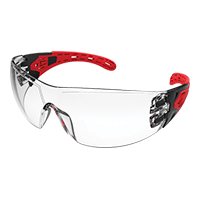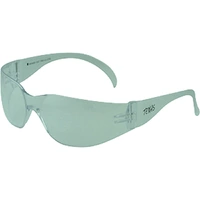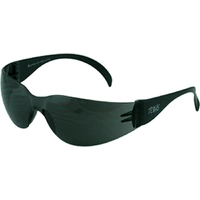

Search Results:
Search Results:
Search Results:
Search Results:
Safety glasses are occupational eyewear built to absorb and deflect impact, block particles, and shield the eyes from optical radiation. The lenses are made from polycarbonate or similar impact-resistant polymers, and the frames are designed to hold the lenses securely even under a direct hit. Ordinary prescription or fashion glasses do not offer this level of protection and are not a substitute.
Safe Work Australia data shows that most workplace eye injuries come from small particles, flying debris, or splashes during routine tasks. Almost all of these incidents are preventable with properly rated eyewear worn correctly. The gap between injury and no injury is usually a pair of glasses that cost less than a coffee.
Electricians, construction workers, and industrial tradespeople face several recurring eye hazards. These include metal swarf from drilling and grinding, concrete and masonry dust, insulation fibres, flying fasteners, splashed cleaning chemicals, arc flash from live work, and UV from welding. Each hazard calls for a specific level of impact, coverage, and lens filtering, which is why one pair rarely covers every task on site.
Both routes supply compliant eyewear, but electrical wholesalers tend to stock the brands and styles that match the rest of a sparky's kit. Buying PPE through the same supplier as your hand tools and test gear keeps ordering simple and delivery consolidated.
A reliable supplier lists AS/NZS 1337.1 certification clearly, publishes product markings and datasheets, carries recognised brands, and ships quickly. Check that returns are straightforward and that the supplier carries replacement parts and full ranges, not just single SKUs.
Sites and workshops usually need multiple pairs on hand. Bulk packs reduce the per-unit cost and mean a replacement is always within reach when a pair gets scratched or misplaced. Sparky Direct ships Australia-wide and offers trade pricing on volume orders.
Selecting safety glasses without identifying the hazard is guesswork. A site risk assessment should list every expected hazard per task, then match eyewear to the highest rating required. The glasses chosen for grinding are not the glasses chosen for chemical decanting.
AS/NZS 1337.1 is the core Australian and New Zealand standard for personal eye protection in occupational use. It covers impact resistance, optical quality, lens markings, frame construction, and the test methods used to verify each requirement. Any safety glasses sold for industrial use in Australia should carry clear markings that tie back to this standard.
Compliant lenses are marked with the manufacturer identifier, the standard number, the optical class, and the impact rating. If markings are missing or unreadable, the eyewear should not be used on a job site. These markings are your proof that the product has been tested.
Class 1 lenses are suitable for continuous wear and have the tightest optical tolerances. Class 2 lenses are suitable for intermittent wear. For most electrical and construction work where glasses are worn most of the day, Class 1 is the sensible choice to reduce eye strain and headaches.
AS/NZS 1337.1 defines three impact levels. Low impact covers general dust and particles. Medium impact covers most trade applications including drilling and grinding. High impact is required where the risk of projectile injury is severe, such as powder-actuated tools or heavy grinding. Choose one rating above your minimum hazard level to build in a margin.
| Impact Rating | Typical Test | Suited For |
|---|---|---|
| Low Impact (F) | 45 m/s projectile | Dust, light debris, office or lab use |
| Medium Impact (B) | 120 m/s projectile | Drilling, grinding, general trade work |
| High Impact (A) | 190 m/s projectile | Powder-actuated tools, heavy grinding, demolition |
Wraparound frames curve around the temples to block debris entering from the side. They are the default choice for most electrical and construction tasks because they combine good peripheral coverage with the comfort and ventilation of conventional glasses.
OTG safety glasses are sized to fit over standard prescription glasses. They are a fast and low-cost option for workers who only need occasional protection. For regular daily wear, dedicated prescription safety glasses are a better long-term solution.
Goggles seal against the face and are the correct choice for dust, chemicals, and high-splash environments. Safety glasses are lighter, more ventilated, and suited to impact hazards where a full seal is not needed. Safety goggles and glasses are complementary, not interchangeable.
Welding requires shaded lenses or filters rated for the specific process. Arc flash work requires eyewear rated for arc flash energy, usually in combination with a face shield. General safety glasses alone are not adequate for either application.
Clear lenses are the default for indoor work and general trade use. Clear safety glasses pair well with most indoor lighting and do not alter colour perception. Smoke-tinted lenses cut glare for outdoor work. Polarised lenses reduce glare from reflective surfaces like metal roofing, water, and glass, and are useful for rooftop solar work.
Anti-fog coatings keep lenses clear in humid conditions, temperature swings, or when the wearer is sweating. Anti-scratch coatings extend lens life in dusty, abrasive environments. A lens with both coatings is the practical choice for most site work.
Most quality safety lenses block 99 to 100 percent of UVA and UVB. For outdoor work in Australia this is non-negotiable. Tinted or mirrored lenses reduce glare and eye fatigue during long days outside.
Indoor work typically calls for clear lenses. Outdoor work in bright sun calls for smoke or mirrored lenses. Work moving between indoors and outdoors calls for two pairs, or an indoor/outdoor lens that offers light tinting without compromising indoor visibility.
Glasses and goggles are not interchangeable. The right choice depends on the task, hazard mix, and how long the worker stays in the exposure zone. Most well-equipped crews stock both and switch between them as the work changes.
| Feature | Safety Glasses | Safety Goggles |
|---|---|---|
| Seal around the eyes | Open frame, side gaps | Closed seal, side coverage |
| Dust and fine particles | Limited protection | Better protection |
| Liquid splash | Not recommended | Better protection (sealed designs) |
| Weight and airflow | Lighter, more airflow | Heavier, less airflow |
| Typical use | General impact, inspections, drier tasks | Dusty, splash, grinding-adjacent work |
| Comfort for short tasks | Easier to wear intermittently | Heavier on the face |
Safety glasses rest on the nose and ears like conventional eyewear, leaving gaps at the top, sides, and bottom. Goggles seal against the face and block particles and liquids from reaching the eye through those gaps. The trade-off is comfort, ventilation, and speed of use.
Goggles are required whenever the hazard includes fine dust, chemical splash, or any risk of liquid contact with the eye. Tasks like pouring chemicals, grinding in confined spaces, or working in blowing dust call for goggles, not glasses.
Glasses are lighter and ventilated, which makes them more comfortable for long shifts. Goggles seal out particles but can fog without indirect ventilation and anti-fog coatings. Choose goggles where the hazard demands them and accept the comfort trade-off.
Under WHS regulations the employer must provide PPE suited to the identified risk. A risk-based selection process documents the hazard, the required rating, and the chosen product. Defaulting to glasses for every task is not compliant when the hazard calls for goggles.
Start with the hazard, not the product. List every hazard per task, then select eyewear that meets or exceeds the required impact, coverage, and lens filtering. When a task has multiple hazards, the highest rating governs the selection.
Indoor electrical work typically needs clear, medium-impact, wraparound glasses with anti-fog coating. Outdoor construction needs tinted lenses with UV protection. Welding needs shaded filters matched to the process. Arc flash work needs arc-rated eye protection paired with a face shield.
Safety glasses must work alongside hard hats, ear protection, respirators, and hi-vis clothing. Check that temple arms clear earmuff cups and that the frame does not break the seal on a respirator. The whole PPE kit should be tested together before a shift.
Common mistakes include buying on price alone, ignoring the impact rating, choosing tinted lenses for indoor use, and skipping anti-fog coating in humid conditions. The right pair matches the hazard, fits the wearer, and stays clear enough to be worn all day.
Electricians need medium-impact, Class 1, wraparound glasses with clear lenses for indoor switchboard and wiring work. For live work or any task with arc flash risk, upgrade to arc-rated eyewear and a face shield. Pair eyewear with insulated gloves and the rest of the arc flash kit.
Construction calls for high-impact glasses with anti-scratch coating to handle dust, masonry chips, and flying fasteners. Outdoor sites need UV protection and, in summer, smoke or mirrored lenses. Coordinate eyewear with hard hats and knee pads as part of the full site PPE kit.
Workshop environments vary widely. Grinding and cutting benches call for high-impact glasses or a face shield over glasses. Assembly work usually calls for medium-impact wraparounds. Chemical handling calls for goggles. A workshop should stock multiple types to match the task.
Welding requires shaded lenses or auto-darkening filters rated for the process. General safety glasses do not filter welding radiation. For high-risk applications like arc flash, refer to the full arc flash kit range, which includes eye and face protection rated for the energy levels involved.
Eyewear that does not fit gets left on the ute dashboard, not worn on the job. A good fit keeps the lens positioned correctly, stops particles entering from the sides, and prevents slipping during overhead or kneeling work. Fit is not a luxury, it is what makes PPE actually work.
Adjustable temple arms let the wearer dial in the right angle and length. Soft, flexible nose pads distribute pressure and keep the glasses in place during long shifts. These features are standard on most trade-grade eyewear and worth the small price difference over budget units.
Lightweight frames, padded temples, and good ventilation make all-day wear bearable. A pair that works for 30 minutes but triggers headaches after three hours is the wrong pair. Try different styles to find what suits your face shape and work patterns.
Anti-fog coatings, indirect ventilation, and proper fit all reduce fogging. For very humid environments, add an anti-fog spray as a top-up. Rubber temple tips and adjustable straps prevent slippage during active work.
Impact resistance comes from lens material and frame design working together. Polycarbonate is the standard lens material because it resists impact without shattering. The frame must also hold the lens under impact, which is where budget units often fail.
Class 1 optical quality means minimal distortion across the lens. Poor optical quality causes eye strain, headaches, and reduced depth perception, all of which matter when you are working at height or around live equipment.
Coatings wear off. A quality anti-scratch coating lasts months in normal use. Cheap coatings flake or degrade within weeks, leaving the lens vulnerable. Look for brands that publish coating performance data.
Recognised brands like 3M, Maxisafe, MMS Safety, Pro Choice, PIP, and Volt Safety maintain consistent certification and quality control across batches. Generic unbranded eyewear often lacks traceable testing and should be avoided for site use.
Under the model WHS Regulations, employers must eliminate risks to eyes where practicable, and provide compliant PPE where risks remain. This means supplying AS/NZS 1337.1 rated eyewear, training workers in its use, and replacing damaged units promptly.
A documented risk assessment identifies eye hazards per task, rates the severity, and specifies the PPE required. This document should be reviewed when new equipment, processes, or chemicals are introduced. PPE is the last line of defence, not the first.
Workers must be trained in how to select, fit, clean, and replace their safety glasses. Training should cover the limitations of the eyewear and the tasks where a higher rating or goggles are required. Compliance is not just owning the glasses, it is using them correctly.
Supplying PPE, recording its issue, training workers, and monitoring use all form part of the employer's duty of care. Documentation protects both the worker and the business in the event of an incident or audit.
Compliance Reminder: AS/NZS 1337.1 is the Australian standard for occupational eye protection. Always verify markings on the lens and frame. Unmarked or uncertified eyewear should not be worn on a regulated work site.
Clean lenses with warm water, a drop of mild soap, and a microfibre cloth. Avoid paper towels, tissues, or the corner of a shirt, all of which scratch the coating. Do not use solvents or alcohol wipes unless the manufacturer states they are safe.
Store glasses in a hard case when not in use. Leaving them loose in a tool bag or ute console is the fastest way to scratch or warp them. A case in the truck and one at the workshop covers most situations.
Replace when lenses are scratched to the point of impairing vision, when frames are cracked or bent, when coatings are flaking, or when the glasses have taken a direct hit. Damaged PPE does not meet the certified rating, even if it looks mostly intact.
On larger sites, a simple weekly inspection picks up damage early and keeps stock rotating. Log replacements against the PPE register. On smaller jobs, a personal check before each task is enough.
Budget safety glasses are fine for short-term use, visitors, or as spares. Premium glasses justify the extra cost with better optical quality, longer-lasting coatings, and more comfortable all-day wear. For daily use, premium is the cheaper choice over the year.
Multi-packs of safety glasses reduce the per-unit price and mean a backup is always to hand. Keep at least one spare pair per worker on site, plus visitor pairs at the gate. Lost or damaged PPE is a fact of site life, not a failure of management.
Total cost of ownership includes the purchase price, replacement frequency, lost productivity from bad fit or fogging, and the cost of any eye injury. Cheap glasses that get replaced monthly can easily cost more than a premium pair that lasts a year.
Certified eyewear from established brands holds up longer, performs to rating, and comes with documented testing. That documentation matters during audits and incident investigations, and the extra few dollars per pair is the cheapest insurance on site.
Watch Maxisafe EBR331 | Eye Protection - Texas Smoke Safety Glasses video
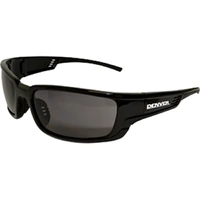
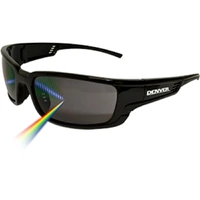
Watch Maxisafe EDE307 | Eye Protection - Denver Smoke Lens Safety Glasses | Black Frame video
Watch Volt Safety GLOVE0-KIT-10 | Class 0 Insulated Glove KIT 1000v IEC 360mm ASTM [Size: 10] video

Awesome range of specialized electrical items on their catalogue. Rare find these days and a reasonable price for items purchased.
Sparkie direct were a great online buying option with quick turn around for delivery and I will most definitely us again
Ordered to replace an unusable kit at work, quick and easy ordering, great price and prompt shipping too.
Quality products in stock • Fast Australia-wide delivery • Competitive trade pricing
Browse Safety Glasses → Get Expert Advice →Yes, they are designed to be compatible with helmets, hearing protection, and face masks.
Sparky Direct supplies safety glasses Australia-wide, offering reliable eye protection solutions with convenient delivery.
Safety glasses are lightweight and delivered via standard courier services.
Unused safety glasses are generally eligible for return according to the seller’s returns policy.
Warranty coverage varies by manufacturer and typically covers defects in materials or workmanship.
Safety glasses are available individually and in multi-pack options.
Minimal maintenance is required beyond regular cleaning and inspection for damage.
Lifespan depends on usage and care, and they should be replaced if damaged.
They can be cleaned with a soft cloth and appropriate lens cleaner.
When correctly selected, safety glasses should provide clear vision without distortion.
Yes, safety glasses are suitable for DIY tasks such as drilling, cutting, or sanding.
Clear lenses are better indoors, while tinted lenses are suited to bright outdoor conditions.
Scratch resistance varies by lens type, and some glasses include scratch-resistant coatings.
Safety glasses are used to protect eyes from hazards such as dust, debris, sparks, splashes, and impact during work tasks.
Quality safety glasses are designed with lightweight materials and ergonomic shapes for extended wear.
They help reduce the risk of eye injuries caused by debris, tools, or unexpected hazards.
Yes, prescription safety glasses are available to combine vision correction with eye protection.
Some safety glasses are available in different sizes or adjustable designs to suit various face shapes.
Safety glasses are commonly used to protect eyes during electrical work, which must be carried out by a licensed electrician.
Many safety glasses feature anti-fog coatings to maintain visibility in humid or active conditions.
Some safety glasses include UV protection, which should be confirmed in the product specifications.
Yes, safety glasses are widely used in construction, electrical, manufacturing, and workshop environments.
Yes, safety glasses are designed to resist impact and protect against flying particles when used as intended.
Common types include clear lens glasses, tinted lenses, wraparound styles, and prescription safety glasses.
Many safety glasses are tested and certified to relevant AS/NZS eye protection standards, depending on the product.