


CT Clamp
Ohme EP0-07AU-WI-BLSTD-01 | ePod 7.4kW EV Charger Type 1 & 2 Vehicles | Untethered
$1,199.00
$1,090.00 ex. GST
Search Results:
Search Results:
Ohme is a UK-developed brand of smart home EV chargers designed for households that want to charge an electric vehicle overnight from a dedicated wall unit. The chargers deliver 7kW (single-phase, 32A), which is roughly five to six times faster than charging from a standard 10A power point. Both Ohme units sold by Sparky Direct use the Type 2 connector, the standard for new EVs sold in Australia.
Once installed and commissioned by a licensed electrician, the charger connects to your home network and the Ohme app. You plug the EV in when you arrive home, set a target charge level and a "ready by" time, and the charger schedules the session around your tariff windows. If you have a time-of-use or EV-specific tariff, the unit waits for the cheap window and only draws power then. If you have solar, it can be configured to top up from excess PV instead of grid power.
"Smart" in this context means three things: the charger talks to your electricity tariff, it talks to your phone, and it can be supervised remotely. Practical features include cost-per-session tracking, schedule overrides, charge-rate limiting (useful on weak supplies), and over-the-air firmware updates. These features are what separate a smart Level 2 charger from a basic plug-and-go unit.
Peak retail electricity in most Australian states sits well above off-peak and shoulder rates. Plugging an EV in at 6pm and letting it charge through the evening peak is the most expensive way to refuel an electric car. A "dumb" charger or a 10A socket has no way to wait for cheaper power.
Ohme reads your tariff schedule and shifts the bulk of each charging session into the off-peak window, typically overnight. On flat-rate plans without time-of-use pricing the savings are smaller, but on EV plans and time-of-use tariffs the difference between scheduled and unscheduled charging can be substantial over a year of driving.
Smart charging pays back fastest for households on a time-of-use or EV-specific retail plan, households with rooftop solar, and high-mileage drivers who put 200km or more into the car each week. For occasional drivers on a flat tariff the dollar savings shrink, but the convenience of scheduled charging and per-session cost tracking still applies.
Sparky Direct stocks two Ohme models. Both are 7kW single-phase units with the Type 2 connector and both work with the same app. The differences sit in the cable, the connectivity, and the screen.
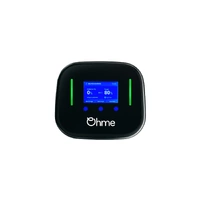
The Home Pro is the full-feature option. The tethered cable means the connector is always with the unit and ready to plug in. The built-in display shows charge state, scheduled session times, and live kW draw without needing the phone. The 4G modem keeps the charger connected to the Ohme cloud independently of household Wi-Fi, which matters for tariff syncing and remote troubleshooting.
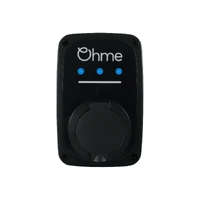
The ePod strips the form factor down. It uses your own Type 2 cable, runs over Wi-Fi, and relies on the app for status. The smaller footprint suits tight wall spaces and apartment carparks. All scheduling, solar integration, and tariff syncing features remain available.
| Feature | Ohme Home Pro | Ohme ePod |
|---|---|---|
| Cable | Tethered (attached) | Untethered (BYO Type 2) |
| Display | Built-in screen | App-only |
| Connectivity | 4G (no Wi-Fi needed) | Wi-Fi |
| Charge rate | 7kW single-phase | 7kW single-phase |
| Best for | Daily drivers, weak Wi-Fi sites | Strong Wi-Fi, multi-vehicle households |
Level 1 charging means a standard 10A wall plug, which adds roughly 10km to 15km of range per hour. Level 2 means a hard-wired 32A circuit and a dedicated wall charger, which adds around 40km of range per hour at 7kW. For most Australian commute patterns, Level 2 is the difference between needing to plan charging and simply plugging in overnight.
A 7kW charger delivers up to 7 kilowatts per hour to the vehicle, but real-world rates vary with battery temperature, state of charge, and the car's onboard charger. Most modern EVs accept the full 7kW from empty to about 80%, then taper. A typical 50kWh battery from 20% to 80% takes around four to five hours at 7kW.
The Type 2 connector on Ohme units fits every new EV sold in Australia, including Tesla Model 3, Model Y, Model S, and Model X delivered locally, plus BYD, Polestar, Hyundai, Kia, MG, Volvo, BMW, Mercedes, and others. No adapter is needed for Tesla in Australia because Australian-delivered Teslas already use the Type 2 inlet.
Dynamic tariff integration means the charger pulls your retailer's price schedule and aligns sessions with the cheapest periods. For static time-of-use plans this is straightforward. For wholesale-linked plans (Amber, for example, in supported regions) the charger can chase live prices and pause when wholesale spikes.
The Ohme app shows per-session kWh, dollar cost, and a running total. You can set a "ready by" time, a maximum charge level, and weekly recurring schedules. Notifications cover session start, completion, and faults.
The Home Pro uses 4G; the ePod uses Wi-Fi. The trade-off is reliability versus running cost. 4G keeps working when home Wi-Fi drops out and removes a setup variable. Wi-Fi avoids any future modem dependency and works fine where the signal is strong. Both deliver the same scheduling features.
Pairing an Ohme charger with rooftop solar inverters turns surplus generation into vehicle range. Instead of exporting unused PV at low feed-in rates, the charger diverts that energy into the EV.
Solar Boost mode reads net export from a compatible meter or inverter and ramps the charger up or down to match available surplus. If the house draws more (kettle on, aircon kicks in), the charger backs off. If the surplus grows, the charger draws more. The aim is zero grid import during the session.
Solar charging is cheapest when feed-in tariffs are low and the household exports more than it consumes during daylight. Off-peak grid charging wins when feed-in rates are still attractive or when the car returns home after sunset. Many households use both: solar top-ups on weekends, off-peak overnight on weekdays.
Solar Boost needs a compatible inverter or a current transformer (CT) clamp on the main switchboard, plus a network connection back to the Ohme app. Your installer will confirm compatibility based on your existing solar system. Compatible solar supplies and accessories are stocked separately.
An Ohme install is a fixed-wired Level 2 EV charger installation that must be completed by a licensed electrician in compliance with AS/NZS 3000:2018 and AS/NZS 3001.2:2022. The electrician will run a dedicated 32A circuit from the switchboard to the charger location, fit a Type B (or Type A with 6mA DC detection) RCD, commission the unit on the network, and issue a certificate of compliance.
A 7kW charger pulls 32A continuous on a single phase. Most Australian homes can support this on the existing supply, but some older properties with 60A or 80A main supply will need a load assessment. Items typically required at the switchboard include a dedicated breaker, a Type A RCD with DC detection (or a Type B RCD), and adequate main switches and isolators. The cable run is usually 6mm twin and earth cable for short to medium distances, sized up for long runs to manage voltage drop.
EV charging circuits in Australia are governed by AS/NZS 3001.2:2022. Critical requirements include dedicated circuit protection rated for the charger, a Type A RCD with 6mA DC residual detection (or Type B), and an accessible isolation point. A licensed electrician will confirm exact requirements for your installation.
Look for an electrician with EV charger installation experience, not just a general electrical licence. They should be familiar with AS/NZS 3001.2, comfortable commissioning networked equipment, and able to advise on supply capacity if a load test is needed. Ohme also publishes an approved installer list.
Ohme sits in the smart-charger category alongside Wallbox, Zappi, and Tesla Wall Connector. Each brand has different strengths.
Wallbox Pulsar Plus competes directly with the Ohme ePod on size and price. Ohme's edge is depth of tariff integration, especially with time-of-use plans. Wallbox tends to lead on power-sharing for multi-charger sites.
Zappi (Myenergi) is the established solar-diversion choice in Australia and pairs tightly with the Eddi hot water diverter. Ohme matches Zappi's solar integration on supported setups and adds stronger tariff-aware scheduling. Zappi tends to win where the household already runs the Myenergi ecosystem.
The Tesla Wall Connector is the simplest and often cheapest of the four to buy outright, but it lacks tariff scheduling and solar diversion as native features. Tesla owners who want native scheduling rely on the car's own Charge Schedule. Ohme adds scheduling at the charger level, which works the same way regardless of vehicle make.
For a first EV with a single driver and a fixed parking spot, the Ohme Home Pro is the simpler choice. The tethered cable means no extra purchase and no fumbling with a separate lead in the rain. The built-in display lets you confirm charge status without unlocking your phone.
For apartment carparks where Wi-Fi reaches the bay, the ePod is the more discreet option. Its smaller footprint suits shared structures and the BYO cable model means the cable can be stored inside the vehicle when not in use, lowering theft risk in shared parking.
Tethered (Home Pro) prioritises convenience and reduces the chance of forgetting a cable in the boot. Untethered (ePod) prioritises flexibility and lets you carry one cable between home, work, and public AC chargers. Households with two EVs of different connector orientations sometimes prefer untethered for that reason.
Ring your retailer or check your most recent bill for time-of-use windows and EV plan availability. The bigger the gap between peak and off-peak rates, the more value smart scheduling delivers. If you only have a single flat rate, check whether your retailer offers an EV tariff before installing.
Hardware pricing varies by retailer and current stock; check Sparky Direct's product pages for the latest Ohme prices. Installed cost depends on cable run distance, switchboard work needed, and any RCD upgrades.
Basic 7kW chargers without scheduling or solar features can be bought for less, but the savings disappear quickly on a time-of-use tariff. The break-even point for a smart charger over a basic one is usually under three years for a daily driver on an EV plan.
Total cost includes hardware, installation, electricity, and any switchboard upgrades. Running cost per 100km on off-peak power is typically a fraction of a petrol equivalent, and lower again on solar. Smart scheduling protects that gap from eroding through accidental peak charging.
Drivers covering 50km or more each day benefit most from a 7kW Level 2 unit. Overnight charging from near-empty to full sits comfortably inside an off-peak window, and the dollar gap between smart and basic charging compounds quickly with daily use.
Apartment installations need strata approval and often a sub-meter for billing. The ePod's compact footprint suits secure parking bays. Speak to your strata committee early; load management and metering are usually the sticking points.
Households with 6.6kW or larger PV systems get strong value from Ohme's Solar Boost mode. Daytime EV top-ups soak up surplus generation that would otherwise export at low feed-in rates.
If the budget is tight and the tariff is flat, a basic 7kW charger may be enough. If the tariff has time-of-use windows or you have rooftop solar, the Ohme will usually pay back the price difference within a few years.
The cost-saving case for Ohme rests on having a tariff with cheap off-peak windows or a wholesale-linked plan. On a flat single-rate tariff the dollar saving narrows considerably, although the scheduling and tracking features still apply.
The Home Pro relies on 4G coverage at the install location. Underground carparks and metal-clad sheds can attenuate signal. The ePod relies on Wi-Fi reaching the bay. If neither is reliable, scheduling can still run from the cached settings, but real-time tariff syncing and remote control will be limited.
Ohme does not currently offer load-sharing across multiple units in the same way some commercial-grade Wallbox setups do. Sites planning more than two chargers should compare options.
Warranty terms are set by Ohme and the importing distributor; check the current product page or paperwork supplied with the unit for the term that applies to your purchase. Support is provided through Ohme's app and the local distributor.
Both units receive over-the-air firmware updates through their network connection. Past updates have added new tariff integrations and refined Solar Boost behaviour.
Wall-mounted EV chargers in Australian conditions are generally robust if installed correctly, properly weather-sealed, and on a circuit with appropriate protection. The most common long-term issues are connector wear from daily plug cycles and water ingress when the unit is mounted in driving rain without an awning.
If sessions are not aligning with off-peak windows, check that the correct retailer and tariff are selected in the app, that the time zone matches your location, and that "Smart Charge" is enabled rather than a manual override. Many apparent scheduling faults are tariff configuration issues.
For Wi-Fi units, confirm signal strength at the charger location and that the network is on a 2.4GHz band where required. For 4G units, signal strength is reported in the app; a relocation of the unit or an external antenna may be needed in low-coverage areas.
Mid-session interruptions are usually one of three things: a tripped RCD or breaker (check the switchboard), a vehicle-side fault (try a different charger), or a thermal throttle on a hot day. If the RCD trips repeatedly, stop using the charger and call an electrician.
Club Clipsal is Australia's largest electrician community offering trade rewards, business support, and exclusive benefits. When you nominate Sparky Direct as your preferred wholesaler, we automatically apply your Clipsal spend points to your Club Clipsal account daily.
Entry-level offering coaching, mentoring, and training discounts
Unlock exclusive industry tools and networking events
Access Toyota fleet offers and business software discounts
Maximum benefits, including VIP experiences and rewards
1. Sign Up: Create your Club Clipsal account at clipsal.com/club-clipsal or via the iCat mobile app
2. Nominate Sparky Direct: Select Sparky Direct from the wholesaler dropdown menu in your profile
3. Add Email: Enter your Sparky Direct account email address in the membership number field
4. Start Earning: Every dollar spent on Clipsal products earns points automatically
Redeem points from the rewards store, including gift cards, tools, and experiences. Access business summits, product training, and industry networking events. Receive early access to new product launches and special promotions. Connect with fellow electricians via the Club Clipsal community app.
Watch Fluke ST240+ | RCD Socket Tester With Beeper video
Watch Volt Safety LVR-KIT | Low Voltage Switchboard Rescue Kit video
Watch CLIPSAL Iconic O3025-BK | Double Weatherproof Power Point 10amp | Black | IP54 video

I recently purchased a GoodWe inverter online and was thoroughly impressed with both the product and service. The inverter is of exceptional quality, living up to its high standards, and was delivered promptly without any issues. Its performance has exceeded my expectations, offering efficient and reliable energy management. I am happy to recommend this inverter to anyone seeking a dependable product for their solar energy needs. The seamless purchase and delivery experience only added to the satisfaction. Great product and excellent service!
Outstanding quality product, Super fast delivery, Perfect fitment. I researched before I ordered this product - the service and ease of ordering on the Sparky Direct site was one of the best I've experienced. The products were in stock, exactly as described, and a premium quality product that fitted... and they arrived ahead of time too! The overall customer experience was excellent. Sparky Direct do what they say and outshine others who pale by comparison. I couldn't be happier and would highly recommend to all.
The Catchpower Solar relay - Catch Control was recently fitted to my newly installed solar / Tesla powerwall system. Straight forward to fit and setup and operates very well to control a hot water system using excess solar energy through the day and also has the ability to boost and time control as well. Works as expected.
Quality products in stock • Fast Australia-wide delivery • Competitive trade pricing
Browse Ohme EV Chargers → Get Expert Advice →Charging speed depends on the charger model, power supply, and the vehicle’s onboard charger.
Sparky Direct supplies Ohme EV Chargers with fast Australian delivery to support home and workplace EV charging solutions.
Yes, installation must be completed by a licensed electrician in accordance with Australian regulations.
Warranty terms vary by model and manufacturer and typically cover manufacturing defects.
Check vehicle compatibility, power supply requirements, installation location, and smart feature needs.
Yes, Ohme EV Chargers are available in different configurations to suit various charging needs.
Most users can operate the charger without training due to its user-friendly design.
Yes, Ohme EV Chargers can be installed in existing properties, subject to electrical capacity and site conditions.
Maintenance is generally minimal and involves periodic checks in line with manufacturer guidance.
Basic charging functionality usually continues, but smart features may be limited until connectivity is restored.
Some models may be suitable for light commercial or fleet use, depending on site requirements.
Yes, Ohme chargers are commonly used in residential settings for daily EV charging.
Smart scheduling features may help optimise charging times, which can support cost management depending on energy plans.
Ohme EV Chargers are smart electric vehicle charging stations designed to optimise charging based on power availability and energy pricing.
Yes, Ohme chargers typically allow control and monitoring through a dedicated smartphone app.
Ohme EV Chargers are designed for everyday use with simple controls and app-based management.
Power requirements vary by model and site conditions and should be assessed during installation planning.
Many Ohme EV Chargers are rated for both indoor and outdoor installation, depending on the model.
An internet connection is typically required to enable smart features and app-based control.
Yes, Ohme chargers are designed to support smart charging functions such as scheduled charging and load management.
Ohme chargers are compatible with most electric vehicles sold in Australia that use standard charging connections.
Ohme offers wall-mounted EV chargers with smart control features suitable for residential and selected commercial applications.
Ohme EV Chargers supplied in Australia should comply with relevant AS/NZS electrical safety and installation standards.
Ohme EV Chargers supplied in Australia are designed to suit local electrical systems and usage requirements.
Ohme chargers are developed by Ohme, a company specialising in smart EV charging technology.