
1 Buy Special
CLEARANCE
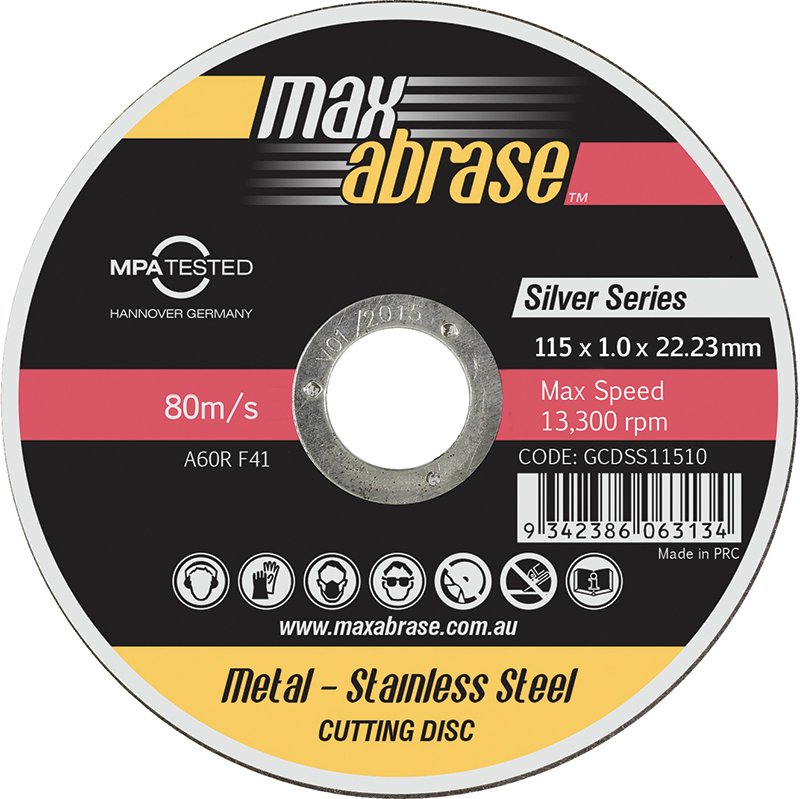
Alpha GCDSS11510 | Cutting Disc 115 x 1.0 mm Silver Series | 1 Buy.. Discontinued
$2.46
$2.24 ex. GST
Search Results:
Search Results:
The abrasive grain bonded into a cutting disc determines what it cuts, how fast it cuts, and how long it lasts. Using the correct grain type for your material is the single biggest factor in disc performance.
Aluminium oxide is the most common abrasive grain used in cutting discs. It suits ferrous metals including mild steel, structural steel, and most carbon steels. These discs are cost-effective for everyday fabrication, site work, and general trades. They are available in thin (1.0 to 1.6 mm) and standard (2.0 to 3.2 mm) profiles. Thin discs cut faster and generate less heat; standard-profile discs last longer under sustained load.
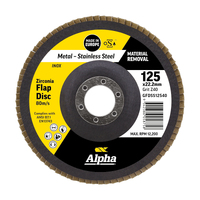
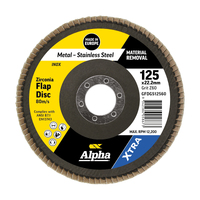
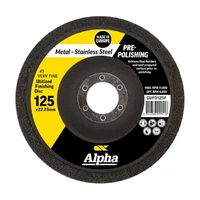
Zirconia alumina grains self-sharpen as they wear. This means they maintain cutting and grinding speed throughout their life rather than glazing over as aluminium oxide discs can. Zirconia flap discs perform well on stainless steel, high-tensile steel, and hard alloys. They suit demanding applications where both surface finish and material removal matter. Flap discs use overlapping abrasive flaps bonded to a backing plate, combining cutting and finishing in a single pass. These discs cost more upfront but typically work more material per disc than standard aluminium oxide equivalents.
Aluminium oxide: General-purpose steel and ferrous metals. Zirconia alumina: Stainless steel, high-tensile alloys, surface finishing. Grinding discs: Material removal and surface preparation on metal. Wood saw blades: Timber cutting on angle grinders.
Every cutting disc carries a material code on the blotter label. This is not a suggestion: it is a safety specification. Using a disc on the wrong material can cause rapid disc failure, kickback, or shattering.
Mild steel is best cut with aluminium oxide or zirconia discs in the 1.0 to 1.6 mm range for thin sections, or 2.0 to 2.5 mm for heavier profiles. Stainless steel requires a disc rated for inox (stainless) cutting. Standard aluminium oxide discs contain iron and sulphur compounds that contaminate stainless steel and promote corrosion. Inox-rated discs use iron-free, sulphur-free bonding compounds. Aluminium and copper require specialist discs formulated for non-ferrous metals; standard steel-cutting discs can load up and overheat rapidly on soft metals.
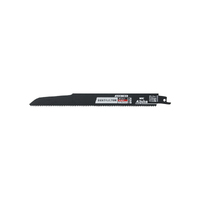
Standard abrasive cutting discs must not be used on timber. The fibres load the wheel and create a fire and kickback hazard. Timber requires purpose-made wood saw blades rated for use on angle grinders. These are specialist tools and carry specific safety requirements under AS/NZS 4600 and relevant state workplace safety regulations. Always verify the blade is rated for the RPM of your grinder before use. Some reinforced plastics and fibreglass composites can be cut with carbide-tipped blades; check the manufacturer's material specification before use.
Cutting disc dimensions are standardised. The disc label shows outer diameter, thickness, and bore diameter. All three must match the tool in use.
The most common angle grinder disc sizes in Australian trade use are 100 mm (4 inch), 115 mm (4.5 inch), 125 mm (5 inch), 180 mm (7 inch), and 230 mm (9 inch). The disc diameter must match the guard and spindle of the grinder. A larger disc on a smaller grinder exceeds the tool's rated peripheral speed and creates a serious ejection risk. A 100 mm grinder running a 125 mm disc also removes the guard clearance that protects the operator from disc fragments.
Thin discs (1.0 to 1.6 mm) cut faster, generate less heat, and waste less material. They are suited to precise cuts in sheet metal, tubing, and angle iron. They are more fragile under lateral pressure and must not be used for grinding or levering. Standard-thickness discs (2.0 to 3.2 mm) tolerate more abuse, suit heavier sections, and last longer when cutting volume is high. Depressed-centre (Type 42) discs allow flush cutting against surfaces. Flat (Type 41) discs are the standard straight-cut profile.
The bore diameter must match the grinder's spindle. The most common bore sizes are 16 mm and 22.23 mm. Reducing bushes allow larger bores to fit smaller spindles, but the outer diameter and rated speed must still match the tool. Every angle grinder has a maximum disc speed rating expressed in RPM. The disc's rated speed (printed on the label as MAX RPM) must equal or exceed the grinder's no-load speed. Running a disc above its rated speed is a category-1 safety violation under AS/NZS 4600. Electrician hand tools and cable cutters from Sparky Direct complement cutting disc applications in trade toolkits.
Two discs of the same diameter and grain type can perform very differently depending on bond hardness, grain concentration, and manufacturing quality. Understanding these variables helps you evaluate value across brands and grades.
Cutting speed is determined by grain sharpness, bond hardness, and disc thickness. A softer bond releases worn grains faster, exposing fresh cutting edges. This suits harder materials where the grain dulls quickly. A harder bond retains grains longer and suits softer materials where the grain would otherwise shed before it was exhausted. Manufacturers publish recommended material-and-disc pairings; following these recommendations gives the fastest cut for the lowest disc consumption.
Heat builds when the cut stalls, when feed pressure is too light, or when the disc is used on an incompatible material. Excessive heat discolours the disc, weakens the bond resin, and increases the risk of sudden failure. Thin discs run cooler than thick ones in equivalent cuts. Interrupted cuts (lifting off and re-engaging) allow cooling and extend disc life compared to continuous plunge cuts.
Disc lifespan varies widely by application. A 1.0 mm steel-cutting disc may complete 20 to 50 cuts in 25 mm steel box section before reaching minimum diameter. A zirconia flap disc typically outlasts an aluminium oxide equivalent on stainless steel by a significant margin. Premium discs from established manufacturers carry consistent grain distribution and bond quality. Budget discs can vary within a batch. For high-volume site work, per-cut cost (purchase price divided by cuts completed) is a more reliable measure than purchase price alone.
The right disc for a job balances material compatibility, tool compatibility, duty level, and volume requirements. There is no universal disc that suits all applications.
Light-duty disc use for occasional home maintenance and renovation does not require the same disc specification as daily trade use. Entry-level aluminium oxide discs in 115 mm or 125 mm sizes suit most occasional DIY cutting of mild steel, threaded rod, and conduit. Trade electricians cutting cable duct, drill fixings, or structural fixings on a daily basis benefit from thinner, sharper discs with higher-grade abrasive that reduce fatigue and increase cut throughput per shift.
Some discs are marketed as multi-material or universal. These typically use a coarser grain and harder bond designed to cut steel and other materials without catastrophic failure. They are a practical choice when you need one disc for mixed cutting tasks on a renovation site. However, a specialist steel grinding disc removes material faster than a universal disc, and a zirconia flap disc finishes stainless steel better than a universal equivalent. For high-volume single-material work, specialist discs reduce cost per use and working time.
Industrial applications include shipbuilding, structural steel fabrication, pipeline work, and demolition cutting. These environments demand discs with reinforced fibreglass mesh layers (typically two or three layers), higher grain concentration, and bond formulations that tolerate sustained heat. Type 27 depressed-centre discs allow cutting close to surfaces and are standard in structural steel work. Disc diameter for industrial use typically runs 180 mm to 230 mm on large angle grinders. Always verify the disc's EN 12413 or AS/NZS 4600 certification before use in a site safety plan.
Cutting discs are a consumable. The lowest purchase price rarely represents the lowest cost per job. Evaluating value requires comparing disc life and cut quality alongside price.
Entry-level discs use lower-grade abrasive with less consistent grain size distribution. They cut acceptably for light and occasional use. Premium discs use certified abrasive grain, consistent bond formulation, and reinforced fibre layers. They cut faster per disc consumed, generate less heat, and have lower burst risk. For a sole trader doing occasional steel cutting, entry-level discs may represent better value. For a team cutting steel daily, the per-shift cost of entry-level discs often exceeds the cost of premium alternatives once disc consumption and downtime are factored in.
Contractors who consume cutting discs at volume benefit from buying in packs of 10, 25, or 50. Unit cost falls significantly at volume, and having adequate stock on site eliminates the productivity loss from running out during a job. Storage conditions matter: cutting discs have a shelf life and degrade in high humidity and temperature extremes. Purchasing volumes that can be used within six to twelve months avoids waste from disc degradation. Sparky Direct offers trade pricing on cutting discs with fast Australia-wide delivery.
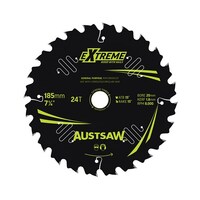
Established cutting disc manufacturers publish performance data including cuts per disc on reference materials. This data allows objective comparison. When brand data is unavailable, user experience from the same trade is a reliable guide. Brands stocked by Sparky Direct include Austsaw, Bordo, and Bristol Tool Works. Reviewing performance data and checking compatibility with your grinder before ordering saves the cost of returning unsuitable stock.
Cutting disc failures kill and injure workers every year in Australia. Safe use is not optional: it is a legal obligation under the Work Health and Safety Act 2011 and relevant state WHS regulations.
The disc's MAX RPM rating must equal or exceed the grinder's no-load speed. Check both values before fitting any disc. Over-speed is the leading cause of catastrophic disc failure. Feed pressure should be firm and steady. Forcing the disc causes it to flex, increases heat, and accelerates bond fatigue. Light, consistent pressure with a slight forward motion produces faster, cleaner cuts than heavy forcing. Let the abrasive do the work.
Kickback occurs when the disc pinches in the cut, stalls, and throws the grinder toward the operator. To prevent it: keep the cut open with wedges or support the workpiece so it cannot close on the disc, use a steady feed rate, and never twist the disc sideways in the cut. Always fit the guard. Never use a disc that is chipped, cracked, or has a visible distortion in the bond. Inspect each disc before fitting. Tap the disc against your palm: a clear ring indicates an intact disc; a dull thud indicates a crack. Discard cracked discs immediately.
Minimum PPE for cutting disc use includes: full-face shield rated to AS/NZS 1337 (safety glasses alone are insufficient for angle grinder use), hearing protection rated to the noise level of the grinder and application, cut-resistant gloves, steel-capped footwear, and flame-resistant long-sleeve workwear. When cutting or grinding metal, a dust mask is recommended to reduce exposure to metallic particles.
Grinder Safety Reminder: Never remove or modify the disc guard. The guard is a critical last line of protection if a disc fails. A 125 mm cutting disc running at 11,000 RPM stores significant energy: fragments from a burst disc travel at projectile velocities. Always use two hands on the grinder, and position your body to the side of the cutting line, not behind it.
Most cutting disc problems trace back to a mismatch between the disc specification and the application, or to technique errors. Identifying the cause prevents the same problem repeating.
Overheating produces a blue or brown discolouration on the disc face and generates visible smoke from the cut. Common causes include: using a disc on an incompatible material, applying insufficient feed pressure (causing the disc to rub rather than cut), using a disc that is too hard for the material (bond retains dull grains instead of releasing them), or making very long continuous cuts without allowing any cooling time. Increasing feed pressure, switching to a softer-bond disc for the material, or pausing between cuts to allow cooling will resolve most overheating problems.
A disc that wears rapidly is usually too soft for the material, or is being run at a speed below its optimum range. Under-speed occurs when the grinder is loaded and slows down: a worn or underpowered grinder cuts a disc's life significantly. Verify the grinder maintains near-rated speed under load. If the workpiece can be repositioned to reduce the depth of cut per pass, disc life improves.
Disc shattering has three main causes: over-speed (disc running above MAX RPM), side loading (applying lateral force or using the disc face for grinding), and disc damage before installation (cracks from dropping, impact, or incorrect storage). Always check the disc's MAX RPM, never use a cutting disc for grinding, and inspect each disc before use. Discs that have been dropped onto a hard surface should be discarded regardless of visible damage: internal bond fractures may not be visible but will cause in-service failure.
Inaccurate cuts result from disc wander during entry. Mark the cut line clearly and use a firm, two-handed grip on the grinder. Start the cut with the disc running at full speed before it contacts the material: a disc that is already stalled at the material surface wanders as it accelerates. For long cuts, use a guide fence or clamp a straight edge to the workpiece. Worn discs with reduced diameter cut less accurately because the effective cutting arc is smaller: replace the disc before it reaches minimum diameter.
Cutting discs are a consumable with a finite shelf life. Proper storage preserves bond integrity and maximises usable life.
Store cutting discs flat or on a dedicated disc rack. Do not hang them from their bore or stack them in ways that allow the disc to deform under its own weight. Storage temperature should be between 5 and 25 degrees Celsius. Avoid direct sunlight, high humidity, and areas subject to temperature cycling (such as an unventilated van in summer). The phenolic resin binders used in most cutting discs degrade over time when exposed to UV radiation and moisture. Keep discs in their original packaging until use where possible.
Do not soak cutting discs in water or cleaning solvents. The bond is porous and absorbs liquids, which degrades the resin and creates imbalance. Wipe the disc face with a dry cloth if needed. Before each use, visually inspect the disc for cracks, chips, missing bond sections, and distortion. Perform the ring test: hold the disc through the bore on a finger or rod and tap lightly with a non-metallic object. A clear, bell-like ring indicates the disc is sound. A flat or dull thud indicates an internal crack: discard the disc.
Most cutting disc manufacturers stamp an expiry date (typically three years from manufacture) on the disc or its packaging. After this date, the resin bond may have degraded below safe operating strength even if the disc appears undamaged. The disc must also be retired when it reaches the minimum diameter marked on the label (the inner ring on the blotter). Continuing to use a disc below minimum diameter exposes the spindle flange to contact with the workpiece and puts the flange, the disc bore, and the grinder spindle at risk of damage.
Cutting discs generate waste in the form of spent abrasive, metallic and mineral swarf, and packaging. There are practical steps trades can take to reduce waste without compromising performance.
Some manufacturers are producing cutting discs with reduced iron, sulphur, and chlorine content in the bond matrix. These formulations reduce the release of hazardous compounds during cutting, particularly when cutting stainless steel and exotic alloys where bond contaminants can migrate into the workpiece and affect corrosion resistance or weld quality. Inox-rated zirconia flap discs serve this purpose in metal fabrication.
Choosing the correct disc for the material and operating it within its rated parameters produces more cuts per disc and less disc waste per job. A premium disc that completes twice as many cuts as a budget disc at 1.5 times the price reduces both material cost and waste volume per cut. Reducing the number of incomplete discs (discs retired before reaching minimum diameter due to damage from incorrect use) is the highest-impact waste-reduction measure available at the tool level.
Spent cutting discs are general solid waste in most Australian jurisdictions unless they contain hazardous materials from the cutting process (for example, discs used on lead-painted steel or asbestos-containing materials, which require hazardous waste handling). Packaging from cutting disc packs is typically card and plastic, which is recyclable in standard kerbside streams where the materials are clean. In commercial and industrial contexts, discuss disposal requirements with your site waste management contractor.
Cutting disc use in Australian workplaces is governed by a combination of product standards, workplace safety legislation, and industry codes of practice.
The principal product standard for bonded abrasive cutting-off wheels in Australia is AS/NZS 4600 (referenced within the broader safe design framework). International standard EN 12413 covers safety requirements for bonded abrasive products and is widely referenced by disc manufacturers selling into Australia. Discs sold in Australia must carry oSa (Organisation for the Safety of Abrasives) certification or equivalent third-party testing documentation. The oSa mark confirms the disc has been tested to the applicable European standard, which is accepted as the reference benchmark for abrasive disc safety in Australian trade practice.
Every cutting disc must carry a label identifying the manufacturer, outer diameter, bore diameter, maximum operating speed (MAX RPM or MAX m/s), material code, reinforcement layer count, and expiry or manufacture date. Discs without these markings should not be used on any Australian worksite. Keep records of disc batch numbers and purchase dates for large-scale operations where tooling forms part of a site safety management plan. Traceability becomes important if a disc failure results in an injury and requires investigation by a workplace safety regulator.
Under the Work Health and Safety Act 2011 (Commonwealth model, adopted in most states and territories), persons conducting a business or undertaking (PCBUs) must ensure that plant and equipment, including angle grinders and cutting discs, is used in accordance with the manufacturer's instructions and relevant standards. The Safe Work Australia Code of Practice for Managing the Work Environment and Facilities, and the WHS Regulation Schedule 14 (Plant Design Registration), apply to high-risk cutting operations. Consult your state or territory WHS regulator for jurisdiction-specific requirements. Electrical tools and cutting discs stocked at Sparky Direct are sourced from reputable suppliers and comply with applicable Australian standards.
| Standard | Scope | Relevance |
|---|---|---|
| EN 12413 | Bonded abrasive products safety | Most cutting discs sold in Australia |
| oSa Certification | Third-party safety testing of abrasives | Widely used quality assurance mark |
| AS/NZS 1337 | Eye and face protectors | PPE requirement for grinder use |
| WHS Act 2011 | Workplace safety duty of care | All cutting disc use on Australian worksites |
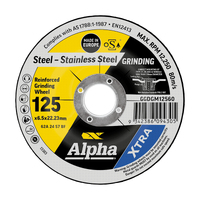
Watch Alpha GGDGM12560 | Metal Grinding Disc 125 x 6.5mm XTRA | Single Buy video
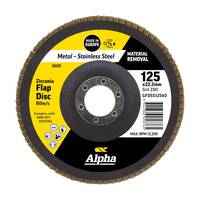
Watch Alpha GFDSS12560 | Zirconia Flap Disc 125mm Grit Z60 Type 29 | Single Buy video
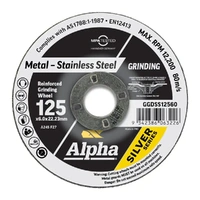
Watch Alpha GGDSS12560 | Metal Grinding Disc 125 x 6.5mm Silver Series | Single Buy video

Thanks to Sparky direct for their clear, easy to follow website and online invoices and tracking. Item arrived on time and packaged safely with bubble wrap. Good reliable service will recommend using them again no problem.
Great service and fast delivery! Bought a light from Sparky Direct and couldn't be happier. The price was excellent, shipping was quick, and the product quality was spot-on. Everything arrived well-packed and exactly as described. I'll definitely be ordering from them again for future electrical gear.
Very happy with the purchase which arrived very promptly. It is exactly as indicated on the Sparky Direct website and exactly what I was looking for. The online service was excellent. Would recommend Sparky Direct to anyone great to do business with.
Quality products in stock • Fast Australia-wide delivery • Competitive trade pricing
Browse Cutting Discs → Get Expert Advice →Wear rate depends on material hardness, cutting pressure, and correct disc selection.
Sparky Direct supplies cutting discs Australia-wide, offering reliable trade-quality options with convenient delivery.
Cutting discs are packaged securely and delivered via standard courier services.
Unused cutting discs are usually eligible for return in line with the seller’s returns policy.
Warranty coverage varies by manufacturer and generally covers defects in materials or manufacture.
Cutting discs are available both individually and in multi-pack options depending on the product range.
Cutting discs do not require maintenance but should be inspected for damage before use.
Cutting discs should be stored flat in a dry environment to prevent damage and moisture exposure.
Cutting discs can be used for DIY tasks, provided tools are used safely and appropriately.
Yes, excessive pressure or prolonged cutting can cause overheating and reduce disc life.
Metal cutting discs produce sparks, while masonry discs typically produce dust rather than sparks.
Cutting discs are easy to change using the correct tool and following the grinder manufacturer’s instructions.
If damaged, incorrectly used, or oversped, cutting discs can fail, which is why correct selection and inspection are important.
A cutting disc is used with power tools such as angle grinders to cut materials including metal, steel, stainless steel, masonry, and stone.
Some discs are multi-purpose, but using a disc designed for the specific material gives better performance and safety.
The right cutting disc depends on the material being cut, the tool being used, and the required cut quality.
Cutting discs are commonly used during electrical installation work, but electrical work must be carried out by a licensed electrician.
Yes, discs specifically labelled for stainless steel should be used to avoid contamination and ensure clean cuts.
Thin cutting discs provide faster, cleaner cuts, while thicker discs may offer longer life depending on the application.
Cutting discs must match the grinder’s size and maximum RPM rating to be used safely.
Cutting discs are available in a range of diameters and thicknesses to suit different grinders and cutting applications.
Yes, metal cutting discs and masonry cutting discs are designed differently and should not be used interchangeably.
Many cutting discs are manufactured and tested in line with relevant AS/NZS safety and performance standards, depending on the product.
Cutting discs are typically made from abrasive materials bonded with resin and reinforced with fibreglass for strength and safety.
Cutting discs are designed for specific materials, such as metal, stainless steel, aluminium, concrete, brick, or stone, depending on the disc type.