
Search Results:
Search Results:
Search Results:
Search Results:
The Pica-Marker brand produces several distinct marker types, each suited to specific tasks and surfaces. Understanding the range helps you select the right tool before arriving on site.
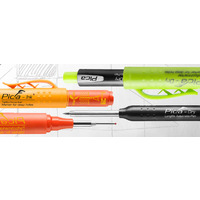
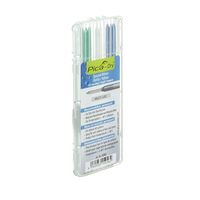
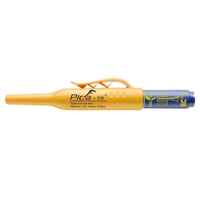
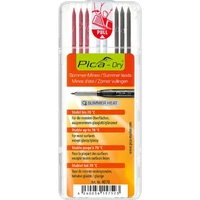
The Pica Dry is the most widely used marker in the range. It accepts interchangeable refill leads in graphite, white, yellow, red, and blue. The large-format lead works on rough sawn timber, plasterboard, brick, and concrete block. It sharpens automatically with the built-in sharpener stored in the cap. The Pica Dry Marker (green body) suits carpenters, electricians, and plumbers who need consistent, visible marks across a full day of work.
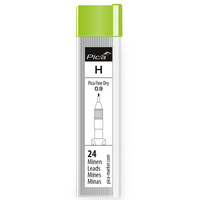
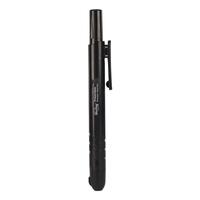
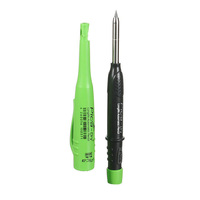
The Pica Fine Dry uses a 0.9 mm mechanical lead, comparable to a technical drawing pencil. It is suited to layout work requiring close tolerances: marking conduit entry points, outlet box positions, and trunking runs where a thick lead would be too imprecise. The Fine Dry also accepts multiple lead grades and colours, and the lead is protected inside the casing when not extended.
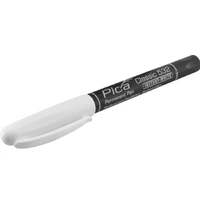
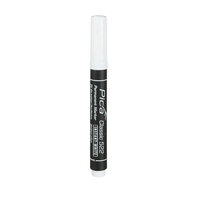
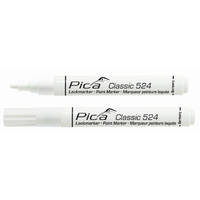
Pica Classic paint markers use an oil-based ink that adheres to non-porous surfaces including galvanised steel, PVC, glass, and wet concrete. They are available in white, yellow, and other high-visibility colours. The Pica Classic white marker is a standard tool for marking distribution boards, cable runs, and conduit at Sparky Direct.
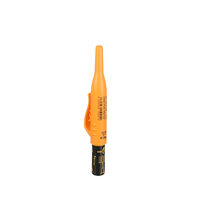
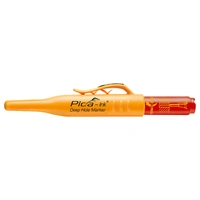
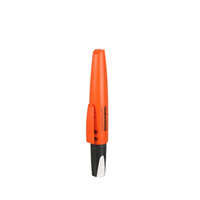
The Pica Tieflochmarker (deep-hole marker) has an extended tip designed to reach into drilled holes and recesses up to 150 mm deep. It is used for marking masonry anchor positions, drilling targets in confined cavities, and cable entry points in walls. It is available in blue and orange ink, both permanent and visible on light and dark surfaces.
Pica produces trade-specific sets: the Joiner Master-Set, Plumber Master-Set, and Dry Metal Set. These bundle a marker body with multiple lead types, a carry case, and accessories tailored to each trade. The Joiner Master-Set and Plumber Master-Set are well suited to electricians who need both graphite and coloured leads on site without carrying multiple separate markers.
Pica markers use different marking technologies depending on the model. Knowing how each type works helps you get reliable results across varying site conditions.
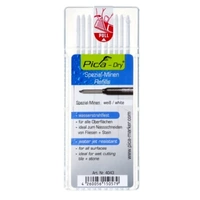
The Pica Dry and Fine Dry use compressed graphite or mineral leads rather than ink. The leads are harder than standard pencil graphite, which gives them resistance to smearing on rough surfaces. The lead diameter on the standard Pica Dry is 2.8 mm, which produces a line wide enough to read easily in low light. Water jet resistant white leads contain a binder that prevents washout during rain or when marking near wet concrete pours.
Pica Classic markers use a valve-tip system with oil-based opaque ink. Pressing the tip activates the valve and draws ink from the reservoir. The ink dries quickly on non-porous surfaces and resists smearing within 30 to 60 seconds of application. It adheres to surfaces where water-based markers fail: oily metal, dusty concrete, and treated timber.
The Tieflochmarker uses a long, narrow body with a felt tip seated at the end of an extended tube. The tube can be inserted into a drilled hole and the tip pressed against the base to leave a mark. The ink is permanent and remains visible on light-coloured masonry and dark substrates alike. Both blue and orange versions use fast-drying permanent ink.
Lead-based marks on rough timber remain visible because the lead is forced into the grain rather than sitting on top of a smooth surface. Paint marker ink wets the substrate and bonds on contact. On dusty concrete, the best result comes from blowing off loose dust before marking. On wet surfaces, water jet resistant refill leads are the correct choice over standard graphite, which can wash out before the concrete sets.
Selecting the correct marker depends on the surface material, the required line width, and the conditions on site. The wrong choice leads to marks that wash out, smear, or are too faint to read safely.
| Surface | Recommended Marker | Lead or Ink Type |
|---|---|---|
| Rough sawn timber | Pica Dry (standard) | Graphite or coloured lead |
| Planed or smooth timber | Pica Fine Dry | HB graphite, 0.9 mm |
| Galvanised or painted steel | Pica Classic paint marker | White or yellow oil-based ink |
| PVC conduit and trunking | Pica Classic paint marker | White or black oil-based ink |
| Wet or damp concrete | Pica Dry with white water jet resistant lead | Water jet resistant white lead |
| Masonry (drilled holes) | Pica Tieflochmarker | Blue or orange permanent ink |
| Glass and glazed tiles | Pica Classic paint marker | Oil-based permanent ink |
Where accuracy matters more than speed, the Fine Dry 0.9 mm lead is the correct choice. It is suited to marking outlet box centres, conduit bends, and cable tray brackets. Where a mark must be read from a distance or in poor light, a standard Pica Dry with a coloured lead (yellow or white on dark surfaces) gives better visibility. Paint markers in white provide the highest contrast on steel, concrete, and black PVC.
Electricians working across residential and commercial sites commonly carry a Pica Dry for general timber framing, a Fine Dry for precise conduit and cable marking, and a paint marker for steel enclosures and distribution boards. The deep-hole marker is useful for marking anchor positions in masonry without needing a separate pen. The electrician hand tools range at Sparky Direct includes complementary tools for installation work.
Using different lead colours for different services (blue for data cables, red for power, yellow for lighting circuits) reduces errors during rough-in. Pica Dry refill packs are available individually, making it straightforward to keep a range of colours in your tool bag without carrying multiple marker bodies.
Not all markers sold for trade use are equal in durability. Understanding what separates a quality marker from a short-life one helps you assess value when buying in bulk for a business.
Pica paint markers use pigmented oil-based ink rather than dye-based ink. Pigmented ink has better UV resistance and does not fade as quickly under direct sunlight. This matters on outdoor concrete slabs and exposed steelwork where marks may need to remain legible for several weeks between inspection and pour. Dye-based markers, including most household permanent markers, fade within days on sun-exposed concrete.
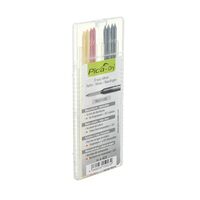
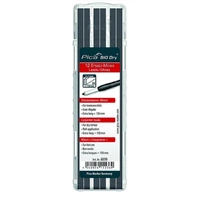
Pica Dry leads are denser than standard carpenter's pencil leads. They resist breakage during normal marking pressure on rough timber and abrasive concrete surfaces. The Fine Dry 0.9 mm lead is harder than the standard size and less prone to snapping when used on smooth surfaces with controlled pressure. Refill packs contain 10 or 24 leads depending on the grade, making on-site replacement straightforward.
Lead-based marks on timber do not smudge when touched once applied, unlike wax-based pencils or chalk. Paint marker ink dries to a smudge-resistant film within approximately one minute on non-porous surfaces. On porous surfaces such as raw concrete, ink absorbs slightly, which reduces smudge risk but also makes the mark harder to remove if a correction is needed.
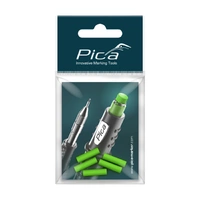
Check refill compatibility: Pica Dry refills and Fine Dry refills are different diameters and are not interchangeable. The standard Dry uses 2.8 mm leads. The Fine Dry uses 0.9 mm leads. Always confirm the correct lead size before ordering refill packs.
Pica markers appear across multiple trades on Australian job sites. Their range of tip types and surfaces they handle make them a practical choice wherever marking accuracy is part of the work.
Electricians use Pica markers to mark outlet box positions on stud frames, conduit bend points, cable support intervals, switchboard mounting positions, and anchor hole centres in concrete. The Fine Dry is favoured for conduit work where precise bend spacing directly affects the finished installation. The paint marker is used on metal enclosures and distribution boards for circuit identification and inspection markings. Electrical test equipment from Sparky Direct complements on-site marking tools for complete installation work.
Joiners and carpenters use the standard Pica Dry for setting out stud positions, joist spacing, and cut lines on framing timber. The coloured lead options allow different marks to be distinguished at a glance during framing, which reduces the chance of cutting at the wrong position. The large lead diameter remains visible on rough-sawn structural timber even after light exposure to dust and rain.
Plumbers use Pica Dry for timber and masonry set-out work, and the Tieflochmarker for marking pipe anchor positions in drilled masonry. The deep-hole capability removes the need for a separate marking tool when installing pipe brackets into concrete or brick walls. HVAC technicians use the paint marker for marking refrigerant pipe supports on steel beams and metal plant rooms.
The Pica Dry Metal Set includes a carbide scriber alongside the marker body. Fabricators use the scriber for permanent scratch marks on steel, and the marker leads for layout lines that can be wiped off after cutting. The paint marker provides a readable line on mill-scale or painted steel surfaces where scribed lines may not be visible enough in workshop lighting. Hand tools and crimping tools are stocked alongside Pica markers at Sparky Direct for trade kit top-ups.
Trade professionals often have pencils, permanent markers, and chalk lines already in their kit. Understanding where Pica markers outperform these alternatives helps justify the cost difference.
A standard carpenter's pencil uses a wide, soft graphite lead that breaks frequently on hard surfaces and produces inconsistent line width. The Pica Dry lead is denser, maintains a sharper edge for longer, and the built-in sharpener keeps the tip consistent without a separate tool. The Fine Dry produces a line that a carpenter's pencil cannot: a precise 0.9 mm mark on smooth timber or laminate sheet.
Standard permanent markers use dye-based alcohol ink that dries quickly on non-porous surfaces but fades under UV exposure and bleeds on porous concrete. Pica paint markers use pigmented oil-based ink with better adhesion on oily and dusty surfaces. On galvanised steel and PVC conduit, a standard permanent marker often beads off the surface, while Pica paint marker ink wets and bonds on contact.
A chalk line is faster for setting out long straight runs on flat surfaces, but chalk marks wash off in rain and do not survive concrete placement or surface vibration. Pica marks are permanent or semi-permanent depending on the lead type, making them the correct choice for marks that must survive site conditions over several days. Chalk lines remain useful for establishing reference lines during set-out, but Pica markers are better suited to individual point marks and short layout lines in electrical and plumbing work.
| Tool | Best For | Weakness |
|---|---|---|
| Pica Dry Marker | Durable marks on all construction surfaces | Lead replacement cost |
| Carpenter's Pencil | Quick rough-in on clean timber | Frequent breakage, no precision |
| Permanent Marker | Fast marking on smooth surfaces | UV fade, poor adhesion on dusty or oily substrates |
| Chalk Line | Long straight reference lines | Washes off, no point marking |
| Pica Paint Marker | Non-porous surfaces: metal, PVC, glass | Slower drying than alcohol markers |
Pica markers carry a higher unit price than generic carpenter's pencils or household markers. For trade businesses, the cost-per-mark calculation over a marker's lifespan usually favours Pica, particularly when factoring in replacement frequency and marking failures avoided.
The standard Pica Dry body is the entry point to the range. It accepts all standard Pica Dry refill leads. More specialised models, the Fine Dry and the Tieflochmarker, address specific tasks that the standard body cannot perform. Purchasing the standard body first and adding specialist models as needed is the most cost-effective approach for sole traders and small teams.
Refill packs of 10 or 24 leads reduce the per-lead cost compared to individual lead purchases. For businesses with multiple electricians on site, stocking a central supply of refill leads in multiple grades avoids the situation where one lead colour runs out on a job. Paint marker refills and replacement tips are also available individually, extending the life of the marker body.
Generic trade markers at a lower price point often use softer leads that break more frequently and dye-based inks that fade faster. The total cost when leads break mid-job or marks must be reapplied after weather exposure exceeds the initial saving. Pica leads in the 10-pack and 24-pack formats are priced competitively at Sparky Direct against other professional marking brands.
Pica markers last longer and perform better when used and stored correctly. These practices are relevant whether you use one marker or manage a kit for a crew.
Hold the Pica Dry at approximately 45 degrees to the surface rather than upright. This produces a wider, more visible mark and reduces lead breakage under side pressure. For the Fine Dry, keep the lead extended only as far as needed for the mark. Excess extension increases the risk of snapping on rough surfaces. Apply consistent, light pressure rather than pressing hard to force a deeper mark.
Store paint markers horizontally when not in use. This keeps the ink distributed evenly around the tip and reduces the chance of the tip drying out from one-sided ink starvation. Before using a paint marker that has been stored for several weeks, shake it with the cap on and press the tip against a scrap surface to prime the flow before marking on the job.
Always replace the cap on paint markers immediately after use. The cap seals the tip against evaporation. On the Pica Dry, retract any unused lead before capping to avoid the protruding lead breaking off inside the cap. Clean the tip of paint markers periodically with a dry cloth to remove dried ink crust that restricts flow. Replacement tips are available separately for Pica Classic markers and are far less expensive than replacing the whole unit.
Extreme heat causes the ink in paint markers to thin and the body to pressurise slightly, which can result in overpriming when the cap is removed. Store paint markers out of direct sunlight in hot weather: in a tool bag in a shaded vehicle rather than on a dashboard or exposed surface.
Most marking problems on site come down to the wrong product choice for the surface, or a maintenance issue that is straightforward to fix. The following covers the most frequent problems reported by trade users.
Paint markers smudge on surfaces that have not fully dried, or on surfaces with a release agent or chemical contamination. Before marking oily or treated steel, wipe the surface with a clean dry rag. On surfaces treated with mould release compounds (common in precast concrete), the oil-based ink may not adhere well. Test on a small area first if the surface treatment is unknown. Lead-based marks on smooth surfaces (laminate, MDF) smudge because the lead cannot key into the surface; use a paint marker or scriber on these substrates.
A paint marker that produces no ink despite shaking usually has a blocked tip. Remove the tip with pliers, soak in mineral spirits for 10 minutes, and reinstall. If the tip remains blocked, replace it with a new tip from Sparky Direct. Dry markers that produce no mark despite a full lead may have a bent or broken internal feed mechanism. Check that the lead is seated correctly in the body and that the cap sharpener is clear of lead debris.
Poor flow on a paint marker usually indicates the tip is partially dried. Press the tip firmly against a piece of cardboard 10 to 15 times to re-wet the felt. If flow does not improve, replace the tip. Fading marks on outdoor surfaces indicate the ink has been exposed to UV or solvents. White water jet resistant Pica leads or oil-based paint markers are the correct replacement in outdoor or wet environments.
Lead-based Pica marks on timber can be sanded off or planed away. On painted steel, paint marker can be removed with a small amount of mineral spirits on a rag before the paint dries. Once dried, paint marker on steel requires sanding or a solvent-based paint stripper. On PVC conduit, most Pica paint marker can be removed with acetone before the ink fully cures. Always test the solvent on a hidden area of PVC to confirm it does not damage the surface.
For trade businesses managing waste and material costs, the refillable design of the Pica range offers a practical sustainability benefit over single-use marking tools.
All Pica Dry and Fine Dry markers are fully refillable. The marker body is designed to last for years with normal trade use. Replacement leads and tips are available individually and in value packs. This reduces the number of marker bodies disposed of over the life of the product compared to single-use markers. Pica Classic paint markers accept replacement tips, which is the only consumable part of the body after the ink reservoir is empty.
Pica does not market specific eco-certifications for its ink formulations, and Sparky Direct does not make claims on behalf of the manufacturer on this point. General industry guidance for oil-based marker disposal applies: dried paint marker tips and lead debris should be disposed of as general solid waste rather than liquid waste. Wet paint marker remnants should not be washed into stormwater drains.
Buying refill packs in the 24-lead format rather than individual 10-packs reduces packaging per lead. Storing markers correctly (caps replaced, horizontal storage for paint markers) reduces premature drying. A well-maintained Pica Dry body can remain functional for several years on a working site. Tool bags that protect markers from physical damage and sun exposure extend the working life of the whole kit.
Watch Pica Marker 4043 | Dry Marker Water Jet Resistant Refills White 10 Pack video
Watch Pica 30800 | Pica Dry® Metal Set with Carbide Scriber video
Watch Pica Marker 7070 | Fine Dry Longlife Automatic Marker Equipped with 5 x 0.9mm Leads | Each video

Great bit of kit! I've had a std Pica dry for a while, and wanted another, finer pencil. Saw this kit online on another website and kind of balked at the price. Then I found this and there was no question. Means i can now have multple coloured stad Pica Drys and the thinner option for more detailed work.
Pica pencil is a god sent , excellent quality and tough enough for the building site , the 0.9 mm diameter pencil is great even for marking over rough sawn timber and it's always protected inside the green casing , great tool!!
These are great pencil markers and the design allows for ease of replacement and sharpening of the leads
Quality products in stock • Fast Australia-wide delivery • Competitive trade pricing
Browse Pica Markers → Get Expert Advice →They offer clear, precise marking and are easy to use on a wide range of surfaces commonly found on job sites.
Sparky Direct supplies Pica markers Australia-wide, offering reliable marking tools with convenient delivery.
Pica markers are lightweight and delivered via standard courier services.
Yes, replacement leads for Pica markers are sold separately.
Warranty coverage depends on the manufacturer and typically covers defects in materials or workmanship.
Pica markers are available individually or as part of kits, depending on the product range.
Pica markers are safe when used as intended and stored properly.
Yes, Pica markers are suitable for DIY projects as well as professional trade use.
Minimal maintenance is required, mainly replacing leads when they are worn.
Yes, they are suitable for both indoor and outdoor marking tasks.
Removability depends on the lead type and surface; some leads are designed to be removable while others are permanent.
Lead life depends on usage and surface type, but refill leads are long-lasting and cost-effective.
Certain leads are specifically designed to mark on dusty or damp surfaces where standard pencils fail.
Pica markers are designed to be compact and often include clips or holders for convenient carrying.
Yes, many users prefer Pica markers over pencils due to their durability and versatility.
Yes, Pica markers are refillable. You can purchase replacement cartridges from Sparky Direct
Some Pica marker leads are water-resistant or water-soluble, depending on the intended use.
Pica markers are commonly used for marking during electrical work, but electrical installations must be completed by a licensed electrician.
Pica marker housings are designed to be durable and withstand regular site use.
Yes, with the appropriate lead, Pica markers can be used to mark metal surfaces clearly.
Yes, Pica markers are widely used by electricians, carpenters, and builders for accurate marking on job sites.
Marking tools like Pica markers do not typically fall under AS/NZS electrical standards, but they are manufactured to high quality and safety expectations.
Common lead types include graphite, water-soluble, permanent, and special-purpose leads for different surfaces.
Yes, Pica markers are designed to be refillable, with replaceable leads available for ongoing use.
Pica markers can write on dry, wet, rough, or dusty surfaces depending on the lead type being used.
Pica markers are used for precise marking on surfaces such as timber, metal, plastic, brick, and concrete in trade and workshop environments.
Pica pencil is owned by the German company Pica Innovative Marking Tools.
Pica markers are made in Germany.
Pica ink is a water-based ink designed to be long-lasting and fade-resistant. It is also non-toxic and safe for use on a variety of surfaces.