

Air Conditioning Ducting and Capping
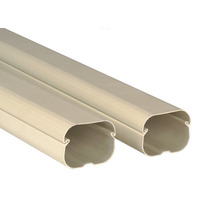
Find the best Ducting & Capping here at Sparky Direct. [ Read More ]
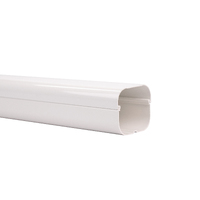
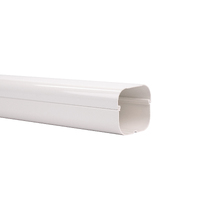
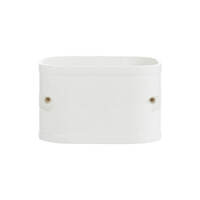

What Are Air Conditioning Ducting and Capping?
Table of Contents
- Understanding Air Conditioning Ducting and Capping
- Where Ducting and Capping Are Used in AC Systems
- Types of Air Conditioning Ducting
- Types of AC Capping and Trunking
- Wall Caps and Penetration Components
- Choosing the Right Ducting and Capping
- Installation Requirements and Best Practices
- Compliance and Australian Standards
- Performance and Long-Term Reliability
- Pricing, Value and Buying Considerations
- Practical Buying Guidance for Electricians and Installers
- Product Videos
- What Sparky Direct Customers Say
- Quick Summary (TL;DR)
- Frequently Asked Questions about Air Conditioning Ducting and Capping
Understanding Air Conditioning Ducting and Capping
Ducting and capping are two different jobs, even though installers often say them in the same breath. Knowing which one you need, and when, saves time on site and prevents the wrong product ending up in the van.
What Is Air Conditioning Ducting?
In HVAC terms, ducting is a hollow pathway that carries conditioned air from the indoor coil to rooms around the building. Residential ducted systems use flexible insulated duct, usually silver aluminium or foil-wrapped polyester, sized between 200mm and 400mm diameter. Commercial systems often use rigid galvanised sheet metal duct in rectangular or circular profiles. In both cases, the duct itself never carries refrigerant, only air.
What Is Air Conditioning Capping (Trunking)?
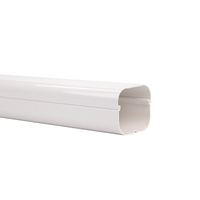
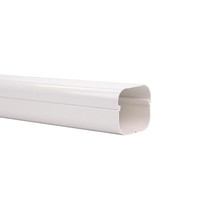
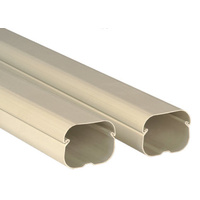
Capping is the rigid plastic cover that hides the refrigerant pipes, drain line and power cable running between a split system's indoor head unit and outdoor condenser. It is sometimes called trunking, duct cover, pipe cover or line-set cover. Standard sizes on Australian jobs are 75mm, 80mm, 99mm and 100mm, sold in 2-metre lengths with a clip-on cover and a base rail that screws to the wall.
How Ducting and Capping Work Together
On a fully ducted install, you rarely need capping. On a standard split system, ducting is not involved at all, but capping is essential to protect the pipework from UV, birds, dust and physical damage. Multi-head systems can use a run of capping on each pipe set, so one outdoor unit may feed three or four capped runs to separate rooms.
Ducting vs Conduit vs Cable Trunking Differences
Conduit is a round rigid or corrugated tube used to protect electrical cables. AC capping is a rectangular clip-on cover designed to house refrigerant pipes plus cable together. Cable trunking, such as Clipsal Maxi Cable Duct, is a separate electrical-only product for indoor cable management. Using the wrong one can cause compliance issues or physical fit problems, so treat them as three distinct product families.
Where Ducting and Capping Are Used in AC Systems
Ducted Systems and Internal Air Distribution
Ducted reverse-cycle systems distribute conditioned air through an attic or ceiling space via flexible or rigid duct. Each branch feeds a ceiling grille in a separate zone. Ducting selection here is about airflow volume, static pressure and insulation R-value rather than aesthetics.
Split Systems and External Capping Requirements
A typical wall-mounted split system needs a run of capping from the indoor unit, through an external wall, and down the outside wall to the condenser. 80mm capping fits most domestic installs under 5kW. Larger units, longer runs, or multi-head pipe sets often require 100mm capping to give the pipework and drain room to breathe.
Multi-Split Systems and Increased Complexity
Multi-head systems with two to five indoor heads generate several pipe runs. Each run needs its own capping line, often at different elevations on the same wall. Flexible joiners and tee-pieces let installers branch and redirect around windows, downpipes and eaves without breaking the run.
Electrical and Cable Protection Applications
Sparkies sometimes borrow AC capping for visible cable runs in garages, sheds and commercial fitouts where a neater finish is needed than standard surface conduit. For pure electrical jobs, dedicated products like Cable Duct or the broader Electrical Conduits range are a better fit because they are rated for cable mechanical protection under AS/NZS 3000.
Types of Air Conditioning Ducting
Flexible Insulated Ducting (Residential Standard)
Flexible ducting is the default for residential ducted reverse-cycle and evaporative systems. Construction is an inner wire-reinforced polyester sleeve wrapped in glass-wool insulation, sealed inside a foil outer jacket. Common diameters run from 200mm up to 400mm, with insulation rated to R1.0 or R1.5. Flexible duct is fast to install but adds static pressure loss, so long runs need upsizing.
Rigid Sheet Metal Ducting (Commercial Use)
Rigid galvanised steel duct is the standard for commercial HVAC. It comes in rectangular and circular profiles, is joined with slip-and-drive or flange connections, and is externally insulated on cooled runs. Rigid duct carries airflow with far less friction than flexible, which matters on large systems with high static pressure requirements.
Low-Profile and Slimline Duct Options
Some retrofit ducted systems use low-profile ducting to fit inside tight bulkheads or thin ceiling cavities. These products trade off some airflow capacity for physical clearance, so sizing calculations have to account for the reduced free area.
Fire-Rated Ducting Requirements in Australia
In commercial buildings, duct that passes through a fire-rated wall or floor must either be fire-rated itself or be fitted with a fire damper that closes automatically. AS 1668.1 and the National Construction Code set out the specific requirements, which vary by building classification and fire compartment.
Types of AC Capping and Trunking
uPVC and PVC Capping Systems
Almost all domestic AC capping in Australia is moulded uPVC. The base rail screws to the wall, the pipes and cable sit inside, and the cover clips over the top. Cover and base are colour-matched in white as standard, with a UV-stabilised compound to resist chalking and yellowing outdoors.
Standard Capping Sizes and Profiles (80mm, 100mm)
80mm capping suits most single-head splits up to about 5kW cooling capacity. The channel fits a pair of insulated copper lines, a small control cable and a drain tube without crowding. 100mm capping gives extra room for larger systems, multi-head pipe sets, or where additional data or control wiring is needed. Both sizes are sold as 2-metre straight lengths, with a full set of matching accessories. The AC Duct Cover 80mm and AC Duct Cover 100mm ranges cover both sizes.
Low-Profile and Eco-Duct Options
75mm and 99mm profiles are used where a slimmer look is wanted or where the 80mm standard clashes with an existing architectural detail. Complete Air makes 75mm and 99mm covers that are popular for heritage jobs and apartment balconies where visual impact is a concern.
Accessories: Bends, Joiners, T-Pieces and Reducers
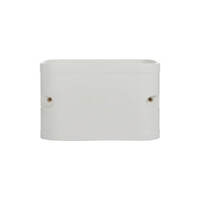
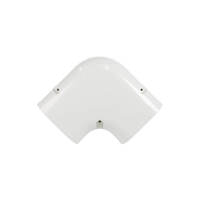
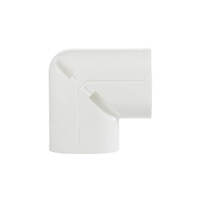
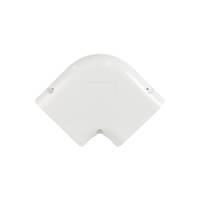
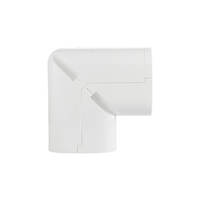
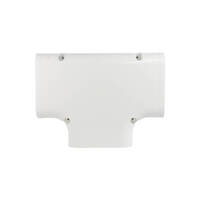
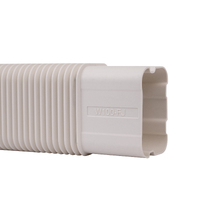
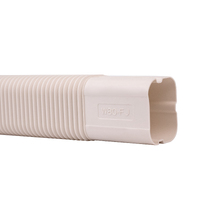
A complete capping run rarely uses just straight lengths. Expect to add flat-face 90-degree bends for turning a corner, vertical 90-degree bends for transitioning from wall to roofline, flexible joiners where the pipe route cannot be predicted, and T-pieces on multi-head jobs. Matching the accessory brand to the straight capping stops colour and profile mismatches on the finished wall.
Wall Caps and Penetration Components
What Wall Caps Do and Why They Matter
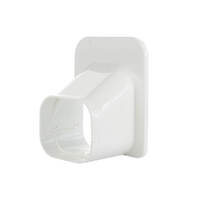
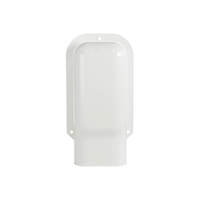
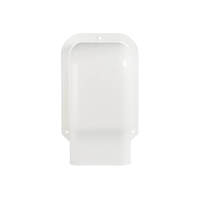
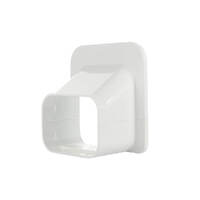
A wall cap is the fitting that covers the hole where refrigerant pipes pass through the external wall. It seals around the pipe entry, stops weather and vermin getting into the cavity, and gives the capping run a clean terminal point. On a split system install, the wall cap is often the only visible component right at the indoor unit, so neat fit matters.
Wall Cap Sizing and Compatibility
Wall caps are sized to match the capping system they connect to. An 80mm capping line uses an 80mm wall cap; a 100mm line uses a 100mm cap. Mixing sizes forces installers to improvise with sealant or oversized caps, which never looks right and usually fails the weather seal within a year or two.
Weatherproofing and Pest Protection
The wall cap traps the point where the pipe transitions from inside to outside. Done properly with a bead of silicone or approved sealant, it keeps rain, lizards, mice and insects out of the cavity. Any gap here eventually shows up as water damage on the internal wall.
Installation Best Practices for Wall Penetrations
Drill the penetration at a slight downward angle from inside to outside so any condensate drains away from the wall. Slip the wall sleeve in before fitting the cap, seal both faces, and make sure the cover of the capping run sits flat against the cap's integrated flange. Cutting the cap to fit a non-standard wall thickness is normal and expected.
Choosing the Right Ducting and Capping
Sizing for Airflow and Pipe Capacity
For ducted systems, size on calculated airflow (litres per second) and the allowable static pressure drop for the indoor fan. For capping, size on the diameter of the refrigerant pipes plus the drain and control cable. A 2.5kW to 5kW split system typically fits 80mm capping; anything larger, or a twin-head run, usually needs 100mm.
Material Selection (Plastic vs Metal)
PVC capping is lightweight, cheap, UV-stabilised and easy to cut on site with a hacksaw. Galvanised steel capping exists for heavy commercial work but is rarely used on domestic jobs. For most Australian installs, plastic wins on cost, weight and speed of installation, provided the compound is genuinely UV-stable.
UV Resistance and Environmental Durability
Cheap unstabilised PVC turns yellow and becomes brittle in Australian sun, sometimes within 18 months. Proper UV-stabilised capping from trade brands will hold its colour and impact resistance for 10 years or more. For coastal installs, check that the fixings supplied are corrosion-rated; stainless screws are worth the small extra cost.
Matching Products to System Type
Single-head domestic split: 80mm capping, matching 90-degree bends, one wall cap. Multi-head system: 100mm capping on the main trunk, flexible joiners for each branch, T-pieces where pipe sets diverge. Ducted system: no capping needed, but flexible or rigid duct sized to the indoor unit's airflow specification.
Installation Requirements and Best Practices
Surface Mount Ducting Installation Guide
Plan the run before drilling anything. Mark the straight-line path from indoor unit to outdoor unit, noting where bends and joiners will sit. Fix the base rail first, using wall plugs into masonry or screws into timber studs. Route the pipes, drain and cable through the base. Clip the cover on last, working from one end so the cover sits flush.
Securing and Supporting Duct Runs
Base rails need a fixing every 600mm on straight runs, closer on vertical sections or where wind loading is a factor. Every bend and joiner should have its own fixing within 150mm of the fitting, not relying on the adjacent straight to hold it. Over-spacing fixings is the most common cause of capping drooping or rattling in wind.
Installing Cable Capping Properly
For electrical cable capping runs, the base rail sits first, the cable lays into the channel without being pinched, and the cover snaps over. Never force a cable into a capping that is too small; undersized capping damages insulation and may fail an inspection under AS/NZS 3000.
Common Installation Mistakes to Avoid
Running capping uphill so condensate pools inside the channel. Cutting base rails short and using sealant to bridge gaps. Mixing brands where the cover of one does not clip into the base of another. Forgetting the wall cap and relying on silicone alone to seal the penetration. Each of these issues usually shows up within the first year as water ingress or falling capping.
Compliance and Australian Standards
AS/NZS 3000 Wiring Rules Considerations
Any cable sharing the capping with refrigerant pipework is still subject to the Wiring Rules. That means correct segregation where required, appropriate mechanical protection, and approved terminations. The capping does not relieve the installer of any Wiring Rules obligations for the cable inside it.
AS 4254.2 Ducting Standards
AS 4254.2 covers the construction and installation of flexible duct for air-handling systems. It sets minimum insulation values, fire performance requirements and installation tolerances, including maximum sag between supports and minimum bend radius. Flexible duct that does not meet AS 4254.2 should not be installed in commercial work.
Fire Rating and Building Compliance
Penetrations through fire-rated walls or floors require fire-rated sealing, an approved fire damper, or a tested combination of both. The National Construction Code sets the trigger conditions based on building classification. Getting this wrong is not a cosmetic issue: it changes the building's certified fire performance.
Electrical Safety and Protection Requirements
Any 240V cabling feeding the outdoor unit must be mechanically protected where exposed. AC capping is generally acceptable for domestic exposed runs, but check local inspector preferences; some prefer separate conduit for the power cable and capping for the refrigerant pipework only.
Performance and Long-Term Reliability
How Ducting Impacts Airflow Efficiency
Undersized or poorly supported flexible duct can halve the delivered airflow at the grille, which the system then tries to compensate for by running longer and harder. That shows up as higher energy bills and reduced comfort, not as an obvious ducting fault. Correct sizing and proper support are more important than the brand on the label.
How Capping Protects Pipes and Wiring
Exposed refrigerant pipe insulation breaks down under UV in about three years. Covered pipework stays flexible, keeps its R-value and holds its seal on the flare joints for a decade or more. Capping also stops physical damage from ladders, whipper-snippers and hail.
Preventing Energy Loss and Damage
A compromised refrigerant line loses efficiency before it loses refrigerant. Protected pipework maintains rated capacity; unprotected pipework slowly drifts towards nominal performance losses of 10% to 20% before the homeowner notices the system is struggling.
Maintenance and Inspection Practices
Capping runs need almost no maintenance, which is part of the point. On an annual service, check for cracked covers, missing fixings, sagging between supports and any gaps at wall caps or joiners. A 10-minute walkaround on site is usually enough to spot the issues before they turn into water damage.
Pricing, Value and Buying Considerations
Ducting and Capping Prices in Australia
Capping straights sit in the low double digits per 2-metre length for 80mm, with 100mm priced a little higher. Accessories like bends, joiners and wall caps are each a fraction of a straight length. Flexible ducted-system ducting is priced by the metre, with R1.5 insulated product commanding a premium over R1.0.
Bulk Buying vs Single Purchase
Most trade suppliers price capping per 1-buy (single length) and also in carton quantities. Carton pricing generally delivers 15% to 25% savings for installers doing multiple jobs. If you fit more than one split system a month, carton buying usually pays for itself on the first job of the carton.
Cheapest PVC Ducting Suppliers Australia
Headline prices are only part of the story. The cheap supplier that ships damaged product, substitutes brands without asking, or runs out of wall caps mid-project costs more in the long run. Reliable stock, accurate delivery and consistent brand supply are what separate a genuine trade supplier from a low-price reseller.
Trade Suppliers vs Retail Options
Retail big-box stores stock a limited range of sizes and rarely carry the full accessory set for any one brand. Trade electrical wholesalers stock the full range: straights, bends, joiners, wall caps and terminals across 75mm, 80mm, 99mm and 100mm. For a working installer, having the full kit available matters more than the cheapest headline on a single item.
Fast Delivery and Availability
A split system install often gets booked in the week it is quoted. If capping is back-ordered for two weeks, the job either gets pushed or the installer substitutes whatever is on the shelf, which creates brand-mixing problems. Sparky Direct holds the common 75mm, 80mm, 99mm and 100mm sizes in stock for same-day or next-day dispatch.
Practical Buying Guidance for Electricians and Installers
Choosing the Right Products for the Job
For a single-head domestic split, order 80mm capping straights in the length required, two 90-degree flat bends, one wall cap and a flexible joiner for the vertical-to-horizontal transition. For larger units or twin-head installs, step up to 100mm and plan on an extra tee or flexible joiner per branch. Stock brands like Asuka and Complete Air cover most domestic sizes with full matching accessory sets.
Common Buyer Mistakes to Avoid
Ordering only straights and forgetting the accessories. Mixing 80mm straights with 100mm accessories. Buying ultra-cheap capping with no UV rating for a north-facing coastal install. Skipping the wall cap and trying to seal with silicone alone. Each one costs more in rework than it saves in the order.
Planning Installation Layouts
Before the first length leaves the van, walk the wall with the homeowner. Mark where the capping will run, note any downpipes, windows, or flashing details, and check there is clean access to the wall penetration point from both sides. Layout planning adds 10 minutes and prevents most mid-install surprises.
Where to Buy Ducting and Capping Online
Sparky Direct stocks the complete Air Conditioning Ducting and Capping range, plus the full set of PVC Fittings, Air Conditioning Slabs, Wall Brackets, Pair Coil and Installation Kits needed to complete an AC job from condenser to wall cap. Orders placed before the cut-off dispatch same day from the Brisbane warehouse.
80mm Capping
- Suits splits up to 5kW
- Fits pair coil plus drain and control cable
- 2-metre straight lengths
- Full accessory set available
100mm Capping
- Suits larger and multi-head systems
- Extra room for pipe bundles
- 2-metre straight lengths
- Compatible with wall caps and joiners
75mm and 99mm Profiles
- Slimmer look for heritage jobs
- Complete Air is a common brand
- Matching bends and wall covers
- Less visible on narrow walls
Bends and Joiners
- Flat 90-degree for corners
- Vertical 90-degree for wall-to-eave
- Flexible joiners for awkward routes
- T-pieces for multi-head runs
Important note on brand mixing: Cover profiles differ slightly between brands. An Asuka cover will not always click into a Complete Air base, and vice versa. Order straights, bends and accessories from the same brand on any single run to avoid fit problems on the wall.
| Feature | AC Capping | Electrical Conduit | Cable Trunking |
|---|---|---|---|
| Primary use | Split system pipework | Electrical cable protection | Indoor cable management |
| Typical profile | Rectangular clip-on | Round rigid or corrugated | Rectangular clip-on |
| Standard sizes | 75mm, 80mm, 99mm, 100mm | 20mm, 25mm, 32mm and up | 50mm x 50mm and up |
| UV stability | Required for outdoor use | Varies by grade | Typically indoor only |
| Governing standard | Manufacturer specification | AS/NZS 3000, AS/NZS 2053 | AS/NZS 3000 |
Quick sizing guide
Single-head split up to 5kW: 80mm capping is the standard choice. 5kW and over, or any multi-head system: step up to 100mm. Apartment balconies or heritage walls where visual impact is critical: 75mm or 99mm Complete Air covers give a slimmer finish.
Product Videos
Watch 80mm AC Duct Cover 2m | 1 Buy | Air Conditioning Duct | Asuka W80D2 video
Watch 100mm AC Duct Cover Plastic 2m | 1 Buy | Air Conditioning Duct | Asuka W100D2 video
Watch 80mm Wall Cap AC Duct Cover | Air Conditioning Duct | 1 Buy | Asuka W80WC video
What Sparky Direct Customers Say

I have previously ordered Ducting online and it was damaged more times than i care to think of, Thanks Guys We will use you again
I used these bends to replace the rubbish ones that another popular online wholesaler sold me. They are far superior
Great being to buy everything in one shop. There prices are great. Highly recommend.
- AC ducting carries conditioned air; AC capping covers the refrigerant pipes and cable on a split system install.
- 80mm capping suits single-head splits up to 5kW; 100mm suits larger units and multi-head systems.
- Asuka, Complete Air and Airware are the main trade brands stocked at Sparky Direct.
- Order straights and accessories from the same brand to avoid fit problems on the wall.
- Wall caps, flexible joiners and 90-degree bends complete a typical run; never skip the wall cap.
- UV-stabilised PVC lasts 10 years or more outdoors; unstabilised product yellows and cracks in 18 months.
Shop Air Conditioning Ducting and Capping at Sparky Direct
Quality products in stock • Fast Australia-wide delivery • Competitive trade pricing
Browse Air Conditioning Ducting and Capping → Get Expert Advice →Ducting & Capping Frequently Asked Questions
Can ducting be hidden in ceilings or walls?
Yes. Air conditioning ducting is commonly concealed within ceiling cavities or bulkheads.
Air Conditioning Ducting near me
Air conditioning ducting and capping are available from Sparky Direct, offering access to quality products with Australia-wide delivery.
Is delivery available for air conditioning ducting and capping?
Delivery options depend on the supplier and location, with availability across metropolitan and regional Australia.
Can ducting and capping be used for both new and existing installations?
Yes. Products are available for new builds, renovations, and replacement installations.
Is air conditioning ducting and capping covered by warranty?
Warranty terms vary by manufacturer and supplier, with conditions applying when products are used as intended.
What should I consider before buying air conditioning ducting or capping?
Consider system type, required sizes, material quality, insulation, and installer recommendations.
Is ducting and capping suitable for year-round air conditioning use?
Yes. When properly installed, ducting and capping support reliable heating and cooling all year.
Can air conditioning capping be painted?
Some capping products can be painted, but this should be confirmed with the manufacturer and installer.
Does damaged ducting reduce efficiency?
Yes. Leaks or crushed ducting can reduce airflow and increase running costs.
How often should ducting be checked or maintained?
Ducting should be inspected during routine air conditioner servicing to check for damage or air leaks.
Can existing ducting be reused when upgrading an air conditioner?
In some cases it can, but suitability should be assessed by a licensed installer to ensure compatibility and efficiency.
Is air conditioning capping noticeable once installed?
Capping is designed to be neat and low-profile, blending with walls and exterior surfaces.
Does ducting need insulation?
Yes. Insulated ducting helps reduce energy loss and prevents condensation.
What is air conditioning ducting used for?
Air conditioning ducting is used to distribute conditioned air from an air conditioning system to different areas of a building.
Is air conditioning capping mainly for appearance?
Capping improves appearance but also protects pipework from weather, physical damage, and UV exposure.
Does air conditioning ducting affect how evenly rooms are cooled?
Yes. Well-designed ducting helps distribute air evenly and reduces hot or cold spots.
Is professional installation required for air conditioning ducting and capping?
Yes. Installation should be carried out by licensed air conditioning and electrical professionals to ensure compliance and correct operation.
Does ducting size affect air conditioning performance?
Yes. Correct duct size is essential to maintain airflow efficiency and system performance.
Is air conditioning capping UV resistant?
Most quality air conditioning capping is UV resistant to prevent cracking and discolouration when exposed to sunlight.
Can air conditioning ducting be used with split systems?
Yes. Ducting is used with ducted air conditioning systems, while split systems typically use capping to protect pipework rather than air ducts.
What materials are air conditioning capping made from?
Air conditioning capping is typically made from durable UV-stable plastic designed to withstand outdoor conditions.
What materials are used for air conditioning ducting?
Air conditioning ducting is commonly made from insulated flexible duct, rigid ducting, or pre-insulated materials depending on the system design.
Do ducting and capping products comply with Australian standards?
Quality ducting and capping products supplied in Australia are designed to meet relevant AS/NZS material and safety requirements when installed correctly.
Are air conditioning ducting and capping suitable for residential use?
Yes. Air conditioning ducting and capping are commonly used in both residential and light commercial installations.
What is air conditioning capping?
Air conditioning capping is a protective cover used to conceal and protect refrigerant pipes, cables, and drainage lines between indoor and outdoor units.