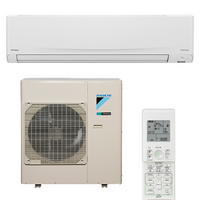

Search Results:
Search Results:
Search Results:
Search Results:
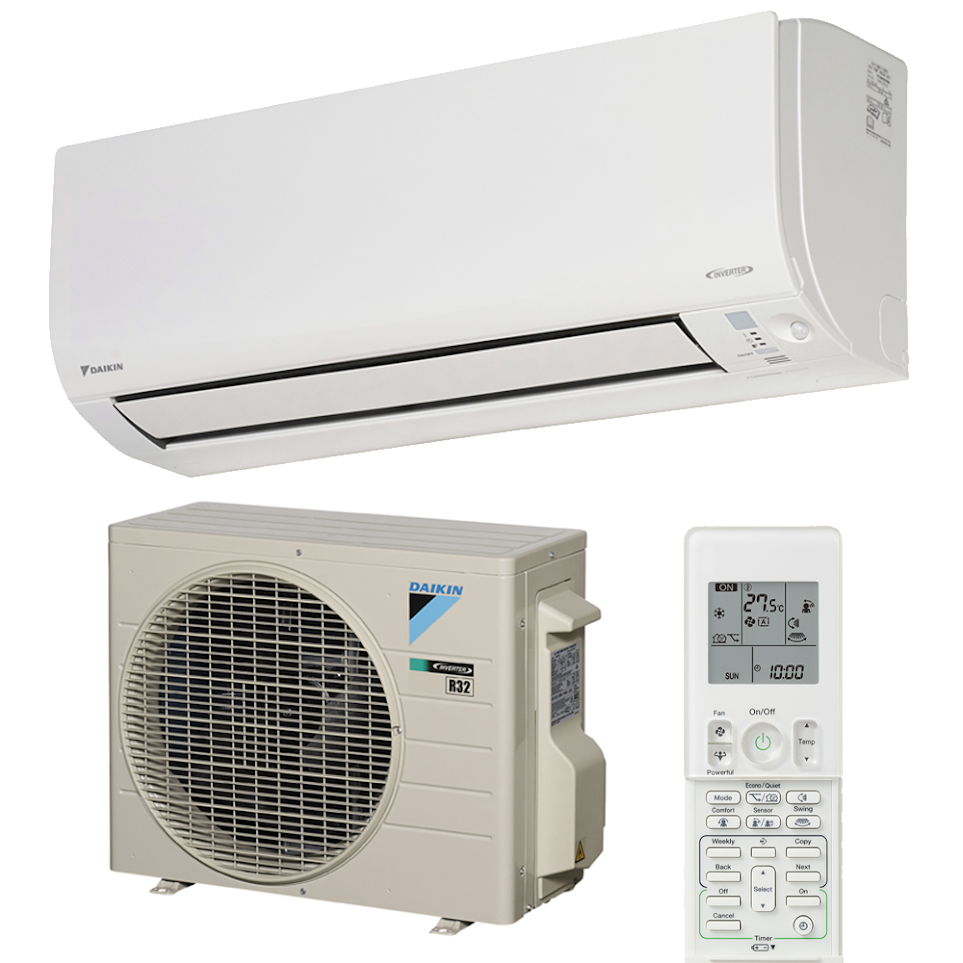
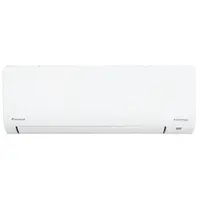
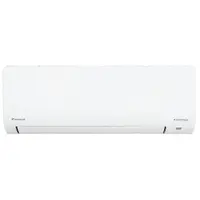
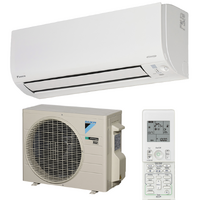
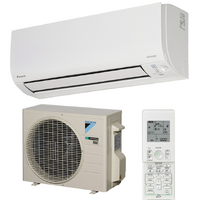
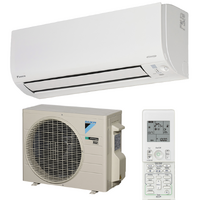
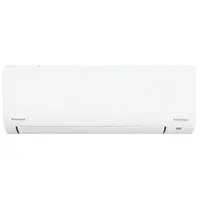
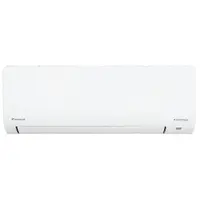
Find the best Daikin Split System Air Conditioning here at Sparky Direct. [ Read More ]
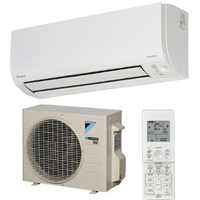
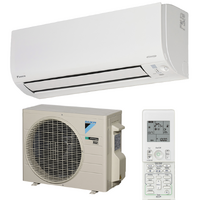
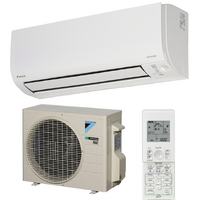
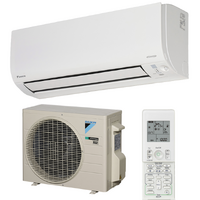
A split system separates the cold-side and hot-side components of an air conditioner into two physical units. The indoor head pushes conditioned air into the room. The outdoor condenser handles the heat exchange and houses the compressor. Daikin manufactures both units, the controllers, and the refrigerant cycle as a matched system.
Most Daikin units sold in Australia are reverse-cycle, meaning they cool in summer and heat in winter from the same hardware. The R32 refrigerant used across the current range has a lower global warming potential than older R410A gas.
The compressor in the outdoor unit pumps refrigerant through a closed loop. As the refrigerant changes between liquid and gas states, it absorbs heat in one location and releases it in another. In cooling mode, heat is pulled from inside the room and dumped outside. In heating mode, the cycle reverses.
An inverter-driven compressor varies its speed continuously. This contrasts with older fixed-speed units that switch fully on or fully off. Variable speed lets the system match output to demand, which improves efficiency and reduces temperature swings.
The indoor head contains the evaporator coil, a fan, an air filter, and the user controls. The outdoor unit contains the compressor, the condenser coil, a fan, and the electronics that drive the inverter. Connecting them is a pair of insulated copper pipes carrying refrigerant, plus a sheathed control cable.
The refrigerant pipes are commonly supplied as pair coil copper in lengths matched to the install. The outdoor unit must sit on stable ground or be mounted on dedicated wall brackets.
Ducted systems push air through a network of ducts in the ceiling and serve the whole house. They cost more to install and run, but they cool every room. Portable units sit on the floor and vent through a window. They are cheap and need no installation, but they are noisy and inefficient.
A split system sits between the two. It conditions one room or zone effectively, runs quietly, and uses less energy than a portable unit. It is the default choice for cooling bedrooms, lounges, and home offices in Australian homes.
Daikin Industries is a Japanese company founded in 1924. It is the largest manufacturer of air conditioning equipment in the world by revenue and operates in more than 170 countries. Daikin invented the split system in 1958 and pioneered the use of inverter technology in residential air conditioners.
The Australian arm, Daikin Australia, has been operating since 1969 and runs a national network of dealers, technicians, and parts suppliers. Daikin units are designed and tested for Australian climate conditions, including high summer temperatures and humidity loads in the north.
Daikin runs accredited dealer and installer programs across all states and territories. Spare parts are stocked in Australia, which keeps repair lead times short. The factory warranty is administered locally, not through an overseas call centre. This matters when something goes wrong years into ownership.
Daikin units are consistently rated highly by independent reviewers and consumer organisations for reliability, build quality, and noise performance. The compressor, which is the most expensive component to replace, is manufactured in-house. This vertical integration is one reason Daikin units commonly run for 15 years or more without major faults.
Sparky Direct also stocks Mitsubishi Electric, Fujitsu, Haier, Rinnai, Mitsubishi Heavy Industries, and Gree. Daikin and Mitsubishi Electric are typically priced at the premium end. Fujitsu and Haier sit in the mid-range. Rinnai and Gree often compete on price for trade buyers needing volume.
| Brand | Position | Typical Strength |
|---|---|---|
| Daikin | Premium | Reliability, quiet operation, inverter efficiency |
| Mitsubishi Electric | Premium | Heating performance, build quality |
| Fujitsu | Mid-range | Wi-Fi integration, broad range |
| Haier | Mid-range | Strong value, competitive features |
| Rinnai | Trade-friendly | Sharp pricing on common capacities |
The Cora series is Daikin's entry-level wall-mounted split system. It covers the 2.0kW to 9.0kW capacity range, which suits bedrooms through to large open-plan living areas. Cora units use the same R32 refrigerant and inverter platform as the higher models, but with simpler controls and a more compact indoor head.
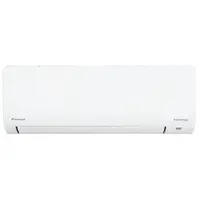
The Alira X series adds Wi-Fi as standard, a higher star rating in many capacities, and a refined indoor head design. It is the volume seller in the Daikin range and the typical choice when buyers want better efficiency and connectivity without paying for the premium models.
The Zena and Emura series are the design-led premium models. They feature curved or flat-fronted indoor units intended to be visible in living spaces. Performance is similar to Alira X in equivalent capacities, with the main differences being aesthetics, sound levels, and finish options.
A multi-split system runs two or more indoor heads from a single outdoor condenser. This suits homes where multiple rooms need cooling but where outdoor space is limited. Commercial models include cassette air conditioners that mount flush into a suspended ceiling, plus ducted and floor-standing options.
For bedrooms, studies, and small offices up to about 25 square metres, a 2.0kW or 2.5kW Cora or Alira X is the standard pick. Going larger than needed wastes money and can cause short-cycling, where the unit reaches temperature too quickly and cycles on and off without dehumidifying properly.
Sizing is based on the heat load of the room. The heat load depends on floor area, ceiling height, insulation, window size and orientation, the number of people using the space, and the local climate. A rough rule of thumb is 100 to 150 watts of cooling per square metre for a typical Australian home.
That gives a 2.5kW unit for a 17 to 25 square metre bedroom, a 5.0kW unit for a 35 to 50 square metre living area, and a 7.0 to 8.0kW unit for larger open-plan spaces. These are starting points only. A site-specific calculation gives a more accurate result.
Split system capacity is quoted in kilowatts (kW) of cooling and heating output, not power consumption. A 2.5kW unit delivers 2.5 kilowatts of cooling but typically draws around 0.7kW of electricity to do so. The ratio of output to input is the efficiency, expressed as the COP (coefficient of performance) for heating and EER (energy efficiency ratio) for cooling.
A west-facing room with large unshaded windows can need 30 to 50 percent more capacity than the floor area suggests. A well-insulated room with shaded windows and a low ceiling can need less. Vaulted ceilings, dark roofs, and uninsulated walls all push the requirement up.
South-east Queensland and Brisbane homes face high humidity in summer, which adds to the latent cooling load. The unit has to remove moisture as well as heat. Northern Queensland adds higher peak temperatures. In both regions, sizing on the upper end of the calculated range is sensible.
Oversizing: A unit that is too large cools the room quickly but does not run long enough to remove humidity. The room feels cold and clammy.
Undersizing: A unit that is too small runs flat out on hot days and never reaches the set temperature. Energy use and wear both go up.
Ignoring the heating side: A unit sized for summer cooling may struggle to heat the same space on a cold winter morning. Reverse-cycle heating output is usually higher than cooling output, but check both ratings.
Inverter compressors vary speed continuously to match the cooling or heating demand. They ramp up hard to reach the set temperature quickly, then throttle back to maintain it. This avoids the start-stop cycling of older fixed-speed units and reduces energy use by 30 to 50 percent in typical operation.
Most current Daikin models include or accept the Daikin Mobile Controller. The app lets users set schedules, change temperature remotely, and monitor energy use. Wi-Fi is standard on the Alira X, Zena, and Emura series. On the Cora series it is available as an add-on adapter.
Daikin units use multi-stage filtration. The base layer is a washable mesh filter that catches lint and dust. Higher-spec models add an electrostatic filter and a deodorising filter that removes airborne particles and odours. The titanium apatite photocatalytic filter on premium models is washable and lasts about three years.
Australia uses the Zoned Energy Rating Label (ZERL) for residential air conditioners. The label shows star ratings for cooling and heating across three climate zones: hot, average, and cold. More stars means more output per kilowatt-hour of electricity used. Daikin units commonly score between 4 and 6 stars, depending on the model and capacity.
Older fixed-speed split systems used 30 to 50 percent more electricity than current inverter units of the same capacity. The difference is largest when the unit is maintaining temperature, which is most of its operating time. Replacing a 15-year-old fixed-speed unit with a current inverter model often pays back in energy savings within five to seven years.
A 2.5kW Daikin unit running for 8 hours a day in cooling mode draws roughly 0.7kW on average. At a Brisbane retail electricity rate of about 30 cents per kWh, that is around $1.70 per day or $50 per month for the cooling season. Larger units and longer run times scale the cost up proportionally.
Setting the thermostat one degree higher in summer (or lower in winter) cuts energy use by 5 to 10 percent. Running the unit only when the room is occupied saves more again. Closing doors and curtains in unused rooms reduces the conditioned volume and helps the system reach set temperature faster.
Split system installation involves work that must be done by licensed trades. The electrical connection requires a licensed electrician. The refrigerant work requires an Australian Refrigeration Council (ARC) licence holder. Both are legal requirements under state regulations and the Ozone Protection and Synthetic Greenhouse Gas Management Act.
Safety and warranty note: Daikin will void the manufacturer warranty if the system is installed by an unlicensed person. The work also breaches state law and may invalidate building and home insurance. Always use an ARC-licensed refrigeration mechanic and a licensed electrician.
A standard back-to-back install (indoor head and outdoor unit on opposite sides of the same wall) takes around 4 to 6 hours. Longer pipe runs, multi-storey installs, and difficult mounting locations add time. The installer drills the wall penetration, mounts both units, runs and brazes the refrigerant pipes, vacuum-tests the system, and charges it with refrigerant.
The electrical side covers the dedicated circuit, isolator switch, and earthing. Many Daikin units sold by Sparky Direct ship as KIT packages with the indoor head, outdoor unit, basic installation kit components, and a remote.
A standard back-to-back install in Brisbane typically costs between $700 and $1,200 for a 2.5kW to 5.0kW system. Long pipe runs (more than 3 metres), high mounting, scaffolding, or wiring upgrades add cost. Multi-split installs cost more again because of the extra indoor heads and refrigerant work.
Check that the installer holds a current ARC refrigerant handling licence and a state electrical licence. Daikin's accredited dealer network is searchable on the Daikin Australia website. An accredited installer registers the warranty automatically and gives access to extended warranty options.
The user-serviceable maintenance is straightforward. Pull the front panel off the indoor head, lift out the mesh filters, vacuum the dust off, rinse under cold water, dry, and refit. This should be done every 4 to 6 weeks during heavy use and every 3 months otherwise.
A clogged filter restricts airflow, drops capacity, and forces the compressor to work harder. Clean filters are the single biggest factor in keeping running costs and noise levels down.
Beyond the user-serviceable filter clean, the unit benefits from a professional service every 2 to 3 years. The service covers a deeper clean of the indoor coil, drainage check, refrigerant pressure check, electrical safety check, and outdoor coil clean. Coastal locations need more frequent outdoor unit cleaning to prevent salt corrosion.
A well-installed and serviced Daikin split system commonly runs 12 to 18 years. The biggest determinants of lifespan are install quality, regular filter cleaning, and protecting the outdoor unit from direct sun and salt spray where possible. A simple poly slab base keeps the outdoor unit off the ground and reduces moisture exposure.
Daikin offers a manufacturer warranty on residential split systems sold and installed in Australia. Coverage varies by model and series, with the higher-end models attracting longer cover. The exact term applicable to a specific model and date of purchase is confirmed on the warranty card and on the Daikin Australia website. Warranty cover is conditional on installation by a licensed refrigeration mechanic and a licensed electrician.
Daikin Australia stocks parts locally for current and recent models. The accredited dealer network covers most metropolitan and regional areas, which keeps repair lead times short compared with brands that ship parts from overseas. This is one of the practical reasons Daikin units retain their value over a long ownership period.
Some accredited installers offer extended warranty packages that lengthen the standard manufacturer cover, typically in exchange for a scheduled annual service. These can be worthwhile for commercial installs and high-use residential systems. For a standard home install used a few hours a day, the standard warranty plus regular filter cleaning is usually sufficient.
Daikin units sit at the premium end of the split system market. The Cora series is the most affordable entry point. Alira X commands a step up for the added Wi-Fi and improved efficiency. Zena and Emura premium models add a further step for design and finish. Comparing like-for-like capacities across the Daikin range and against other brands gives the clearest picture of value.
The cheapest path into Daikin ownership is the Cora series in 2.0kW or 2.5kW capacity. Buying through a trade wholesaler like Sparky Direct rather than a retailer can also reduce the supply cost. Installation is the other major cost line and is best quoted from two or three accredited installers.
The headline price is only part of the cost. Energy use over the unit's lifespan often exceeds the purchase price for high-use installs. A Daikin unit that costs $300 more upfront but uses 20 percent less power than a budget alternative typically returns the difference in 3 to 5 years.
Trade wholesalers stock the same Daikin units that appear in retail stores, often at lower prices. The trade-off is that the buyer arranges installation separately. For trade buyers and organised homeowners, this is usually the better-value path. Sparky Direct ships nationwide and handles both trade and retail customers.
Decide first on capacity (kW), then on series. A bedroom typically needs 2.5kW. A medium living area needs 5.0kW. A large open-plan space needs 7.0 to 8.0kW or a multi-split. Once capacity is set, choose the series based on budget, design preference, and whether Wi-Fi control matters.
Buying on capacity rule-of-thumb only: The thumb rule is a starting point, not a final answer. A site-specific calculation pays for itself in comfort and running costs.
Skipping the heating rating: Reverse-cycle heating performance varies. Check the heating star rating if you intend to use the unit through winter.
Cheapest install: The headline install price often excludes long pipe runs, brackets, and electrical upgrades. Get a written, itemised quote.
Ignoring noise levels: Bedrooms benefit from low-noise models. Check both indoor and outdoor sound ratings.
Forgetting the outdoor unit location: The outdoor unit needs airflow on three sides and access for service. Tight enclosures cause overheating and shorten unit life.
Most residential splits up to 5.0kW run on a dedicated 10A or 15A circuit from the switchboard. Larger units and three-phase models need 20A circuits or three-phase supply. The electrician should check switchboard capacity before install. Older homes with limited spare circuits may need a sub-board or main switch upgrade.
Sparky Direct stocks the Daikin range and ships Australia-wide from our Brisbane warehouse. The full air conditioning catalogue covers split systems, accessories, ducting, brackets, and installation tools. Trade pricing is available on application.
Watch Daikin FTXV25WVMA-KIT | 2.5KW Reverse Cycle Split System Air conditioner R32 video
Watch Mitsubishi Electric Air Conditioner Split System 2.5 KW Cooling - 3.2 Kw Heating | MSZ-AP25VGD video
Watch Rinnai HSNRA80 | 8.0 KW Reverse Cycle Split System Air conditioner | R410A video

I was going to install a budget unit then found these online. Great price for these units. Shipping was next day and only $30 to deliver in Brisbane. Awesome value for money.
Right on Christmas our old Mitsubishi split system died after 20 years. We purchased our new one from Sparky Direct. It is so quiet and cooling much better than the previous one. The guys at Sparky Direct were so helpful, their warehouse was very clean and organised. First time purchasing and I will be using them again Thanks
After receiving good advice and help on line from Sparkys. I selected the Mitsubishi 5kw split system. Once installed, I cannot believe how quiet and perfect the replacement unit has been for my home. Highly recommend it and considering the same system for my adjacent studio apartment.
Quality products in stock • Fast Australia-wide delivery • Competitive trade pricing
Browse Daikin Split Systems → Get Expert Advice →Yes. During cooling operation, Daikin split system air conditioners help reduce excess indoor humidity, improving comfort levels.
Daikin split system air conditioning is available from Sparky Direct, offering access to genuine products.
Delivery availability depends on the supplier and location, with options commonly available across metropolitan and regional Australia.
Yes, subject to building approvals, outdoor unit placement, and assessment by a licensed installer.
Yes. Daikin split system air conditioners are supplied with a manufacturer’s warranty when installed and used in accordance with Australian guidelines.
Consider room size, required capacity, energy efficiency, noise levels, and ensuring installation by licensed professionals.
Yes. Reverse-cycle Daikin split systems provide effective heating and cooling throughout all seasons.
Electricity use depends on unit size, efficiency rating, thermostat settings, and usage habits. Inverter technology helps minimise unnecessary energy use.
With proper installation and regular maintenance, a Daikin split system air conditioner can provide reliable performance for many years.
Some Daikin split system models offer optional Wi-Fi control, allowing remote operation via compatible smartphone applications.
Larger capacity Daikin split systems can be suitable for open-plan living areas when correctly sized.
Yes. Low noise levels and stable temperature control make Daikin split systems well suited for sleeping areas.
Routine servicing is generally recommended every 12 months, or more often in high-use or dusty environments.
Daikin split system air conditioning uses an indoor unit and an outdoor unit connected by refrigerant pipework to provide efficient heating and cooling for individual rooms or defined spaces.
Most Daikin models include intuitive remote controls with simple temperature, fan speed, and mode settings.
Yes. Daikin split systems are well known for quiet operation, making them suitable for bedrooms, living areas, and home offices.
Yes. Installation must be carried out by licensed refrigeration and electrical professionals to ensure safety, performance, and compliance.
Many modern Daikin split system models use R32 refrigerant, which has a lower global warming potential than older refrigerants.
Many residential Daikin split systems operate on single-phase power, while larger capacity models may require specific electrical provisions assessed by a licensed electrician.
Yes. Daikin split system air conditioners are reverse-cycle units, providing cooling in summer and heating in winter.
Yes. Most Daikin split system air conditioners use inverter technology to adjust compressor output, improving comfort while reducing energy consumption.
Correct sizing depends on room dimensions, insulation, ceiling height, window exposure, and heat load. A qualified installer can recommend the appropriate capacity.
Energy efficiency varies by model and capacity, with many Daikin split systems achieving high star ratings under Australian energy labelling requirements.
Daikin split system air conditioners supplied in Australia are designed to meet applicable AS/NZS electrical and safety standards when installed by licensed professionals.
Yes. Daikin split system air conditioners are designed and tested to perform reliably in Australian climates, including hot summers and cooler winter conditions.