
Search Results:
Search Results:
Search Results:
Search Results:
Find the best Air Conditioning Tools here at Sparky Direct. [ Read More ]
Air conditioning tools are the instruments a technician uses to work on refrigeration circuits, ductwork, and the electrical controls that run them. They combine mechanical, pneumatic, and electronic functions in a single toolkit. Unlike general trade tools, most HVAC tools are rated for specific refrigerant types, pressures, and temperatures.
General electrical and plumbing tools are not designed for the pressures and temperature swings in a sealed refrigeration circuit. HVAC tools carry pressure ratings marked in kPa or psi, compatibility marks for R32, R410A, R22, or R134a, and seals chosen for refrigerant oils. A standard spanner can open a flare nut, but only a calibrated torque wrench will seat the flare to the manufacturer's specified value without leaks.
The same tool can appear at different stages of the job. A manifold gauge set is used during commissioning to check standing pressures, during servicing to diagnose faults, and during recovery to monitor system-side pressure. A multimeter checks supply voltage during install, tests fan and compressor windings during service, and verifies control board outputs during fault-finding.
Australian HVAC work is regulated under a refrigerant handling licence and AS/NZS 5149. Specialised tools are not a luxury, they are the only way to meet the compliance requirements for leak testing, evacuation, and recovery. Using the wrong tool risks refrigerant release, faulty flares, and failed commissioning.
A complete kit draws on all four groups. A typical service call may start with a thermometer check on the return and supply air, move to electrical testing at the outdoor unit, then to a manifold gauge reading on the service ports. The right mix depends on the work type: installation work leans heavily on pipework tools, while service and fault-finding draw more on diagnostic gear.
A split system install starts with bracket mounting, then pipework, then electrical, then evacuation and commissioning. The core tools for a domestic install include a hammer drill with core bits for the wall penetration and a copper pipe bender. Pipework tools also include a flaring kit, a deburring tool, and a torque wrench set sized for 1/4-inch through 5/8-inch flare nuts. On the refrigerant side, the kit needs a vacuum pump and a manifold gauge set. A pre-packaged installation kit saves time for standard residential jobs.
Service work is lighter on pipework and heavier on diagnostics. A service technician typically carries a manifold gauge set, a clamp meter, a laser thermometer, a fin comb, a coil cleaning kit, and a small set of flare-nut spanners. The emphasis is on quick diagnosis without opening the sealed circuit unless necessary.
Fault-finding combines electrical and refrigerant-side measurement. A multimeter with a temperature probe separates electrical faults from refrigerant faults. Electrical faults include a failed capacitor, an open contactor, or a faulty thermistor. Refrigerant faults include undercharge, a restriction, or non-condensable gas in the circuit. A micron gauge proves the system was evacuated properly during the last service.
Commissioning requires documented measurements: suction and discharge pressures, subcooling and superheat, air-on and air-off temperatures at both coils, and running current at the compressor. This needs a gauge set, two thermometers (or one dual-probe), a clamp meter, and a pen or digital form to record values against the manufacturer's commissioning sheet.
A multimeter measures voltage, resistance, and low-range current through its probes. A clamp meter adds current measurement through a split-core jaw, which is essential for readings on compressor and fan motor leads without breaking the circuit. Fluke and Klein Tools are the two most common brands on Australian HVAC vans, with Fluke preferred for high-end diagnostics and Klein Tools offering strong mid-range options.
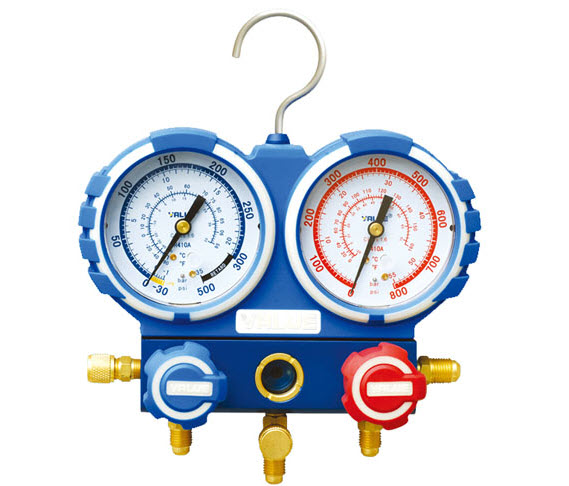
A manifold gauge set connects to the system's high and low service ports, allowing the technician to read pressures, add or recover refrigerant, and pull a vacuum. Modern sets are specific to refrigerant type: R32 sets use 5/16-inch fittings and higher pressure ranges, while legacy R22 and R410A sets use different fittings and scales. Ball valve manifolds close faster and leak less than knob-type manifolds.
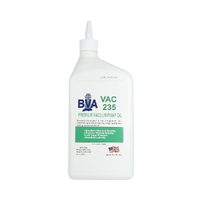
A vacuum pump evacuates air, moisture, and non-condensable gases from the refrigerant circuit before charging. For domestic splits, a 2 to 4 CFM two-stage pump is standard. A deep vacuum (below 500 microns) is required for reliable operation, and only an electronic micron gauge can verify that target has been reached. Vacuum pump oil must be changed regularly to maintain the pump's ability to reach low microns.
Leak testing is required under the refrigerant handling licence. Common methods include electronic leak detectors (heated diode or infrared sensor types), UV dye kits, soap-bubble solutions, and nitrogen pressure tests. A pressure test with dry nitrogen at working pressure is the standard method for new installations before evacuation.
Temperature tools include contact probes, laser thermometers, and dual-input digital thermometers for simultaneous air-on and air-off readings. Airflow measurement uses anemometers at grilles or Pitot tubes in ductwork. Delta-T across the evaporator (typically 8 to 14 degrees Celsius) is a fast health check for any split system.
Compliance reminder: Handling refrigerant in Australia requires a current Refrigerant Handling Licence issued by the Australian Refrigeration Council. Tools alone do not confer the right to work on a sealed system.
A recovery machine pulls refrigerant out of a system into a recovery cylinder, allowing the technician to work on the sealed circuit without venting to atmosphere. Recovery is mandatory before any component change that breaks the refrigerant circuit. A typical unit draws around 300 watts and recovers at roughly 0.2 to 0.5 kg per minute depending on phase and temperature.
Charging scales measure refrigerant added or recovered to within 5 to 10 grams. Accuracy matters because modern inverter systems are sensitive to charge: 50 grams undercharged on a 2.5 kW split can noticeably reduce capacity and shorten compressor life. Wireless scales with a handheld display let the technician watch the readout while operating the valve at the manifold.
A micron gauge reads absolute pressure below atmospheric, in the 0 to 10,000 micron range. It is the only reliable way to confirm a deep evacuation. The standing vacuum test (pump off, gauge isolated, watch for rise) reveals leaks or residual moisture that a manifold gauge cannot detect. Target values are typically 500 microns held for 10 minutes.
Charging hoses connect the manifold to the service ports and refrigerant cylinder. Hoses must be rated for the refrigerant (R32 hoses use different seals to R22 hoses), and fitted with ball-valve ends to minimise refrigerant loss when disconnecting. Hose length is usually 900 mm or 1500 mm for bench work, with longer hoses available for roof or ceiling service ports.
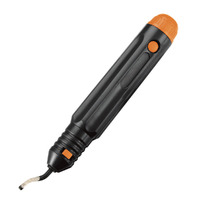
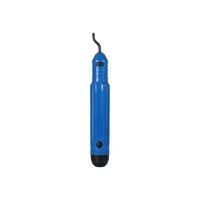
A clean, square cut is the first step in a leak-free flare. Rotary pipe cutters with replaceable wheels handle 1/4-inch through 5/8-inch copper, the sizes used in most residential split installs. After cutting, internal deburring with a deburring tool removes the raised lip that would otherwise restrict flow and fracture a flare during seating.
Copper pipe benders shape refrigeration pipe without kinking or thinning. Lever-action benders cover 1/4-inch to 7/8-inch sizes and produce tight radius bends suitable for unit-rear penetrations. Spring benders are a cheap backup for occasional use but give less consistent results than a geared bender.
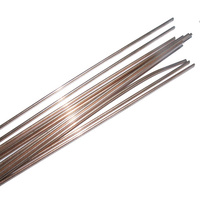
A flaring tool swages the end of a copper pipe into a 45-degree cone that seats against a flare nut. Eccentric clutch flaring tools produce a consistent flare regardless of operator pressure, reducing leaks at commissioning. For joints that will not be demountable, silver-bearing brazing rod and an oxy-LPG torch give a sealed, high-temperature joint.
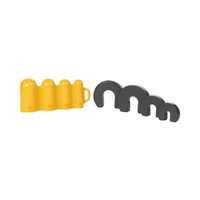
Flare nuts have a specified torque value by size. Undertightening leaks; overtightening splits the flare. A flaring kit paired with a calibrated torque wrench is the only way to reliably hit the manufacturer's specification. A standard 8-piece torque set covers 1/4-inch through 5/8-inch flare nuts in typical split system work.
| Flare Nut Size | Typical Torque (Nm) | Common Application |
|---|---|---|
| 1/4 inch | 14 to 18 | Liquid line, small splits |
| 3/8 inch | 33 to 42 | Suction line, smaller splits |
| 1/2 inch | 50 to 60 | Suction line, mid-size splits |
| 5/8 inch | 63 to 75 | Suction line, larger splits |
Values are indicative; always follow the manufacturer's specification for the specific unit.
Before any work on an HVAC unit, the technician must prove isolation. This requires a tested voltage indicator and a known live source for the test-dead-test procedure. Insulation testers confirm motor and cable integrity before and after service. Safety lock-out devices prevent re-energisation during the job.
Refrigerant contact can cause frostbite, so safety glasses and suitable gloves are mandatory when working on open refrigerant circuits. Ear protection is needed when running vacuum pumps or recovery machines for extended periods. Nitrile gloves give protection from oils during filter and drier changes.
Refrigerant cylinders must be stored upright, below 50 degrees Celsius, and secured against falling. Recovery cylinders must never be filled above 80 percent by weight. When pressure-testing with nitrogen, a regulator is mandatory: cylinder pressure can exceed 15,000 kPa and is lethal if vented directly into a sealed circuit.
Relevant standards include AS/NZS 5149 for refrigerating systems and heat pumps. AS/NZS 3000 governs the electrical installation side. The Ozone Protection and Synthetic Greenhouse Gas Management Regulations cover refrigerant handling. The Australian Refrigeration Council issues both the Refrigerant Handling Licence for technicians and the Refrigerant Trading Authorisation for businesses.
Entry-level kits suit apprentices and technicians starting out in refrigeration work. They typically include a basic manifold gauge set, a 2 CFM single-stage vacuum pump, a manual flaring tool, and a standard pipe cutter. Professional kits step up to two-stage vacuum pumps, ball-valve manifolds, eccentric-clutch or powered flaring tools, and electronic micron gauges.
Residential split system work is served by a modest toolkit: 1/4-inch to 5/8-inch pipework tools, a 2 to 4 CFM pump, and a basic gauge set. Commercial work on VRF and chilled water systems demands higher-capacity pumps, larger gauge scales, longer charging hoses, and brazing capability. The investment steps up significantly for commercial-ready tooling.
Tool cost reflects three factors. The first is the materials: aluminium versus steel bodies, brass versus plated fittings. The second is the precision of the working components, such as manifold movement and gauge calibration. The third is the service network behind the tool. Cheap tools often work on day one but drift out of calibration or fail at seals within a year of daily use.
A technician who carries tools up and down ladders all day benefits from light, well-balanced handles, soft-grip coatings, and tools that pack tightly into a roll or case. Manifold gauge sets with impact-resistant cases and protective boots around the glass faces survive the van floor better than bare-faced alternatives.
The irreducible core of an HVAC kit includes a manifold gauge set matched to current refrigerants, a two-stage vacuum pump, and an electronic micron gauge. Pipework tools add a flaring kit, a pipe cutter, a deburring tool, and a torque wrench set. Electrical and thermal measurement needs a clamp meter and a laser thermometer. This combination covers roughly 90 percent of install and service work on residential splits.
Ducted and VRF work adds an electronic leak detector, extra-long charging hoses, a nitrogen regulator, a brazing kit, and a digital anemometer for airflow measurement. Commercial refrigeration adds larger-capacity recovery equipment, heavier torque wrenches, and specific tools for captive flare and ODS fittings.
Advanced diagnostic work may call for a thermal imaging camera. These cameras visualise coil blockages and refrigerant distribution. A wireless manifold that logs pressures over a service call is useful for commercial commissioning. A combustion analyser is needed when working on gas-fired heating components in reverse-cycle systems.
Tools drift with use. Torque wrenches should be checked annually against a test bench or sent for recalibration. Vacuum pump oil should be changed after every deep-vacuum job on a wet system, and at least every 20 hours of use otherwise. Manifold gauges need zeroing periodically; micron gauges need new sensor tips or full factory calibration every few years.
Tool prices sit across a wide range. A basic residential install kit (manifold, pump, flare set, pipe cutter, small torque set) typically falls in the low four-figure range. A professional-grade equivalent with two-stage pump, ball-valve manifold, eccentric-clutch flaring tool, and electronic micron gauge can run two to three times that figure.
Cheap kits exist and work for the apprentice or occasional user. They share common weaknesses: single-stage pumps that struggle to reach deep vacuum, and knob-type manifolds with slower action and higher leak potential. Flaring tools without eccentric clutches also produce inconsistent flares. Cheap kits are a reasonable entry point provided they are replaced as work volume grows.
Professional-grade tooling pays back through time saved and warranty returns avoided. A torque wrench that seats every flare correctly saves the cost of a callback. A two-stage pump that reaches 500 microns in half the time of a single-stage pump saves 20 to 30 minutes per job. Over a year of daily use, this adds up to many hours.
Trade suppliers stock tools that meet the specifications of working technicians: correct refrigerant compatibility, Australian-market pressure ratings, and post-sale support. Retail generalist outlets often stock tools aimed at the automotive air conditioning market, which may not suit residential or commercial HVAC work.
For technicians running jobs week to week, stock availability matters more than headline price. A tool that arrives two days late can cost a full day of labour if a scheduled install is delayed. Sparky Direct ships Australia-wide, with stocked items dispatched the same business day where ordered before cutoff.
Match gauge sets and hoses to the refrigerants you work on. An R32-specific manifold uses 5/16-inch SAE fittings and higher-pressure gauges than an older R22 set. Charging scales should comfortably read a full 10 kg cylinder for most residential work, and 20 kg or larger for commercial.
Buying a single-stage vacuum pump when the work requires deep vacuum on humid systems. Choosing a manifold gauge set without ball valves, which slows every service and increases refrigerant loss. Skipping the torque wrench, which produces leaks that show up weeks later. Selecting charging scales with insufficient resolution for inverter system charging.
Tools bought once and used daily for ten years work out cheap per use. Tools bought three times in ten years because each one breaks are expensive. The long-run cost of quality tooling is lower than the sticker price suggests, particularly for mechanically-abused items like flaring tools, pipe benders, and torque wrenches.
Trade-focused online suppliers give access to a wider range of professional HVAC tools than general retail. Look for suppliers that carry RectorSeal, Sauermann, NAVTEK, Value, and FavorCOOL, along with generalist HVAC brands, so a complete van kit can be sourced from one place.
Watch Rectorseal 87001 Pro-Fit Precision Flaring Kit | 87001 video
Watch Manifold Gauges Ball Valve Type R32 | VMG-2-R32 video
Watch Airconditioning Refrigerant Recovery / Charge Scales 50KG | VES-50B video

The Product is true to its description and with a little bit of practice, produces a superior flare in a timely manner. A vice is not needed like stated in previous reviews and can easily be executed held in hand. The only recommendation i would give is to wear a suitable low profile glove as the copper pipe can get hot!. Overall very happy with product.
With this amazing spanner torque wrench kit it takes all the guesswork out of tightening the flare nuts to the specified setting. Complete range of flare nut sizes with the adjustable hand piece set in a convenient plastic case with double sliding locks to prevent anything falling out accidentally. I’m glad Sparky Direct brought this tool into their refrigeration sales as I’ve been searching multiple sites to replace this. Thank you Sparky Direct!
Rugged and great functionality built into this meter. The app for retrieving data could be a little better. For example it would be nice if there were more options for what data you could retrieve from the meter, like when capturing data on the meter being able to send that later to the app would be great. But a very impressive and comprehensive meter for this price. Definitely recommend for anyone needing a good all rounder and works in solar, HVAC or power analysis.
Quality products in stock • Fast Australia-wide delivery • Competitive trade pricing
Browse Air Conditioning Tools → Get Expert Advice →Air conditioning tools require technical knowledge and experience, which is why they are typically used by trained professionals.
Air conditioning tools are available from Sparky Direct, providing access to professional-grade equipment with Australia-wide delivery.
Air conditioning tools are available both individually and in kits, depending on professional requirements.
Yes. Air conditioning tools are commonly available for delivery to residential and commercial locations.
Warranty coverage varies by manufacturer and supplier, with conditions applying based on use and maintenance.
Consider tool quality, refrigerant compatibility, durability, accuracy, and suitability for professional use.
Yes. Correct tools and procedures help ensure installations meet manufacturer requirements, supporting warranty compliance.
Yes. Many tools are used during servicing to test pressures, check performance, and maintain system operation.
Yes. Regular use can cause wear, which is why tools should be inspected and replaced when necessary.
When used correctly by trained professionals, air conditioning tools are designed to operate safely.
Yes. Purpose-built tools help installers work more accurately and efficiently, reducing installation time.
Many air conditioning tools are designed to be portable for use on-site, while larger equipment may be transported separately.
Yes. Tools should be kept clean, calibrated where required, and stored correctly to maintain accuracy and safety.
Air conditioning tools are used for the installation, servicing, testing, and maintenance of air conditioning and refrigeration systems.
Yes. Low-quality or incorrect tools can lead to leaks, incorrect connections, and reduced system efficiency.
Using the right tools helps prevent system damage, reduces installation errors, and supports reliable system performance.
Yes. Proper training and licensing are required to safely and correctly use air conditioning tools on live systems.
Air conditioning tools are commonly made from hardened steel, aluminium, brass, and durable composite materials for strength and accuracy.
Most air conditioning tools are intended for use by licensed refrigeration and electrical professionals due to safety and compliance requirements.
Some tools vary based on system size and complexity, with commercial systems often requiring heavier-duty or specialised equipment.
Yes. Using correct and well-calibrated tools helps ensure accurate installation, system efficiency, and long-term reliability.
Yes. Some air conditioning tools are rated for use with R32 refrigerant systems and must be compatible with higher operating pressures.
Yes. Many air conditioning tools are specifically designed for split system and ducted air conditioning installations.
Quality air conditioning tools supplied in Australia are designed to meet relevant AS/NZS safety and performance requirements for professional use.
Common air conditioning tools include flaring tools, vacuum pumps, manifold gauges, pipe cutters, benders, torque wrenches, and leak detection equipment.