


What Are Hot Water Elements and How Do They Work?
Table of Contents
- How Hot Water Elements Work
- Types of Hot Water Elements
- Wattage, Voltage, and Heating Performance
- Thread Size, Fitment, and Compatibility
- Choosing the Right Replacement Element
- Hot Water Element vs Thermostat
- Performance Factors and Quality Indicators
- Common Problems and Troubleshooting
- Testing and Fault Diagnosis
- Why Hot Water Elements Fail
- Installation and Replacement Considerations
- Cost, Value, and Buying Strategies
- Maintenance and Extending Element Life
- Trade Applications and Use Cases
- Safety and Compliance Considerations
- Where to Buy Hot Water Elements in Australia
- Product Videos
- What Sparky Direct Customers Say
- Quick Summary (TL;DR)
- Frequently Asked Questions about Hot Water Elements
How Hot Water Elements Work
Core Function in Electric Water Heaters
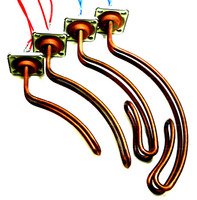
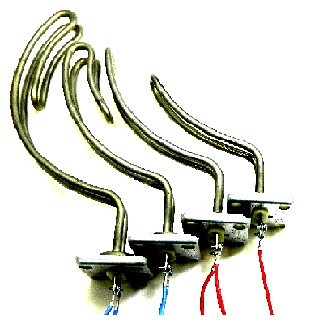
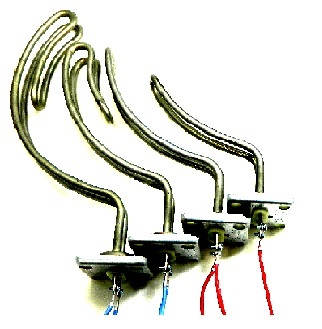
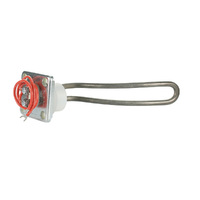
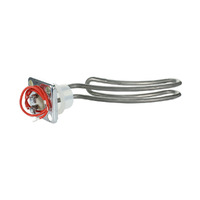
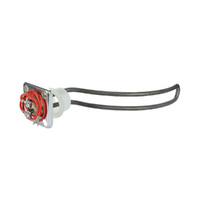
An electric storage water heater relies on one or two immersion elements to heat water inside the tank. Each element consists of a resistive wire coil sealed inside a metal sheath. When current flows through the wire, the resistance generates heat. That heat conducts through the sheath wall into the surrounding water.
The thermostat monitors water temperature and switches the element on or off to maintain the set point. Most residential tanks operate a single lower element, while some larger tanks use upper and lower elements in sequence.
How Resistance Heating Transfers Energy to Water
Resistance heating follows Joule's law: power dissipated equals current squared multiplied by resistance (P = I²R). For a 2.4 kW element on a 240V supply, the operating current is 10 amps. The element sheath must transfer all of that heat into the water efficiently. Poor contact with water, caused by scale build-up or dry firing, concentrates heat at the element surface and accelerates failure.
Element Placement and System Performance
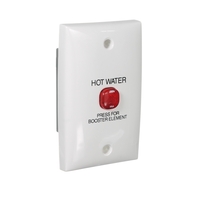
Element position affects recovery speed and energy use. Lower elements heat the full tank volume. Upper elements heat only the top portion, which suits off-peak tariff arrangements where rapid reheat is needed in the morning peak. Tanks with solar boost typically use an upper element for electrical backup when solar input is insufficient.
Types of Hot Water Elements and Their Applications
Element sheath material determines durability, corrosion resistance, and suitability for different water quality conditions. Selecting the right material is as important as matching the wattage and thread size.
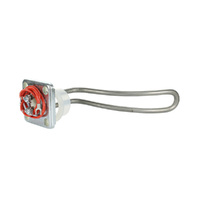
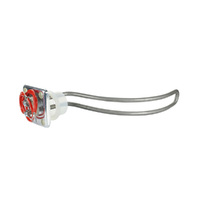
Dur-alloy (Copper) Elements
- Standard material for most residential systems
- Good thermal conductivity
- Suits treated town water supplies
- Lower cost than corrosion-resistant alternatives
- Most widely stocked replacement type
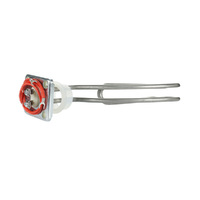
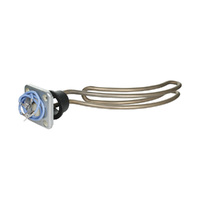
Incoloy Elements
- Nickel-iron-chromium alloy sheath
- Superior corrosion resistance
- Suits bore water and higher-mineral supplies
- Longer service life in aggressive water conditions
- Preferred for commercial applications
Stainless Steel Elements
- Good general corrosion resistance
- Common in food service and commercial tanks
- Better than copper in moderately aggressive water
- Higher cost than dur-alloy
Titanium Elements
- Maximum corrosion resistance
- Used in seawater or highly acidic water conditions
- Industrial and specialised applications only
- Highest material cost
Sparky Direct stocks hot water dur-alloy elements and hot water incoloy elements for the most common residential and commercial applications.
Wattage, Voltage, and Heating Performance
Understanding Wattage and Recovery Speed
Element wattage determines how quickly the tank recovers after hot water draw-off. Higher wattage means faster heating but also higher instantaneous current draw. Recovery time is a function of wattage, tank volume, and inlet water temperature.
240V vs 415V Systems
Residential single-phase systems operate at 240V. Larger commercial tanks may use 415V three-phase supplies, which allow higher wattage elements without excessive current on any single phase. Always confirm the supply voltage before selecting a replacement element. Fitting a 415V element to a 240V supply will result in severely reduced output. Fitting a 240V element to a 415V supply risks immediate burnout.
1.8 kW vs 3.6 kW Comparison
| Specification | 1.8 kW Element | 3.6 kW Element |
|---|---|---|
| Operating current (240V) | 7.5A | 15A |
| Circuit requirement | 10A dedicated circuit | 20A dedicated circuit |
| Typical tank size | Up to 125L | 160L and above |
| Recovery speed | Slower | Faster |
| Off-peak tariff compatibility | Yes | Yes |
| Common application | Small residential, solar boost | Standard residential, commercial |
Matching Element Output to Tank Size
Always match the replacement element to the original wattage specified for the tank. Fitting a higher-wattage element can cause excessive temperature cycling and thermostat wear. Fitting a lower-wattage element reduces recovery performance. The tank data plate shows the required element rating.
Reading the Tank Data Plate
The data plate is usually located on the side of the tank near the element access panel. It shows the tank model, serial number, capacity, element wattage, and supply voltage. Always record these details before ordering a replacement element.
Thread Size, Fitment, and Compatibility
BSP Thread Standards in Australia
Most Australian hot water elements use BSP (British Standard Pipe) threads. The most common size is 1-3/4 inch BSP for screw-in immersion elements. Some older tanks and imported units may use metric or NPT threads. Always confirm the thread specification from the existing element or the tank manual before ordering.
Screw-In vs Flange Elements
Screw-in elements thread directly into a boss welded to the tank. They are the dominant type in Australian residential storage tanks. Flange elements bolt to a plate using multiple studs and are more common in large commercial tanks. The two types are not interchangeable. Confirm the fitment type from the tank or the old element before purchasing.
Element Length and Immersion Depth
Element length must suit the tank diameter and the position of the element boss. A replacement that is too long will contact the far wall of the tank, causing physical stress and possible short circuit to the tank body. Always match the immersion length to the original specification.
Brand Compatibility
Most Australian tanks use standard BSP thread elements. Generic replacement elements from quality suppliers are compatible with these tanks provided the wattage, voltage, thread size, and immersion length match the original. Check the model number against the supplier's compatibility list when in doubt.
Choosing the Right Hot Water Element Replacement
Matching Existing Element Specifications
The safest replacement strategy is to match the original element exactly: same wattage, same voltage, same thread size, same immersion length, and same sheath material (or a material upgrade). Record all specifications from the old element and the tank data plate before placing an order.
Using Tank Model Numbers for Identification
When the existing element is not readable or is missing its markings, use the tank model number to identify the correct replacement. Most manufacturers publish service manuals with element specifications. Sparky Direct's team can assist with element identification for common Australian tank models.
Upgrading Materials Based on Water Quality
If a dur-alloy element has failed prematurely, the water quality in the area may be the cause. Bore water, high-mineral water, or water with elevated chloride levels accelerates copper sheath corrosion. Upgrading to an incoloy element in these conditions extends service life significantly. This is particularly relevant in rural areas with private water supplies.
Selecting for Residential vs Commercial Systems
Residential tanks typically use 1.8 kW or 2.4 kW elements at 240V. Commercial tanks often require 3.6 kW or higher, and may use 415V three-phase elements. High-demand commercial applications benefit from incoloy or stainless steel sheaths for extended life under continuous use conditions.
Hot Water Element vs Thermostat
Functional Differences
The element generates heat. The thermostat controls when the element switches on and off. Both are separate components, both can fail independently, and both require licensed electrical work to replace in Australia.
Diagnosing Which Component Has Failed
A failed element produces no heat at all, or severely reduced output. The circuit breaker may trip on element short circuit. A failed thermostat can cause the element to run continuously (resulting in excessively hot water and pressure relief valve operation), or it can fail open circuit (resulting in no heat, identical to an element failure). Use a multimeter to test both components before ordering parts. Sparky Direct also stocks hot water thermostats if that component is the fault.
When Both Should Be Replaced
If the tank is more than 8 to 10 years old and one component has failed, replacing both the element and thermostat at the same time is cost-effective. Labour costs for two separate service calls typically exceed the cost of the second component. This approach also reduces the likelihood of a callback within months of the initial repair.
Performance Factors and Quality Indicators
Heat Transfer Efficiency
A well-functioning element transfers heat rapidly from the sheath to the water. Scale accumulation on the element surface acts as insulation, reducing heat transfer and raising the element's surface temperature. Higher surface temperature accelerates sheath degradation and shortens element life.
Resistance to Scale and Corrosion
Incoloy sheaths resist both scale adhesion and electrochemical corrosion better than copper. In hard water areas, incoloy elements maintain better heat transfer over time because scale bonds less firmly to the alloy surface.
Durability Under Thermal Cycling
Each heating and cooling cycle stresses the element through thermal expansion and contraction. Quality elements use a tightly packed magnesium oxide insulating fill that maintains consistent contact between the resistance wire and the sheath wall throughout the thermal cycle range.
Brand Reliability and Warranty
Elements from Wilson Elements are a well-regarded option in the Australian trade market. When selecting elements, confirm the manufacturer's warranty period and whether it covers premature corrosion failure.
Common Problems and Troubleshooting
No Hot Water or Reduced Output
Complete loss of hot water from an electric storage tank usually indicates an element failure, a thermostat failure, or loss of supply to the circuit. Check the circuit breaker first. If supply is present, test the element with a multimeter. An open-circuit reading confirms element failure.
Tripping Circuit Breakers
A circuit breaker that trips immediately when the hot water circuit is energised indicates a short circuit in the element. This occurs when the resistance wire shorts to the element sheath, which then shorts to the earthed tank body. The element must be replaced. Do not reset the breaker repeatedly without investigating the cause.
Discoloured or Metallic Water
Rusty or metallic-tasting hot water indicates tank corrosion, often caused by anode depletion. The sacrificial anode protects the tank lining from electrochemical attack. When the anode is consumed, the tank itself corrodes. Discoloured water from a failed element sheath is less common but can occur when severe corrosion perforates the sheath.
Slow Heating and Recovery Issues
Slow recovery with an element that tests as electrically sound usually indicates heavy scale accumulation on the element surface. Scale greater than 3 mm thick can reduce heat transfer by 20 percent or more. Descaling or element replacement resolves the issue. Persistent slow recovery after element replacement suggests the replacement element is underrated for the tank volume.
Testing and Fault Diagnosis
How to Test an Element with a Multimeter
Isolate the hot water circuit at the switchboard and verify isolation before touching any wiring. Remove the element terminal cover and disconnect the element leads. Set the multimeter to the resistance (ohms) function. Place one probe on each element terminal. A working element reads a resistance value consistent with its wattage rating (for a 2.4 kW / 240V element, expect approximately 24 ohms). An open-circuit reading (infinite resistance or OL) confirms element failure.
Identifying Open Circuit Failures
An open-circuit element has a broken resistance wire internally. The element will not heat at all. This is the most common failure mode. The element reads infinite resistance between its terminals.
Detecting Short Circuits or Earth Faults
Test between each terminal and the element body (or earth terminal). A working element reads infinite resistance to earth. Any measurable resistance indicates a short circuit or earth fault through the failed sheath insulation. This fault causes the circuit breaker to trip.
Safe working requirement: All testing and replacement work on hot water systems must be performed with the circuit fully isolated and locked out at the switchboard. Verify isolation with a voltage tester before disconnecting any wiring. Hot water systems operate at 240V and present a serious shock hazard.
Confirming Element vs Thermostat Issues
If the element tests as serviceable but there is no hot water, test the thermostat. Check for continuity through the thermostat at the current water temperature. A thermostat that reads open circuit when the water is below the set point has failed open and must be replaced. Hot water thermostats are also available from Sparky Direct.
Why Hot Water Elements Fail
Scale Build-Up and Heat Insulation
In areas with hard water, calcium and magnesium carbonate deposits accumulate on the element surface over time. Scale insulates the sheath, causing the element to operate at higher surface temperatures than it was designed for. Sustained overtemperature conditions degrade the resistance wire and the magnesium oxide insulation fill, eventually causing open-circuit failure.
Corrosion and Sheath Breakdown
Electrochemical corrosion attacks copper sheaths when the sacrificial anode is depleted or when water chemistry is aggressive. Bore water with elevated chloride or sulfate concentrations accelerates this process. Sheath perforation allows water to contact the resistance wire, causing short-circuit failure.
Thermal Stress and Fatigue
Repeated thermal cycling causes expansion and contraction stress in the sheath material. Elements with poor magnesium oxide fill density are more susceptible to internal voids forming over time. Voids reduce the thermal contact between the resistance wire and the sheath, creating hot spots that accelerate local failure.
Water Quality and Anode Depletion
The sacrificial magnesium anode protects the tank lining and, indirectly, the element by controlling the electrochemical environment inside the tank. A depleted anode leaves both the tank and the element exposed to uncontrolled corrosion. Checking anode condition at the manufacturer's recommended intervals is the most effective way to extend system life.
Installation and Replacement Considerations
Draining and Depressurising the System
Before removing an element, close the cold water inlet valve and open a nearby hot tap to relieve line pressure. Attach a hose to the tank drain valve and drain sufficient water to expose the element position. For a lower element, this means draining the tank below the lower element boss. Failure to drain below the element level results in water discharge when the element is removed.
Thread Sealing and Torque Requirements
Apply PTFE thread tape or thread sealant compound to the BSP threads of the replacement element before fitting. Overtightening damages the element boss. Follow the torque specification in the tank service manual, or apply hand-tight plus one-quarter to one-half turn with a spanner. Check for leaks after refilling.
Refilling Before Power Restoration
The tank must be completely full of water before restoring power to the element circuit. Energising an element that is not fully submerged causes dry firing, which destroys the element within seconds. Open the hot tap nearest the tank while refilling. When water flows steadily from the tap, the tank is full and the element is submerged.
Requirement for Licensed Electrical Work
Element replacement involves disconnecting and reconnecting live electrical conductors on a 240V circuit. This work must be carried out by a licensed electrician in all Australian states and territories, as required under AS/NZS 3000:2018 and applicable state electrical safety legislation. Unlicensed persons must not perform this work.
Cost, Value, and Buying Strategies
Budget vs Premium Element Materials
Dur-alloy elements are the most economical option and are entirely suitable for standard town water supplies. The cost difference between dur-alloy and incoloy elements is modest. In areas with aggressive water quality, the longer service life of incoloy makes it the more cost-effective choice over the maintenance cycle of the system.
Long-Term Value of Corrosion-Resistant Options
Incoloy elements typically last two to three times longer than copper elements in high-mineral or bore water conditions. Accounting for labour costs of replacement, the total cost of ownership favours incoloy for commercial systems and rural residential systems with private water supplies.
Bulk Buying for Plumbers and Contractors
Electrical and plumbing contractors who service hot water systems regularly benefit from stocking the most common element sizes. Keeping 1.8 kW and 2.4 kW elements in both dur-alloy and incoloy types covers the majority of residential service calls. Sparky Direct offers competitive trade pricing for volume purchases.
Replacement Cost Considerations in Australia
The element itself is a relatively low-cost component. Labour for replacement, including draining, element change, and refilling, is typically 1 to 2 hours for a straightforward job. Using a quality element at the first replacement reduces the probability of a repeat call within the same service year.
Maintenance and Extending Element Life
Sacrificial Anode Maintenance
The magnesium sacrificial anode is the primary corrosion protection mechanism for an electric storage tank. Most manufacturers recommend inspection every 5 years and replacement when the anode is more than 50 percent consumed. A depleted anode exposes both the tank lining and the element to accelerated corrosion.
Managing Scale in Hard Water Areas
In hard water regions, consider periodic tank flushing to remove scale and sediment from the base of the tank. A whole-of-house water softener or inline scale inhibitor reduces scale formation on elements and extends service life. Where water softening is not practical, upgrading to an incoloy element is the most effective mitigation.
Optimal Thermostat Settings
Most manufacturers recommend a thermostat setting of 60 degrees Celsius. This temperature is sufficient to inhibit Legionella growth in the stored water. Operating at temperatures above 65 degrees accelerates scale formation and increases thermal stress on the element. Do not lower the thermostat below 60 degrees to avoid microbiological risk.
Routine Tank Flushing
Flushing several litres from the tank drain valve annually removes accumulated sediment from the base of the tank. Sediment insulates the lower element from the water above it and can cause localised overheating. A tank that is regularly flushed maintains better heat transfer efficiency and extends element life.
Trade Applications and Use Cases
Residential Electric Storage Systems
The majority of element replacements in Australia involve single-phase 240V tanks in the 80L to 315L range. Standard dur-alloy elements at 1.8 kW, 2.4 kW, or 3.6 kW cover most residential service work. Off-peak tariff tanks typically use a single lower element. Solar electric boost tanks use an upper element for electrical backup.
Commercial Hot Water Systems
Commercial installations include hotels, hospitals, aged care facilities, and food service operations. These systems use larger tanks, higher wattage elements, and often require incoloy sheaths for the higher duty cycles and potentially more aggressive water supplies associated with commercial water treatment. Some commercial tanks use multiple elements in separate zones.
High-Demand and Industrial Applications
Industrial applications such as food processing, laundries, and manufacturing may require custom element configurations, high-wattage three-phase elements, or specialised materials such as titanium for process water with extreme chemistry. These applications are outside standard residential stock and may require direct inquiry with the supplier for correct specification.
Safety and Compliance Considerations
AS/NZS 3000 Electrical Compliance
Hot water element replacement falls under the scope of AS/NZS 3000:2018 (the Australian Wiring Rules). The standard requires that all electrical work on fixed wiring installations be carried out by a licensed electrician. The hot water circuit must be isolated, locked out, and tested dead before work commences. Compliance with the standard is a legal requirement in all Australian states and territories.
Safe Isolation and Lockout Procedures
Before starting work, turn off the circuit breaker controlling the hot water circuit and apply a personal safety lock. Test the element terminals with a voltage tester to confirm the circuit is de-energised. Do not rely solely on the breaker position indicator. Water in the vicinity of electrical work makes strict isolation procedure essential.
Preventing Dry Firing
Dry firing occurs when an element is energised without being fully submerged in water. The element reaches destructive temperatures within seconds, burning out the resistance wire and often cracking the sheath. Always confirm the tank is full before restoring power. Use the procedure described in the installation section: open the nearest hot tap and wait for steady water flow before energising the circuit.
Pressure Relief Valve Check
After completing an element replacement, test the temperature and pressure relief (TPR) valve to confirm it operates freely. A seized TPR valve is a serious safety hazard. If the valve does not operate correctly or leaks after testing, it must be replaced before the system is returned to service.
Scalding and Pressure Risks
A tank thermostat set above 70 degrees Celsius produces water hot enough to cause scalding injury within seconds at the tap. Confirm the thermostat is set correctly after replacement. Also confirm that the tank pressure relief valve is in good condition. A blocked or absent relief valve on an over-temperature tank presents a catastrophic failure risk.
Where to Buy Hot Water Elements in Australia
Buying Online vs Plumbing and Electrical Wholesalers
Online electrical wholesalers offer price transparency, broader stock range, and faster comparison across element types and specifications. Sparky Direct is an Australian online electrical wholesaler with stock across the most common dur-alloy and incoloy element sizes. Orders are dispatched quickly Australia-wide.
Related parts available from Sparky Direct include hot water thermostats, fan forced oven elements, hot plate elements, and grill elements. For the broader appliance parts range, see the appliance parts category.
What to Look for in a Reliable Supplier
A reliable hot water element supplier should clearly list wattage, voltage, thread size, and immersion length for each product. Stock availability, fast dispatch, and the ability to identify compatible elements by tank model number are important for trade buyers who cannot afford delays on service calls.
Delivery Speed, Availability, and Trade Support
Most metro areas receive orders within 1 to 2 business days from Sparky Direct. Rural and regional delivery times vary by courier. Sparky Direct offers trade support for element identification by tank model. Contact the team via the Sparky Direct contact page for specification assistance.
Product Videos
Watch Hotwater Element Duraloy 1800W | HWDS-18 video
Watch Hotwater Element Duraloy 2400W | HWDS-24 video
Watch Hotwater Element Incoloy 1800W | HWIS-18 video
What Sparky Direct Customers Say

Hot water system failed, l checked it, the element was blown, ordered a replacement same day, picked it up next morning, system was hot enough to shower that day, easy! Great service and price was even better, really happy with result
Hot Water Element Frequently Asked Questions
Do hot water elements wear out over time?
Yes, they can wear out due to normal use, water quality, and age.
Hot Water Element near me
You can find Hot Water Element options at Sparky Direct, offering suitable replacements for Australian hot water systems.
Do I need a professional to install a hot water element?
Yes, Australian regulations require a licensed electrician or qualified professional for installation or replacement.
What should I check before buying a hot water element?
Check system brand and model, voltage, wattage, element type, and installation requirements.
Can hot water elements be purchased online?
Yes, they are available through authorised electrical suppliers and online electrical retailers.
Do hot water elements come with a warranty?
Yes, they are typically supplied with a manufacturer’s warranty covering defects under normal use.
Will replacing a hot water element restore hot water?
In many cases, replacing a failed element restores normal hot water operation.
Do hot water elements need regular maintenance?
They generally require minimal maintenance once installed correctly.
Can hot water elements be used in rental properties?
Yes, they are commonly installed in rental and owner-occupied homes.
How long does a hot water element usually last?
Lifespan varies depending on usage and water quality, but quality elements are designed for long-term use.
Are hot water elements noisy?
No, they operate silently during normal use.
Can the wrong element affect my hot water system?
Yes, using an incorrect element can reduce performance or cause damage.
Are hot water elements energy efficient?
Efficiency depends on the wattage, system design, and correct matching to the hot water unit.
What is a hot water element?
A hot water element is an electrical heating component installed inside an electric hot water system to heat water stored in the tank.
How do I know if my hot water element needs replacing?
Common signs include no hot water, slow heating, or tripping electrical protection devices.
What does a hot water element actually do?
It heats the water inside the tank so hot water is available for showers, taps, and appliances.
Do hot water elements require professional installation?
Yes, installation or replacement must be carried out by a licensed electrician or suitably qualified professional.
Can hot water elements be used in hard water areas?
Certain element types are better suited for hard water conditions, depending on water quality.
What materials are hot water elements made from?
They are commonly made from copper, stainless steel, or alloy materials depending on the application.
Are hot water elements compatible with all hot water systems?
No, compatibility depends on the hot water system brand, model, size, and mounting type.
Can hot water elements be used in off-peak systems?
Yes, specific hot water elements are designed for use in off-peak or controlled load systems.
Are different wattage hot water elements available?
Yes, hot water elements are available in various wattage ratings to suit different system sizes and recovery times.
Are hot water elements suitable for residential hot water systems?
Yes, they are commonly used in electric storage hot water systems in Australian homes.
What voltage are hot water elements rated for?
Most residential hot water elements are rated for standard Australian mains voltage of 230–240 volts AC.
Are hot water elements compliant with Australian standards?
Yes, quality hot water elements are designed to meet relevant AS/NZS electrical safety and performance standards when installed correctly.