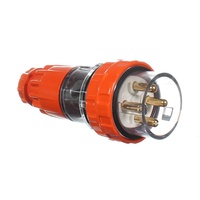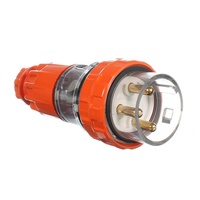

Search Results:
Search Results:
Search Results:
Search Results:
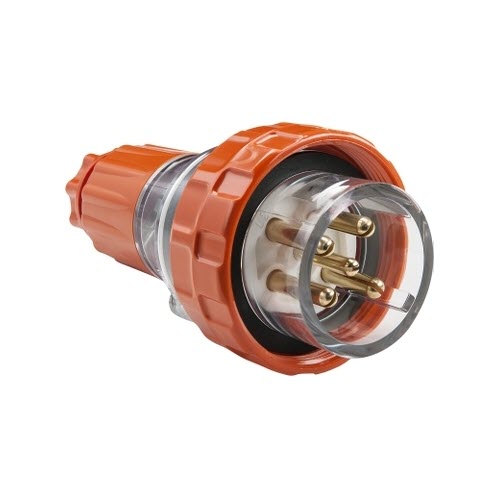
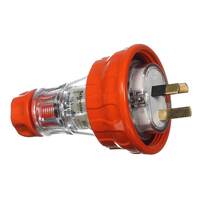
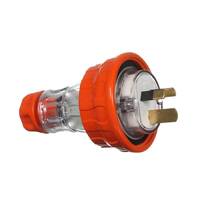
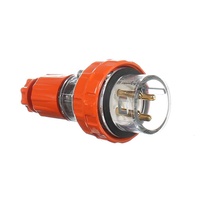
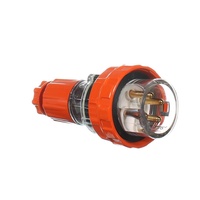
Find the best Clipsal Easy56 straight & angled plugs here at Sparky Direct. [ Read More ]
Industrial plugs are heavy-duty connectors designed for high current, harsh environments, and frequent disconnection. They sit at the end of flexible cords or appliance leads and mate with matching sockets to deliver power to portable equipment, machinery, or temporary installations. Unlike domestic plug tops covered under AS/NZS 3112, industrial plugs follow AS/NZS 3123 and use larger pins, robust housings, and ingress-protected mating faces.
The plug is the critical link between a fixed installation and the equipment that needs power. A poor connection can overheat, arc, or fail under load. Industrial plugs are built to maintain solid contact pressure and dust or water sealing across thousands of mating cycles, which is why they appear on construction sites, in workshops, and on caravans across Australia.
The Clipsal 56 Series has been the reference industrial connector range in Australia for decades. The Easy56 update keeps the same pin configurations and mating compatibility, but adds tool-free internal access and a cable gland system designed to reduce installation time. Specifiers choose Easy56 because it pairs with the wider Clipsal 56 Series industrial switchgear already on most Australian sites.
A straight plug exits the cable in line with the pin axis. The cord runs out of the back of the plug body in a continuous line. This is the standard form for general use and works well where the lead can run away freely from the socket without tight bends.
An angled plug bends the cable exit 90 degrees relative to the pin axis. The cord exits the side of the plug body, parallel to the wall surface. The angled body keeps the cable close to the wall and removes the prominent rearward profile that a straight plug creates when fitted to a wall-mounted socket.
The choice between straight and angled comes down to how the plug sits in the installation. Straight plugs suit open runs, extension leads, and equipment that can swing freely. Angled plugs suit fixed wall outlets, doorways, and high-traffic walkways where a straight plug would protrude into the workspace.
Easy56 plugs are stocked by traditional trade counters and online wholesalers. Online suppliers typically carry deeper stock across the full range of pin counts and current ratings, with same-day dispatch on most lines. Trade counters can be useful for emergency single-unit purchases but rarely match online pricing on bulk orders.
A reliable supplier carries genuine Clipsal stock with RCM marking visible on the packaging, ships from Australian warehouses, and lists clear product codes (the EY56P prefix identifies Easy56 plugs). Avoid grey imports without compliance marking, as they may not meet AS/NZS 3123 and cannot be installed legally in Australia.
For project work, bulk pricing on cartons of 10 or 20 plugs delivers meaningful savings against single-unit pricing. Sparky Direct ships nationwide on cartons of Easy56 plugs and pairs them with matching Easy56 switched socket combination outlets and Easy56 appliance inlets when complete kits are needed.
The Easy56 plug carries pins arranged in a fixed pattern that matches the receiving socket. When the two halves are pushed together and the locking ring is rotated, the pins seat fully into the socket contacts and the housings compress a sealing gasket. This single action delivers both electrical contact and ingress protection.
The threaded ring on the plug front engages a matching thread on the socket. Tightening the ring pulls the two faces together under controlled pressure. This stops the plug working loose under cable strain or vibration, and maintains the contact force needed for low-resistance current flow.
Easy56 plugs only deliver their full performance when paired with matching Easy56 or 56 Series sockets. Forcing an Easy56 plug onto a non-compatible socket compromises the seal, the locking action, and the contact integrity. Always specify matched plug and socket pairs from the same series.
The Easy56 plug range covers the standard Australian industrial current ratings: 10A, 15A, 20A, 32A, 40A, and 50A. Each rating uses a different pin diameter and spacing to prevent cross-mating between current classes. A 32A plug will not fit a 10A socket and vice versa.
Three-pin plugs (active, neutral, earth) carry single-phase 240V loads. Four-pin plugs add a third active for unbalanced three-phase 415V loads. Five-pin plugs add a neutral conductor for balanced three-phase loads where neutral current flow is expected.
Clipsal uses colour-coded housings to make rating identification quick on site. 10A and 15A flat-pin units typically appear in grey or orange; round-pin 20A and above appear in red or grey depending on voltage class. The colour and pin pattern together confirm the rating before the plug is even fitted.
| Pin Count | Typical Use | Common Ratings |
|---|---|---|
| 3 pin (flat) | Single phase 240V | 10A, 15A, 20A, 32A |
| 3 pin (round) | Single phase 240V industrial | 20A, 32A |
| 4 pin | Three phase 415V (no neutral) | 20A, 32A, 40A, 50A |
| 5 pin | Three phase 415V with neutral | 10A, 20A, 32A, 50A |
IP66 is a two-digit ingress protection rating defined under AS/NZS 60529. The first digit (6) means dust-tight: no dust can enter the enclosure. The second digit (6) means protection against powerful water jets from any direction. Easy56 plugs achieve IP66 when correctly assembled and mated with a matching socket.
IP66 plugs handle direct rain, hose-down cleaning, and dusty workshop environments without ingress. This makes them suitable for outdoor power points, marine applications, washdown areas, and construction sites. The rating only applies when the plug is correctly tightened into the matching socket.
The IP rating is only achieved when the locking ring is fully engaged. A loose plug or partial engagement leaves a gap between the two faces, breaking the seal. Always tighten the locking ring by hand until firm. Replace gaskets if they become deformed or split, as this is the most common cause of IP66 failure in service.
Straight plugs work best where the cable can run away freely from the socket. Power leads to portable generators, freestanding machinery, or roof-mounted air conditioning units suit straight plugs because nothing forces the cable to bend tightly at the socket face.
Most extension lead manufacturers fit straight plugs to both ends. The straight body keeps the lead profile compact when coiled and stored, and the in-line cable exit reduces stress when the lead is unrolled and dragged across a site.
Straight plugs are easier to grip and rotate during connection because the body sits in the user's hand without obstruction. For frequent connect-disconnect cycles, this makes them faster to operate than angled units.
Angled plugs suit installations where a straight plug would protrude into a doorway, walkway, or behind furniture. The 90-degree cable exit keeps the lead flat against the wall, reducing the depth needed behind the socket.
When a straight plug is used in a wall socket, gravity pulls the cable downward and creates a sharp bend at the cable gland. Over time this damages the conductors. The angled plug routes the cable parallel to the wall from the moment it leaves the body, removing that bend and extending lead life.
In workshops and factories where carts and trolleys move past wall outlets, angled plugs are less likely to be hit and damaged. The lower profile reduces the chance of the plug being kicked or struck, which protects both the plug and the socket from mechanical damage.
Measure the clearance behind the socket before specifying. If less than 100mm of free space exists behind the socket, an angled plug is the safer choice. Above 150mm, a straight plug is generally fine.
Consider where the cable needs to run after leaving the plug. If the natural cable path is downward or sideways along a wall, angled plugs follow that path without forcing a bend. If the cable runs straight back to a fixed cable tray or conduit, straight plugs match that path.
Angled plugs reduce cable bend stress at the gland, which is the most common failure point on industrial leads. For leads that will see heavy use over years of service, the angled configuration typically delivers longer life. For occasional-use leads or extension leads stored coiled, straight plugs are equally durable and easier to handle.
Each Easy56 plug uses a sized cable gland that grips the cord jacket and forms the IP66 seal. The gland must match the cable outside diameter. A cable too thin slides through the gland; a cable too thick prevents the gland from closing fully. Always check the manufacturer cable size range before assembly.
Easy56 plugs use captive screw terminals colour-coded to AS/NZS 3000 conductor identification. Active goes to the brown or red marked terminal, neutral to the blue, and earth to the green-yellow. Reversed polarity creates a serious hazard, so always confirm conductor identification before tightening the terminals.
The cable gland provides primary strain relief. Tighten it until it grips the cable jacket firmly without crushing the conductors inside. Pull-test the assembled plug before placing it in service to confirm the gland holds against expected handling forces.
In Australia, fitting a plug to a flexible cord that will be connected to mains supply is electrical work. This must be performed by a licensed electrician or, in the case of plug tops, by a person holding a plug top licence under the relevant state regulations. DIY assembly is not permitted.
Compliance reminder: All electrical work in Australia must comply with AS/NZS 3000:2018 (the Wiring Rules). Industrial plug installation, testing, and tagging requirements vary by state. Always check local regulations before starting work.
Easy56 plug bodies use a glass-reinforced thermoplastic that resists impact, chemical exposure, and temperature swings. The locking ring is moulded as a single piece to avoid weak points at hinges or joints, which are common failure spots on lower-grade plugs.
Outdoor plugs face constant UV exposure that can degrade lower-grade plastics within a few seasons. The Easy56 housing is UV stabilised for Australian conditions and resists common workshop fluids including oils, solvents, and cleaning chemicals.
The captive screw terminals hold conductor strands firmly without backing out under vibration. This is critical because a loose terminal generates heat under load, which can degrade insulation and eventually cause an open circuit or fire.
Genuine Clipsal Easy56 plugs carry RCM marking, the Australian Regulatory Compliance Mark. The mark confirms the unit has been tested against AS/NZS 3123 and meets the requirements for sale and installation in Australia.
AS/NZS 3123 is the Australian and New Zealand standard for industrial plugs and socket-outlets. It specifies pin configurations, current ratings, mechanical strength, and electrical performance. Easy56 plugs are designed and certified against this standard.
AS/NZS 3000:2018 covers the broader installation requirements: circuit protection sizing, conductor selection, RCD requirements, and inspection rules. Industrial plug circuits must be matched to the correct circuit protection upstream.
The Regulatory Compliance Mark identifies products that meet Australian electrical safety, electromagnetic compatibility, and (where applicable) radio communications requirements. Look for the RCM symbol on the plug body or packaging before installing.
Genuine Easy56 plugs are tested and marked to AS/NZS 3123. Some generic industrial plugs sold online lack RCM marking or carry questionable certification. Installing a non-compliant plug exposes both the installer and the end user to safety and legal risk.
Generic plugs may use lower-grade plastics that crack under impact or yellow under UV exposure within a year or two. The Easy56 housing is engineered for the long service life expected on Australian sites, which keeps replacement and downtime costs lower over the project life.
The Easy56 range is stocked Australia-wide and matches the existing 56 Series infrastructure on most sites. Generic plugs may be cheap initially but often cannot be replaced like-for-like later, forcing full lead and socket replacement when one component fails.
| Factor | Clipsal Easy56 | Generic Industrial |
|---|---|---|
| Compliance | AS/NZS 3123 with RCM | Variable, often unmarked |
| Material grade | UV-stable engineered plastic | Standard polymer |
| Mating compatibility | Pairs with 56 Series sockets | Brand-specific or limited |
| Replacement availability | Stocked Australia-wide | Varies by importer |
If a plug runs warm or shows discolouration around the pin contact area, the terminal screws may have loosened. Disconnect, inspect, and re-tighten. If the pins themselves show pitting or burn marks, replace the plug rather than continue to use it.
A common error is fitting a 10A plug to a circuit that draws 12A or more. The plug rating must match or exceed the load current and the upstream circuit breaker rating. Undersizing leads to overheating and contact damage.
Visible jacket damage near the gland indicates excessive bending or pulling. Cut the cable back to fresh jacket, refit the gland, and reterminate. If the inner conductors are damaged, replace the lead entirely.
Outdoor plugs that have been in service for years may show gasket compression set or housing chalking from UV exposure. Pressure-test the gasket by checking the seal under a hose-down. Replace the plug if water enters the body.
Construction sites rely on industrial plugs for distribution boards, generators, and tool feeds. The IP66 rating and locking action handle the dust, water, and rough handling typical of building sites. Easy56 plugs match standard 56 Series temporary supply equipment.
Permanent and semi-permanent machinery installations use industrial plugs to allow safe disconnection for maintenance. The ability to lock out a plug-connected machine for service work is a key safety control under workshop electrical procedures.
Repair workshops fit industrial plugs to welders, compressors, and high-current tools. The robust mating action survives the daily connect-disconnect cycle far better than domestic plug tops, and the higher current ratings handle workshop loads safely.
Event power, market stalls, and outdoor entertainment use industrial plugs to distribute power across temporary cable runs. The weatherproofing protects against rain during open-air events, and the locking action prevents accidental disconnection by foot traffic.
Unmarked generic plugs may sell for less than half the price of a certified Easy56 unit. The price gap reflects the compliance testing, materials, and warranty backing that genuine products carry. For any installation that will be tested and tagged, certified product is the only option.
A plug failure on a live site can mean tool downtime, machine repair costs, or in serious cases injury. Even modest failure rates on cheap plugs add up quickly. The lifetime cost of a quality plug is typically lower than the cumulative cost of replacing budget alternatives.
For projects fitting out multiple distribution boards or sets of leads, bulk carton pricing on Easy56 plugs is significantly lower than single-unit pricing. Order matched plug and socket sets together to ensure compatibility and to simplify spares stocking.
The Easy56 range pairs with existing 56 Series infrastructure already on most Australian sites. Choosing Easy56 means future replacements and additions stay compatible with the installed base, avoiding the trap of locking into a single-source system that may not be available in five years.
Club Clipsal is Australia's largest electrician community offering trade rewards, business support, and exclusive benefits. When you nominate Sparky Direct as your preferred wholesaler, we automatically apply your Clipsal spend points to your Club Clipsal account daily.
Entry-level offering coaching, mentoring, and training discounts
Unlock exclusive industry tools and networking events
Access Toyota fleet offers and business software discounts
Maximum benefits, including VIP experiences and rewards
1. Sign Up: Create your Club Clipsal account at clipsal.com/club-clipsal or via the iCat mobile app
2. Nominate Sparky Direct: Select Sparky Direct from the wholesaler dropdown menu in your profile
3. Add Email: Enter your Sparky Direct account email address in the membership number field
4. Start Earning: Every dollar spent on Clipsal products earns points automatically
Redeem points from the rewards store, including gift cards, tools, and experiences. Access business summits, product training, and industry networking events. Receive early access to new product launches and special promotions. Connect with fellow electricians via the Club Clipsal community app.
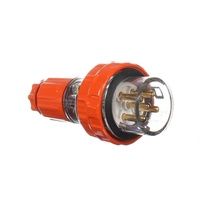
Watch CLIPSAL EY56P310 | 3 Pin Flat 10 Amp Straight Plug IP66 | Easy56 video
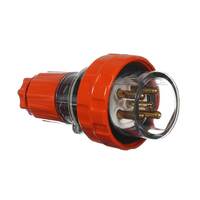
Watch CLIPSAL EY56P315 | 3 Pin Flat 15 Amp Straight Plug IP66 | Easy56 video
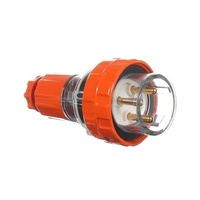
Watch CLIPSAL EY56P520 | 5 Pin 20 Amp Straight Plug IP66 | Easy56 video

Personally I like the Clipsal brand and appreciate there are other models out there (have used some), however I find these are easier to work with in the installation, and hold up well when placed on equipment and electrical leads that are out in the field daily.
These connectors are a total game changer for our caravan and traveling requirements. I have fitted the van and all our extension cords with this connector system. It's solid, water proof and can not be easily disconnected if trodden on. 5 Stars!
Great plugs to improve the plug staying plugged in, with great improvement of dust and water ingress.
Quality products in stock • Fast Australia-wide delivery • Competitive trade pricing
Browse Easy56 Plugs → Get Expert Advice →Yes. Their robust design helps reduce accidental disconnection and damage in harsh environments.
Easy56 straight and angled plugs are available from Sparky Direct, offering access to durable electrical products with Australia-wide delivery.
Delivery availability depends on the supplier and location, with options across metropolitan and regional Australia.
Yes. They are suitable for new installations, upgrades, and replacing existing industrial plugs.
Warranty coverage depends on the manufacturer and supplier, with conditions applying to correct installation and use.
Consider current rating, IP rating, cable size, installation environment, and electrician recommendations.
They generally require minimal maintenance but should be checked during routine electrical inspections.
Yes. They are built to withstand frequent connection and disconnection.
When properly installed and used, they are designed for long service life.
Yes. Their tough housings can be wiped clean and resist dust and grime.
Yes. They are commonly used in workshops, garages, and service areas.
They have an industrial design prioritising durability and protection rather than a compact profile.
Yes. When correctly rated and installed, they are suitable for powering outdoor equipment.
Easy56 straight and angled plugs are industrial-style electrical plugs designed for secure power connections in demanding environments.
Yes. They are designed for firm, reliable connection while allowing safe disconnection when required.
Angled plugs help manage cable direction, reduce bending stress, and suit installations with limited space.
Yes. Termination of plugs must be carried out by a licensed electrician to ensure safety and compliance.
Yes. They are widely used in commercial and light industrial applications.
Yes. Easy56 straight and angled plugs are designed to be compatible with matching Easy56 outlets and inlets.
Yes. They are designed to handle higher current ratings within their specified limits.
IP ratings vary by model, indicating protection against dust and water ingress.
Yes. They are designed with durable housings suitable for indoor and outdoor use when rated and installed as specified.
Easy56 straight and angled plugs supplied in Australia are designed to meet relevant AS/NZS electrical and safety standards when used correctly.
They are commonly used in workshops, industrial sites, outdoor areas, commercial settings, and heavy-duty applications.
Straight plugs extend directly from the cable, while angled plugs allow the cable to exit at an angle, helping manage space and reduce strain.