
Search Results:
Search Results:
Search Results:
Search Results:
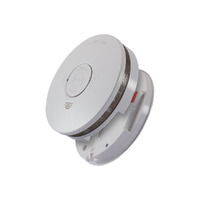
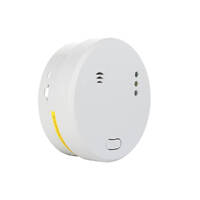
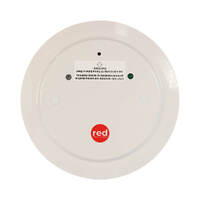
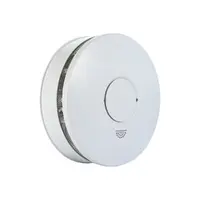
A Red Smoke Alarm is a photoelectric detector manufactured under the Red Smoke Alarms brand, an Australian-engineered range designed to meet AS 3786:2023. Each unit uses an optical sensor chamber to detect the visible smoke particles produced by smouldering fires. The brand is named after the housing colour on its early models, although current units are supplied in white, black, and red finishes.
House fires double in size every 60 seconds once flames take hold. A working photoelectric alarm gives occupants the warning they need before smoke fills the escape route. Fire and Rescue services across Australia consistently cite working smoke alarms as the single most effective measure for surviving a residential fire.
The range suits owner-occupied homes, rental properties, granny flats, caravans, sheds, and small commercial premises. The 240V models with battery backup are the standard choice for new builds and major renovations, while the 10-year sealed lithium battery units suit retrofits where running cable to each ceiling location is not practical.
Photoelectric alarms detect smoke using a light beam inside an optical chamber. When smoke enters the chamber, it scatters the beam onto a sensor and triggers the alarm. This method responds quickly to the smouldering fires that cause most fatal house fires, including soft furnishings, mattresses, and cabling. Every Red Smoke Alarm in the current range is photoelectric.
Ionisation alarms use a small radioactive source to detect particles produced by fast-flaming fires. Australian fire services have moved away from recommending ionisation-only alarms in residential settings. State legislation in Queensland already requires photoelectric units in all dwellings.
Dual-sensor units combine photoelectric and ionisation technologies in a single device. They appear in some commercial applications, however the AS 3786 photoelectric pathway is sufficient for residential compliance under current state laws. Most Australian homes do not require a dual-sensor product.
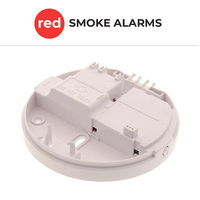
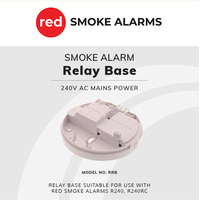
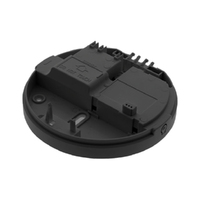
The Red R240 series and R240RC models run from 240V mains with a sealed 10-year lithium battery providing backup during power outages. These are the units required for new builds and significant renovations under the Building Code of Australia. Hardwired alarms must be installed by a licensed electrician.
The R10RF range uses a sealed 10-year lithium battery with no mains connection. Installation is a simple ceiling mount, suiting retrofits, rentals, and owner-occupied homes where running cable would be disruptive. The battery is non-removable and the entire unit is replaced at end of life.
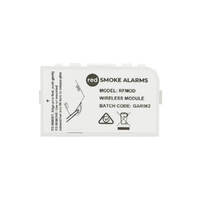
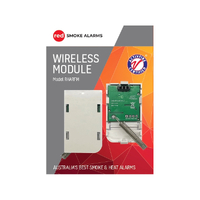
Interconnection means that when one alarm detects smoke, every alarm in the system sounds together. Red Smoke Alarms supports both hardwired interconnection (via the cable run between 240V units) and wireless RF interconnection (no cabling required). The wireless option is the practical choice for most retrofits because it links upstairs and downstairs alarms without lifting floorboards.
AS 3786:2023 is the Australian Standard that all residential smoke alarms must meet. It covers sensor performance, alarm sound output, low-battery warning, and durability. Every Red Smoke Alarm sold through licensed wholesalers carries AS 3786 certification. Units that are not AS 3786 certified should not be installed in any Australian dwelling.
Queensland leads the country with the strictest rules under the Fire and Emergency Services Act. From 1 January 2027, every Queensland dwelling must have photoelectric, AS 3786:2014 (or later) compliant, interconnected alarms in all bedrooms, hallways, and on each storey. New South Wales requires at least one working alarm on each level, with additional rules for tenanted properties under the Residential Tenancies Act. Victoria mandates AS 3786-compliant alarms on each storey, with hardwired units required in new builds since 1997.
Landlords across all Australian states have ongoing obligations to maintain working smoke alarms between tenancies. New builds must use 240V hardwired alarms with battery backup, installed by a licensed electrician. Major renovations that expose the ceiling cavity typically trigger an upgrade requirement for the affected zones.
Queensland deadline: The 1 January 2027 deadline for full photoelectric and interconnected coverage in every dwelling applies to owner-occupied homes as well as rentals. Many Queensland households are upgrading now to spread the cost rather than wait for the deadline.
AS 3786 and state legislation require alarms in every bedroom, in hallways serving bedrooms, and on every storey of the dwelling. Open-plan areas need an alarm covering the main living zone. Avoid placing alarms within 300mm of cornices, walls, or light fittings, as dead air pockets can delay smoke reaching the sensor.
Ceiling mounting is the standard. Smoke rises and pools at the highest point of a room, so a ceiling-mounted alarm reaches activation temperature first. Wall mounting is permitted only in specific circumstances (such as cathedral ceilings) and the alarm must sit between 300mm and 500mm below the ceiling line.
For a single-storey home with no existing alarms, a wireless interconnected R10RF set is the simplest pathway to compliance. For a new build or major renovation, the 240V R240RC is required. Investment property owners often choose the 10-year sealed battery models because they do not require an electrician between tenancies.
Bedrooms and hallways take photoelectric smoke alarms. Kitchens, garages, and laundries take a Red Heat Alarm (RHA10RF or RHA240SL) instead, because cooking steam, vehicle exhaust, and dust will trigger nuisance alarms on a smoke sensor. Mixing smoke and heat alarms within the same wireless interconnected system is supported.
Hardwired alarms run continuously from mains power and never need a battery change during the 10-year service life. Sealed lithium battery alarms need no electrical work, but the entire alarm is replaced at the end of the battery life. The hardwired system is the long-term lower-cost option, however the upfront installation labour is higher.
The housing colour does not affect detection performance. Red Smoke Alarms is a brand name, not a description of the housing colour on every model. Detection performance is governed by AS 3786 testing, which measures sensor sensitivity, alarm output decibels, and low-battery warning behaviour. Two AS 3786 certified alarms in different housing colours will perform identically in a fire.
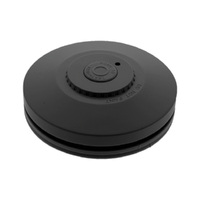
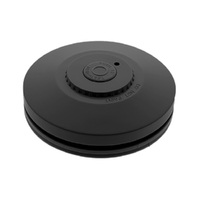
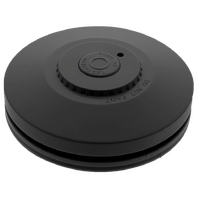
Red housings are sometimes specified in commercial fire safety plans where visual identification helps occupants and emergency services locate alarms quickly during evacuations. The brand also offers black housings (R10RFB, R240RCB) for ceilings where a discreet finish is preferred.
Body corporates, strata managers, and commercial fitouts sometimes mandate a high-visibility colour for safety devices. Where a fire safety plan calls for visible identification of detection equipment, a coloured housing meets that brief without changing detection performance.
| Feature | Red Smoke Alarms (brand) | Generic AS 3786 alarms |
|---|---|---|
| AS 3786 certified | Yes (every model) | Varies by manufacturer |
| Wireless RF interconnection | Yes (R10RF, R240RC) | Brand-specific compatibility |
| 10-year sealed battery option | Yes | Available from major brands |
| Wall remote controller | Yes (RAC, RAC240) | Rare |
| Designed for Australian conditions | Yes | Varies |
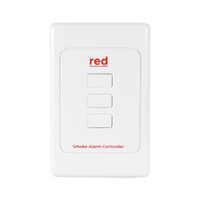
Most family homes need three to six alarms: one in each bedroom, one in the hallway serving the bedrooms, and one in the main living area. A wireless R10RF starter set with a Red Smoke Alarm Controller (RAC) covers a typical three-bedroom home in around an hour of installation time.
Rental properties carry an ongoing maintenance obligation between tenancies. The 10-year sealed lithium battery R10RF range suits rentals because the alarm runs for its entire service life on a single battery, removing the need for the agent or owner to coordinate battery replacement visits.
Small commercial premises (offices, retail tenancies under 500m2, granny flats attached to a main residence) typically follow residential alarm rules. Larger commercial fitouts fall under the Building Code of Australia fire detection provisions and usually require a monitored fire indicator panel rather than residential-style point alarms.
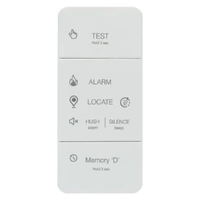
Photoelectric detection responds quickly to smouldering fires (the cause of most fatal Australian house fires). Wireless interconnection sounds every alarm in the system at once. The 10-year sealed battery removes the annual battery-change task that older 9V alarms required. The wall remote allows residents to test and silence alarms from a comfortable height, useful for elderly occupants and high ceilings.
No smoke alarm prevents a fire. Alarms detect smoke that has already reached the sensor and sound a warning so occupants can escape. Photoelectric alarms also respond more slowly to fast-flaming fires (such as flammable liquid fires) than ionisation units, although AS 3786 sets a performance floor for both fire types. Smoke alarms are not a substitute for a tested home fire escape plan.
Confirm the alarm carries an AS 3786 certification mark. Confirm the model meets the photoelectric and interconnection rules for your state. Confirm the brand is supported by a licensed Australian wholesaler. Cheap unbranded alarms from online marketplaces often fail one or more of these tests.
Press the test button on every alarm at least once a month. The alarm should sound for several seconds. With wireless interconnected systems, every other alarm in the system should also sound. The Red Smoke Alarm Controller (RAC) lets residents trigger a system-wide test from a wall switch instead of climbing to each unit.
Vacuum each alarm every six months using a soft brush attachment to clear dust and insects from the sensor chamber. Visual inspection should confirm the indicator LED is flashing as specified by the manufacturer. Wipe the housing with a dry cloth, never with cleaning sprays or solvents that could enter the sensor chamber.
Every AS 3786 alarm has a service life of 10 years from manufacture. The date is printed on the housing. At end of life, sealed-battery alarms beep periodically as a low-battery warning that cannot be silenced; this is the trigger to replace the entire unit. 240V alarms with replaceable backup batteries continue to function past the battery, but the sensor itself reaches end of life at 10 years and must be replaced.
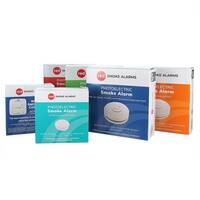
Sparky Direct stocks the full Red Smoke Alarms range. The lineup includes the R10RF wireless 10-year battery model, the R240RC mains-powered alarm, and the RHA10RF wireless heat alarm. Bundle packs of 5, 7, and 10 units with the RAC remote controller are also available. Legrand smoke alarms and Matelec smoke alarms are stocked when a different brand is preferred.
Trade-grade alarms from licensed wholesalers carry verifiable AS 3786 certification, traceable manufacturing dates, and supplier warranties. Sub-$10 alarms from generic online marketplaces frequently lack this paper trail. In a fire, an undocumented alarm can complicate insurance claims and leave the property owner exposed under state legislation.
Confirm the AS 3786 mark. Confirm the manufacturing date is recent (10-year service life starts from manufacture, not installation). Confirm the model offers the connectivity required for the property: wireless RF for retrofits, hardwired for new builds, or stand-alone for caravans and sheds. For interconnected systems, all alarms in the network must be the same brand and series. Cross-link with the rest of the electrical accessories range when planning a full safety upgrade.
The most common cause is dust or insects in the sensor chamber. Vacuum the alarm with a soft brush. The next most common cause is steam or cooking aerosols reaching a smoke sensor placed too close to a kitchen or bathroom; relocate the alarm or replace it with a heat alarm in those zones. Persistent false alarms with no obvious cause indicate sensor failure, and the unit should be replaced.
If a single alarm fails to sound on a test press, check the battery indicator and the manufacturing date on the housing. Wireless networks that fail to interconnect usually have a setup step missed during pairing. Review the brand pairing procedure: Red Smoke Alarms uses the RAC controller as the master device during initial pairing.
Sealed 10-year lithium battery alarms cannot have the battery replaced. End-of-life chirping (typically every 30 to 60 seconds) signals that the entire alarm needs replacing. For 240V alarms, a flashing red LED with no green LED indicates loss of mains power; check the lighting circuit breaker and the alarm cable run. Pair Red Smoke Alarms with appropriate safety switches for full residual current protection on the dedicated alarm circuit.
Watch Red Smoke Alarms 10 x Bundle R10RF | Photoelectric RF Wireless smoke alarm | 10 year Battery video
Watch Red Smoke Alarms R240RC | Photoelectric Smoke Alarm 240v | 10 Year Lithium Battery | Interconnectable video
Watch Red Smoke Alarms R10RFP | Photoelectric RF Wireless Smoke Alarm Pro | 10 Year sealed Lithium Battery video

These smoke and heat alarms have now been installed with minimal effort and have replaced a set (by another manufacturer from a big green hardware store) that had started having daily false alarms after only 2 1/2 years. The sound of a smoke alarm is definitely something you NEVER want your family getting used to and ignoring. The setup and pairing is really easy and the addition of the wall controller is fantastic. I'll definitely be buying these again (hopefully in about 10 years)
Had some other smoke detectors that kept giving false alarms. So I needed to invest in a reliable product. They were delivered quickly, were easy to link together and easy to install. The wall remote is a great idea, can test all 5 detectors with a press of a button. No more standing on chairs trying to reach them. Have had them installed for a month and have had no false alarms. So far so good, definitely a worthwhile investment to protect your family and have peace of mind.
I have installed these Red Smoke Alarms in 2 houses. So easy to install, and especially good for 2 story homes . The wireless feature works well in all rooms and levels. Easy to par the alarms with the controller, which also will be ideal for silencing and then finding the offending alarm. As a professional firefighter I am recommending these alarms to anyone who needs upgrade their alarms before the new legislation takes effect.
Quality products in stock • Fast Australia-wide delivery • Competitive trade pricing
Browse Red Smoke Alarms → Get Expert Advice →Yes, they produce a loud audible alarm designed to alert occupants.
Sparky Direct supplies red smoke alarms Australia-wide, offering compliant fire safety solutions with convenient delivery.
Red smoke alarms are securely packaged and delivered via standard courier services.
Unused products are generally eligible for return according to the seller’s returns policy.
Warranty coverage varies by manufacturer and typically covers defects in materials or workmanship.
Yes, red smoke alarms are typically sold as individual units.
Yes, selection should suit the environment and compliance requirements.
They are designed to withstand long-term use in their intended environments.
They help provide early warning, which can reduce injury and property damage risk.
Yes, they are commonly used in workplaces as part of fire safety systems.
They are typically replaced every 10 years, depending on manufacturer recommendations.
Yes, they should be tested regularly as part of fire safety maintenance.
Quality units are designed for dependable operation when correctly installed.
Red smoke alarms are smoke alarm units featuring a red housing, commonly used to identify a specific alarm type or application.
Yes, the red casing makes them highly visible.
The red colour can help with visual identification in commercial or specialised environments.
Hardwired smoke alarms must be installed by a licensed electrician.
Yes, they are commonly used in commercial and industrial fire safety systems.
Many red smoke alarms support interconnection with compatible alarm systems.
They are available in hardwired and battery-operated versions, depending on the product.
Some models are suitable for residential use, provided they meet local regulatory requirements.
They are often used in commercial buildings, industrial sites, or specific installations where colour identification is required.
They are commonly available as photoelectric smoke alarms, depending on the model.
Quality red smoke alarms are manufactured to meet relevant AS/NZS fire and electrical safety standards when installed correctly.
They detect smoke particles in the air and sound an audible alarm to warn occupants of a potential fire.