
Search Results:
Search Results:
Search Results:
Search Results:
Every compliant switchboard needs a structured way to terminate its neutral conductors. The neutral link does that job. It groups every circuit's neutral return into one tidy, accessible bar inside the enclosure, ready for testing, identification, and inspection. Neutral links are not optional hardware on a properly arranged board; they are part of a correctly engineered neutral termination system.
This category covers neutral links suitable for residential switchboards, meter boards, sub-boards, small commercial distribution boards, and control enclosures. Selection comes down to switchboard suitability, current rating, terminal count, insulation, conductor compatibility, and Australian compliance.
A neutral link is the bar or terminal block where neutral conductors land inside a switchboard. It completes the return path for load current in single-phase and three-phase AC circuits, giving every neutral a dedicated, screwed termination.
Electricians use neutral links in residential switchboards, meter panels, sub-boards, small commercial distribution boards, and control enclosures. Selection comes down to circuit count, current rating, terminal size, board layout, and spare capacity for future circuits.
Active conductors deliver supply to the load. Neutral conductors carry the return current back to the supply origin. The neutral link is the organised meeting point where every circuit's neutral is terminated, labelled, and made accessible for testing.
Loose, undersized, or poorly arranged neutral terminations can cause flickering lights, nuisance tripping, equipment faults, overheating, and compliance defects. A correctly rated and properly torqued neutral link removes that risk and makes future maintenance much faster.
Three terminal bar types sit inside many Australian switchboards. Each one has a specific job:
| Link Type | Function | Typical Conductor |
|---|---|---|
| Neutral link | Terminates the neutral return conductors for circuits on the board | Blue (current Australian convention) |
| Earth link | Terminates protective earthing conductors and bonds the board to the earthing system | Green or green/yellow |
| Active link | Distributes live conductors where designed and correctly protected | Red, brown, or other approved active colours |
Neutral and earth must never be confused or casually bridged inside a modern switchboard. The two systems are kept separate to ensure protection devices trip correctly and fault current behaves as designed.
Safety note: Switchboard wiring, testing, and replacement of neutral links is electrical work. It must be carried out by a licensed electrician in Australia. The information on this page is product selection guidance, not installation instructions.
Neutral links come in several formats. Each suits a different installation context: small residential boards, multi-circuit homes, sub-boards, compact meter panels, and larger commercial distribution boards. Sparky Direct stocks single-pole, multi-way, insulated, and heavy duty options to support residential, light commercial, and project work.
Simple single-pole neutral links suit smaller single-phase switchboards and basic circuit groups. Typical uses include small residential boards, minor switchboard additions, garage and shed circuits, and accessory enclosures.
Even on a small link, current rating and conductor capacity still matter. The terminal must be sized for the conductor it accepts, and the bar must carry the maximum expected neutral current without heating.
Larger switchboards need multi-way neutral links. Common configurations are 4-way, 6-way, 8-way, 10-way, 12-way, and beyond. The way count should match the circuit count, with spare terminals available for future additions.
Each circuit's neutral generally needs its own correctly rated terminal. Doubling conductors into a single terminal should be avoided unless the manufacturer specifically permits it on the product datasheet.
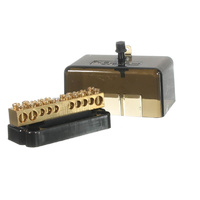
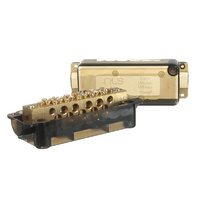
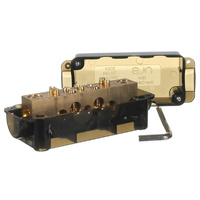
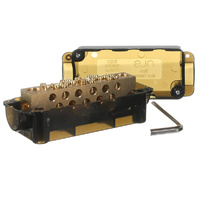
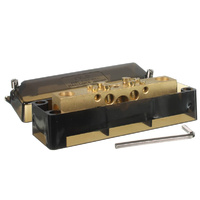
Insulated neutral links have a moulded plastic base or shroud around the brass bar. The insulation reduces accidental contact between the bar and other metalwork or conductors inside the enclosure.
Insulated models are widely used in modern switchboards, compact boards, sub-boards, and crowded meter panels where physical separation is tight. They support safer installation, neater layouts, and easier compliance with enclosure clearance requirements.
Heavy duty neutral links are higher-capacity terminal arrangements. They accept larger conductor sizes, carry higher continuous currents, and use more robust terminal screws and bar cross-sections.
Typical applications include larger homes, workshops, sheds, EV-ready switchboards, submains, and small commercial boards. Standard links suit many everyday residential circuits when correctly rated. Heavy duty links earn their place where conductors are larger, currents are higher, or the board faces frequent maintenance access.
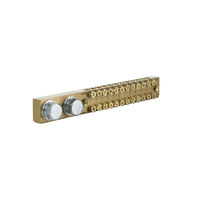
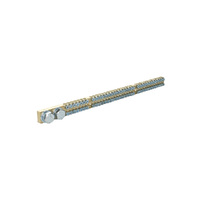
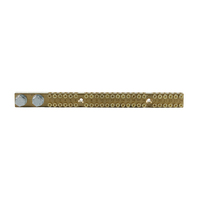
Brass is the most common neutral link bar material. It offers good electrical conductivity, durable threading for terminal screws, and reliable clamping when correctly tightened. Most insulated and non-insulated links on Sparky Direct's range use brass bars.
Aluminium bars appear in some designs where weight or cost favours them, but brass is widely preferred for durability and termination reliability in switchboard accessories. Plated or tinned finishes can improve corrosion resistance in humid or coastal environments. Always check the manufacturer datasheet rather than rely on material assumptions alone.
The right neutral link is the one that matches the board, the circuits, and the conductors actually being installed. This section is a buyer decision framework, not a step-by-step wiring guide. Installation and final selection remain the responsibility of a licensed electrician.
"Size" on a neutral link can mean several things: current rating, number of ways, conductor capacity, physical bar length, and mounting style. All of them matter. Check the switchboard design, main switch rating, circuit count, and conductor sizes against the product datasheet before ordering.
Each circuit needing a neutral termination generally requires its own correctly rated terminal. Way count should match the circuit count, with spare ways added where the board has spare circuit capacity.
| Circuit Count | Suggested Way Range | Typical Application |
|---|---|---|
| Up to 4 circuits | 5 to 7 way | Small renovation board, shed supply, accessory enclosure |
| 5 to 8 circuits | 8 to 10 way | Standard residential switchboard, single-phase home |
| 9 to 12 circuits | 12 to 13 way | Larger home, full switchboard upgrade, sub-board |
| More than 12 circuits | Heavy duty multi-way or multiple links | Meter board, commercial distribution board, project work |
The neutral link must be rated to handle the maximum neutral current expected for the circuit group or board. Current rating, conductor size, main switch capacity, and circuit protection all need to line up. An under-rated link in a high-load installation will run hot, loosen, and eventually fail.
Always follow the product datasheet and the requirements of AS/NZS 3000 Wiring Rules. The main switch rating and the circuit breakers on the board set the upper limit for what each link is expected to carry.
Physical fit inside the switchboard matters as much as the electrical rating. Some neutral links are screw-fixed direct to the chassis. Others are DIN rail mounted, insulated-base, or compact block style designed to slot into modern boards.
Link placement affects wiring neatness, test access, conductor bending radius, and future maintenance. Check the available space inside the enclosure before ordering. Electric switchboards and meter boxes vary in internal layout, so a link that fits one enclosure may not suit another.
Standard neutral links are usually suitable for everyday residential boards when correctly rated for the circuit count and conductor sizes in use. Heavy duty links suit installations with larger conductors, more circuits, higher continuous loads, or more frequent maintenance access.
"Heavy duty" labelling does not replace correct engineering. A licensed electrician should assess the load profile, conductor sizing, and board capacity, then select a link that matches the documented design.
Neutral links installed in Australian switchboards must be suitable for fixed wiring and installed in accordance with AS/NZS 3000 Wiring Rules. This section covers the compliance and safety points relevant to product selection, without providing unsafe installation directions.
The relevant standard for general electrical installations is AS/NZS 3000:2018 Wiring Rules. Neutral terminations are addressed in the context of secure connection, identification, accessibility, enclosure suitability, and separation from other conductors.
Products should carry the relevant certification markings or be supplied through reputable Australian electrical wholesalers. The neutral link's datasheet should confirm current rating, terminal sizing, mounting, and intended application.
Neutral conductors in Australia are identified by blue insulation or blue marking under current wiring conventions. Neutral links should be clearly identifiable and never confused with earth links or active links during installation or maintenance.
Poor labelling and untidy terminations are common causes of defects, rework, and call-backs. A tidy, well-labelled neutral bar saves time during inspection and on every future maintenance visit.
Installing, replacing, or modifying a neutral link inside a switchboard is electrical work. In Australia, that work must be carried out by a licensed electrician.
The board must be isolated, tested, terminated to torque, inspected, and documented by qualified personnel. Homeowners can buy components online, but the installation itself is not a DIY job. There are no shortcuts in compliant switchboard work.
These points are licensed-trade considerations, not homeowner instructions. They appear here to inform product selection and post-installation expectations:
Neutral link failures almost always trace back to termination. A loose screw, an oversized terminal, an undersized conductor, or a corroded contact will cause heat, voltage variations, and eventual breakdown. This section covers practical troubleshooting and maintenance intent for electricians.
A correctly sized screwdriver may be required depending on the terminal type. Many manufacturers specify a torque value on the datasheet, which means a calibrated torque screwdriver is the correct tool for the job.
Calibrated torque tools help avoid two problems at once: loose connections that overheat, and over-tightened screws that damage the brass thread or distort the conductor. The tool choice must match the terminal head style and the torque requirement on the product datasheet.
A loose neutral is a serious fault. Common symptoms include flickering lights, intermittent equipment faults, nuisance tripping, overheating around the terminal, a burning smell, or visible discolouration on the bar or conductor insulation.
Any of these symptoms calls for immediate investigation by a licensed electrician. Preventive switchboard inspections reduce call-backs, equipment damage, and downtime on commercial sites.
High load, poor termination, undersizing, corrosion, moisture, salt air, and dust can all degrade neutral link performance over time. In Queensland coastal and humid environments, corrosion-resistant fittings and suitable IP-rated enclosures are especially important.
Maintenance guidance includes visual inspection at scheduled intervals, thermal imaging for commercial boards under load, and replacement where damage or discolouration is present. A damaged link should never be reused.
Neutral links sit inside almost every type of switchboard on a site. The same category covers a small renovation upgrade, a sub-board for a workshop, and the commercial distribution board in a warehouse. Selection depends on circuit count, current, and enclosure fit rather than the building type alone.
Residential switchboards use neutral links on every circuit. Common scenarios include meter board upgrades, extra circuit additions, dedicated appliance circuits, shed and granny flat supplies, and renovation rework.
Homeowners searching for cheap neutral links for home renovations should focus on compliant, correctly rated products rather than the lowest-price option. The link itself is a small cost compared with the work to install it. Buy the right part, then have a licensed electrician fit it.
Sub-boards need their own neutral termination arrangement sized to the outgoing circuits and the submain feeding them. Practical selection factors include the number of outgoing circuits, submain capacity, available enclosure space, neutral isolation requirements, and labelling.
Related accessories on Sparky Direct include insulated busbars, RCBOs, single pole RCBOs, and a range of electrical accessories that complete a sub-board build.
Electrical contractors keep neutral links in stock as everyday consumables. Bulk purchasing, spare stock, and standardising on common way counts (such as 5-hole, 7-hole, 10-hole, and 12-hole) keeps repair work moving without trips back to the wholesaler.
Facility maintenance teams and builders managing multiple dwellings rely on transparent online ordering, clear stock visibility, fast dispatch, and product datasheets to keep procurement efficient. Sparky Direct supplies trade and informed retail buyers across Australia.
Buying neutral links online has become the default for most electricians. The advantage is being able to compare specifications, way counts, brands, and prices side by side before ordering. Sparky Direct supplies switchboard accessories to trade and retail buyers Australia-wide.
The Active and Neutral Links Red and Black range covers colour-coded options used in many Australian switchboards. Buyers can compare neutral links by current rating, way count, insulation, brand, and switchboard suitability.
The range supports electricians, contractors, builders, and informed retail buyers who need compliant components for licensed installation. Online ordering, fast dispatch, and Australia-wide supply keep small jobs and large projects moving on schedule.
Project work and stock replenishment benefit from bulk ordering. Buying multiple units at once reduces handling, simplifies invoicing, and keeps consistent part selection across a job.
Confirm product specifications before placing larger orders. Consistent part selection across a project improves installation speed and reduces mismatched components on inspection day. For trade quantities or project pricing, the Sparky Direct team can help confirm availability and lead times.
Brand choice often comes down to switchboard system compatibility, terminal layout, spare capacity, documentation, and existing site standards. Hager neutral links and busbar accessories suit Hager enclosures and modular switchgear ranges.
Clipsal-compatible neutral links and busbar accessories work alongside Clipsal MAX9 and Resi MAX circuit protection in residential and light commercial boards. The full Clipsal range covers switchboard accessories used in many Australian homes. Other trusted brands stocked at Sparky Direct include NHP Electrical, Legrand, and HPM.
Club Clipsal is Australia's largest electrician community offering trade rewards, business support, and exclusive benefits. When you nominate Sparky Direct as your preferred wholesaler, we automatically apply your Clipsal spend points to your Club Clipsal account daily.
Entry-level offering coaching, mentoring, and training discounts
Unlock exclusive industry tools and networking events
Access Toyota fleet offers and business software discounts
Maximum benefits, including VIP experiences and rewards
1. Sign Up: Create your Club Clipsal account at clipsal.com/club-clipsal or via the iCat mobile app
2. Nominate Sparky Direct: Select Sparky Direct from the wholesaler dropdown menu in your profile
3. Add Email: Enter your Sparky Direct account email address in the membership number field
4. Start Earning: Every dollar spent on Clipsal products earns points automatically
Redeem points from the rewards store, including gift cards, tools, and experiences. Access business summits, product training, and industry networking events. Receive early access to new product launches and special promotions. Connect with fellow electricians via the Club Clipsal community app.
A decision-focused summary for ordering the right neutral link first time. This section is built to be skimmable on a phone in the van and quotable in a quick handover conversation with a colleague.
Neutral links rarely sit alone on a board. Common companion categories include circuit protection, Hager RCBOs, electrical enclosures, and screw connectors. For meter board work, browse electric switchboards alongside the link selection.
Watch 30749 | 12 Way Earth / Neutral Link Bar video
Watch NLS 30040 | 12 Hole Neutral Link Black Housing video
Watch NLS 30289 | Heavy Duty 13 Hole 165Amp 500v Neutral Link video

Excellent service, arrived quick. It's an earth bar, what can I say? Solid, brass and 2 screw!!! Sparky Direct are competitive and easy to deal with... Go Hard!
Good product, exactly what was described. Paid for express postage. Got it within 3 business days in rural SA as promised.
Well made quality products
Delivery is fantastic now Australia Post is back to it’s best performance ( paying the $3 for priority).
$3 well spent if you are in a hurry.
Quality products in stock • Fast Australia-wide delivery • Competitive trade pricing
Browse Neutral Links → Get Expert Advice →