
Search Results:
Search Results:
Search Results:
Search Results:
The plug top sits at the appliance end of a flexible cord. Each pin terminates one conductor inside the cord and aligns with the matching contacts in a wall socket. When the plug is inserted, current flows from the active pin through the appliance and back via the neutral pin, while the earth pin ties exposed metal parts to ground.
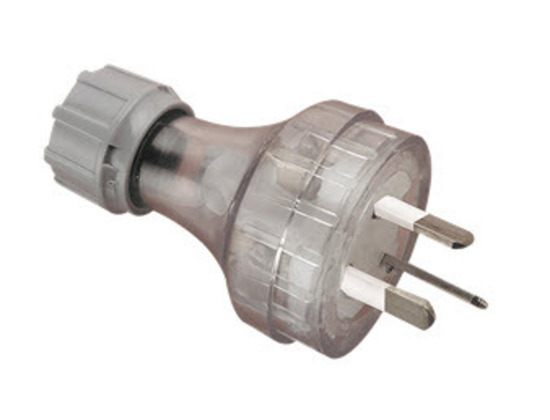
The active pin (brown conductor) carries 230 V from the supply. The neutral pin (blue conductor) returns the current to the source. The earth pin (green and yellow conductor) is the longer central pin and connects the appliance frame to the protective earth system, allowing fault current to trip the upstream protective device.
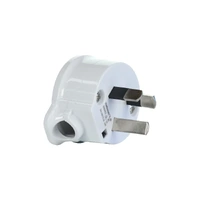
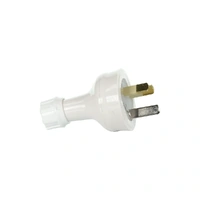
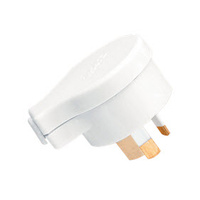
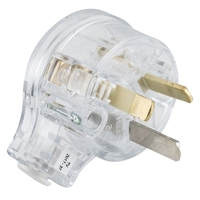
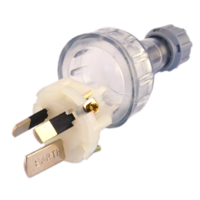
Australia and New Zealand use the AS/NZS 3112 pin pattern: two angled flat blades for active and neutral, and a vertical earth blade. This pattern is unique to the region and prevents accidental insertion of incompatible plugs from other markets.
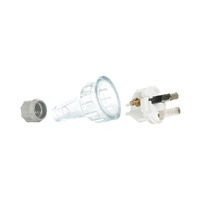
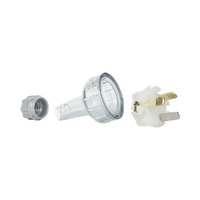
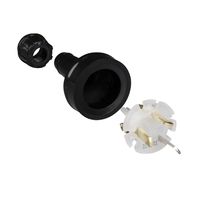
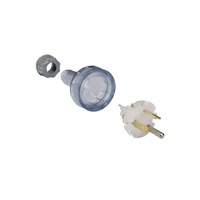
Inside the moulded body, three terminals secure the conductors with screws or cage clamps. A cord grip holds the outer sheath of the cable, transferring any pulling force away from the terminals. This combination of secure termination and strain relief keeps the conductors in place under repeated use.
The three pin design exists because earthed equipment is safer equipment. Without a working earth path, a fault inside an appliance can leave the metal casing live at mains voltage, creating a serious shock risk for anyone touching it.
The earth pin connects the chassis of the appliance to the building's earth electrode through the protective earth conductor in the wiring. If a live conductor inside the appliance contacts the chassis, the resulting fault current returns through the earth path. This trips the circuit breaker or operates the RCD almost instantly.
A correctly wired plug top reduces shock risk in two ways. The earth pin diverts fault current safely to ground. The polarised pin layout ensures that the active conductor lands on the switched terminal of the appliance, so isolating the wall switch removes voltage from internal components.
Every domestic and commercial socket in Australia accepts the same 3 pin pattern. Trade tools, kitchen appliances, office equipment, and site lighting all share one connector standard. Qualified workers can replace a plug top with confidence that it will fit the next outlet they encounter.
The earth pin is slightly longer than the active and neutral pins. This means the earth connection is made first when the plug is inserted, and broken last when it is removed. Never modify or shorten the earth pin.
Male 3 pin plug tops appear wherever a portable or semi-portable appliance needs to be connected to mains power. They are the most common connector on the Australian electrical network.
Kitchen appliances, vacuum cleaners, lamps, fans, and most consumer electronics with metal enclosures use a 10A plug top. When the original moulded plug fails or the cord is damaged, a rewireable plug top restores the appliance without replacing the entire flex.
Power tools, test equipment, and trade gear regularly need plug top replacements. Heavy duty 10A or 15A plugs handle the higher inrush currents from motors and the rough handling typical on construction sites.
Site-built extension leads use a male plug top at one end and a female cord extension socket at the other. For higher current draws, 15A and 20A versions are paired with appropriately rated cable. Industrial sites often use the related 3 pin straight plug industrial IP66 connectors for weather and impact resistance.
Plug tops are grouped by current rating, entry style, and duty class. The right choice depends on the appliance load, the cable diameter, and how often the plug will be handled.
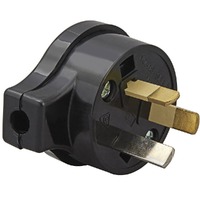
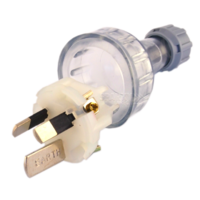
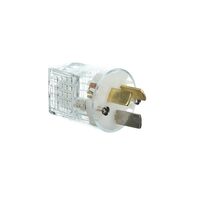
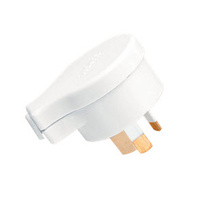
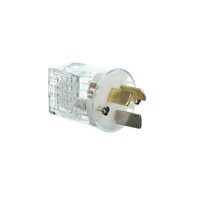
Standard duty 10A plugs suit indoor appliances and light commercial use. The body is moulded thermoplastic with a screw cord grip and three terminal screws. These are the workhorse of household replacement and are stocked in transparent, white, and black finishes.
Heavy duty plugs use thicker insulation, larger cord grips, and reinforced terminals. They are designed for trade tools, site lighting, and equipment that is plugged and unplugged dozens of times a day. The 15A and 20A versions are clearly distinguished by their larger earth pin to prevent connection to a 10A circuit.
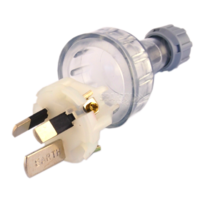
Modern Australian plug tops include insulating sleeves on the active and neutral pin bases. This sleeved design (sometimes labelled "safety shield") prevents accidental contact with live metal when the plug is partially inserted. AS/NZS 3112 has required insulated pins on new plugs since 2005.
Plug top ratings define the maximum continuous current the connector can safely carry. Matching the rating to the appliance load is the foundation of every safe termination.
10A plug tops cover most domestic and light commercial loads up to 2,400 W at 240 V. The 15A version uses a larger earth pin and suits welders, larger compressors, and commercial kitchen equipment. The 20A version, with an even larger earth pin, is reserved for heavier industrial duty.
The plug rating must equal or exceed the appliance nameplate current. For motor loads, account for inrush current that can briefly exceed the running figure several times over. The cable, plug, and outlet must all share the same rating.
| Plug Rating | Maximum Load (240 V) | Typical Use |
|---|---|---|
| 10A | 2,400 W | General appliances, tools, lighting |
| 15A | 3,600 W | Welders, compressors, caravan supply |
| 20A | 4,800 W | Heavy industrial portable equipment |
Drawing more current than the plug rating allows generates heat at the pin contacts. Sustained overload melts the body, damages the socket, and in severe cases starts a fire. The pin sizes are deliberately different across ratings so a higher rated plug cannot be inserted into a lower rated outlet.
The plug top, cable, and termination work together as one system. A plug rated correctly but fitted to undersized cable creates a hidden weak point in the circuit.
A 10A plug suits 1.0 mm or 1.5 mm flexible cord. A 15A plug needs at least 1.5 mm conductors, with 2.5 mm preferred for runs over a few metres. Use only flexible cord rated for portable use, never solid twin and earth cable which is intended for fixed wiring.
Every conductor must be fully seated under its terminal screw with no stray strands. Loose strands can bridge to adjacent terminals or create high resistance joints that overheat. The terminal screws should be tightened to the manufacturer's torque, not just hand-tight.
The cord grip clamps the outer sheath of the cable, not the individual conductors. Tightening the cord grip evenly transfers any pulling force from the flex to the plug body, protecting the terminal screws from being loaded by the user yanking the lead.
Conductor preparation: Strip the outer sheath only as far as needed to reach the terminals comfortably. Excess unsheathed conductor inside the plug body can chafe over time and breach the insulation.
The materials used in a plug top decide how it handles heat, impact, and the wear of frequent use. Premium plugs use better thermoplastics and brass alloys that resist deformation and corrosion.
Modern plug bodies are moulded from polycarbonate or flame-retardant nylon. These resist cracking when dropped on concrete and stay dimensionally stable when warm. Cheaper plugs use brittle polystyrene that shatters on impact and softens under load.
Brass pins with a nickel or tin plating give the best balance of conductivity and corrosion resistance. The terminal screws should be brass or plated steel to prevent galling against the brass terminal block. Avoid plugs with bare steel pins, which corrode and develop poor contact over time.
A trade-grade plug withstands thousands of insertion cycles without loosening at the pin clamp or terminal. Factory drop tests, retention tests, and temperature rise tests are part of the certification process for plugs sold under AS/NZS 3112.
Selecting the correct plug starts with the appliance and ends with the environment it will live in. Three considerations cover most decisions: load, layout, and exposure.
For a desk lamp, a basic 10A side entry plug in a finish that matches the cord is enough. For a workshop power tool, a heavy duty 10A or 15A straight entry plug gives the cord grip and impact resistance the application demands.
Specify plugs with insulated pin bases (safety shield) to reduce shock risk during partial insertion. For wet or dusty environments, choose IP rated industrial connectors instead of a standard plug top.
Indoor plugs are designed for clean, dry environments. Outdoor or wet area connections need IP66 industrial plugs from the IP66 3 pin industrial outlets and sockets range, with sealed bodies and weather-resistant cord glands. Standard household plugs should never be used outside without enclosed weatherproof housings.
Plug tops sold in Australia must comply with AS/NZS 3112 (plugs and socket-outlets) and carry an approval mark from a recognised certifier such as RCM or a state regulator.
AS/NZS 3112 specifies pin dimensions, insulation, mechanical strength, and temperature rise limits. AS/NZS 3000:2018 (the Wiring Rules) covers how the plug fits into the wider installation. AS/NZS 3760 governs in-service inspection and testing of portable equipment, which includes plug top condition.
Uncertified plugs can fail certification testing for pin retention, leakage current, and earth continuity. They may pass visual inspection while hiding defects that only show up under load. Always check for the regulatory compliance mark before installing a new plug.
In every Australian state and territory, fixed wiring and the replacement of plug tops on equipment used in commercial settings is restricted to licensed electricians. Many workplaces also require regular test and tag inspection under AS/NZS 3760.
Replacing a plug top is straightforward for a qualified electrician but unforgiving of shortcuts. Follow the same disciplined approach every time.
Strip the outer sheath, leaving the conductors long enough to reach their terminals without strain. Strip each conductor to match the terminal depth. Land active on the brown terminal, neutral on the blue terminal, and earth on the green and yellow terminal. Tighten each screw firmly and check by tugging each conductor.
Once terminations are checked, route the conductors so they sit clear of the screws on the cover. Tighten the cord grip evenly across the cable sheath. Close the body and torque the cover screws so the plug feels solid in the hand with no creak or movement.
Workplace plug top replacement, equipment used in rental properties, and any work on hardwired plug tops or industrial connectors must be performed by a licensed electrician. Domestic flex repairs to personal appliances are unrestricted in some states but still benefit from professional installation when the work is critical.
A correctly specified and installed plug top should serve for years without intervention. The variables that shorten its life are heat, mechanical stress, and moisture.
Heat is the main enemy of plug top reliability. Loose terminals, undersized cable, or sustained loads above the rating all generate excess heat at the pin contacts. A plug that feels warm to the touch in normal use is a warning sign that warrants investigation.
Heavy duty plugs withstand repeated handling without the pin clamp loosening or the cord grip slipping. For tools that move between sites every day, the extra cost of a trade-grade plug is recovered many times over in avoided replacements.
Regular visual inspection during portable equipment testing catches early signs of wear: scorched pins, cracked bodies, or loose cord grips. Catching these conditions early prevents the more expensive failure of the appliance or the supplying circuit.
Plug tops do not last forever. Mechanical wear, electrical stress, and accidental damage all reduce their useful life. Replacement is cheap insurance against a far more expensive failure.
Cracks in the body, missing or melted insulation around the pins, or visible discolouration at the terminals all indicate a plug that needs immediate replacement. Even cosmetic damage that exposes internal conductors creates a shock and short-circuit risk.
If a plug feels warm during normal operation, drops out of the socket easily, or trips a circuit breaker for no obvious reason, the internal terminations are failing. Open the plug under safe conditions to inspect, or replace it as a precaution.
A faulty plug top is a fire and electrocution risk. The cost of a replacement plug is trivial compared with the consequences of leaving a damaged one in service. Workplace test and tag programs exist precisely to catch this kind of deterioration.
Trade buyers and electricians need plugs available in quantity, in the right ratings, and at consistent quality. Sparky Direct stocks the major brands across all common ratings and finishes.
Sparky Direct ships male 3 pin plug tops Australia-wide from Brisbane. The full range sits within the broader plug tops category, alongside extension sockets, flex and plug assemblies, and 3 core flexible cables.
Budget plug tops can be appropriate for low-cycle domestic use, but trade-grade products from brands like Clipsal, HPM, and PDL hold up better under the demands of daily site work. The price difference is usually a few dollars per plug, recovered quickly in service life.
Confirm the current rating matches the appliance and cable. Check for an Australian regulatory compliance mark on the body. Choose insulated pin bases for any new installation. Buy from a stockist that lists detailed product information, not just a name and a price.
Most plug top problems trace back to one of three causes: loose terminations, mechanical damage, or thermal stress. A short inspection usually identifies the issue.
If an appliance cuts in and out, suspect the plug top before the appliance itself. Wiggle the cord at the plug to see if power returns. Inside, look for broken conductor strands at the terminal entries or terminal screws that have backed off over time.
Each terminal screw should hold its conductor firmly against the brass terminal block. Conductors that pull free under light tension, or screws that turn freely without resistance, indicate that the joint is no longer reliable. Re-terminate fully or replace the plug top.
Discolouration around the pins, a faint plastic odour, or visible cracking in the body all indicate failure. Replace the plug top immediately. Inspect the matching socket for signs of damage that may have caused the heat build-up.
Club Clipsal is Australia's largest electrician community offering trade rewards, business support, and exclusive benefits. When you nominate Sparky Direct as your preferred wholesaler, we automatically apply your Clipsal spend points to your Club Clipsal account daily.
Entry-level offering coaching, mentoring, and training discounts
Unlock exclusive industry tools and networking events
Access Toyota fleet offers and business software discounts
Maximum benefits, including VIP experiences and rewards
1. Sign Up: Create your Club Clipsal account at clipsal.com/club-clipsal or via the iCat mobile app
2. Nominate Sparky Direct: Select Sparky Direct from the wholesaler dropdown menu in your profile
3. Add Email: Enter your Sparky Direct account email address in the membership number field
4. Start Earning: Every dollar spent on Clipsal products earns points automatically
Redeem points from the rewards store, including gift cards, tools, and experiences. Access business summits, product training, and industry networking events. Receive early access to new product launches and special promotions. Connect with fellow electricians via the Club Clipsal community app.
Watch CLIPSAL 439S15HDTR | 3 Pin 15Amp Heavy Duty PlugTop (Transparent) video
Watch Clipsal 439SBK | 3 Pin Plug Top Safety Shield BLACK video
Watch CLIPSAL 418S-BK | Side Entry 3 Pin 10Amp Plug Top (Black) video

I have been using Sparky Direct for a while and recently purchased some 15Amp HD Plugs. The price and quality of the product was good, no complaints there. This has been the case with all the transactions I have had with Sparky Direct over the years. Excellent service all round.
Exactly what I needed for my EU coffee maker. Service from Sparky Direct was exceptional!
A Clipsal flat entry plug at a better price than my local wholesaler. An easy decision.
Quality products in stock • Fast Australia-wide delivery • Competitive trade pricing
Browse Male 3 Pin Plug Tops → Get Expert Advice →Yes, they are a standard electrical component used in many applications.
Sparky Direct supplies plug tops and extension sockets Australia-wide, offering compliant and reliable power connection solutions with convenient delivery.
They are securely packaged and delivered via standard courier services.
Unused products are generally eligible for return according to the seller’s returns policy.
Warranty coverage varies by manufacturer and typically covers defects in materials or workmanship.
Yes, they are typically sold as individual electrical accessories.
Yes, selecting the correct current rating is important for safety and performance.
They should be visually checked from time to time for wear or damage.
Yes, they are designed for portable power applications.
Yes, compliant products help ensure safe power connections.
Yes, they are commonly used in workshops, garages, and utility areas.
Quality plug tops are designed to withstand regular use.
Yes, they allow appliances and tools to be used further from fixed outlets.
Plug tops are electrical plugs fitted to the end of a power lead, while extension sockets are outlets used to receive a plug on an extension lead.
Yes, they are designed for simple and safe plug-in connections.
They ensure a secure electrical connection and help reduce the risk of faults.
Yes, heavy-duty options are available for workshops and industrial use.
Yes, they are suitable for residential, commercial, and light industrial applications.
Yes, they are widely used in homes for appliances and extension leads.
Plug tops are commonly used to replace damaged plugs on extension leads by licensed professionals.
Yes, some extension sockets are designed for outdoor or heavy-duty use.
Yes, they are available in common ratings such as 10 amp and 15 amp.
Yes, they must comply with relevant AS/NZS electrical safety standards when sold and used in Australia.
Extension sockets are used to provide a safe connection point at the end of an extension lead.
Plug tops are used to connect appliances, tools, or extension leads to a power supply.