
Search Results:
Search Results:
Search Results:
Search Results:
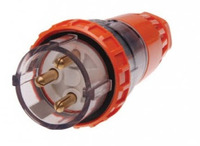
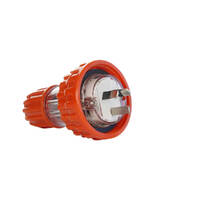
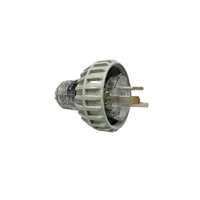
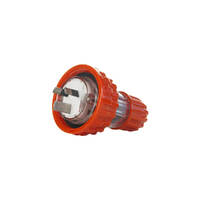
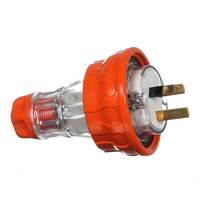
Find the best Industrial 3 Pin Straight Plugs here at Sparky Direct. [ Read More ]
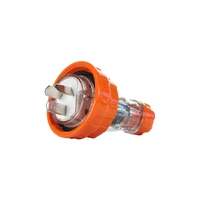
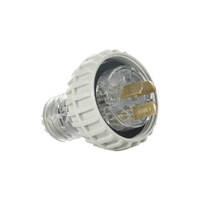
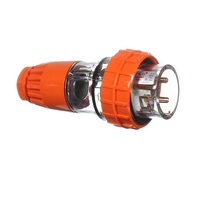
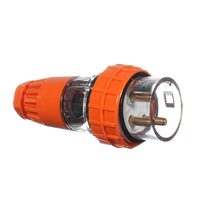
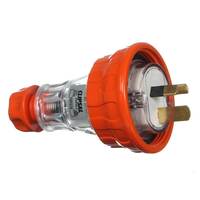
A 3 pin industrial straight plug is a single-phase connector built for tough electrical environments, with a body moulded from impact-resistant thermoplastic. The pin housing extends in line with the cable rather than at an angle, hence the term straight. Inside, three terminals connect to active, neutral, and earth conductors. A cable gland at the rear seals the cable entry against dust and moisture. The plug pushes into a matching IP66 socket and locks with a screw collar to maintain the seal under load.
The active pin carries 230 volts from the supply, and the neutral pin returns current to the source and sits at near-zero potential. The earth pin bonds the appliance frame to the protective earthing system, providing a fault-current path for circuit protection devices. Correct identification of each terminal during termination is essential. A reversed active and neutral can render some appliances unsafe even when they appear to operate normally.
Straight plugs suit applications where the cable runs away from the socket along the same axis. They handle direct pull cleanly because the strain travels through the cable gland, not across a bent housing. This makes them well-suited to portable power leads, generator tails, machinery feeds, and trailing leads on construction sites.
A straight plug exits the socket parallel to the cable, while an angled plug redirects the cable at 90 degrees from the pin axis. Straight plugs work best when there is clearance behind the socket. Angled plugs save space against walls and floors, and reduce strain when the cable must drop or run sideways immediately after connection.
The IP66 code breaks into two digits. The first digit, 6, certifies a dust-tight enclosure with no ingress of particles after eight hours of test exposure. The second digit, 6, certifies protection against powerful water jets from any direction at 100 litres per minute, projected from 3 metres for 3 minutes. A plug carrying this rating suits outdoor installation, washdown areas, and exposed industrial environments.
Ingress protection ratings are defined by the AS 60529 standard, where the first digit ranges from 0 to 6 for solid particle protection and the second digit ranges from 0 to 9 for liquid ingress protection. IP66 sits at the top of standard solid-particle protection and near the top for water resistance below full submersion. The seal relies on an O-ring between the plug body and socket face, plus a cable gland at the cable entry.
| Rating | Dust Protection | Water Protection | Typical Use |
|---|---|---|---|
| IP65 | Dust-tight | Low-pressure water jets | Sheltered outdoor, light wash exposure |
| IP66 | Dust-tight | Powerful water jets | Construction sites, washdown, outdoor industrial |
| IP67 | Dust-tight | Temporary submersion to 1 metre | Flooded areas, marine, brief immersion risk |
IP66 covers most Australian industrial scenarios, while IP67 is required only where temporary submersion is foreseeable. Most fixed industrial outlets and plugs in this category sit at IP66.
IP66 does not cover continuous submersion, high-temperature steam, or chemical attack, and the rating also assumes correct installation. A loose cable gland, missing O-ring, or unmatched socket reduces protection well below the certified level. Protection is a function of the assembled connection, not the plug alone.
AS/NZS 3123 covers approval and test specifications for plugs, socket-outlets, and couplers used for general industrial purposes. The standard defines pin dimensions, current ratings, mechanical strength, and dielectric performance. Plugs sold in Australia for industrial use must meet this specification and carry a Regulatory Compliance Mark.
AS 60529 is the Australian adoption of IEC 60529, and it defines the IP rating test methods, equipment, and pass criteria. A claim of IP66 must be supported by independent test results to this standard, and reputable brands publish certification reports on request.
The Wiring Rules govern circuit design, conductor sizing, and protection requirements upstream of the plug. Selection of the plug current rating must align with the circuit protective device. A 32-amp plug terminated to a circuit fed by a 20-amp breaker is non-compliant and may overload the breaker if the load exceeds the breaker rating.
Termination of plugs to flexible cords on installed equipment is electrical work in Australia and must be carried out by a licensed electrician in most states. Replacement of like-for-like flexible cords on portable equipment may be permitted in limited cases under state-specific exemptions. Always check the relevant state regulator before undertaking the work.
Single-phase 3 pin industrial plugs are commonly available in 10, 15, 20, and 32 amp ratings. Each rating uses a different pin geometry to prevent insertion into a higher-rated socket. A 10-amp plug fits a 10, 15, 20, or 32-amp socket, while a 32-amp plug only fits a 32-amp socket. This step-up keying protects equipment and supply circuits from current mismatch.
Flat pin variants use the standard Australian pin shape and suit general portable power, caravan supply, and light industrial use. Round pin variants follow the AS/NZS 3123 industrial pattern and are common at 20 and 32 amps for site power, generator tails, and heavy machinery. Flat and round pin plugs are not interchangeable and require their own matching sockets.
All 3 pin straight plugs in this category are rated for 230/240 volt single-phase supply at 50 Hz, and are not designed for three-phase loads. For three-phase circuits, see the 4 pin straight plug range or the 5 pin straight plug range with neutral.
Select the plug rating to match the maximum continuous current draw of the connected equipment, with an allowance for inrush on motor loads. Undersized plugs overheat at the contacts and degrade the seal, while oversized plugs work safely but require a matching socket and circuit upstream.
Quality industrial plugs use polycarbonate or glass-filled nylon housings, which resist impact, UV exposure, and a wide temperature range without becoming brittle. The housing colour is typically red, orange, or grey to suit visibility requirements on site.
Pins are usually solid brass with a tin or nickel plating to resist corrosion. Terminals accept stranded copper conductors and clamp them with a captive screw. A well-designed terminal grips the conductor evenly across its full width without nicking strands.
The cable gland at the rear of the plug compresses an O-ring around the cable jacket as it tightens. Glands are sized for a specific cable diameter range: a cable that is too thin will not seal, and a cable that is too thick will not enter the gland. Correct cable selection is a precondition for the IP66 rating to apply.
Outdoor use requires UV-stabilised housings to prevent surface chalking and embrittlement. Chemical resistance becomes important in workshops, dairies, and food processing where wash chemicals contact the plug regularly. Impact ratings, where published, indicate joule values from drop and impact tests.
Start with the equipment nameplate, where the current draw and supply voltage are stamped on every compliant appliance. Select a plug rating equal to or just above the maximum draw, then check that the upstream socket and circuit match. Where motors are involved, allow headroom for starting current.
Indoor sheltered use accepts IP54 or IP55 in many cases, while outdoor exposure, washdown, and exposed industrial sites require IP66 as a minimum. Coastal and marine use may also need increased corrosion resistance through nickel-plated brass pins and stainless screws.
Match the cable cross-section to the current rating using the Wiring Rules tables. Confirm the cable outside diameter falls inside the published gland range for the plug. Adequate strain relief at the gland prevents conductor pull-out and protects the seal from cable movement.
Selecting a plug rating without verifying the socket is the most common error. The second is choosing a flat pin plug for a round pin socket or vice versa. The third is fitting a cable outside the gland's diameter range, which voids the IP claim. Each of these mistakes is preventable with a five-minute check before purchase.
Site distribution boards, generator tails, and trailing leads use 3 pin industrial plugs as the standard portable connection. The IP66 seal protects against dust, mud, and rain through long shifts, and RCD-protected outlets upstream provide additional fault protection on temporary supplies.
Production lines use industrial plugs for machinery moves, maintenance access, and removable equipment, where the locking collar prevents accidental disconnection during operation. The robust housing handles knocks from forklifts and trolleys without failing.
Food processing, abattoirs, dairies, and outdoor pump installations all subject electrical connections to high-pressure water and aggressive cleaning agents. IP66 plugs with chemical-resistant housings hold up to daily washdown cycles where unrated plugs would fail within weeks.
Marquees, mobile food vans, market stalls, and outdoor events depend on weatherproof connections that handle changeable conditions. The same plugs are used on caravan supply leads and marina pedestals where waterproof integrity is non-negotiable.
Strip the outer jacket only as far as the manufacturer's measurement guide indicates. Over-stripping leaves bare conductor exposed past the terminal block, while under-stripping forces jacket material into the terminal and prevents a clean clamp. Strip individual conductors to the length shown for the terminal type.
Pass the cable through the gland nut before terminating, then land the conductors at active, neutral, and earth in line with the plug markings. Seat the cable in the gland and tighten the gland nut to compress the O-ring evenly around the jacket. The jacket should not rotate when the gland is fully tight.
Tighten terminal screws to the torque shown in the product instructions, since loose terminals overheat and damage the plug. Over-tight terminals can crush stranded conductors and break individual strands. A torque screwdriver gives consistent results across multiple terminations.
Test continuity from active pin to the active conductor at the equipment end, repeat for neutral and earth, and confirm there is no connection between active and earth. Insulation resistance testing at 500 volts confirms the integrity of the plug and cable as a single assembly. Record the test results before placing the equipment back in service.
Straight plugs need clear space behind the socket equal to the plug length plus a bend radius for the cable. Angled plugs route the cable parallel to the mounting surface, reducing the projection from the wall by around half.
A straight plug transfers cable tension directly through the gland to the cable. An angled plug introduces a bend at the housing that the gland and internal terminals must absorb. Both are rated for the same pull force, but the failure modes differ.
Straight plugs install identically regardless of socket orientation. Angled plugs need orientation choice at the time of termination because the cable direction is fixed by the housing. Some angled plugs allow housing rotation in 90-degree increments to address this.
Choose straight when there is clearance and the cable runs away from the socket. Choose angled when the socket sits close to a wall, floor, or obstruction, or when the cable must drop or run sideways from the connection point.
Australian industrial sites combine high UV, dust, temperature swings, and seasonal rainfall. Quality IP66 plugs with UV-stabilised housings hold their colour and mechanical strength across years of exposure, whereas lower-grade housings chalk and crack within a few seasons.
Most field failures trace to a degraded O-ring, a loose cable gland, or a mismatched cable diameter. None of these fail without warning, and routine inspection at scheduled intervals catches these issues before water reaches the terminals.
Visual inspection of the housing, gland, and cable jacket should occur whenever the plug is connected or disconnected. Test and tag intervals are set by AS/NZS 3760 and depend on the equipment class and environment, with construction site equipment typically tested every three months.
A quality industrial plug terminated correctly will outlast the cable it is fitted to. The cost difference between a budget plug and a Tier-1 brand plug is small relative to the labour cost of retermination after early failure. Specification of recognised brands at the outset reduces total lifecycle cost.
Each of the four issues below voids the IP rating, breaches the Wiring Rules, or both. All are preventable at the point of selection and termination.
Fitting a plug rated below the equipment current draw causes pin and contact heating, melted plastic, and ultimately fire. Fitting a plug rated above the upstream circuit defeats the keying that protects against overload. Match the plug to the equipment, then verify the upstream circuit matches the plug.
An untightened gland, missing O-ring, or out-of-range cable diameter all break the IP66 seal. Water that enters the housing tracks across terminals and causes nuisance tripping at best, and earth faults or fire at worst.
Forcing a flat pin plug into a round pin socket, or attempting to bypass current rating keying, damages both connectors and produces an unsafe connection. Confirm pin geometry and current rating match before purchase.
Terminations carried out by unlicensed personnel are illegal in most Australian states. Even where a licensed installer is involved, shortcuts such as omitting the earth conductor, using non-flexible cable on portable equipment, or fitting damaged plugs all produce non-compliant assemblies that may fail an inspection.
Pricing varies with current rating, brand, and pin type. Entry-level 10-amp flat pin plugs from value brands sit at the lower end of the range. Premium 32-amp round pin plugs from established manufacturers carry a higher price reflecting tested compliance and warranty backing. Sparky Direct lists current pricing on each product page in the 3 pin IP66 industrial outlets and sockets category.
Project work where multiple identical plugs are required often qualifies for bulk pricing. Contact the trade desk before placing the order to confirm quantity discounts and stock availability. Holding spares on the truck reduces downtime when a plug is damaged in service.
Plugs imported without RCM certification, IP test reports, or AS/NZS 3123 compliance may look identical to certified product but lack the underlying testing. Failure of an uncertified plug exposes the installer to liability that no price saving can offset.
Online electrical wholesalers stock a broader range than most trade counters and ship directly to site. Sparky Direct supplies industrial electrical equipment across Australia with same-day dispatch on stocked items.
Stocked items dispatch the same business day when ordered before the daily cut-off. Delivery times vary by location, with metropolitan areas receiving stock in one to two business days under standard freight. Express options are available where required.
Before placing an order, confirm the equipment current draw, the socket type and rating already installed, the cable size in use, and the environmental conditions at the connection point. Each of these inputs narrows the plug specification to a single correct choice.
Look for the Regulatory Compliance Mark on the housing or packaging, and cross-check the brand against published certification listings where any doubt exists. Compliant brands stocked by Sparky Direct include Clipsal and NLS in this category, alongside other recognised manufacturers such as PDL, HPM, Legrand, and NHP across the wider industrial range.
Carry one spare plug per current rating and pin type used regularly. A damaged plug on a critical lead can halt work for the rest of the shift if no spare is available. Consumable stock on the truck is cheap insurance against downtime.
Sparky Direct stocks the full range of 3 pin industrial straight plugs IP66 across Clipsal 56 Series, Easy56, and NLS product lines. Browse the Clipsal 56 Series industrial switchgear range, the Easy56 straight and angled plug range, or the broader industrial outlets and sockets category.
Club Clipsal is Australia's largest electrician community offering trade rewards, business support, and exclusive benefits. When you nominate Sparky Direct as your preferred wholesaler, we automatically apply your Clipsal spend points to your Club Clipsal account daily.
Entry-level offering coaching, mentoring, and training discounts
Unlock exclusive industry tools and networking events
Access Toyota fleet offers and business software discounts
Maximum benefits, including VIP experiences and rewards
1. Sign Up: Create your Club Clipsal account at clipsal.com/club-clipsal or via the iCat mobile app
2. Nominate Sparky Direct: Select Sparky Direct from the wholesaler dropdown menu in your profile
3. Add Email: Enter your Sparky Direct account email address in the membership number field
4. Start Earning: Every dollar spent on Clipsal products earns points automatically
Redeem points from the rewards store, including gift cards, tools, and experiences. Access business summits, product training, and industry networking events. Receive early access to new product launches and special promotions. Connect with fellow electricians via the Club Clipsal community app.
Watch CLIPSAL 56P310-EO | 3 Pin Flat 10Amp Straight Plug IP66 | 56 Series video
Watch NLS 30470 | 3 Pin Flat 10Amp Straight Plug IP66 | 66P310F video
Watch NLS 66P332 | 3 Round Pin 32Amp Straight Plug IP66 | 30521 video

Good quality industrial plug, straight forward conversion with measurement guide for stripping. Delivery was prompt and pricing was pretty good compared to other suppliers.
I have been using these type of plugs for many years, they provide good service, while keeping water & dust out if installed correctly, then tightened properly when plugging in. Great for caravans, camp gear and more.
I needed this for a fish pond filter. Sparky Direct was the only place I could find the right plug for the job. Delivered in a day or so and the fish are now happy and healthy.
Quality products in stock • Fast Australia-wide delivery • Competitive trade pricing
Browse 3 Pin Industrial Straight Plugs → Get Expert Advice →Yes. Straight cable entry offers direct support, suitable for fixed or stable cable runs.
3 pin straight plug industrial IP66 products are available from Sparky Direct, offering access to durable industrial electrical connectors with Australia-wide delivery.
Delivery availability depends on the supplier and location, with options across metropolitan and regional Australia.
Yes. They are suitable for new installations, upgrades, and replacing existing industrial plugs.
Warranty coverage depends on the manufacturer and supplier, with conditions applying to correct installation and use.
Consider voltage and current rating, IP rating, cable size, installation environment, and electrician recommendations.
With correct installation and use, they are designed for long service life in harsh conditions.
They generally require minimal maintenance but should be inspected during routine electrical checks.
Yes. They are designed to withstand repeated connection and disconnection in demanding environments.
Yes. They are often used to supply power to portable tools and fixed equipment.
Yes. They are commonly used in agricultural and rural settings due to their weather resistance.
They feature a robust industrial design focused on durability rather than compact size.
Yes. The IP66 rating makes them suitable for wash-down areas and dusty industrial sites.
A 3 pin straight plug industrial IP66 is a heavy-duty electrical plug designed for industrial applications, featuring a straight cable entry and high protection against dust and water.
Yes. They are designed for secure yet straightforward connection by trained personnel.
They provide reliable power connections with strong protection against dust, water, and physical wear.
Yes. Termination and installation must be carried out by a licensed electrician to ensure safety and compliance.
Yes. They are designed to mate with matching 3 pin industrial sockets of the same rating and configuration.
Ratings vary by model and must be selected to suit the electrical supply and connected equipment.
Yes. The IP66 rating makes them suitable for outdoor and wash-down environments when installed as specified.
Straight plugs are suitable where there is sufficient clearance and a direct cable run is preferred.
They are commonly used in workshops, factories, agricultural sites, outdoor installations, and industrial equipment connections.
Products supplied in Australia are designed to meet relevant AS/NZS electrical and safety standards when used correctly.
A 3 pin configuration is typically used for single-phase power, including active, neutral, and earth connections.
IP66 means the plug is fully protected against dust ingress and resistant to strong water jets, making it suitable for harsh environments.