

Two Pole Circuit Breakers
Find the best two-pole circuit breakers here at Sparky Direct. [ Read More ]
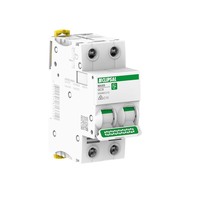

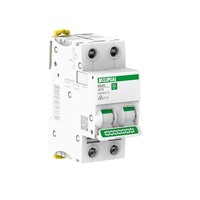
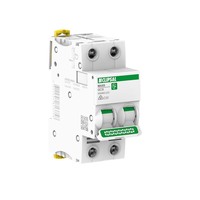
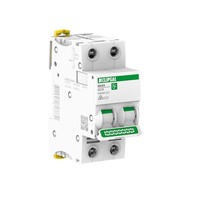

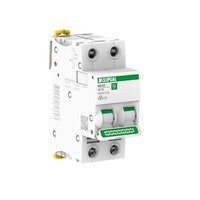

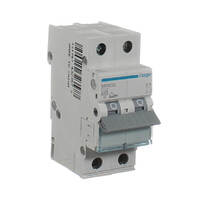
What Are Two Pole Circuit Breakers and How Do They Protect Your Switchboard?
Table of Contents
- How Two Pole Circuit Breakers Work
- Why They Are Critical for Safety
- Where Two Pole Breakers Are Used
- Two Pole vs Other Breaker Types
- Types of Two Pole Circuit Breakers
- Breaker Ratings and Trip Curves
- Breaking Capacity and Fault Protection
- Choosing the Right Two Pole Breaker
- Compliance and Australian Standards
- Installation Best Practices
- Environmental Considerations
- Testing, Maintenance, and Replacement
- Common Specification Mistakes
- Performance and Long-Term Reliability
- Two Pole Breakers in Modern Switchboards
- Buying Two Pole Breakers in Australia
- Troubleshooting Common Issues
- Tradies Join Club Clipsal with Sparky Direct
- Product Videos
- What Sparky Direct Customers Say
- Quick Summary (TL;DR)
- Frequently Asked Questions about Two Pole Circuit Breakers
How Two Pole Circuit Breakers Work
What Is a Two Pole Circuit Breaker?
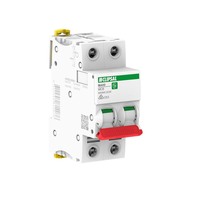
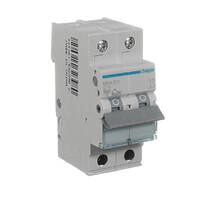
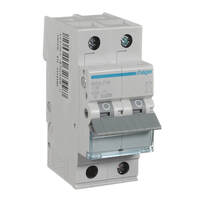
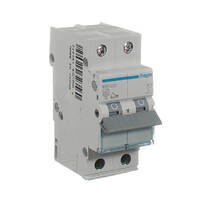
A two pole circuit breaker is a single mechanical device with two switching modules joined by an internal linkage. Both poles open and close together. One pole switches the active conductor, and the second pole switches the neutral conductor of the same single-phase 240V circuit. This is different from two single pole breakers wired side by side, which can trip independently and leave one conductor energised.
How Simultaneous Disconnection Protects Active and Neutral
When an overload or short circuit occurs on either conductor, the internal mechanism trips both poles at once. The result is full circuit isolation. No current flows through the load, and no residual voltage remains on either conductor at the breaker output. This matters for appliances and equipment that can carry voltage on the neutral side under fault conditions.
Thermal-Magnetic Trip Mechanisms Explained
Most two pole MCBs use a combined thermal-magnetic trip system. The thermal element is a bimetallic strip that bends when heated by sustained overload current. The magnetic element is an electromagnet that snaps open instantly when fault current exceeds a set threshold. The thermal side handles slow overloads such as a motor that is slightly overloaded. The magnetic side handles short circuits that need to clear in milliseconds.
Why Two Pole Circuit Breakers Are Critical for Safety
Complete Circuit Isolation During Faults
A single pole breaker only opens the active conductor. The neutral remains connected to the supply. If the neutral has been swapped at any point upstream, or if an open neutral fault has lifted the conductor to a voltage above earth, the appliance is still live. A two pole breaker removes that risk by opening both conductors at the same instant.
Preventing Residual Voltage Hazards
Equipment with capacitive components, such as variable speed drives and some switch-mode power supplies, can store charge after the active is opened. If the neutral remains connected, that stored charge can find a path through the load. Opening both poles ensures the equipment is fully de-energised and safer to work on.
Supporting Safe Maintenance and Fault Finding
For licensed electricians performing fault finding or maintenance, two pole isolation provides a clear, verifiable safe state. Test instruments will read zero volts on both conductors, allowing confident lockout and tagout procedures to follow. Pair the breaker with a circuit breaker lockout device for compliant isolation during work on the circuit.
Where Two Pole Circuit Breakers Are Used
Residential High-Power Appliances
In domestic switchboards, two pole breakers commonly protect hot water systems, ducted air conditioning units, pool pumps, electric ovens, and electric vehicle chargers. These loads draw enough current that complete isolation is required for safe servicing. Many newer Australian installations also use two pole RCBOs on these circuits to add residual current protection without consuming an extra DIN slot.
Commercial HVAC and Refrigeration Systems
Commercial HVAC compressors, walk-in refrigeration units, and rooftop package units typically run on single-phase 240V at 25A to 40A. A two pole breaker provides both overcurrent protection and a clear isolation point. This simplifies service work because the technician can lock out both conductors at one device rather than relying on a separate isolator switch.
Industrial Single-Phase Equipment
Industrial control circuits, single-phase motors, dust extractors, and small machine tools all benefit from two pole protection. Loose neutrals on industrial sites are not uncommon as switchboards age, and a two pole breaker prevents an open neutral from leaving equipment partially energised. For larger isolation tasks, refer to the main switches and isolators range.
Two Pole Breakers vs Other Breaker Types
Two Pole vs Single Pole Breakers
A single pole circuit breaker protects the active conductor only. The neutral runs straight through the switchboard to the load, then back to the neutral bar. A two pole breaker switches both conductors. For most lighting and general-purpose outlet circuits, single pole protection meets AS/NZS 3000 requirements. For dedicated circuits feeding appliances with internal capacitance or for circuits where the neutral may be shared across multiple loads, two pole is the correct choice.
Two Pole vs Three Pole Breakers
A three pole circuit breaker protects three-phase circuits and switches all three actives together. Two pole breakers are for single-phase 240V circuits. The two devices are not interchangeable. Trying to use a three pole breaker on a single-phase circuit wastes a pole and switchboard space, and using a two pole breaker on a three-phase circuit leaves one phase unprotected.
Two Pole vs Four Pole Breakers
A four pole breaker switches three actives and the neutral on a three-phase circuit. The fourth pole gives the same complete isolation benefit that the two pole gives on single-phase circuits. The 4 pole MCB/RCD combinations range covers three-phase applications where neutral switching is required.
Two Pole RCBOs vs MCBs
A two pole MCB protects against overcurrent only. A two pole RCBO combines overcurrent protection with residual current detection in the one device. RCBOs trip on earth leakage as low as 30mA, protecting people from electric shock. For circuits feeding socket outlets, lighting in wet areas, or any installation that requires safety switch protection, an RCBO is the better choice. For dedicated equipment circuits already protected by an upstream RCD, a plain MCB is sufficient.
Types of Two Pole Circuit Breakers
Two Pole MCBs
- Standard miniature circuit breakers
- Ratings from 6A up to 63A
- 4.5kA or 6kA breaking capacity
- DIN rail mount, 36mm wide
- Common in domestic and light commercial
Two Pole MCCBs
- Moulded case circuit breakers
- Higher current ratings: 80A and above
- 10kA to 50kA breaking capacity
- Adjustable trip settings on some models
- Used in commercial main switchboards
Two Pole RCBOs
- Combined overcurrent and earth leakage
- 30mA standard sensitivity for personal protection
- 10mA available for medical and high-risk areas
- Slim 18mm modules now available
- Replacing MCB plus separate RCD installations
Two Pole Miniature Circuit Breakers (MCBs)
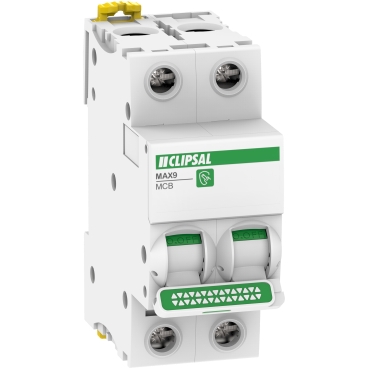
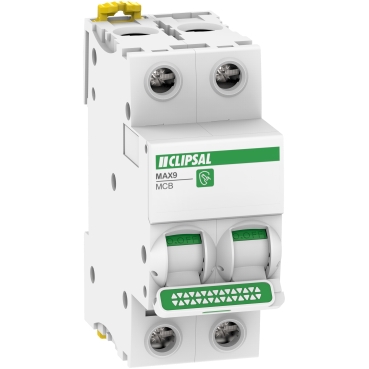
The two pole MCB is the most common form of two pole protection in Australia. It is a DIN rail device that fits standard switchboard chassis. Brands such as Clipsal, Hager, NHP, and Schneider Electric all produce two pole MCBs with similar form factors. Switchboard builders use these for hot water, air conditioning, and similar dedicated circuits. The Clipsal MAX9 range is one of the most widely specified families.
Two Pole Moulded Case Circuit Breakers (MCCBs)
MCCBs are larger devices designed for higher current and higher fault levels. A two pole MCCB at 100A or 250A is often used as a sub-mains protective device feeding a sub-board or as the main switch on a small commercial installation. They mount via screws or chassis brackets rather than DIN clips and have heavier terminals to accept larger cable sizes.
Two Pole RCBOs for Combined Protection
The two pole RCBO is the modern preferred device for new domestic installations. AS/NZS 3000:2018 effectively requires RCD protection on most final subcircuits, and an RCBO delivers this in the same DIN footprint as a plain MCB. Slim 18mm modules from Clipsal MAX9 and Hager save valuable switchboard space when retrofitting older boards. The single pole RCBO range covers circuits where active-only switching is acceptable.
Understanding Breaker Ratings and Trip Curves
Common Current Ratings (16A, 20A, 32A, 40A)
Two pole MCBs are sold in standard current ratings: 6A, 10A, 16A, 20A, 25A, 32A, 40A, 50A, and 63A. The current rating must match the cable cross-section and the load draw. A 16A breaker suits most 2.5mm² circuits feeding appliances up to about 3.7kW. A 20A suits 4mm² circuits. A 32A or 40A is typical for hot water and air conditioning on 6mm² cable.
Type B, C, and D Trip Curves
The trip curve sets how quickly the magnetic element responds to inrush current. Type B trips at 3 to 5 times rated current, suiting purely resistive loads. Type C trips at 5 to 10 times, suiting most general loads including fluorescent lighting and small motors. Type D trips at 10 to 20 times, suiting heavy motor loads with high inrush. The vast majority of two pole MCBs sold in Australia are Type C.
Matching Breakers to Load Characteristics
Choosing the right curve avoids two failure modes. A Type B breaker on a motor circuit will nuisance-trip on every start. A Type D breaker on a sensitive electronics circuit may not trip fast enough on a fault to limit damage. The general rule is Type C unless there is a specific reason to choose otherwise.
Breaking Capacity and Fault Protection
What kA Ratings Mean
The kA rating is the maximum prospective short-circuit current the breaker can interrupt without being damaged. A 6kA breaker can safely clear a fault of up to 6,000 amps. A 10kA breaker can clear up to 10,000 amps. The breaker must be rated equal to or greater than the prospective fault current at the point of installation, calculated from the supply transformer, cable lengths, and impedances upstream.
Residential vs Commercial Fault Levels
A typical Australian domestic installation has a prospective fault current at the meter board of 3kA to 6kA. A 4.5kA or 6kA breaker is usually sufficient. Commercial sites with larger transformers can see fault levels of 10kA, 20kA, or higher at the main switchboard. Always check the network supply authority documentation or perform a fault current calculation rather than assuming.
Risks of Incorrect Breaking Capacity
If a breaker is asked to interrupt a fault larger than its rating, the contacts may weld closed or the case may rupture. The breaker will not clear the fault, and the upstream device will eventually trip instead, often after considerable damage. Specifying breakers with adequate kA rating is non-negotiable for compliance and for installation safety.
Choosing the Right Two Pole Circuit Breaker
Matching Breaker to Cable Capacity
The current rating of the breaker must not exceed the current-carrying capacity of the smallest conductor in the circuit. A 32A breaker on 2.5mm² cable is unsafe because the cable will heat up before the breaker trips. AS/NZS 3008 sets the conductor capacity tables. Always work from cable size up, not from load down, when sizing the protective device.
Selecting Based on Load and Application
Match the rating to the design load with reasonable headroom. A 4.8kW hot water unit drawing 20A is appropriately protected by a 25A breaker on 4mm² cable. Sizing too tight causes nuisance tripping. Sizing too loose loses protection. Apply diversity factors only where the standard permits.
Compatibility with Switchboards and Busbars
Check that the chosen breaker fits the switchboard chassis and works with the existing busbar arrangement. Most modern boards use 36mm DIN spacing and accept any standard MCB or RCBO. Insulated busbars simplify wiring and reduce fault risk. Some legacy chassis use proprietary spacing and accept only one manufacturer's range.
Compliance and Australian Standards
AS/NZS 60898-1 and AS/NZS 60947-2
AS/NZS 60898-1 covers circuit breakers for household and similar installations, defining ratings, performance, and marking requirements. AS/NZS 60947-2 covers industrial circuit breakers, including MCCBs. Any two pole breaker installed in an Australian switchboard must be certified to one of these standards, depending on its intended application.
AS/NZS 3000 Wiring Rules
The Wiring Rules dictate where two pole switching is required and where single pole protection is acceptable. Section 2 covers protection against overcurrent. Section 4 covers RCD requirements for final subcircuits. Switchboard designers and licensed electricians must work from the current edition, including any amendments published by Standards Australia.
RCM Certification and Compliance Marks
Every breaker sold in Australia must carry the Regulatory Compliance Mark (RCM) and be listed on the EESS national database. The RCM indicates the supplier has demonstrated compliance with the relevant electrical safety standards. Counterfeit or non-certified breakers from grey-market suppliers carry serious safety and legal risks.
Installation Best Practices
Isolation and Safe Work Procedures
Before working on a switchboard, isolate at the upstream main switch and verify with a tested-known-good voltage indicator. Apply lockout devices and tags to prevent accidental re-energisation. Only licensed electricians may install or replace circuit breakers in Australia.
Correct Termination and Torque Settings
Most two pole MCBs specify a tightening torque between 2.0 and 3.5 Nm on the terminal screws. Use a calibrated torque screwdriver. Under-torqued connections cause heat damage and eventual failure. Over-torqued connections damage the terminal and may crack the case. Strip cables to the gauge marked on the breaker, no more, no less.
Functional Trip Testing After Installation
After installation, perform a functional test. For an MCB, manually toggle the lever to confirm both poles operate together. For an RCBO, press the test button and confirm the breaker trips. Reset and place the circuit in service. Document the test in the certificate of electrical safety.
Environmental and Installation Considerations
Outdoor and High-Humidity Installations
Standard two pole MCBs are designed for installation inside an enclosed switchboard, IP20 minimum. For outdoor installations, the switchboard itself must be rated IP54 or higher, often IP65 or IP66 in coastal and exposed locations. The breaker inside is protected by the enclosure, not by its own ingress rating. Specify distribution boards with the appropriate IP rating for the site.
Temperature Derating Considerations
Manufacturer ratings assume an ambient temperature around 30 degrees Celsius inside the switchboard. At higher ambients, the breaker must be derated. A 32A breaker may need to be treated as a 28A or 25A device when installed in a hot roof space or in a board with high heat density. Manufacturer datasheets provide derating curves.
Vibration and Industrial Environment Suitability
Industrial sites with significant vibration may require breakers tested to higher mechanical endurance grades. MCCBs typically perform better than MCBs in these conditions. Mount the switchboard on isolating brackets if vibration is severe.
Routine Testing, Maintenance, and Replacement
Annual Manual Operation Testing
Best practice is to manually operate every breaker in a switchboard at least once a year. This breaks any mild oxidation on the contacts and confirms the mechanism is free. Coordinate with the building owner to schedule the brief outage required.
Monthly RCBO/RCD Test Procedures
Two pole RCBOs and dedicated RCDs should have their test buttons pressed monthly. The test button simulates an earth leakage fault and confirms the residual current mechanism is operational. Building managers and homeowners can perform this test without a licence. Record the result in a maintenance log.
Signs a Breaker Needs Replacement
Replace a breaker if it shows discolouration around the terminals or if the case is cracked or warped. Replace it if the lever is loose or sluggish, if it trips at lower current than its rating, or if it fails the manual trip test. A breaker that has cleared a major fault should also be replaced even if it appears intact. The contacts may have been damaged internally.
Common Installation and Specification Mistakes
Critical: The most dangerous specification error is using two single pole breakers tied together with a handle clip and treating them as a two pole device. They are not the same thing. A genuine two pole breaker has an internal common trip mechanism. Two clipped single poles only share a handle, and one pole can still carry current after the other has tripped.
Oversizing Breakers Relative to Cable Size
Fitting a 32A breaker to protect 2.5mm² cable is one of the most common and most serious errors found in older domestic installations. The cable insulation will fail before the breaker trips on a sustained overload. Always size the breaker to the cable, not to the load.
Using Incorrect Trip Curves
Fitting a Type B breaker on a circuit with significant motor inrush will cause repeated nuisance tripping. Owners often respond by upsizing the breaker, which then loses protection. The correct response is to change the trip curve to Type C or D, not the current rating.
Using Two Single Pole Breakers Instead of a Genuine 2P Device
As noted above, this is unsafe and non-compliant for any circuit where simultaneous disconnection is required. Specify a single mechanical two pole device with internal common trip.
Performance and Long-Term Reliability
Mechanical and Electrical Endurance
A trade-grade two pole MCB is rated for around 20,000 mechanical operations and 6,000 electrical operations at full load. In normal switchboard service, this represents a service life well beyond 25 years. Cheaper imported devices may meet the minimum standard at testing but degrade faster in service.
Preventing Nuisance Tripping
Nuisance tripping is usually caused by one of three things: an undersized breaker, an incorrect trip curve, or an actual intermittent fault on the circuit. Investigate each in order before assuming the breaker itself is faulty. Replacing a breaker that is doing its job correctly only masks the underlying problem.
Maintaining Protection Coordination
Protection coordination ensures the breaker closest to a fault trips first, leaving upstream devices in service. For a two pole breaker on a final subcircuit, coordination with the upstream main switch and any sub-board breakers is established by the breaker's time-current curve. Modern switchboard design software handles this automatically. For older boards, coordination should be reviewed when adding new circuits.
Two Pole Circuit Breakers in Modern Switchboard Design
Layered Protection Strategies
Modern switchboards use layered protection: a main switch or main MCCB at the supply, an RCD or RCBO at each final subcircuit, and surge arrestors on incoming lines. Two pole breakers sit at both layers. They are common as the main switch on small boards and as final subcircuit protection for dedicated appliances. Surge protection devices protect the breakers themselves from transient damage.
Integration with RCBO and RCD Systems
Where the design requires both overcurrent and residual current protection, a two pole RCBO is more compact than a separate MCB and RCD. It also simplifies fault diagnosis because each circuit has its own dedicated device. The shift to all-RCBO boards is now standard practice for new residential builds.
Upgrading Legacy Switchboards
Many older Australian homes still have ceramic fuses or first-generation MCBs without RCD protection. Upgrading to a modern board populated with two pole RCBOs brings the installation up to current standard and significantly improves both safety and serviceability. Pair the upgrade with a fresh chassis from the plug-in circuit breakers range where compatibility is required for the existing board.
Buying Two Pole Circuit Breakers in Australia
Where to Buy Online
Sparky Direct stocks two pole MCBs and RCBOs from Clipsal, Hager, NHP Electrical, Eaton, Siemens, and Legrand. Browse the full circuit protection range for related devices.
Cheap vs Trade-Grade Options
Trade-grade breakers from established brands carry full RCM certification, predictable performance, and warranty support. Generic devices sold cheaply online often lack proper certification and may fail testing. The price difference per unit is small. The risk difference is large.
Bulk Purchasing for Contractors
Contractors building multiple switchboards benefit from bulk purchasing across a single brand for consistent fit and coordination. Sparky Direct offers contract pricing on volume orders. Contact the trade desk through the contact page to discuss requirements.
Troubleshooting Common Issues
Repeated Tripping Under Normal Load
If the breaker trips when the circuit is loaded but not overloaded, check for a degraded thermal element by comparing actual current with rated current using a clamp meter. If actual current is well below rated, the breaker itself may be faulty. If actual current is close to or above rated, the breaker is correctly sensing an overload condition.
Breakers Failing to Reset
If the breaker will not reset, the fault is still present somewhere on the circuit. Disconnect loads one at a time and attempt reset between each disconnection to isolate which load is causing the trip. A breaker that will not reset with all loads disconnected is likely damaged internally and needs replacement.
Heat Damage and Loose Connections
Discolouration around the terminals, brown marks on the breaker case, or a noticeable smell of warm plastic indicates a loose connection generating heat. Isolate the circuit, retighten to the manufacturer's torque specification, and inspect the cable conductor for damage. Replace the breaker if there is any visible heat damage to the case or contacts.
Tradies Join Club Clipsal with Sparky Direct
Club Clipsal is Australia's largest electrician community offering trade rewards, business support, and exclusive benefits. When you nominate Sparky Direct as your preferred wholesaler, we automatically apply your Clipsal spend points to your Club Clipsal account daily.
Four Membership Tiers
Entry-level offering coaching, mentoring, and training discounts
Unlock exclusive industry tools and networking events
Access Toyota fleet offers and business software discounts
Maximum benefits, including VIP experiences and rewards
How It Works
1. Sign Up: Create your Club Clipsal account at clipsal.com/club-clipsal or via the iCat mobile app
2. Nominate Sparky Direct: Select Sparky Direct from the wholesaler dropdown menu in your profile
3. Add Email: Enter your Sparky Direct account email address in the membership number field
4. Start Earning: Every dollar spent on Clipsal products earns points automatically
Exclusive Benefits
Redeem points from the rewards store, including gift cards, tools, and experiences. Access business summits, product training, and industry networking events. Receive early access to new product launches and special promotions. Connect with fellow electricians via the Club Clipsal community app.
Product Videos
Watch Volt Safety LVR-KIT | Low Voltage Switchboard Rescue Kit video
Watch Volt Safety LVR-KIT | Low Voltage Switchboard Rescue Kit video
Watch Fluke ST240+ | RCD Socket Tester With Beeper video
What Sparky Direct Customers Say

Competitively priced and arrived within days. Entire order was correct and job completed as planned. I would definitely use Sparky direct again.
Outstanding quality product, Super fast delivery, Perfect fitment. I researched before I ordered this product - the service and ease of ordering on the Sparky Direct site was one of the best I've experienced. The products were in stock, exactly as described, and a premium quality product that fitted... and they arrived ahead of time too! The overall customer experience was excellent. Sparky Direct do what they say and outshine others who pale by comparison. I couldn't be happier and would highly recommend to all.
Thank you for the quick delivery.Its one of the best items of this type on the market and at a reasonable cost Regards
- Two pole circuit breakers simultaneously disconnect both active and neutral on a single-phase 240V circuit, providing complete electrical isolation that single pole breakers cannot match.
- They are essential for hot water systems, air conditioning, EV chargers, pool pumps, and other dedicated high-power appliance circuits in residential and commercial installations.
- Choose between two pole MCBs for overcurrent protection only, or two pole RCBOs for combined overcurrent and 30mA earth leakage protection in a single DIN module.
- Match current rating to cable size, select Type C trip curve for general use, and ensure the kA breaking capacity meets the prospective fault current at the installation point.
- Compliance with AS/NZS 60898-1, AS/NZS 60947-2, and AS/NZS 3000:2018 is mandatory; only RCM-certified devices may be installed in Australia.
- Trade-grade brands such as Clipsal, Hager, NHP, Schneider Electric, Eaton, and Siemens deliver the durability and predictable performance contractors need.
Shop Two Pole Circuit Breakers at Sparky Direct
Quality products in stock • Fast Australia-wide delivery • Competitive trade pricing
Browse Two Pole Circuit Breakers → Get Expert Advice →Circuit Breakers Two Pole Frequently Asked Questions
Are two pole circuit breakers easy to identify in a switchboard?
Yes. They are typically wider than single pole breakers and clearly labelled.
Circuit Breakers Two Pole near me
Circuit breakers two pole are available from Sparky Direct, offering access to compliant electrical protection products with Australia-wide delivery.
Is delivery available for two pole circuit breakers?
Yes. Two pole circuit breakers are available with fast dispatch and fast delivery Australia wide, including metropolitan and regional areas.
Can two pole circuit breakers be used for replacements or upgrades?
Yes. They are suitable for replacing existing breakers or upgrading older switchboards.
Do two pole circuit breakers come with a warranty?
Yes. Warranty coverage depends on the manufacturer and supplier, with conditions applying.
What should I consider before buying a two pole circuit breaker?
Consider the required current rating, switchboard compatibility, application type, and electrician recommendations.
Are two pole circuit breakers suitable for light commercial use?
Yes. They are widely used in residential and light commercial installations.
Do two pole circuit breakers require maintenance?
They generally do not require maintenance but are checked during electrical inspections.
Do two pole circuit breakers wear out over time?
They are designed for long service life but may require replacement if performance degrades.
Are two pole circuit breakers used during renovations?
Yes. They are often installed during upgrades to meet current safety requirements.
Are two pole circuit breakers noisy when they operate?
No. They operate silently under normal conditions.
Do two pole circuit breakers improve electrical safety?
Yes. Full circuit isolation helps reduce electrical risks during faults or maintenance.
Can frequent tripping indicate a problem?
Yes. Repeated tripping may indicate an overload or a fault that should be checked by a licensed electrician.
What is a two pole circuit breaker?
A two pole circuit breaker is a protective device designed to simultaneously disconnect both the active and neutral conductors in a single-phase electrical circuit when a fault occurs.
What happens when a two pole circuit breaker trips?
Power is disconnected to both conductors, stopping electricity flow to the protected circuit.
Why would I need a two pole circuit breaker instead of single pole?
Two pole breakers provide additional safety by isolating both active and neutral conductors at the same time.
Is professional installation required for two pole circuit breakers?
Yes. Installation and replacement must be carried out by a licensed electrician.
Are two pole circuit breakers resettable after tripping?
Yes. Once the fault is resolved, two pole circuit breakers can be reset rather than replaced.
Can two pole circuit breakers be used in residential homes?
Yes. They are commonly used in Australian homes for specific dedicated circuits.
Are two pole circuit breakers suitable for single-phase power?
Yes. They are designed for single-phase applications where both active and neutral isolation is required.
What current ratings are available for two pole circuit breakers?
Two pole circuit breakers are available in a range of amp ratings to suit different circuit loads and applications.
Are two pole circuit breakers required for certain circuits?
Yes. Some circuits require two pole protection or isolation depending on system design and Australian wiring rules.
What does a two pole circuit breaker protect against?
It protects against overloads and short circuits while providing isolation of both conductors for improved safety.
Do two pole circuit breakers comply with Australian standards?
Two pole circuit breakers supplied in Australia are designed to meet relevant AS/NZS electrical and safety standards when installed correctly.
Where are two pole circuit breakers commonly used?
They are commonly used in residential and commercial switchboards for circuits requiring full isolation, such as air conditioning, hot water systems, and fixed appliances.