
Search Results:
Search Results:
Search Results:
Search Results:
A metal switchboard is the central control point for an electrical installation. It receives the incoming mains supply and divides that supply into protected final subcircuits. Each subcircuit feeds power, lighting, hot water, or fixed appliances within the building.
The board performs three jobs at once. It isolates the installation from the network, distributes current to circuits sized for their load, and trips automatically when fault current or earth leakage exceeds safe limits. Without a compliant switchboard, the installation cannot legally be energised.
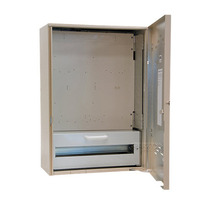
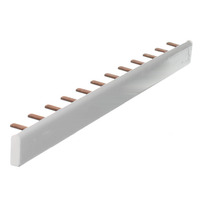
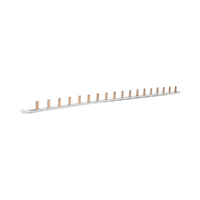
Inside the enclosure, you will find a main switch, circuit breakers on a DIN rail, residual current devices, busbar connections, and the neutral and earth bars. Larger boards may also include surge protection, kilowatt-hour metering, and contactors for off-peak loads. Sparky Direct stocks the full population of components: main switches, circuit breakers, and RCDs across single, double, and three-pole formats.
Metal boards use sheet steel, stainless steel, or aluminium with a powder coat finish. Plastic boards use moulded thermoplastic. Metal handles higher fault energy, resists impact better, and can be earthed as a continuous conductive surface. Plastic offers lower cost and corrosion immunity for benign indoor sites.
The board is the single point where faults are contained. Every other safety device on the installation is downstream of the switchboard. If the board cannot withstand a fault, the protective devices it holds cannot do their job.
One enclosure groups every protective device for the installation. An electrician can isolate the whole property, kill power to a single circuit, or test an RCD from a single panel. This centralisation is the reason switchboards exist as a discrete piece of equipment rather than scattered junctions.
The main switch provides the legally required means of isolation under AS/NZS 3000:2018. Downstream RCDs cut supply within milliseconds when earth leakage exceeds 30 mA. Circuit breakers trip on overload or short circuit. Each layer addresses a different fault mode.
Modern installations carry far heavier loads than legacy boards were sized for. Heat pump hot water, EV charging, ducted air conditioning, and rooftop solar all push existing boards past their original design assumptions. A correctly specified metal board provides the spare capacity and the structural integrity these loads demand.
Switchboard selection follows the application: where the board sits, how many circuits it carries, and what environment it lives in. The three primary axes are end use, mounting style, and door configuration.
Residential boards typically run 4 to 24 poles in a wall-mounted enclosure, feeding lighting, power, hot water, and air conditioning. Commercial boards scale to 36 poles or more, usually pre-wired with separate distribution sections for tenancy circuits. Industrial boards use floor-standing cubicles with form 2 to form 4 segregation, fault ratings to 50 kA, and dedicated metering compartments.
Surface-mount boards bolt directly to a wall and are the standard choice for sub-boards and outdoor installations. Flush (recessed) boards sit inside the wall cavity for a clean architectural finish in residential rebuilds. Free-standing cubicles are used where a board exceeds wall capacity or where front and rear access is required for maintenance. Sparky Direct stocks both surface mount enclosures and recessed enclosures in matching pole counts.
Single-door boards are the residential default: a hinged front door covers the breakers and the main switch. Double-door designs separate the metering section from the distribution section, which is mandatory for many network operator meter boxes. The second door allows the meter reader access without exposing the breakers.
Material choice drives both cost and service life. The same enclosure dimensions can vary by a factor of three in price between mild steel and 316 stainless, but the wrong material will fail in the wrong environment.
Powder-coated zinc-coated steel is the workhorse construction for Australian boards. The steel handles fault energy and impact, and the powder coat resists corrosion in normal indoor and weather-protected outdoor sites. Coastal and washdown environments need a step up.
Grade 304 stainless suits inland industrial sites with chemical exposure or persistent humidity. Grade 316 is required within a few hundred metres of the surf zone, where chloride attack pits standard 304 within months. Stainless boards cost more upfront but avoid the recurring replacement cost of corroded steel.
Aluminium is used where weight matters: pole-top distribution, plant rooms with limited structural loading, and mobile installations. It corrodes more slowly than steel in coastal air but is softer and more easily dented during transport.
The IP rating tells you what the enclosure keeps out. The first digit covers solid objects (dust), the second covers water. IP54 is the typical outdoor minimum in sheltered locations; IP65 and IP66 are required for direct exposure.
IP54 means dust protected and splash resistant. IP65 means dust-tight and resistant to water jets. IP66 means dust-tight and resistant to powerful water jets. The IK rating, often quoted as IK08 or IK09, measures impact resistance against a calibrated hammer test. Higher IK ratings matter on construction sites and in carparks.
Indoor boards in dry conditioned spaces can use IP20 to IP30 enclosures. Garages, plant rooms, and weather-protected verandas need IP40 to IP54. Anything fully exposed to the weather requires IP65 or higher with sealed cable glands and a drip-loop arrangement on incoming conduits.
Coastal sites need IP66 with 316 stainless and stainless fasteners. Food and beverage washdown areas need IP66 plus IP69K-rated boards able to withstand high-pressure hot water cleaning. Heavy industrial sites add IK10 impact protection and locking handles to deter unauthorised access.
Switchboards in Australia are governed by two intersecting standards: the Wiring Rules cover how the installation connects to the board, and AS/NZS 61439 covers how the board itself is built and verified.
AS/NZS 3000:2018 defines what a compliant board must include: a means of isolation, RCD protection on final subcircuits up to 32 amps, correct labelling, and accessible operation. It also sets the minimum clearances around the board for safe maintenance access.
AS/NZS 61439 is the design and verification standard for low-voltage switchgear assemblies. It replaced the older AS 3439 series and aligns Australian practice with international IEC standards. Boards built to 61439 carry a verified short-circuit withstand rating, temperature rise verification, and a documented design check.
Every new board must be tested and certified by the licensed electrician who installs it. Network operators (Energex, Ergon, Essential Energy and others) require a notification before connection and may inspect the meter section before energising. Any board feeding a hazardous area requires additional certification under AS/NZS 60079.
The protective devices inside the board are layered to handle different fault types. A correctly populated metal switchboard combines all three layers below.
Browse the full range of single pole circuit breakers, two pole circuit breakers, and three pole circuit breakers for sizing every final subcircuit on the board.
Standalone RCDs and combined RCBOs both meet the AS/NZS 3000 30 mA earth leakage requirement. The RCBO format saves DIN rail space when every circuit needs both functions.
Arc fault detection devices (AFDDs) sit alongside circuit breakers on the DIN rail. The Clipsal MAX9 and Resi MAX range includes integrated AFDD options for high-risk circuits such as bedrooms in older homes.
Sizing a board correctly the first time prevents an expensive upgrade three years later. Three numbers matter: total connected load, expected diversity, and planned spare capacity.
Calculate the maximum demand using the methodology in AS/NZS 3000 Appendix C. Add up the connected load for each circuit type, apply the diversity factor that matches the installation, and select a board with main switch and busbar ratings above the result. Most residential properties land between 63 amp and 100 amp single phase or 40 amp per phase three phase.
Specify a board with at least 25 percent spare DIN rail space. Solar inverters, EV chargers, and pool heat pumps are common retrofits and each consumes one or more spare poles. The cost difference between a 12 pole and 18 pole board is small compared with replacing the whole assembly later.
Indoor dry installations: powder-coated steel, IP30 minimum. Garage or plant room: powder-coated steel, IP54. Outdoor sheltered: galvanised or stainless, IP65. Coastal or washdown: 316 stainless, IP66, IK10. Match the enclosure rating to the worst case the board will see, not the average.
The choice between metal and plastic enclosures comes down to fault energy, fire performance, and environment. Both formats have legitimate applications.
| Property | Metal Switchboard | Plastic Switchboard |
|---|---|---|
| Typical fault rating | Up to 50 kA | Up to 10 kA |
| Fire performance | Non-combustible | Self-extinguishing thermoplastic |
| Corrosion resistance | Depends on grade and coating | Inherently corrosion proof |
| Earthing | Whole enclosure can be earthed | Earth bar only |
| Typical use | Mains boards, industrial, coastal | Sub-boards, weatherproof outdoor |
Metal handles higher prospective fault current and contains an internal arc within the enclosure. Plastic boards rely on the moulded body to self-extinguish if an arc occurs. For mains intake positions where utility fault levels can exceed 10 kA, metal is the only safe choice.
Network operators specify metal for the meter and main switch enclosure on most connections. Industrial sites with high fault levels require metal. Anywhere the board sits in direct sun or near a radiant heat source benefits from the dimensional stability of metal over plastic.
Metal boards weigh more, cost more, and need a larger crew to mount on a wall. Plastic boards install in half the time and resist coastal corrosion without finish coatings. The plastic distribution boards in the Sparky Direct range cover applications where plastic is the better fit.
Switchboard installation is restricted work. A homeowner cannot legally mount, connect, or alter a switchboard. The work must be done by a licensed electrician and certified before connection.
The electrician carrying out the work must hold a current state licence (for example a Queensland Electrical Mechanic licence) and the contractor must hold an Electrical Contractor licence to issue the certificate of compliance. Network connection paperwork sits with the contractor.
A typical board change starts with arranging a network operator outage if the meter is being touched. The electrician then disconnects supply, removes the legacy board, and mounts the new enclosure to the wall. Next steps cover DIN rail and busbar installation, breaker and RCD population, cable termination, and full circuit labelling. Final testing happens before the board is energised.
Mandatory tests cover insulation resistance, polarity, earth fault loop impedance, and RCD trip time. Results are recorded on the certificate of testing and compliance. The certificate is lodged with the relevant state electrical safety regulator and a copy stays with the property.
Pricing varies widely between trade-grade boards and the cheap import end of the market. Trade-grade enclosures from NHP Electrical, Clipsal, Hager, Legrand, IPD, and Eaton are designed and verified to AS/NZS 61439.
Sparky Direct ships meter boxes, single phase meter boxes, and three phase meter boxes Australia-wide direct from stock. Trade pricing applies on registered accounts and orders ship the same business day where possible.
Cheap boards often use thinner gauge steel, lower-grade powder coating, and unverified short-circuit ratings. They look identical out of the box. The difference shows up after a fault, after five years of weather, or when a network inspector asks for the AS/NZS 61439 declaration. Trade-grade boards carry the documentation; budget imports rarely do.
Confirm the enclosure rating (IP and IK), the certified short-circuit withstand current, the busbar amperage, the number of usable DIN poles after RCD installation, and the brand of breaker accepted on the rail. Mismatched breakers and busbars are a common compliance failure.
Switchboards are not fit-and-forget equipment. Components age, terminations loosen, and seals degrade. Periodic inspection extends service life and catches faults before they become incidents.
Push the test button on every RCD at least every six months. Schedule a full thermographic and torque inspection every two to five years for commercial boards, annually for industrial sites with continuous loading. The inspection checks termination temperature, busbar tightness, and any signs of insulation breakdown.
Discoloured insulation around terminations indicates heat. Brown or black powder around a breaker terminal points to long-term arcing. A burning smell from the board is an immediate isolation event. Any of these signs warrant a same-day visit from the electrician.
Replace the board when fault ratings no longer match network conditions, or when there is no spare DIN capacity for new loads. A board also needs replacement when the enclosure shows corrosion through the powder coat. The same applies when the RCDs predate the 2018 Wiring Rules and lack 30 mA protection on final subcircuits.
Most switchboard call-outs trace back to three problem categories. Understanding each one speeds up diagnosis.
A loose termination doubles its resistance and starts shedding heat. Thermal imaging finds these before they fail. Tighten to the breaker manufacturer's torque value, never by feel. Aluminium cables especially need correct torque and an antioxidant compound at the lug.
Repeated trips on the same circuit point to either a real overload, a developing earth fault, or a degraded breaker. Test the circuit current draw against the breaker rating, then test insulation resistance to ground. If both pass, replace the breaker before the next callout.
Outdoor boards in coastal or industrial air develop pinhole corrosion at fastener heads and seal joints. Once water enters, internal busbars can flash to ground. Annual inspection of seals, gland plates, and door gaskets prevents this. Replace any board where corrosion has perforated the enclosure body.
Club Clipsal is Australia's largest electrician community offering trade rewards, business support, and exclusive benefits. When you nominate Sparky Direct as your preferred wholesaler, we automatically apply your Clipsal spend points to your Club Clipsal account daily.
Entry-level offering coaching, mentoring, and training discounts
Unlock exclusive industry tools and networking events
Access Toyota fleet offers and business software discounts
Maximum benefits, including VIP experiences and rewards
1. Sign Up: Create your Club Clipsal account at clipsal.com/club-clipsal or via the iCat mobile app
2. Nominate Sparky Direct: Select Sparky Direct from the wholesaler dropdown menu in your profile
3. Add Email: Enter your Sparky Direct account email address in the membership number field
4. Start Earning: Every dollar spent on Clipsal products earns points automatically
Redeem points from the rewards store, including gift cards, tools, and experiences. Access business summits, product training, and industry networking events. Receive early access to new product launches and special promotions. Connect with fellow electricians via the Club Clipsal community app.
Watch Legrand 601974 | 4 Module Surface Mount Weatherproof Switch Board IP65 IK09 video
Watch NLS 30772 | 9 Pole Surface Mount Weatherproof Switchboard IP66 video
Watch NLS 30297 | 12 Pole Surface Mount Weatherproof Switch Board IP54 video

Having tried other enclosures which leaked I looked to Sparky for an IP66 initial. The unit has the necessary hardware for easy use. The din rail has only a small space to run wiring behind it so care
Phenomenal product made with high standards and seems durable. Personally prefer the Hager brand over clipsal as it has a good price point.
Excellent product at a super cheap price, plenty of room in the back for wiring and compact to suit ally of different applications, postage is super fast.
Quality products in stock • Fast Australia-wide delivery • Competitive trade pricing
Browse Metal Switchboards → Get Expert Advice →Metal switchboards offer greater durability and long-term strength.
Sparky Direct supplies metal switchboards Australia-wide, offering durable and compliant electrical switchboard solutions with convenient delivery.
Metal switchboards are securely packaged and delivered via standard courier services.
Unused products are generally eligible for return according to the seller’s returns policy.
Warranty coverage varies by manufacturer and typically covers defects in materials or workmanship.
Yes, metal switchboards are typically sold as empty enclosures ready for fit-out.
Yes, correct sizing ensures compliance and allows for future needs.
They generally require minimal maintenance once installed correctly.
Yes, they are widely used in commercial and light industrial settings.
They may be surface-mounted or recessed, depending on the design.
Yes, when correctly installed, they are designed for safe operation.
Many designs allow room for additional circuits if required.
Yes, they are often used when upgrading older switchboards.
Yes, they provide a solid and clean appearance.
Yes, they are a trusted choice for many electrical installations.
Yes, you can, and it's generally recommended. Securing your electricity meter box with a lock protects it from potential vandalism or unauthorised access. However, you should also ensure utility workers can access it for routine inspections or maintenance. For this reason, it's often best to use a lock for which your utility company has a master key, such as the one mentioned above. Sparky Direct offers the Energex EXCY234-1 crocodile padlock with one key.
Yes, they provide a secure enclosure that protects both electrical components and users.
Yes, they are available in a range of sizes and configurations to suit different circuit requirements.
They typically house circuit breakers, RCDs, isolators, meters, and related protection devices.
Yes, they are commonly used in residential properties, especially for upgraded or modern installations.
Some metal switchboards are suitable for outdoor use when appropriately rated and weatherproofed.
They offer high durability, strength, and resistance to impact and environmental conditions.
They are commonly installed in homes, commercial buildings, factories, and industrial facilities.
Quality metal switchboards are manufactured to meet relevant AS/NZS electrical and safety standards when installed correctly.
They are used to safely distribute and protect electrical circuits in residential, commercial, and industrial installations.
Metal switchboards are electrical enclosures made from metal, designed to house circuit breakers, RCDs, and other electrical components.
While the switchboard and meter box are critical components of your electrical system, they serve different purposes. The meter box, as mentioned, houses your electricity meter and provides a protective barrier from external elements. On the other hand, a switchboard, also known as an electrical panel, controls individual electrical circuits. It allows you to turn off power to certain areas of the property and provides a safety mechanism in case of electrical overloads or short circuits.
In Queensland, the standard size for an electricity meter box is approximately 600mm (height) x 500mm (width) x 220mm (depth). However, the size may vary depending on the specific model and installation requirements. Always check with your local regulations or electrician for precise measurements.
Yes, painting your electric meter box can be an excellent way to make it blend with your home's exterior aesthetics. However, it's crucial to use weather-resistant, non-conductive paint and to avoid painting over any important labels, readings, or seals. Always ensure you're not obstructing the view or access to the meter.