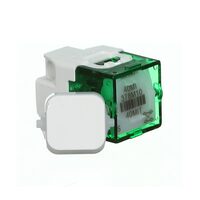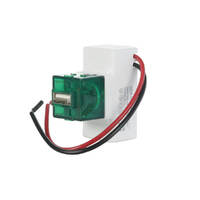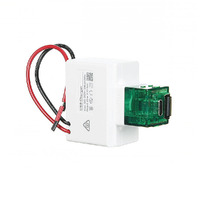

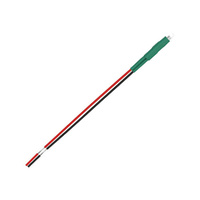

LED Module
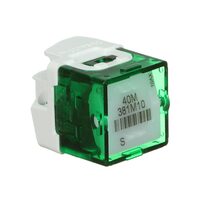
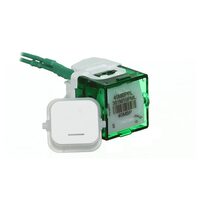
Clipsal Iconic 40MLEDW | Clipsal Iconic - Switch Mechanism, LED Module, 250V, White | Single Buy
$3.53
$3.21 ex. GST
Search Results:
Search Results:
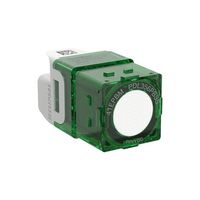
Find the best Clipsal Iconic Mechanisms here at Sparky Direct. [ Read More ]

A push button switch mechanism is the working core of a switch assembly. It contains the contacts, terminals, and actuator that control current flow when pressed. Unlike a rocker, the button returns to the same rest position after each press. The mechanism itself decides whether the load stays on, toggles, or sends a signal to a controller.
In the Clipsal Iconic range, push button mechanisms come in standard mains-rated versions and connected versions that report state to a smart home controller. Several wattage and current ratings are available to suit different circuits, from low-load lighting to dimmable LED.
The mechanism is one of three parts in every Iconic switch. The grid holds the mechanism in the wall box and locates the screws. The mechanism carries out the electrical work, and the skin clips over the front to set the colour and finish. This three-part separation lets the same mechanism work behind any compatible Iconic skin without a wiring change.
A rocker switch latches mechanically in the on or off position. A push button switch does not latch mechanically and instead sends a momentary signal each time it is pressed. The mechanism electronics then decide what happens next, which is the key behavioural difference between traditional dolly rocker switches and push button mechanisms in the Iconic range.
Choosing the right mechanism affects long-term flexibility, smart home compatibility, and load handling. The Iconic range offers a clear path through these decisions. A standard 10A push button mech suits general lighting circuits, while a push button dimmer mechanism handles dimmable LED loads. A connected push button suits integration with Wiser, Zigbee, or Bluetooth controllers.
Momentary switches close the circuit only while pressed, whereas latching switches hold their state until pressed again. Most push button mechanisms in the Iconic range are momentary at the contact level but use internal logic to toggle the load state on each press. They behave like latching switches to the user despite working differently inside.
Direct switching means the contacts carry the load current directly to the lamp or appliance. Signal-based switching means the push button reports the press to a hub, which then drives a relay or another device on the circuit. Connected Iconic push button mechanisms can do both, depending on how the system is configured during commissioning.
A rocker shows its state at a glance because the visible position indicates on or off. A push button does not, so most Iconic push button mechs include an LED indicator that shows the current load state. The indicator matters most in rooms where the lamp itself is out of view, such as outdoor lighting controlled from inside or a separate equipment cupboard.
Standard push button mechs cover general lighting circuits, while push button dimmer mechs handle dimmable LED, halogen, or incandescent loads within their stated wattage range. Connected mechs add wireless control through Wiser, Bluetooth, or Zigbee. Match the mechanism type to how the circuit needs to behave, both at install and over the life of the installation.
Iconic uses a three-layer assembly. The mechanism does the electrical work, the grid holds it in the wall box, and the skin covers the grid to provide the visible finish. Mechanisms snap into grids, skins clip onto the grid edges, and the assembly comes apart in the same order during service.
The same push button mechanism fits every Iconic grid in its gang count, so a 1-gang mechanism fits any 1-gang Iconic grid regardless of skin colour or texture. This is why Sparky Direct stocks Iconic grids and blank plates separately from skins and mechanisms, allowing the installer to mix and match parts to suit each project.
Stocking mechanisms separately from skins reduces the number of part numbers needed on a job, since one push button mech part covers every finish in the matching range. The installer carries fewer SKUs in the van and decides the visible finish at fit-off rather than at first fix. This is useful when the homeowner is still choosing colours during the build.
If a homeowner wants a new wall colour or finish in five years, only the skin needs to change while the mechanism and grid stay in place. If a mechanism fails, only the mechanism is replaced and the existing skin clips back on. This keeps service work fast and reduces the number of parts on the truck for callouts.
Sparky Direct stocks push button mechanisms across several Iconic sub-ranges, including the Iconic Dimmers & Timers range and the broader Iconic Mechanisms range. Selection depends on whether the circuit needs dimming, connected control, or simple push-on switching. The right product is usually obvious once the load type and control method are decided.
Each push button mechanism is rated for a maximum current and load type. The product label states the rating in amps, the voltage, and any wattage limit for dimming. Always confirm the label rating before installation rather than relying on visual similarity to other identical-looking mechs, since two products with the same body can carry different ratings.
Standard push button switch mechs handle resistive and most inductive lighting loads up to their stated current rating. Push button dimmer mechs are load-type specific. A universal dimmer works with most dimmable LED, but some LED drivers still need a trailing-edge dimmer to avoid flicker, audible buzzing, or unstable low-end behaviour.
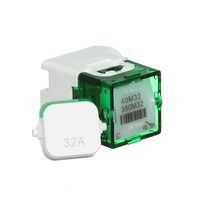
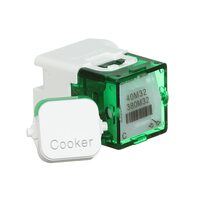
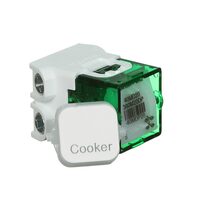
Cooker and oven circuits need a dedicated 32A switch mechanism rather than a 10A push button. The Iconic cooker switches together with the 40M32-VW 32A mechanism are designed for these circuits. Fitting a 10A push button to a 32A circuit creates a fire and contact-welding risk that the mech is not built to handle.
An undersized mech overheats under load, and an incompatible dimmer causes LED flicker or driver failure. A non-connected mech installed where automation is needed forces a rewire later when the smart home work begins. Selection upfront avoids these outcomes and keeps the install on a single visit instead of requiring callbacks.
Living areas with dimmable LED downlights suit a push button dimmer mech. Bedrooms benefit from connected mechs that work with timer or scene routines. Bathrooms and laundries are usually fine with a standard 10A push button. Hallways and stairs often need multi-way push button mechs that allow switching from more than one location.
Residential use centres on lighting control, dimming, and smart home integration, whereas commercial fit-outs add scheduling, scene control, and energy management requirements. The Iconic Wiser range and the ControlLink variants suit both settings, while standard push button mechs cover routine residential switching where automation is not required.
Connected push button mechs are the link between physical switching and a home automation system. Each protocol has different setup requirements, and the choice affects what hub is needed. Bluetooth versions pair directly with the Wiser app. Zigbee versions need a Wiser hub or compatible Zigbee coordinator, and ControlLink versions extend wired multi-way control across the Wiser ecosystem.
Picking a connected mech without a hub leaves features unused. Picking a standard mech where dimming is needed forces a swap later, while picking the wrong dimmer technology for the LED driver causes flicker on first energise. Confirm the load, the control method, and the protocol before ordering, and verify the mech part number against the project schedule.
Push button mechs fit standard residential lighting circuits in living areas, bedrooms, and corridors. They pair with the Iconic skin range so the visible finish matches power points, fan controllers, and other plate accessories on the same wall. The result is a consistent visual look across every electrical fitting in the room.
Offices use push button mechs for scene control, timed lighting, and integration with building management systems. Centralised scheduling in these systems reduces standby power use across a workplace. ControlLink variants allow several push points to control one zone, which suits open-plan layouts and meeting rooms where lights need to be controlled from different positions.
Wiser push button mechs work with the Wiser app, Alexa, and Google Home, while Zigbee versions also integrate with Home Assistant and other open-source platforms used by tech-focused homeowners. The push button still works manually if the hub goes offline, so the lights are not stranded during a network outage or hub firmware update.
The Iconic system is well suited to retrofits because the mechanism, grid, and skin are sold separately. This allows targeted swaps rather than full plate replacement. An electrician can replace a single rocker mech with a push button mech behind the existing skin, provided the gang count and wall box depth are compatible.
Push button mechs fit standard Iconic grids. Confirm the gang count of the existing or planned grid before ordering to avoid a return run for missing parts. Mechs from the Wiser sub-range have different terminal arrangements, so allow extra wall box depth where ControlLink wiring is used and the cable count rises above a standard switch.
Switch mechanism installation is restricted electrical work in Australia and the work must be carried out by a licensed electrician. The installation must comply with AS/NZS 3000:2018, including the requirements for isolation before work, terminal torque settings stated by the manufacturer, and circuit testing on completion before re-energising.
Standard push button mechs use active and switched-active terminals on a familiar 2-wire arrangement. Connected mechs require a permanent neutral at the switch point that not all older circuits include. Always check for a neutral cable before specifying a Wiser or Bluetooth mech in a retrofit, since adding one later means a fresh cable run.
Verify continuity, polarity, and earth before re-energising the circuit, in line with the testing sequence in AS/NZS 3000:2018. For connected mechs, test the radio link to the Wiser hub before fitting the skin. Access to the mech is easier with the skin removed, and the hub pairing can be retried without disassembly.
| Feature | Push Button Mech | Rocker (Dolly) Mech | Rotary Mech |
|---|---|---|---|
| Visible state indicator | LED on the mech | Position of the rocker | Position of the knob |
| Smart home control | Yes, via Wiser variants | Limited | No |
| Multi-way control | Yes, with ControlLink | Yes, with intermediate mech | No |
| Dimming | Yes, on dimmer variants | No, separate dimmer needed | Yes |
| Tactile feedback | Click on press | Snap on flip | Detent on rotation |
Push button mechs are quieter to operate, work better with smart home logic, and look cleaner on the plate. Rocker mechs are cheaper, simpler, and need no hub or commissioning to function. The right choice depends on whether the circuit will ever need automation and whether the installer prefers signal-based control over direct mechanical switching.
Modular systems like Iconic separate the mechanism, grid, and skin into three orderable parts. Fixed systems combine all three into one assembled product. Modular systems cost slightly more per gang but allow finish changes and individual mech replacement without replacing the entire switch. This usually pays back over the life of the installation.
Momentary push action is required for most smart-home control, since the hub needs to interpret each press as an event rather than as a held state. Traditional latching is fine for direct, non-connected switching where the contact position is the signal, and Iconic push button mechs are momentary at the contact level either way.
Choose push button for smart-home installations, dimmer scenarios, or where a clean modern aesthetic is important. Choose rocker for budget projects, simple lighting circuits, or where users prefer the visible position state. Both styles fit the same Iconic skins and plates, so a later change is straightforward.
Push button mechs are tested to thousands of operating cycles, with the actuator returning to the same rest position each time, which reduces uneven wear on the mechanical contacts. Connected mechs include over-the-air firmware updates from the Wiser ecosystem, so the device behaviour can be fixed or improved without physical replacement when issues are found in the field.
The press has a defined click point, so the user knows the action has registered without needing to look at the switch. The LED on most mechs confirms the new state visually for additional feedback. Push behaviour is familiar from elevators, intercoms, and electronic devices, so most users adapt to it within a few days of installation.
If one mech fails, only that mech is replaced and the grid and skin stay in place. This keeps the wall paint and adjacent fittings undisturbed during the service visit. The replacement clips into the same grid, so the wiring does not need to be redone unless the original terminals were damaged during fault finding or removal.
An installation specified with connected mechs today can integrate with a Wiser hub later without rewiring, even if the hub is added years after the original install. An installation specified with standard mechs can be upgraded to connected mechs by swapping the mechanism. This works provided a neutral is present at the switch point and there is space in the wall box.
Specifying a 10A standard push button mech for a 32A cooker circuit is the most common error in this product range. The mech overheats and fails, often producing a burnt smell or contact welding before the homeowner notices. Always check the circuit rating against the mech rating before ordering, and confirm the part number matches the schedule on site.
Iconic mechs are not interchangeable with older Clipsal series like 2000 or Saturn, even though some plate dimensions look similar at first glance. Trying to fit an Iconic mech behind a Saturn skin will not work. Confirm the series of the existing grid and skin before ordering replacement mechs to avoid a return trip with the wrong stock.
Some control systems expect a momentary input from the switch, while others expect a latched state to drive their internal logic. A push button mech sends a momentary press at the contact level, which suits hub-driven systems. A rocker holds a state, which suits direct switching, and mismatching the two breaks the control logic.
Retrofitting a connected mech later needs a neutral at the switch point. If the original circuit was wired without one, a new cable run is required at significant cost. Pulling a neutral during initial fit-out costs little when the cabling is open, while adding it later costs significantly more in labour, plaster repair, and finishing trades.
Standard push button mechs sit at the lower end of the Iconic mechanism range. Push button dimmer mechs cost more because of the additional dimming electronics inside the unit. Connected Wiser mechs are the most expensive, with Zigbee and Bluetooth variants priced according to their feature set and the level of integration they provide.
Sparky Direct stocks Iconic mechs as single units and in bulk packs where Clipsal offers them. Bulk packs reduce per-unit cost on larger fit-outs and reduce checkout time at the same time. Single units suit small jobs or service callouts where only one or two mechs are needed and the bulk pack would not be used up.
Counterfeit and parallel-import switch mechs surface from time to time, especially through online marketplaces that do not vet sellers. They may not meet AS/NZS standards or carry valid Australian electrical approval. Sparky Direct only stocks genuine Clipsal switch mechanisms with full Australian compliance and the original manufacturer warranty intact.
Trade counters offer same-day pickup but limited inventory in some Iconic sub-ranges, especially the connected and dimmer parts that move slowly compared to standard mechs. Online wholesalers like Sparky Direct carry deeper stock across the entire Iconic range. Shipping reaches most Australian addresses inside a few business days when ordered before the daily cut-off.
Stocked items dispatch from the Sparky Direct warehouse on the same business day for orders placed before the cut-off. Tracked delivery reaches most metropolitan addresses inside two business days. Bulk orders, special orders, and freight-restricted items follow standard logistics timeframes, so confirm stock status on the product page before relying on a specific delivery date.
List every push button position on the plan, and note the load type and current rating for each. The schedule of mechs falls out of this exercise rather than being guessed at the merchant counter. Tag positions that need dimming, connected control, or multi-way switching, and the resulting list maps directly to specific part numbers in the Iconic mech range.
A complete Iconic push button switch needs three parts: the mech, the grid, and the skin. Ordering all three at once avoids mismatched delivery dates that delay the fit-off stage. Sparky Direct stocks Iconic complete switches as pre-assembled kits where simpler ordering helps, especially on smaller projects.
Ordering only mechs without grids leaves the installer unable to mount them. Mixing skins from different Iconic sub-ranges can produce visible colour mismatches between adjacent plates on the same wall. Forgetting to check terminal layout on connected mechs can hold up final commissioning, especially when the circuit lacks the neutral that the connected mech needs.
Sparky Direct stocks the full Iconic mech range, including standard push button mechs, push button dimmer mechs, and Wiser connected mechs. The same trade pricing applies to every part for verified trade accounts. For trade account setup or specific product questions on a project schedule, contact the Sparky Direct team via the contact page.
Club Clipsal is Australia's largest electrician community offering trade rewards, business support, and exclusive benefits. When you nominate Sparky Direct as your preferred wholesaler, we automatically apply your Clipsal spend points to your Club Clipsal account daily.
Entry-level offering coaching, mentoring, and training discounts
Unlock exclusive industry tools and networking events
Access Toyota fleet offers and business software discounts
Maximum benefits, including VIP experiences and rewards
1. Sign Up: Create your Club Clipsal account at clipsal.com/club-clipsal or via the iCat mobile app
2. Nominate Sparky Direct: Select Sparky Direct from the wholesaler dropdown menu in your profile
3. Add Email: Enter your Sparky Direct account email address in the membership number field
4. Start Earning: Every dollar spent on Clipsal products earns points automatically
Redeem points from the rewards store, including gift cards, tools, and experiences. Access business summits, product training, and industry networking events. Receive early access to new product launches and special promotions. Connect with fellow electricians via the Club Clipsal community app.
Watch Clipsal Iconic 41E10PBSWM-VW | Push Button Wiser Switch Mechanism, 10A, Controllink, 3-Wire video
Watch Clipsal Iconic 41E2PBSWMZ-VW | Zigbee Wiser Push Button 2AX Connected Switch Mechanism video
Watch Clipsal Iconic 41EPBDWCLM-VW | Bluetooth Wiser Push Button LED Dimmer Mechanism, Push Button with BLE and ControlLink, 3-wire video

Best smart home light switches. Integrate easily with Home Assistant through zigbee and provide classic tactile options as well.
Easy to setup and integrate into home automation, also great that we cam mix manual and automated switches in the same switch block
Easy to set up, works great and isn't too bulky considering what it does. Most of all, Sparky Direct has never let me down for products, pricing or delivery.
Quality products in stock • Fast Australia-wide delivery • Competitive trade pricing
Browse Clipsal Iconic Mechanisms → Get Expert Advice →Yes, they work with interchangeable skins and surrounds for easy style changes.
Sparky Direct supplies Clipsal Iconic mechanisms Australia-wide, offering genuine Iconic components with convenient delivery.
They are securely packaged and delivered via standard courier services.
Unused products are generally eligible for return according to the seller’s returns policy.
Warranty coverage varies by product and manufacturer and typically covers defects in materials or workmanship.
Yes, Clipsal Iconic mechanisms are typically sold as individual components.
Yes, selecting the correct mechanism ensures proper function and compatibility.
Once installed correctly, they generally require minimal maintenance.
Yes, they support the clean and minimalist Iconic design.
Yes, all Iconic mechanisms are designed to integrate within the Iconic system.
Yes, they are commonly used in renovations and upgrades.
Yes, they are designed to provide a quality and responsive feel.
They are straightforward for licensed professionals to install as part of a compliant system.
Clipsal Iconic mechanisms are the internal electrical components that provide the functional operation of switches, dimmers, and control devices in the Iconic range.
Yes, they are a popular and trusted choice for many electrical installations.
They offer reliable performance and flexibility within a modern switching system.
Yes, they are designed for long-term, everyday use.
Yes, mechanisms can be replaced or upgraded within the Iconic system if requirements change.
Certain mechanisms, such as standard switches and compatible dimmers, are suitable for LED lighting circuits.
Yes, they are available in various configurations depending on the control function required.
Yes, they are suitable for residential and light commercial applications.
Yes, they are widely used in residential homes and apartments.
Yes, they are designed to work with Clipsal Iconic skins, grids, and surrounds.
Yes, Clipsal Iconic mechanisms are manufactured to meet relevant AS/NZS electrical and safety standards when installed correctly.
The range includes switch mechanisms, dimmer mechanisms, fan controllers, cooker switches, and other control mechanisms.