
Search Results:
Search Results:
Search Results:
Search Results:
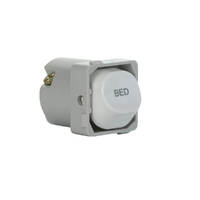
Switch mechanisms are the working internals that make or break an electrical circuit, while the plate, grid, frame, or cover provides only the visible mounting and finish. The mechanism is the part that actually carries current and controls the connected load. Replacing a worn or faulty switch is almost always a mechanism task rather than a plate task.
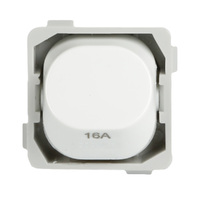
A switch mechanism contains four key components: the contacts that carry the current, the actuator that drives the contacts, the moulded housing that supports both, and the screw or backwired terminals where the cable connects. The actuator drives the contacts open or closed when the user operates the switch. Mechanisms are chosen by function, current rating, pole configuration, and plate compatibility, and the four together determine which product suits a given job.
Common Australian applications include general lighting circuits, ceiling fan speed control, fixed appliance switching, bell and door release circuits, control panels, and connected smart switching across all of these uses. The full range of switch mechanisms covers each of these applications at standard Australian ratings.
A rocker, toggle, push button, or rotary actuator drives the internal contacts together or apart when the user operates the switch. Closing the contacts completes the circuit and energises the connected load, while opening them interrupts current flow at the rated voltage. Quality mechanisms deliver reliable, repeatable switching for tens of thousands of operating cycles at the labelled current and voltage rating.
Plates and skins provide the mounting and visible finish, while grids hold the mechanism in position behind the plate, and the mechanism itself carries out all the electrical switching work. Compatibility between the mechanism series and the plate series is critical: a Clipsal Iconic mechanism will not fit a Saturn Zen plate, and a 2000 Series plate will not accept an Iconic mechanism. The leading Australian plate systems include Clipsal, HPM, and other ranges available through Sparky Direct.
Switch mechanisms come in several actuator styles and feature sets. The right choice depends on the application, the plate range, and how the user will interact with the switch.
Rocker mechanisms are the most common choice in Australian homes, using a flush pivoting action that feels familiar to users and sits neatly against the wall. Rocker mechanisms suit general lighting circuits, ceiling fans, and standard residential applications across most rooms in the house. Most current plate systems carry a compatible rocker mechanism in single, double, and multi-gang configurations. Browse the broader light switches range or focus on a specific plate range such as Clipsal Classic light switches.
Toggle mechanisms use a lever action that gives a clear tactile feel under the user's finger, and they appear most often in designer, heritage, industrial, and premium switch ranges. Toggles share the same underlying electrical principles as rocker mechanisms, but they project visually from the plate rather than sitting flush. The mechanism must match the specified plate range, current rating, and gang configuration before purchase.
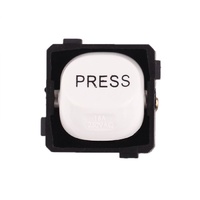
Push button mechanisms come in two main forms: latching and momentary. Latching versions hold the new circuit state until the button is pushed again, while momentary versions close the contact only for as long as the button is being pressed. Typical applications include doorbells, intercom call points, stair timers, automation inputs, and various control circuits in commercial fit-outs. Smart home installations frequently use momentary push buttons as scene triggers connected to a control hub or relay.
Rotary mechanisms drive dimmers, fan speed controllers, and selector-style switching applications across both residential and commercial circuits. Load compatibility matters greatly: an LED dimmer must be rated for the specific LED driver topology and total connected wattage on the circuit. A fan controller is not interchangeable with a dimmer unless the product is specifically rated for both load types. Browse Clipsal dimmers or Clipsal Iconic fan controllers for the appropriate matched mechanism.
Smart switch mechanisms add connected features such as app control, scheduling, voice assistant integration, and energy monitoring, depending on the model and ecosystem. Common protocols include Wi-Fi, Zigbee, Bluetooth, and proprietary ecosystem links, and each has implications for installation and ongoing reliability. The Clipsal Iconic Wiser range is a Zigbee-based example commonly specified in Australian smart home builds. Many smart mechanisms require a neutral wire at the switch position, so older homes may need additional wiring work by a licensed electrician before installation can proceed.
Weatherproof switching is required for outdoor, garage, shed, patio, pool equipment, and other exposed locations where moisture or dust ingress is a risk. The combination of mechanism and enclosure must together suit the environmental rating required for the installation location. The weatherproof switches range covers IP-rated assemblies designed for these demanding outdoor and semi-outdoor areas. A licensed electrician should assess the specific location and confirm the appropriate IP rating before any installation work begins.
Pole configuration describes which conductors a switch breaks during normal operation, while multi-location switching describes how many physical points control the same circuit. Both of these decisions directly affect mechanism selection and downstream plate compatibility for the project.
A single pole mechanism switches one active conductor in the circuit, which suits standard lighting and simple on/off load control across most residential applications. The 1 pole switches range covers common residential and light commercial applications at 10A, 16A, and 20A ratings. Confirm the current rating and plate compatibility against the existing circuit specification before purchase.
A double pole mechanism switches both active and neutral conductors simultaneously, giving higher isolation that is useful for some fixed appliance circuits where the standard requires isolation of both conductors. The 2 pole switches range covers these higher-isolation applications across residential, commercial, and light industrial installations. Wiring and isolation decisions sit with the licensed electrician under AS/NZS 3000 wiring rules.
Two-way switching controls a single circuit from two separate locations, with common uses including hallways, stairways, bedrooms, and large rooms with multiple entry points. Two-way wiring connects a pair of compatible mechanisms with a strapping cable so either switch position can change the lamp state. The electrician selects two-way-rated mechanisms and wires the circuit correctly under AS/NZS 3000 wiring rules.
Intermediate mechanisms allow circuit control from three or more separate locations, and they sit between two-way switches at the intermediate positions in the wiring run. Long corridors, multi-entry rooms, and large commercial spaces frequently rely on intermediate switching arrangements for convenient lamp control. Correct mechanism matching across all switch positions in the circuit avoids replacement errors during fit-off and rough-in stages.
The rating on a mechanism tells the electrician what load it can carry. Selecting a mechanism rated below the actual load is a fire and reliability risk. Selecting the right product is straightforward when the rating, load type, and environment are all known.
Common Australian mechanism ratings are 10A, 16A, 20A, and 25A at 250V AC, with higher-current ratings available for specific fixed-appliance circuits. General lighting and small loads typically use 10A switching. Higher-current circuits such as ovens, cookers, and air conditioning isolation use 20A, 32A, or 35A switch mechanisms. The chosen rating must suit both the connected load and the overall circuit design, since underspecified mechanisms can overheat or fail before reaching their expected service life.
Different load types place different demands on switch contacts during opening and closing operations. Resistive loads such as incandescent lamps and heating elements behave predictably under switching. Inductive loads such as motors and ceiling fans produce switching transients that stress the contacts at switch-off. Capacitive loads and LED drivers create short, sharp inrush currents at switch-on that can pit contact surfaces over time.
LED dimming is the most common compatibility issue encountered in Australian installations. The dimmer must be rated for the specific LED driver topology and the total connected wattage of the load. A standard universal dimmer may not deliver smooth dimming on certain LED downlights without producing visible flicker or audible buzz from the driver.
IP ratings describe the level of dust and water protection required for outdoor, wet area, and dusty installation environments. Queensland coastal sites face additional challenges from salt-laden air that can corrode unsealed contacts over time. Patios, sheds, and pool equipment areas see moisture and UV exposure across their service life. The mechanism and enclosure together must match the location, not just the mechanism by itself.
Fixed switch mechanisms in Australia must be installed, replaced, or connected by a licensed electrician under the relevant state and territory regulations. AS/NZS 3000 is the wiring rules framework that governs the installation work itself. RCM and SAA marks displayed on the product packaging indicate certified compliance for the Australian market. This page covers planning, specification, and compliance awareness rather than any form of DIY installation instructions.
Three practical checks settle most mechanism selection decisions on site: the plate range in use, the connected load type, and the installation environment. Working through these checks in order avoids most of the common ordering mistakes.
Mechanisms are not universally interchangeable across brands or even within a single brand's range. A Clipsal Saturn Zen mechanism fits Saturn Zen plates only, while a Clipsal Iconic mechanism fits Iconic plates only. Check the series, catalogue number, gang configuration, and plate system carefully before ordering. Cross-brand and cross-series mixing remains the most common cause of returns and site delays.
Standard lighting circuits use general 10A switching across most installations. LED dimming requires a dimmer carefully matched to the connected LED driver topology and total wattage. Fan motors need a rated fan controller designed for inductive switching loads. Outdoor circuits require an appropriate IP-rated weatherproof assembly to handle moisture and dust. Bell and automation inputs typically use momentary push button mechanisms. Specifying the next rating tier above the calculated load gives a useful safety margin on long-run circuits.
Indoor dry rooms run standard mechanisms with no environmental concerns to address. Commercial high-use spaces benefit from heavy-duty rated mechanisms designed for longer contact life under repeated cycling. Outdoor patios, sheds, and exposed garages need weatherproof assemblies with appropriate IP ratings. Wet-adjacent zones such as laundries and bathrooms require careful zoning under the AS/NZS 3000 wiring rules.
Rocker mechanisms feel familiar to most users and suit the majority of residential rooms in a typical Australian home. Toggle mechanisms suit premium and design-led interiors where tactile feedback is part of the project brief. Push buttons fit control inputs, scene triggers, and stair timer applications. Rotary mechanisms suit dimming, fan speed control, and selector switching. Smart mechanisms add automation, scheduling, and remote control where the project specifies connected features. The licensed electrician confirms the final technical suitability of the chosen mechanism on site.
The project type drives both the product choice and the overall order strategy for switch mechanisms. New builds typically favour consistent range selection across the entire job. Renovations focus on compatibility with the existing plates and wiring layout. Commercial sites prioritise contact life, stock continuity, and brand support over time.
New homes benefit considerably from a single mechanism range used consistently across the entire project. Consistent plates and mechanisms simplify future maintenance and look intentional in every room of the finished home. Popular new build choices include the Clipsal Iconic switches and dimmers range, the Clipsal Solis collection, and the Clipsal Saturn family. Bulk ordering at the start of a project locks in finish matching and consistent supply continuity throughout fit-off.
Renovation work starts with identifying what is already installed on the wall before any ordering begins. Identify the existing brand, series, mechanism type, and gang count before ordering replacement parts. Worn, discoloured, noisy, or unreliable mechanisms should be replaced by a licensed electrician during the renovation. Some renovators choose to keep matching the existing range across the home. Other renovators move to a modern modular platform such as Clipsal Iconic, where plates and mechanisms separate cleanly for easier future upgrades.
Schools, offices, hospitality venues, retail floors, and shared amenities cycle their switches many times each day across long operating hours. Robust contact materials and proven mechanism life become important specification criteria for these environments. Heavy-duty ranges such as the Clipsal Pro Series are commonly specified for high-use commercial sites. Stock continuity and brand support also matter when a fault response is needed at short notice across multiple sites.
Project quantities favour consistent batch supply and same-day pick-and-pack from the wholesaler. Ordering spare mechanisms with the main project reduces site delays when a unit fails on test or commissioning. Ordering by catalogue number rather than description avoids unwanted substitutions at dispatch. Online ordering opens access to multiple mechanism types and brands without relying on a single trade counter's stock position at the time of order.
Comparison questions come up often during the mechanism selection process for both trade and retail buyers. The honest answer is that mechanism performance depends on current rating, build quality, and correct application more than on actuator style alone.
| Feature | Rocker Mechanism | Toggle Mechanism |
|---|---|---|
| Action | Flush pivoting | Projecting lever |
| Common use | General residential and light commercial | Designer, heritage, industrial, premium |
| Visual profile | Sits flat against the plate | Projects from the plate |
| User feel | Familiar, neat | Tactile, deliberate |
| Plate compatibility | Broad across Clipsal, HPM, and others | Range-specific; check series |
Standard hardwired switch mechanisms remain simple, reliable, and inexpensive across most installations, with no requirement for a network, app, or firmware updates over the years. Smart mechanisms add scheduling, remote control, energy monitoring, voice assistant integration, and scene control through a paired ecosystem hub. Smart mechanisms depend on a working home network and the relevant ecosystem app remaining supported. Standard mechanisms remain the right choice when none of those connected features are required by the project brief.
Indoor mechanisms suit dry, sheltered installation locations only. Exposed installations need an appropriate IP-rated weatherproof assembly designed for the environmental conditions. Patios, sheds, garages, pool equipment areas, and outdoor lighting circuits all fall into this exposed category for selection purposes. Using an indoor mechanism in an exposed location risks moisture ingress, contact corrosion, and premature mechanism failure within the first few years of service.
Clipsal, HPM, Legrand, and PDL are the four most widely specified switch brands in Australian electrical installations. Each manufacturer maintains its own plate ranges, mechanism geometries, and accessory ecosystems that are rarely interchangeable across brands. Mixing mechanisms and plates across different brands is generally not possible and should always be confirmed before any bulk purchase. Brand standardisation across a single project significantly simplifies replacement work, stock holding, and ongoing maintenance.
Online supply gives electricians access to a much wider mechanism range than most local trade counters can stock at any one time. Selecting the right online supplier becomes part of the overall buying decision for trade customers and project buyers.
Switch mechanisms are available through electrical wholesalers, trade counters, and reputable online suppliers across Australia. Buying from an Australian-based supplier means the catalogue references match the products electricians already specify on quotes, and local warranty support stays accessible if a fault occurs. Sparky Direct is an online Australian electrical wholesaler supplying Clipsal switch mechanisms, HPM, Legrand, PDL, and other leading switch ranges with same-day dispatch on stocked lines.
The cheapest option is not always the best choice when electrical compliance, durability, and plate compatibility all matter for the project. Best value combines the right current rating, the right brand and series fit, reliable availability, warranty support, and fair pricing across the order. Bulk packs and trade quantities are particularly useful for contractors managing several active jobs at once.
Fast dispatch and clear stock visibility together help electricians manage tight job schedules across multiple sites. Common spare mechanisms worth keeping in the van include 10A rocker mechanisms, two-way mechanisms, push buttons, dimmer mechanisms, and weatherproof-rated options for exposed locations. Regional electricians and small contractor sites benefit the most from reliable online supply when local trade counter stock runs short on common parts.
Switch mechanisms are mechanical wear items that have a finite operating life under normal use. Years of repeated cycling, accumulated heat from undersized loads, and environmental exposure all gradually reduce the available contact life. Recognising the early signs of mechanism failure helps electricians avoid unplanned call-outs and after-hours emergency work.
Intermittent switching, audible buzzing, warmth at the plate, plate discolouration, a loose or sloppy feel, audible cracking sounds, sticking actuator action, and failure to latch are all signs that a mechanism has reached the end of its useful life. Any one of these symptoms calls for inspection by a licensed electrician. Faulty switch mechanisms are replaced rather than repaired in current Australian practice.
Contact wear from heavy cycling, overloading beyond the rated current, mismatched load types, moisture ingress, loose terminations, physical impact damage, and the simple effects of age all shorten mechanism life over time. LED dimming on a poorly matched dimmer model can also cause premature mechanism failure within months rather than years. Correct product selection at the planning stage significantly reduces repeat failures across the installation.
Replacing a fixed switch mechanism is electrical work and must be done by a licensed electrician under Australian regulations. The planning stage of replacement is open to anyone working on the job: identify the existing brand, series, mechanism type, gang count, load, and environment before ordering. Keep the catalogue codes on file for future maintenance reference. The electrician then confirms the replacement matches the original specification or any agreed upgrade.
Compliance reminder: AS/NZS 3000 requires fixed wiring work, including switch mechanism replacement, to be carried out by a licensed electrical worker. Plan and specify freely. Leave the wiring to the licensed trade.
Club Clipsal is Australia's largest electrician community offering trade rewards, business support, and exclusive benefits. When you nominate Sparky Direct as your preferred wholesaler, we automatically apply your Clipsal spend points to your Club Clipsal account daily.
Entry-level offering coaching, mentoring, and training discounts
Unlock exclusive industry tools and networking events
Access Toyota fleet offers and business software discounts
Maximum benefits, including VIP experiences and rewards
1. Sign Up: Create your Club Clipsal account at clipsal.com/club-clipsal or via the iCat mobile app
2. Nominate Sparky Direct: Select Sparky Direct from the wholesaler dropdown menu in your profile
3. Add Email: Enter your Sparky Direct account email address in the membership number field
4. Start Earning: Every dollar spent on Clipsal products earns points automatically
Redeem points from the rewards store, including gift cards, tools, and experiences. Access business summits, product training, and industry networking events. Receive early access to new product launches and special promotions. Connect with fellow electricians via the Club Clipsal community app.
Watch CLIPSAL 30M35 | 35A Switch Mech (30 Series) 30M35WE video
Watch Clipsal 30MOS Switch, 2-Way, 250VAC, 10A, Outside video
Watch CLIPSAL SATURN 60PBI | Pushbutton Intermediate Mech Only video

We used the Clipsal Iconic 3041AL-VW as a concealed switch inside our wine display, and it was the perfect choice for both function and aesthetics.
The architrave design is slim, discreet, and ideal for tight or narrow spaces. In our case, it allowed us to tuck the switch neatly out of sight while maintaining easy access to control the feature LED lighting within the wine cabinet. The vivid white finish complements our interior and doesn’t draw attention away from the display itself.
As expected with Clipsal, the build quality is excellent, and installation was hassle-free. The low-profile form factor makes it ideal for applications where you want clean lines and minimal visual interruption.
Highly recommend this switch for cabinetry, feature lighting, or any design-focused installation where space and appearance matter.
Using the Clipsal Solis range on a large house renovation. Started with the kitchen bench GPOs. The client had selected still new to market 'Carbonized Bamboo' as a primary finish. I felt that the standard white or black GPO would cheapen the kitchen. My client agreed and we made the purchase. She was so excited and impressed, insisted I use Clipsal Solis switches for all light and fan controllers.
These are not cheap! But they are a real class act. But in the context of a large reno cost, well sometimes the Project just needs top shelf small details.
A must to carry as lot new home have cheapest light switches they maybe not turn on off
I find clipsal light dont fall apart and outlast other brands
As scene still going after old home been rewired 15 years in bathroom. Going clipsal your fixing the same problem again or giving you a bad name. The same RCD i never scene problem with ever other brands round same price clipsal. had full recalled and sparky got refunded and saw most replaced clipsal. There some old blown colour ones still testing ok 25 later
Quality products in stock • Fast Australia-wide delivery • Competitive trade pricing
Browse Switch Mechanisms → Get Expert Advice →Quality mechanisms are designed to feel reliable and durable.
You can find Switch Mechanisms at Sparky Direct, offering a wide range of compatible options.
Yes, Australian regulations require a licensed electrician to install or replace switch mechanisms.
Check compatibility with your wall plates, required switch function, and installation requirements.
Yes, they are available through authorised electrical suppliers and online electrical retailers.
Yes, they are typically supplied with a manufacturer’s warranty covering defects under normal use.
Yes, they are built for long-term reliability in Australian conditions.
Yes, mechanisms can be replaced or upgraded by an electrician if needs change.
Yes, they can be used in older homes when compatible with existing wiring and wall boxes.
Minimal maintenance is required once installed correctly.
Yes, as long as they are compatible with the chosen wall plate range.
Yes, they are frequently used during renovations to update electrical components.
Yes, they are commonly used across all rooms for consistent operation.
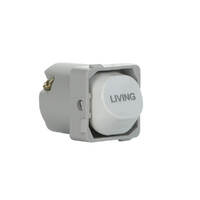
Switch mechanisms are the internal electrical components that control the on and off function of a circuit, designed to be fitted behind compatible wall plates.
Yes, they provide the same familiar switching action as a complete light switch.
Replacing the mechanism allows you to fix or upgrade the switching function without changing the wall plate.
Yes, installation must be completed by a licensed electrician to ensure safety and compliance.
In many cases, yes, provided the new mechanism is compatible with the existing wall plate.
Yes, options include single, double, intermediate, push-button, dimmer, and specialty mechanisms.
Yes, standard switch mechanisms are compatible with LED lighting circuits.
They are designed to suit standard Australian wall boxes when paired with compatible plates.
Yes, they can also be used in light commercial environments where compatible wall plates and systems are installed.
Yes, they are widely used in Australian residential electrical installations.
They are typically rated for standard Australian mains voltage of 230–240 volts AC.
Yes, quality switch mechanisms are designed to meet relevant AS/NZS electrical safety and performance standards when installed correctly.