
Search Results:
Search Results:
Search Results:
Search Results:
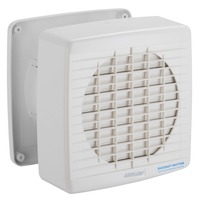
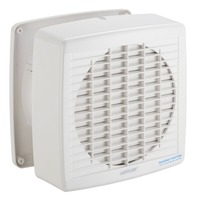
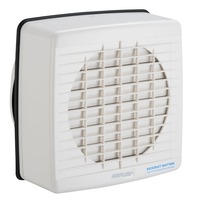
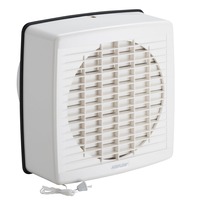
Fantech is one of Australia's most widely specified ventilation brands, and the wall and window mount range covers residential, light commercial and industrial applications. Buyers comparing models within the Fantech Wall & Window Mount category will find compact extract fans, shuttered models, low-noise units and higher-airflow commercial options. Range filtering by series, mounting type and application is more useful than treating all wall fans as interchangeable.
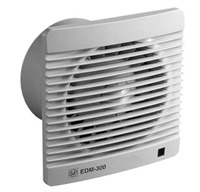
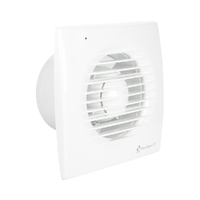
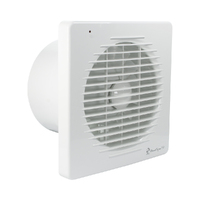
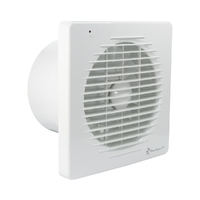
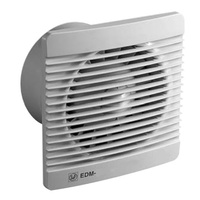
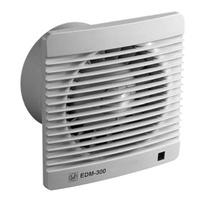
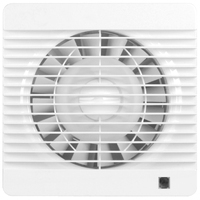
The EDM series covers 100 mm, 125 mm and 150 mm wall and ceiling mount applications. The 100 mm and 125 mm models suit small toilets and ensuites, while 150 mm units handle standard bathrooms and larger wet areas with higher moisture loads. Shuttered variants such as the EDM-300C add backdraft prevention through automatic shutters, which is useful where external louvres alone cannot stop reverse airflow during high winds or when the fan is off.
HCM models cover domestic kitchen and bathroom ventilation, with weather-resistant housings suitable for direct external exposure. Window mounting is a related buying intent for renovation and replacement jobs where a direct wall cut-out is not the preferred method, and matching the existing opening matters. Compatible products are listed across the related Fantech brand range.
Silent series models are positioned for bedrooms, ensuites, toilets and home bathrooms where noise is a major buying factor. Timer and humidistat variants provide automatic control, so the fan runs only when needed. Quiet performance still depends on correct sizing and installation: an undersized Silent fan working at maximum capacity will not be as quiet as a correctly sized unit running well below its peak.
Ezifit Thru Wall fans suit laundries, bathrooms, range hood support, clothes dryer venting and wine cellars where direct external discharge is needed. Commercial and industrial wall mounted options cover store rooms, small offices, data rooms, food storage and variable-demand ventilation. Specialist hazardous-area products should always be selected following site assessment by a qualified professional rather than ordered from a category page alone.
Airflow sizing is the highest-value technical decision when specifying a wall mounted exhaust fan. It must consider room volume, moisture load, use frequency and duct or static pressure losses, not just fan diameter. Free-air manufacturer ratings show the fan's best case, and installed performance is typically lower. A simple sizing formula starts here:
Room volume (m³) × air changes per hour (ACH) = required airflow (m³/h).
Litres per second (L/s) and cubic metres per hour (m³/h) are the two common airflow units on Australian fan specifications. To convert, multiply L/s by 3.6 to get m³/h, or divide m³/h by 3.6 to get L/s. Air changes per hour (ACH) describes how many times the fan replaces the total room volume in 60 minutes. Bathrooms and sanitary compartments commonly target 25 L/s minimum, while kitchens and laundries usually require higher extraction rates depending on the application and code pathway followed.
For practical room planning, small toilets and ensuites work with a compact 100 mm or 125 mm fan if it meets the calculated airflow. Standard bathrooms generally suit a 150 mm wall fan, depending on duct path length and moisture load. Kitchens and laundries need higher airflow, with consideration for grease and moisture, and they must terminate externally. Shower-heavy bathrooms often benefit from more than the code minimum to control steam effectively. Browse matching units in bathroom exhaust fans.
Bigger is not always better. Oversized fans can increase noise, draw conditioned air out unnecessarily and create uncomfortable pressure differences in tightly sealed homes. Size by room volume, moisture source and likely static pressure rather than diameter alone. For best wall mount exhaust fans for small rooms, a properly matched 100 mm to 125 mm Fantech unit usually outperforms a larger fan operating below its sweet spot.
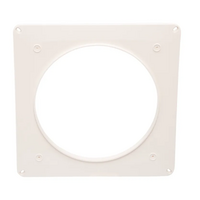
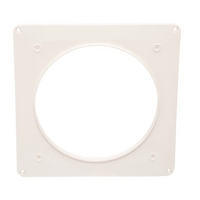
Direct wall discharge is the shortest, most efficient extraction path, but restrictions still occur. Wall sleeves, shutters, mismatched openings and undersized external louvres all add static pressure and reduce real-world airflow. Avoid unnecessary reductions in duct diameter. For replacement jobs, measure the existing wall cut-out, wall depth and outlet size before ordering, and check whether a new sleeve, louvre or grille is needed from the exhaust fan accessories range.
| Room Type | Typical Fan Diameter | Common Airflow Target | Key Consideration |
|---|---|---|---|
| Small toilet or ensuite | 100 mm to 125 mm | 25 L/s minimum | Match to calculated room volume |
| Standard bathroom | 125 mm to 150 mm | 25 to 40 L/s | Higher for shower-heavy use |
| Laundry | 150 mm | 40 L/s or higher | External termination required |
| Domestic kitchen | 150 mm or higher | 40 L/s plus | Grease and moisture load |
| Small commercial | 200 mm or higher | Refer to AS 1668.2 | Mechanical ventilation design |
Wall mount and window mount fans are often searched interchangeably, but they serve different installation conditions. Wall mounted units suit permanent ventilation through an external wall and offer better long-term sealing. Window mounted fans are useful where an existing glass louvre, window panel or lightweight panel provides a practical exhaust path without cutting brickwork. Hardwired installations of either type require a licensed electrician, and glazing work may need additional trade support.
A wall mounted Fantech unit is generally the better choice for bathrooms, laundries, kitchens and utility spaces with available external wall space. It offers more robust sealing, supports external louvres or cowls, and provides a more durable long-term installation than a window-bound fan. Wall installations also allow more flexibility in fan size and airflow, since the cut-out is purpose-made rather than constrained by an existing window opening.
Window mounting is useful where an existing window panel or glass louvre provides a practical exhaust path. Retrofits where wall cutting is undesirable, rental property changes, and replacements in heritage buildings all suit window fans. The model must match the opening, the glazing must support the fan's weight, and sealing around the perimeter must be done correctly. Carefully selected window units are effective for ventilation when the install is done properly.
| Factor | Wall Mounted | Window Mounted |
|---|---|---|
| Installation location | External masonry or stud wall | Glazed panel or glass louvre |
| Airflow path | Direct through wall | Direct through window panel |
| Typical rooms | Bathrooms, laundries, kitchens | Retrofits, rentals, heritage |
| Replacement complexity | Match cut-out and wall depth | Match glass panel size |
| Weather protection | External louvre or shutter | Built-in shutter or seal |
| Noise considerations | Wall absorbs some vibration | Glass transmits more sound |
| Trade requirements | Licensed electrician for wiring | Electrician plus glazier where needed |
Not all wall fans are equal once installed. Modern Fantech models vary in noise output, motor efficiency and built-in controls, which makes feature comparison just as important as size. Buyers specifying ensuites, bedrooms, family bathrooms, kitchens and commercial spaces should compare beyond price and diameter.
Quiet operation depends on fan speed, blade design, motor quality, mounting vibration and the static pressure of the duct path. Low-noise fans suit ensuites, toilets, bedrooms-adjacent bathrooms and home offices. Correct sizing often reduces noise more effectively than oversizing, because a properly matched fan runs comfortably below maximum output rather than at peak load.
Energy efficient models use EC motors or other high-efficiency designs to move more air per watt. Pairing the fan with a timer or humidity control reduces unnecessary run time, which often saves more electricity than the motor type alone. Avoiding oversizing is another simple efficiency win, since a smaller correctly sized fan generally uses less power than a larger fan throttled back.
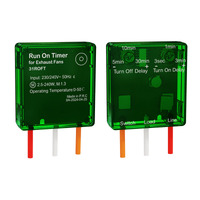
Run-on timers keep the fan operating for a set period after the light is switched off, which removes lingering moisture after a shower. Humidistat fans switch automatically based on room humidity, and they are popular in bathrooms used by multiple people. Auto-switched models start when the light circuit activates, which simplifies installation in older homes. Related controls are available in the ceiling fan switches range, and dedicated electrical timers can be added by a licensed electrician.
Wall and window mounted exhaust fan installation in Australia involves three regulatory areas. These are the AS/NZS 3000 Wiring Rules for electrical work, the National Construction Code (NCC) for ventilation requirements, and AS 1668.2 for mechanical ventilation in commercial buildings. State and territory electrical safety laws also apply. Planning the install correctly avoids non-compliant ventilation paths and rework.
Yes. Any hardwired wall or window mounted exhaust fan installation, replacement involving wiring, timer wiring or humidistat wiring must be completed by a licensed electrician. A licensed electrician confirms safe isolation, earthing, circuit protection, switch and control wiring, and overall compliance. Local state or territory requirements may also apply to certificates and compliance documentation.
Site assessment comes before product selection. The electrician or installer confirms room ventilation requirements, wall or window location, external discharge path, fan size, controls and sealing. Discharge must run to outdoors, not into a concealed roof space or wall cavity, which can drive moisture into the building fabric. Manufacturer installation documentation should be reviewed before purchase to confirm cut-out and clearance dimensions.
This category page does not provide wiring steps. At a high level, wiring may involve a permanent supply, light-circuit switching, run-on timer control or humidity sensor control depending on the model. The correct conductor selection, terminal arrangement and isolation procedure varies by product and circuit, and is the work of a licensed electrician following the manufacturer's installation manual and AS/NZS 3000.
After install, commissioning confirms airflow at the grille, smooth shutter or louvre movement, noise and vibration levels, and correct operation of any timer or humidistat. The electrician also confirms the install does not compromise building moisture management, by checking that the discharge terminates outside the building envelope and that perimeter sealing is intact.
Australian compliance note: Hardwired electrical work on exhaust fans, timers and humidistats must be performed by a licensed electrician. Sparky Direct supplies products and product information, not site-specific installation advice.
The real benefits of installing a wall or window mounted exhaust fan come down to condensation control, odour removal, indoor air quality and long-term building protection. Buyers care about practical outcomes more than airflow numbers, and Fantech models deliver those outcomes when correctly sized and installed.
Direct exhaust reduces condensation on ceilings, mirrors, cabinetry and painted surfaces in bathrooms, laundries and kitchens. Removing humid air at the source helps prevent mould on grout, paint and timber. Airflow must still be correctly sized to the room, since an undersized fan in a steamy bathroom struggles regardless of brand quality.
Kitchens, toilets, laundries, workshops and utility spaces all benefit from active extraction of odours, fumes, steam and VOCs. A wall fan extracts air directly outside rather than recirculating it through the building. While extraction supports better indoor air quality, it does not replace medical-grade air purification, and any health claims should be kept realistic.
Wall and window mounted fans suit renovations where ceiling ducting is difficult, including downstairs bathrooms and laundries in two-storey homes. The simpler external discharge path often delivers better real-world airflow than a long ceiling duct run. For affordable wall mount fans for home renovation, this direct-path approach reduces accessory cost and install complexity.
Correctly specified ventilation reduces mould remediation risk, limits moisture damage to cabinetry and improves comfort. For electricians and builders, the right fan also means fewer callbacks for condensation complaints. Selection at the start of a project costs less than retrofit later when damage is already visible.
Buying online suits electricians, builders, renovators and informed homeowners who already know the product family and want fast procurement. Sparky Direct stocks Fantech wall and window mount fans with online filtering by series, mounting and application, plus the related accessories needed to complete an install. The catalogue is organised so buyers can confirm model, airflow and cut-out before checkout.
Before placing the order, confirm the fan model and mounting type. Check airflow capacity in L/s or m³/h, wall or window opening and duct diameter, and control type (timer, humidistat or standard). Also verify the backdraft shutter or external louvre, any accessories required, and the compliance suitability for the room. Trade buyers often add wall sleeves and external louvres from the same accessory range to avoid site delays.
Compare product cost alongside installation suitability and accessory requirements. The cheapest fan is not the cheapest install if the wall sleeve or louvre adds significant work later. Electricians and builders should confirm stock availability before quoting or scheduling a job, especially for higher-airflow commercial units. Fast shipping is more useful when it is paired with stock confirmation than as a standalone claim.
External louvres, grilles, shutters, wall sleeves, ducting, controls and replacement fascias are available where Fantech supplies them. Matching parts to the exact Fantech model avoids site delays caused by mismatched cut-outs or incompatible covers. Related accessories are listed in the broader fans and ventilation range. For Fantech window mount fan replacement parts online, confirm the model number on the existing unit before ordering.
Small builders, electricians and maintenance contractors buying for renovations, unit blocks, offices or commercial jobs benefit from consistent SKU selection and repeat orders. Choosing one or two preferred Fantech models for a project simplifies stock holding and reduces install variance. Related categories that often appear on the same project list include exhaust fans with light and fan speed controllers.
Wall and window mounted exhaust fans need routine cleaning and occasional inspection to keep airflow and noise within spec. Most problems are mechanical or related to blockages rather than electrical faults, but anything involving wiring or controls is the work of a licensed electrician.
Clean internal grilles, external louvres and accessible covers every 6 to 12 months for residential bathrooms and laundries. Kitchens and commercial rooms may need more frequent cleaning due to grease or dust load. Clean blades and free-moving dampers help maintain rated airflow, and they also reduce noise caused by dust imbalance or restricted movement.
Replace the fan if the motor is noisy or if airflow is no longer compliant with the room requirement. Also replace it where controls have failed, spare parts are unavailable, or the renovated room now needs more capacity than the existing unit delivers. Upgrading may also bring quieter operation, better controls and improved efficiency. Measure the existing wall opening and check model compatibility before ordering a replacement.
For window mount replacements, confirm the glazing or panel suitability, match the existing cut-out, plan the external sealing and check part availability. If the window or electrical connection needs alteration, get a professional assessment before ordering. Replacing like for like usually keeps the install quick, but an upgrade may be justified if the original fan is undersized for current shower or laundry use.
Club Clipsal is Australia's largest electrician community offering trade rewards, business support, and exclusive benefits. When you nominate Sparky Direct as your preferred wholesaler, we automatically apply your Clipsal spend points to your Club Clipsal account daily.
Entry-level offering coaching, mentoring, and training discounts
Unlock exclusive industry tools and networking events
Access Toyota fleet offers and business software discounts
Maximum benefits, including VIP experiences and rewards
1. Sign Up: Create your Club Clipsal account at clipsal.com/club-clipsal or via the iCat mobile app
2. Nominate Sparky Direct: Select Sparky Direct from the wholesaler dropdown menu in your profile
3. Add Email: Enter your Sparky Direct account email address in the membership number field
4. Start Earning: Every dollar spent on Clipsal products earns points automatically
Redeem points from the rewards store, including gift cards, tools, and experiences. Access business summits, product training, and industry networking events. Receive early access to new product launches and special promotions. Connect with fellow electricians via the Club Clipsal community app.
Watch Fantech EDM-300C | 150mm Wall / Ceiling Mounted Exhaust Fan with Shutters video
Watch FANTECH DOM-150C | Extract Fan Ducted Wall Ceiling Mount 150mm | White video
Watch FANTECH DOM-100C | Extract Fan Ducted Wall Ceiling Mount 100mm | White video

Tough little fan is surprisingly quiet and moves a good volume of air. It has a simple, but effective non-return mechanism in the form of a fitted sheet of heavy plastic sheet.
Good value fan is a good option for replacing more expensive shutter-type models where a simple plastic backflip prevention is sufficient.
I recently purchased this fan from Sparky Direct.com.au and the transaction was pleasant and easy, with very quick delivery. The unit itself is very well constructed and was very easy to install, with a low operating noise, a truly splendid product.
Quality products in stock • Fast Australia-wide delivery • Competitive trade pricing
Browse Fantech Wall Mounted Exhaust Fans → Get Expert Advice →