
Search Results:
Search Results:
Search Results:
Search Results:
A limit switch detects when a moving machine part reaches a defined position. The moving part presses an actuator, which drives an internal contact block that opens or closes the control circuit. This simple chain of mechanical to electrical action sits behind countless industrial automation, conveyor, and safety systems across Australia.
Mechanical limit switches are practical, repeatable, and well understood by electricians and maintenance technicians, which makes them a default choice for panel builders, OEM machine designers, and contractors quoting replacement or upgrade work.
A target on the machine pushes the actuator, which transfers movement to the operating head and changes the state of the contacts so the control system can act. Common downstream connections include PLC inputs, relays, contactors, alarms, and machine-safety circuits.
Mechanical contact gives a clear, repeatable switching point that does not depend on power supply, signal shielding, or sensor calibration. That clarity is one reason limit switches remain popular for position confirmation and end-of-travel detection across industrial sites.
Normally open (NO) contacts are open at rest and close when the actuator operates, which makes them well suited to position confirmation and event signalling in straightforward control circuits.
Normally closed (NC) contacts are closed at rest and open when the actuator operates, which makes them the standard choice for safety circuits where loss of signal must trigger a safe state.
Changeover (CO) limit switches include both NO and NC contacts in one body. This flexibility lets a single switch handle confirmation and interlock roles in one control circuit design without doubling up on hardware.
A typical industrial limit switch has six core parts: the actuator, the operating head, the contact block, the terminal chamber, the cable entry, and the enclosure. Each part has a specification range, so buyers should check actuator type, contact rating, and enclosure rating together before ordering rather than reviewing one parameter in isolation.
For replacements, match the manufacturer datasheet wherever possible and confirm dimensions on the existing fixing. Where the machine is being reassessed, treat the new switch as a fresh selection against actuator style, electrical rating, and IP rating.
Limit switches are best organised by actuation method and the motion they sense. Picking the right type starts with how the machine moves and how the target presents to the switch. The categories below cover the main industrial styles stocked across Australian electrical and industrial supply channels.
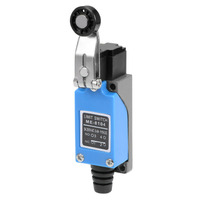
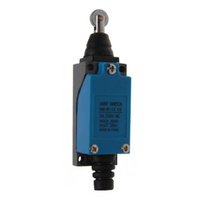
Roller lever limit switches use a hinged lever with a roller tip. They suit conveyor systems, sliding mechanisms, gates, packaging machinery, and any repetitive motion. The roller reduces friction at the actuator tip, lowers wear, and gives smoother engagement than a plain lever.
Roller lever models are a strong default where the target sweeps past the switch rather than approaching head-on. Buyers searching for roller lever limit switches typically want a switch that handles thousands of cycles without alignment drift.
Plunger limit switches use direct linear actuation, which makes them well suited to end-of-travel detection on machine tools, jigs, fixtures, and compact machinery. The plunger moves in a straight line and gives high precision and repeatability at a single point of contact.
Roller plunger variants help where the target approaches at a slight angle rather than head-on. Compact body styles are useful where mounting space is tight inside cabinets, fixtures, and small assemblies that still need a reliable end-stop signal.
Rotary limit switches detect shaft movement, which makes them well suited to cranes, hoists, valve actuators, and any application where the position of a rotating element matters. Geared rotary models can count multiple revolutions before triggering, which suits long travel applications.
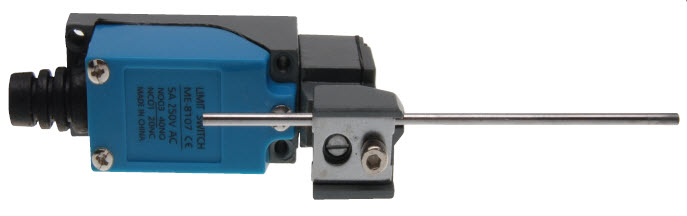
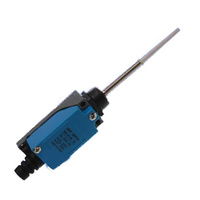
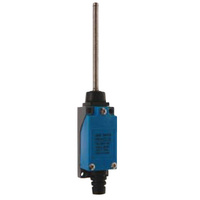
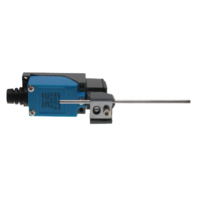
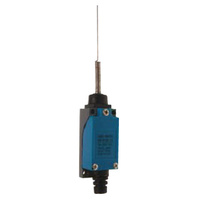
Whisker actuators use a flexible rod or spring to detect light-touch targets where operating force must stay very low. Specialty actuators include adjustable lever, rod lever, fork lever, cross roller, and spring lever styles, with each style targeting a different mechanical approach pattern.
Heavy-duty metal-bodied switches suit industrial, mining, materials handling, and harsh environments because their housings resist impact, vibration, and ingress over long service intervals. Compact precision switches suit machinery with limited mounting space, where a small body must still hold a usable contact rating.
Positive-opening safety limit switches are required where machine guarding, interlocks, or emergency-stop circuits depend on a guaranteed contact separation. Selection for these applications should follow a documented risk assessment and the relevant safety standard.
Limit switches turn up across Australian factories, workshops, water treatment sites, food production lines, warehouses, conveyors, gates, and plant rooms. Electricians, maintenance teams, OEM builders, and contractors specify them for automation, control, safety, and machine-position feedback. The same product family also covers smaller commercial roles, including cabinet and pantry door switching, where a lever or plunger detects a door state.
Limit switches confirm the position of moving parts in automated systems. Typical targets include conveyors, robotic arms, packaging lines, CNC machinery, linear actuators, sliding doors, gates, and production equipment. Reliable position feedback prevents over-travel, product jams, and sequencing errors. Many systems pair limit switches with electrical contactors for motor control and load switching.
Conveyor environments demand robust switching because the cycle counts run into millions over the life of the line. Roller lever and heavy-duty limit switches handle transfer points, end stops, gate positions, and product detection along that line. Actuator durability, alignment tolerance, enclosure rating, and cycle life all matter when downtime is costly, so selecting a robust switch body with appropriate mounting hardware reduces nuisance trips and maintenance calls.
Safety-related limit switches are used on machine guards, access doors, perimeter fencing, hoists, and mechanical travel limits. Compliance awareness here covers safety categories, Performance Level (PL), SIL, and positive-opening contacts where the risk assessment requires them. Safety wiring on machinery should be designed and installed by qualified electricians or machine safety specialists, with the risk assessment determining the correct architecture before any hardware is selected.
Outdoor machinery, washdown areas, dusty workshops, and exposed plant call for sealed, IP-rated limit switches matched to the exposure level on site. IP65 resists dust and low-pressure water, IP66 resists heavy water jets, IP67 adds temporary immersion, and IP69K covers high-pressure, high-temperature washdown duty. Typical applications include gates, roller doors, agricultural machinery, water treatment equipment, and outdoor industrial automation. Sealed cable entry and a correctly rated cable gland are needed to maintain the rating in service.
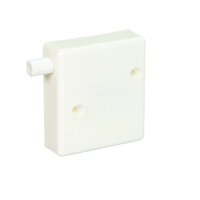
Limit switches also appear in everyday commercial fit-outs. Pantry door switches are compact 240V lever or plunger units that detect when a door opens. They suit pantry lights, walk-in robe lighting, commercial fridge cabinet lighting, and liquor cabinet installations. The selection logic is the same as larger industrial styles: actuator type, electrical rating, and physical fit must match the application.
The choice between contact and non-contact sensing depends on the application, the target, and the environment. Limit switches and proximity sensors each have strengths, and neither type is universally better, so correct selection comes from matching the device to the control system and the working conditions.
Limit switches need physical actuation, which means the target must push the lever, plunger, or whisker hard enough to trip the contacts. Inductive, capacitive, and photoelectric proximity sensors detect without contact, and they read a target through a defined sensing field. Physical contact gives a clear switching point and is less affected by some forms of environmental interference. Proximity sensors are better where the target is fragile, where the application is hygienic, or where no-contact operation is required.
Limit switches have moving mechanical parts and can be highly durable when correctly aligned, with actuator wear as the main inspection point over time. Proximity sensors have no moving parts and avoid mechanical wear, but they may need power supply, shielding, and signal compatibility checks instead.
Mechanical limit switches are often cost-effective across many sensing points because they wire as a simple dry contact and need no separate power supply. PLC input compatibility is straightforward once the contact voltage rating is checked against the input card specification. Inductive loads, solenoids, and relay coils may require suppression or a contactor stage, while proximity sensors usually need a regulated DC supply and a defined output type (PNP, NPN, NO, NC).
| Factor | Limit Switch | Proximity Sensor |
|---|---|---|
| Sensing method | Physical contact | Inductive, capacitive, or optical |
| Power supply | Dry contact, no supply needed | Regulated DC supply required |
| Wear point | Actuator and lever | Electronic, no mechanical wear |
| Best fit | Heavy targets, clear switching point | Fragile, hygienic, or no-contact applications |
| Typical cost | Low to moderate per point | Moderate, with supply and wiring |
A clear buying framework saves time on site and avoids returns. Selection criteria should be measurable and tied directly to product attributes on the datasheet. The four steps below cover the questions most electricians, maintenance teams, and procurement staff need to answer before ordering.
The direction, speed, force, and angle of approach drive actuator choice for any limit switch installation. Roller levers suit moving objects sweeping past the switch, plungers suit a direct end stop, whiskers suit light-touch detection, and rotary heads suit shaft movement. Always allow for pre-travel, over-travel, repeatability, and mechanical clearance around the actuator so the switch sees the target reliably across temperature and vibration changes.
AC and DC contact ratings differ, and control circuit voltage, current rating, and load type all need to match the switch specification before purchase. Inductive loads, solenoids, and relay coils may require an appropriately rated contact or external suppression circuit to protect the contact set. Positive-opening contacts are needed for safety applications where the machine risk assessment calls for them.
Plastic housings suit clean, dry indoor environments where impact and moisture risks are low. Zinc alloy and die-cast metal housings handle industrial duty, vibration, and impact, while stainless steel suits washdown, food production, and corrosive environments. Match dust, moisture, washdown, UV exposure, and oil exposure to the rating on the datasheet, since IP67 limit switches suit outdoor or wet installations only when the cable entry and gland maintain the sealed system.
Compare fixing centres, actuator orientation, conduit entry size, terminal access, and overall body dimensions before ordering. Replacement limit switches should match the original specification unless the machine design is being reassessed. Always check the datasheet before ordering bulk quantities for a maintenance run.
Datasheet first, stock list second. The right limit switch matches the actuator, the contact rating, the IP rating, and the mounting envelope. A cheaper switch that fails on any one of those creates more downtime than it saves on purchase price.
Fixed wiring, machinery control, and safety-circuit work must be performed by licensed electricians or suitably qualified technicians. The notes below cover what installers will check, so buyers can specify and procure with confidence.
Correct actuator alignment is the single biggest factor in long switch life across industrial machinery. Avoid excessive over-travel, use rigid brackets, and protect the switch body from impact during normal production cycles. Poor alignment is a major cause of premature actuator wear and intermittent operation, particularly on conveyors, gates, and reciprocating machinery where the target sees the switch thousands of times each shift.
NO and NC selection must match the control design and the safety function. Check PLC input voltage, relay or contactor coil rating, and cable gland selection before fit-off. Cable entries and glands must preserve the enclosure IP rating. A correctly chosen electrical enclosure and gland combination protects the contact block for the working life of the switch.
Functional testing covers the actuation point, the reset action, the contact state in each position, and the control-system response. Document the switch location, function, and replacement part number for the maintenance record. Any safety-related machine function should be tested by qualified personnel against the relevant standard.
Safety note: Machinery should be isolated and locked off before any inspection, wiring, or replacement work. Live electrical work on industrial control equipment is not a DIY task. Engage a licensed electrician or qualified machine safety specialist for installation and commissioning.
Limit switches are wear items in many machines, so a short preventive routine combined with a sensible spares policy keeps production lines and plant running. The notes below cover the common symptoms, likely causes, and replacement criteria seen on Australian sites across automation, conveyor, and machine guarding applications.
Typical symptoms include missed actuation, stuck contacts, contact welding, actuator breakage, intermittent signals, ingress damage, and loose mounting. Likely causes are misalignment, over-travel, vibration, contamination, an incorrect contact rating for the load, and worn seals around the cable entry. Machinery should be isolated and assessed by qualified personnel before any inspection or replacement.
Inspect actuator condition, mounting security, cable entries, seals, and switch repeatability on a schedule. For high-use machinery, plan cycle-count based replacement before failure. Keep common actuator types and ratings on site as spares for critical production equipment. Stocking industrial supplies alongside limit switches reduces downtime when a fault is found during a shift.
Replace when the housing is damaged, the IP seal is compromised, the actuator is worn, the signal is unstable, the rating is incorrect, or the model is obsolete. Upgrade options include LED-indicator models for faster fault diagnosis, higher IP ratings for environment changes, positive-opening safety switches for new guarding, and smart diagnostic models for connected plant. Match the original manufacturer part number wherever the existing wiring and mounting are retained.
Commercial buyers want product availability, specification confidence, documentation, and fast procurement. Sparky Direct stocks limit switches from recognised industrial brands including Andeli, Nesco, Matelec, and adjacent control gear from brands such as Clipsal, NHP Electrical, and Carlo Gavazzi.
A reliable supplier offers stock breadth across actuator types, contact configurations, IP ratings, and heavy-duty variants. Look for clear access to datasheets, product specifications, compliance information, and warranty support. Transparent pricing, simple online ordering, and fast dispatch matter most for trade and maintenance work where downtime drives the cost of the job.
Budget limit switches suit low-cycle, indoor, non-critical position indication. They are a sensible choice for cabinet door interlocks, simple indicator circuits, and one-off prototypes. Heavy-duty industrial switches are justified for conveyors, outdoor plant, safety systems, washdown areas, high-vibration locations, and continuous operation. Value-based selection beats lowest-price selection where downtime or safety risk is significant.
Online purchase suits electricians and contractors who need fast comparison, product filtering, bulk ordering, and access to multiple models in one place. Before checkout, confirm the actuator style, contact arrangement, voltage and current rating, enclosure rating, and mounting dimensions. Critical machine replacements should be cross-checked against the original datasheet or the site maintenance schedule. For related control hardware, see IP66 isolator switches, key operated switches, and pull cord switches.
The short answers below cover the most common information queries about limit switches. Each answer points back to the relevant section above for buyers who need more detail before ordering.
Limit switches are used for position sensing, end-of-travel detection, machine guarding, conveyor control, automated sequencing, gates, hoists, and industrial process control.
A moving machine part actuates a lever, plunger, roller, or rotary head, and the action causes internal electrical contacts to open or close so the signal can be read by the control system.
A limit switch uses physical contact between the target and the actuator. A proximity sensor detects the target without contact, using inductive, capacitive, or photoelectric methods.
IP67 indicates dust-tight protection and resistance to temporary immersion. The rating only holds if the cable entry and gland also maintain the sealed system.
Yes, provided the selected switch, cable gland, and installation method are rated for the exposure level. Sealed bodies and protected cable entries are essential outdoors.
Fixed electrical, control-panel, machinery, and safety-system work should be completed by licensed electricians or suitably qualified industrial technicians.
Watch Andeli LS-8104 | Limit Switch With Roller Arm 5Amp 250Vac video
Watch Limit Switch With Coil Spring Lever | LS/9101 video
Watch Pantry Door Switch 240v 10A Lever Action | 6006 video

These limit switches are stand alone quality as well as value for money. They replace only slightly cheaper plastic ones on my one off solar tracker. The Plastic ones failed physically resulting in structural gearbox failure. I have every conference in the long term reliability of your products. Cheers
The switch is extremely easy to install and wire and it comes with 230VAC and 15A ratings. It also comes with a change over switch meaning it can turn the pantry light on with the switch activated in either position. Being 230VAC rated it should be installed and wired by an electrician.
the. Pantry switches 240 volt. 10 A were great to. Power my. Lights. In. My. Commercial fridge without. Any. Problem. Gt
Quality products in stock • Fast Australia-wide delivery • Competitive trade pricing
Browse Limit Switches → Get Expert Advice →Maintenance requirements are generally low but depend on the operating environment.
You can find Limit Switches at Sparky Direct, offering a range of options suitable for industrial and control applications.
Yes, installation should be performed by a qualified professional to ensure correct operation and safety.
Check the voltage rating, actuator type, environment rating, and application requirements.
Yes, they are available through authorised electrical suppliers and online electrical retailers.
Yes, they are typically supplied with a manufacturer’s warranty covering defects under normal use.
Yes, they are built for durability and consistent operation over time.
They are available in many configurations to suit different mechanical setups.
Sealed or industrial-rated models are designed for use in harsh conditions.
Yes, they are designed to react immediately when actuated.
Most are electromechanical, though some designs integrate electronic components.
Yes, when a suitable enclosure rating is selected for the environment.
Replacement is usually straightforward for a qualified technician.
Limit switches are electromechanical devices used to detect the presence, position, or movement of an object and trigger a control action when a set limit is reached.
Yes, they are designed for repeated operation and long service life.
It signals when a machine part or object reaches a specific position or end point.
Yes, installation should be carried out by a qualified professional in accordance with applicable electrical regulations.
They are often used as part of control systems, though suitability for safety applications depends on system design and rating.
Yes, they are available in various enclosure styles, including standard and sealed options for harsher environments.
Common actuator types include roller levers, plungers, rotary arms, and spring-loaded mechanisms.
Yes, they are also used in light commercial systems such as automated doors and equipment controls.
Yes, they are widely used in industrial and commercial environments for control and safety functions.
They are commonly used in machinery, automation systems, industrial equipment, and control applications.
Limit switches are available in a range of voltage ratings, including models suitable for standard 230–240 volts AC and lower control voltages.
Yes, quality limit switches are designed to meet relevant AS/NZS electrical safety and performance standards when used and installed correctly.