
Search Results:
Search Results:
Search Results:
Search Results:
Cable cutters are grouped by their cutting mechanism and intended application. Selecting the correct type saves effort, reduces hand fatigue, and produces a clean cut that does not deform the conductor end.
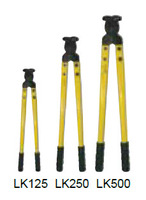
Manual lever cutters are the standard choice for light to medium cable work. A single-action compound-lever design multiplies hand force across the blade, allowing clean cuts through cables up to 70 mm² with reasonable effort. Ratchet cutters add a pawl-and-ratchet mechanism so the user can apply force in increments without releasing grip. This is useful when cutting through larger or harder conductors where a single squeeze is not enough. Hand tools of both types are available at Sparky Direct in a range of jaw capacities.
Hydraulic cutters use fluid pressure to drive the blade, producing very high cutting force with minimal user effort. These tools are suited to heavy industrial work: cutting armoured cables, large bus bars, and conductors above 150 mm². Pneumatic models draw from a compressed air supply and are common in panel-shop and switchgear environments. Both types remove operator fatigue almost entirely and produce consistently clean cuts on the largest conductors.
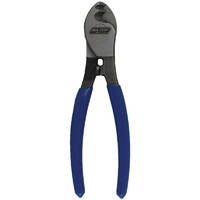
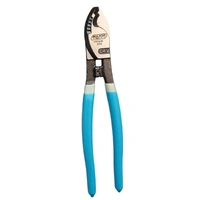
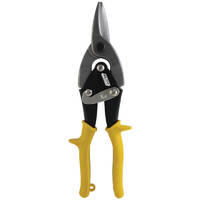
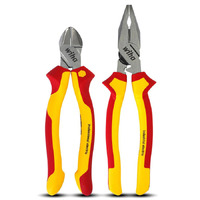
Compact cutters are designed for confined spaces and fine conductor work. Cutting pliers and diagonal snips fall into this category, producing flush or near-flush cuts in tight panel spaces. They are suitable for instrument wiring, data cabling, and light residential work where a full-size cutter would be awkward to use. Sterling Black Panther snips are a well-regarded example of this type.
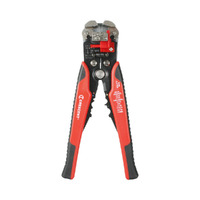
Some tools combine cutting with stripping or crimping functions. A combined wire stripper and cutter handles both tasks in a single instrument and suits residential installers working with light TPS and flexible cable. Dedicated cutters, by contrast, focus all of the tool's mechanical design on producing the cleanest possible cut. For high-volume cutting on site, a dedicated tool is faster and produces a better result. Crimping tools handle connector termination separately and should not be used as cutters.
Using a cutter outside its rated capacity produces deformed cuts, damaged blades, and extra hand strain. Selecting by conductor material and cross-section area is the correct starting point.
Copper is denser than aluminium and requires more blade force per unit area. A cutter rated for copper at 70 mm² will generally handle aluminium at a larger cross-section. Check the manufacturer's ratings for both materials before selecting a tool for aluminium conductors. Aluminium also work-hardens less than copper, which means blade wear patterns differ between the two materials over time.
Steel wire armour (SWA) and steel tape armour (STA) cables require either a dedicated armour cutter or an angle grinder to remove the armour before the conductors can be cut. Attempting to cut armoured cable with a standard cable cutter risks blade damage and injury. Some heavy-duty ratchet cutters are rated for steel strand and can handle armoured cable directly; confirm the manufacturer specification before use. Single and double insulated cables require no such preparation and can be cut cleanly with standard tools.
Cable cutter capacity is rated in mm² (cross-section area). Common ratings are 16 mm², 38 mm², 60 mm², and 150 mm². The rating refers to the maximum conductor cross-section the tool can cut cleanly in a single action. Selecting a cutter rated slightly above the largest conductor you will regularly cut gives a margin of comfort and reduces blade wear. For most residential electrical work, a 38 mm² to 60 mm² cutter covers the full range of twin and earth cables encountered on site.
Cable cutters are designed for cutting one conductor at a time. Attempting to bundle multiple cables and cut them together overstresses the blade and produces uneven cuts. If you need to cut several cables to the same length in sequence, work through them one at a time. A marking jig or measurement stop makes repetitive cuts consistent without bundling.
The blade is the core component of any cable cutter. Blade geometry and steel grade determine cut quality, longevity, and the force required from the user.
Quality cable cutter blades are made from high-carbon steel that has been through-hardened or induction-hardened at the cutting edge. Hardness is measured on the Rockwell scale; blade hardness typically falls in the HRC 55 to 62 range for cutting tools. Harder blades stay sharp longer but are more brittle and more prone to chipping if used on materials outside the rated capacity. Cheaper blades use softer steel that dulls faster and deforms at the cutting edge over time.
Most cable cutters use a single blade pressing against an anvil or a second blade. Single-blade designs are simpler to maintain and easier to sharpen. Dual-blade scissor designs produce a cleaner cut on small-diameter conductors and are common in compact snips and precision cutters. For large conductors, a single hardened blade with a compound lever or ratchet mechanism is standard.
The mechanical advantage of a cable cutter is determined by the ratio of handle length to blade pivot distance. A longer handle relative to the pivot produces greater force at the cutting edge for the same grip effort. Compound-lever designs add a secondary pivot to multiply force further. This is why a compact ratchet cutter can cut larger conductors than its physical size suggests.
A sharp blade cuts cleanly through the conductor in a single stroke, leaving a square end with no strand splaying. A dull blade compresses the conductor before breaking through, which causes strands to splay outward and the conductor end to oval rather than remain round. Frayed ends are harder to fit into lugs and connectors and take longer to terminate. Keeping blades sharp is the most effective way to maintain cut quality.
The best cable cutter for a given job depends on the work environment, the cables involved, and how frequently the tool will be used.
Handle grip material affects both comfort and safety in wet or oily conditions. Non-slip rubber or bi-material grips reduce the chance of the tool slipping during a cut. Spring-loaded return mechanisms keep the handles open between cuts and reduce hand fatigue over a full day's work. For electricians cutting cable repeatedly through a shift, ergonomics are not a luxury consideration; they directly affect cut quality and the risk of hand strain injury.
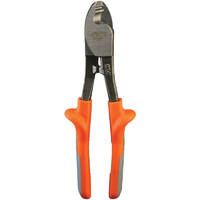
Insulated cable cutters carry handles rated to 1000V and are designed for use in environments where incidental contact with live conductors is possible. They are not a substitute for isolating the circuit before cutting; the insulation provides an additional layer of protection, not primary protection. For all live-adjacent work, confirm circuits are de-energised before cutting. Electrician hand tools with 1000V-rated insulation are available from several brands at Sparky Direct.
Contractors equipping multiple tradies should standardise on one or two cutter models. This simplifies spare-parts sourcing, makes tool identification easier on site, and means all team members are familiar with the same tool's rated capacity. Contact Sparky Direct for trade pricing on bulk orders of cable cutters.
Two cable cutters with the same rated capacity can perform very differently in the field. These are the factors that separate trade-grade tools from budget options.
A quality cutter produces a square cut in a single stroke with no conductor deformation. The blade should pass fully through the conductor without requiring the handles to be repositioned mid-cut. If a tool requires multiple ratchet strokes to complete a cut that the rated capacity suggests should be easy, the blade geometry or steel quality is substandard.
Blade edge retention is the primary durability metric. A durable blade holds its cutting geometry after hundreds of cuts on full-rated conductors. Pivot and hinge wear also matters: a worn pivot introduces blade wobble, which produces angled rather than square cuts. Quality tools use hardened pivot pins and close-tolerance joints that remain precise throughout the tool's working life.
Grip ergonomics matter most in high-volume work. Handles shaped to the natural grip position and padded with non-slip material reduce cumulative fatigue. Spring-loaded return action eliminates the need to consciously open the handles between cuts. A handle length matched to the user's hand span allows full grip force without overextension. Klein Tools and Wattmaster both offer ergonomic handle designs suited to extended cutting sessions.
Established tool brands carry replacement parts, maintain consistent quality across production runs, and stand behind their products. Sterling, Major Tech, and Wiha are commonly stocked at Sparky Direct and are recognised by Australian trade professionals. Budget tools from unknown brands may cut adequately when new but often fail at the pivot or lose blade edge quickly under regular use.
Most cable cutter problems trace back to either blade wear or incorrect tool selection. Identifying the cause correctly saves time and avoids unnecessary tool replacement.
Jamming during a cut usually means the cable being cut exceeds the tool's rated capacity, or the conductor material is harder than the rated specification. It can also result from worn or corroded pivot joints that prevent the blade from moving freely through its full travel. Check the pivot for debris and apply a light machine oil if stiff. If the tool jams on a cable within its rated capacity, the pivot may need replacing or the blade may be chipped.
Blades dull fastest when used on materials harder than their rated specification, when cutting armoured cable without proper tooling, or when cutting through live cables under voltage stress. Normal wear produces a gradual rounding of the cutting edge. Abuse produces chipping and pitting that cannot be corrected by sharpening. Inspect the blade edge under good light regularly; a dull edge appears as a flat or shiny line along the cutting face.
Uneven cuts result from blade misalignment, a dull blade compressing the conductor before cutting through, or the cable slipping in the jaw mid-cut. Ensure the cable is seated fully in the jaw before closing the handles. A blade that closes off-centre relative to the anvil produces a shear-type cut rather than a clean straight cut; this indicates pivot or blade wear.
Carbon steel blades are susceptible to surface rust in humid environments. Light surface rust can be removed with fine abrasive and does not necessarily indicate the blade is unusable. Deep pitting, however, weakens the blade and affects edge geometry. Store cutters in a dry environment and apply a light protective oil to the blade face after cleaning. Tools kept in wet tool bags on site are at high risk of corrosion and should be wiped dry after each use.
Cable cutters span a wide price range. The right choice depends on frequency of use, the conductors being cut, and how much downtime a failed tool causes on the job.
Budget cutters are adequate for occasional light work on small conductors. Their blades are softer, their pivots looser, and their handles less ergonomic than trade-grade equivalents. For an electrician using a cable cutter daily across a full working career, a trade-grade tool pays for itself in longevity and reduced hand fatigue alone. The cost difference between a budget and a trade-grade tool is typically recovered within the first year of regular use.
Compare tools on rated cutting capacity, blade steel specification, pivot design, and handle ergonomics rather than on price alone. A tool rated at 70 mm² with a hardened pivot and ergonomic grip will outlast a cheaper 70 mm² tool many times over. Crescent and Klein Tools are well-regarded for durability in the Australian trade market. Channellock and Bordo are also carried at Sparky Direct for trade buyers.
Buying a standardised set of cable cutters for a team simplifies replacement, reduces training time, and makes tool auditing straightforward. Sparky Direct supports trade account holders with competitive pricing on quantity purchases. Contact the Sparky Direct team for team and contractor pricing enquiries.
Cable cutters are low-complexity tools, but incorrect use causes injuries and tool damage. These practices apply to all types of cable cutters used in electrical and construction work.
Before cutting, confirm the circuit is isolated and tested dead using a verified test instrument. Confirm the cable is within the tool's rated capacity. Remove any cable ties or securing clips from the cut zone. Ensure the cable is held securely and will not spring away when cut. Mark the cut point clearly before positioning the cutter jaw.
Position the conductor fully into the jaw, not just at the tip of the blade. Apply steady, even pressure through the full handle stroke. Do not twist or lever the handles sideways during the cut. On ratchet cutters, allow each ratchet cycle to complete before applying the next increment of force. Rushing the ratchet mechanism or forcing past the ratchet causes blade binding and conductor deformation.
Freshly cut conductor ends are sharp and can puncture skin. Handle cut cable ends with care and remove any burrs from the conductor end with a deburring tool if required for lug installation. Do not leave cut cable off-cuts on the floor where they can cause puncture injuries. Dispose of off-cuts into a scrap cable bin immediately. Working with electrical cables requires the same discipline at disposal as at installation.
Always isolate before cutting: Cable cutters with insulated 1000V handles provide supplementary protection only. They are not a substitute for isolation, testing, and earthing of the circuit. Always confirm de-energised status with a calibrated test instrument before cutting any conductor.
A quality cable cutter maintained correctly will remain serviceable for many years of trade use. Maintenance is straightforward and takes only a few minutes after each working day.
Wipe the blade and pivot area with a clean dry cloth after each use to remove metal filings, insulation dust, and moisture. Apply a thin coat of light machine oil or tool oil to the blade face and pivot joint. Do not use heavy greases, as they attract metal filings and accelerate abrasive wear at the pivot. Store cutters in a dry environment: a sealed tool bag or drawer is preferable to an open tray on a work bench where condensation can settle overnight.
Most cable cutter blades can be lightly touched up with a fine diamond hone or whetstone to restore the cutting edge. Work only on the flat face of the blade, not the bevel, to maintain the original blade geometry. If the blade has chips, heavy rounding, or pitting that sharpening cannot correct, replacement is the better option. Blade replacement is possible on many trade-grade cutters; check with the manufacturer or supplier for available spare parts.
Store cable cutters with the handles closed to protect the blade edge. Do not stack heavy tools on top of cutters; blade edges are vulnerable to impact damage when stored loose. A purpose-built tool bag with dedicated pockets for cutting tools keeps blades protected and reduces the time spent locating tools on a busy site.
Cable cutters are used across multiple trades and industries. The correct tool selection differs by application.
Electrical installation is the primary application for most cable cutters in the Sparky Direct range. Cutting TPS cable, flex, and sub-mains during new construction and renovation work accounts for the majority of cutting tasks on a typical electrical site. Electrical tools for this work range from light-duty snips for data cable to heavy ratchet cutters for main switchboard feeders. Maintenance electricians also use cutters for fault isolation: cutting a suspected faulty section for testing or replacement.
Data and communications cabling uses smaller conductors and requires precision cutters that produce clean, square ends without conductor distortion. Distorted conductor ends cause intermittent faults in terminated data connections. Fine-blade diagonal cutters and compact snips are the tools of choice for this work. TV and data tools including specialist cutters are available at Sparky Direct for telecommunications tradespeople.
Construction and demolition work involves cutting cables for removal and reinstatement. Industrial plants with dense cable trays require cutters suited to cutting in confined, overhead, and awkward-angle positions. Hydraulic cutters with remote heads address the overhead cutting challenge. For cable tray work, a ratchet cutter with a rotating head gives access to conductors that cannot be reached with a fixed-jaw tool. Air conditioning tools and industrial cutting equipment for specialist trades are also available at Sparky Direct.
Cable cutting in a trade context operates within the framework of Australian workplace health and safety law and the wiring rules. The tool is simple; the regulatory context is not.
Electrical work in Australia must comply with AS/NZS 3000:2018 (the wiring rules), which governs conductor selection, installation methods, and termination practices. The cutting tool itself is not directly specified by AS/NZS 3000, but the quality of the cut affects compliance: a conductor end deformed by poor cutting may not seat correctly in a lug, producing a connection that does not meet the installation standard. WHS regulations require that all tools used on a worksite are fit for purpose and maintained in a safe condition.
All cable cutting must be performed on de-energised, tested, and earthed conductors. The relevant WHS regulation in each state requires that a safe work method statement (SWMS) covers the isolation and testing procedure for any electrical work. Insulated cable cutter handles provide an additional safety margin but do not replace the requirement to isolate the circuit. Confirm isolation with a calibrated voltage tester before every cut.
The minimum PPE for cable cutting work is safety glasses (protection from conductor spring-back and metal fragments) and cut-resistant gloves where conductor ends or cable armour present a laceration risk. On sites where electrical energy has not been fully excluded, arc flash PPE requirements apply. Review the site's electrical safety plan before starting cutting work in any switchboard or live-adjacent environment.
Cable cutters connect to sustainability in two ways: the quality of cuts they produce affects how much material is wasted, and the lifespan of the tool itself determines how often it needs to be replaced.
A clean square cut means the conductor end seats fully into the lug or connector in one attempt. A ragged or deformed end often needs to be re-cut, producing a short off-cut that cannot be reused. On large projects, repeated re-cutting of conductors adds up to significant material waste. Using the correct tool for the conductor size and keeping the blade sharp reduces this waste at the source.
Copper and aluminium conductor off-cuts have commercial recycling value. Collect cable cuts and off-cuts in a dedicated scrap bin and arrange pickup with a metal recycler. Stripping the insulation from off-cuts before recycling increases the recovered metal value. Some contractors factor cable scrap recovery into their project cost modelling.
Buying a trade-grade cable cutter with a replaceable blade rather than a cheap disposable tool reduces the number of tools that end up in landfill over a working career. A quality tool maintained correctly can last 10 to 20 years in regular trade use. The embedded energy in manufacturing a high-quality tool is recovered many times over when that tool displaces multiple cheaper replacements.
Watch Major Tech CS0360 | Cable Shears (60mm²) video
Watch 29-514 | Cable Cutters - 165mm Ultimax Pro Black Panther Gen II video
Watch Wattmaster WATMVA200W | 225mm 1000V Insulated Cable Cutting Pliers video

They are so sharp and very accurate cuts every time - a real time saver. So pleased I bought a pair. Huge thanks.
Amazing pliers, have used marvels previously, found these to be on point if not better, the grips allow you to strip with ease and give you that extra leverage without the slipping, 1000v rated... definitely worth the price. Rate it!!!!!
After owning 1 pair of these snips I have to say that they are as sharp as the teeth of the Black Panther they are named after. A great addition to the tool kit. I have cut tissue paper and light aluminium and tin with ease. A few of my coulagues have also purchased the snips after trying mine. I have also purchased a second pair of snips for the kitchen at home as they are stainless steel and very easy to clean. A great tool for many applications.
Quality products in stock • Fast Australia-wide delivery • Competitive trade pricing
Browse Cable Cutters → Get Expert Advice →Using the wrong cutter size or excessive force can damage conductors.
Sparky Direct supplies cable cutters Australia-wide, offering reliable tools for electrical trade professionals.
Cable cutters are securely packaged and delivered via standard courier services.
Unused cable cutters are generally eligible for return according to the seller’s returns policy.
Warranty coverage varies by manufacturer and typically covers defects in materials or workmanship.
Cable cutters are available individually and as part of electrician tool kits.
They should be stored clean, dry, and protected to maintain cutting performance.
Yes, cable cutters are commonly used by apprentices under proper supervision.
Cutting edges can wear with heavy use and should be inspected regularly.
Selection depends on cable size, conductor material, and frequency of use.
They can be used for basic tasks, but household electrical work must be done by a licensed electrician.
Quality cable cutters feature ergonomic handles designed to reduce hand fatigue.
Ratchet cutters provide mechanical advantage, making them suitable for larger cables.
Cable cutters are used to cut electrical cables and wires cleanly without crushing or damaging the conductors.
Cable cutters are easy to use with basic training and correct tool selection.
Proper cable cutters ensure clean cuts, protect conductors, and improve safety and efficiency.
Cable cutters require minimal maintenance beyond cleaning and checking for blade wear.
Yes, cable cutters are essential tools for electrical installations, which must be carried out by a licensed electrician.
Some cable cutters are designed for armoured or reinforced cables, but suitability must be checked for each tool.
Most cable cutters are suitable for copper conductors, while aluminium compatibility should be confirmed in product specifications.
They are typically made from hardened steel with ergonomic or insulated handles for strength and durability.
Yes, insulated cable cutters are available and designed to provide added protection when working near live electrical components.
Many cable cutters are manufactured to meet relevant AS/NZS standards, particularly insulated tools designed for electrical applications.
Yes, cable cutters are designed for specific cable diameters and conductor types, which should be checked before use.
Common types include manual cable cutters, ratchet cable cutters, and insulated cable cutters for electrical work.