

Wi-Fi
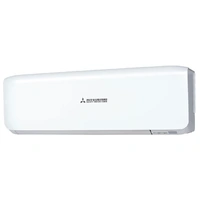
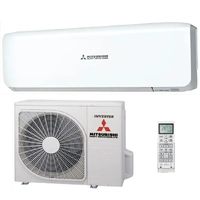
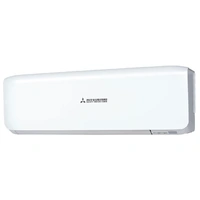
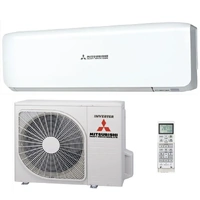
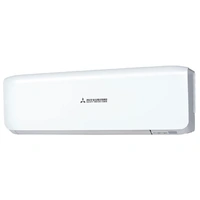
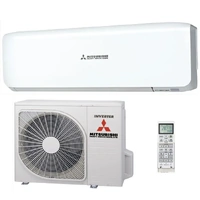
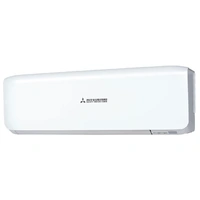
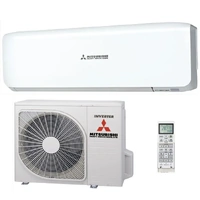
Mitsubishi Electric MAC-588IF-E | Air Conditioner Wi-Fi Control Interface
$133.93
$121.75 ex. GST
Search Results:
Search Results:
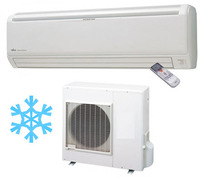
Find the best Mitsubishi Heavy Industries here at Sparky Direct. [ Read More ]
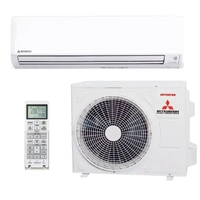
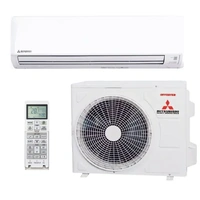
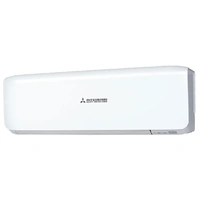
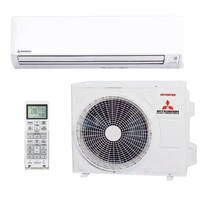
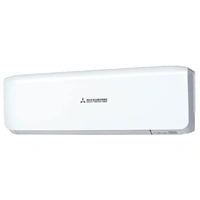
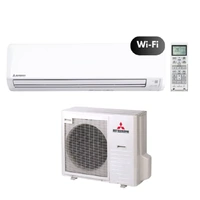
Mitsubishi Heavy Industries split systems are two-part air conditioning units. An indoor head delivers conditioned air into the room. An outdoor unit houses the compressor, condenser coil, and fan. Refrigerant lines and electrical cabling connect the two.
A split system uses a refrigerant cycle to move heat between indoors and outdoors. In cooling mode, the indoor coil absorbs heat from the room air. The compressor pushes the refrigerant outside, where the heat is released. In heating mode, the cycle reverses. Heat is drawn from outside air and released into the room.
The indoor head contains the evaporator coil, fan, filters, and control electronics. The outdoor unit contains the compressor, condenser coil, expansion valve, and a second fan. A refrigerant pair coil connects the two units, typically using insulated copper pipe in matched diameters. Sparky Direct stocks the air conditioning pair coil sizes used in residential split system installations.
Split systems condition one room or zone. Ducted systems use a single large unit and ductwork to condition multiple rooms from one outdoor unit. Portable units are self-contained and need only a window vent, but they are less efficient and noisier than a wall-mounted split. For a single room or open-plan area, a split system is usually the most efficient option. The full split system air conditioner range covers wall-mounted units across all common sizes.
MHI is one of three premium Japanese air conditioning manufacturers serving the Australian market, alongside Daikin and Mitsubishi Electric. The brand has a strong reputation for build quality, quiet operation, and reliable inverter performance.
MHI split systems consistently rate well in independent product reviews and customer satisfaction surveys. Owners report long service life, low noise levels, and stable temperature control as the main reasons they choose the brand a second or third time.
MHI and Mitsubishi Electric are separate companies. They share the Mitsubishi name but operate as independent businesses with their own product lines. Both are premium brands. MHI is often priced slightly lower than the Mitsubishi Electric equivalent at the same capacity. The Mitsubishi Electric split system range is also available at Sparky Direct for buyers comparing the two brands.
MHI manufactures heavy industrial equipment including ship engines, gas turbines, and aerospace components. The same engineering disciplines apply to the air conditioning division. Components are specified for long service life and tight tolerances. Compressors and heat exchangers are manufactured to industrial standards.
MHI units are tested for operation in extreme ambient temperatures. The Bronte and Avanti series are rated to cool at outdoor temperatures up to 46 degrees Celsius and to heat at outdoor temperatures down to minus 15 degrees Celsius. This range covers the conditions experienced across all populated regions of Australia.
The MHI residential range covers wall-mounted, floor-mounted, bulkhead, and cassette installation styles. Wall-mounted units make up the bulk of residential sales.
The wall-mounted indoor head is the most common configuration in Australian homes. It mounts high on an internal wall, typically above doorways or windows. Capacities range from 2.0kW for small bedrooms up to 9.5kW for large open-plan living areas.
Floor-mounted units sit at skirting level. They suit rooms with limited wall space, sloped ceilings, or a preference for the discreet console form factor. Floor-mounted units typically deliver air across the room rather than down from above.
Bulkhead units mount inside ceiling cavities or wall bulkheads, with only a discreet grille visible. They suit homes where the homeowner wants conditioned air without a visible indoor head. Installation is more complex and adds to the project cost.
Reverse cycle units provide both heating and cooling from the same hardware. Cooling-only units are simpler and cheaper but limit the appliance to summer use. The MHI residential range is reverse cycle across all current models. This is the standard configuration for Australian residential air conditioning.
The MHI residential range is split into named series. Each series targets a specific room size, climate, and feature requirement.
The Avanti series covers capacities from 2.0kW (DXK06ZSA) to 5.0kW (DXK18ZSA). It suits bedrooms, studies, smaller living rooms, and home offices. Features include inverter compressor control, Wi-Fi-ready models, and a self-cleaning function on selected variants.
The Bronte series covers capacities from 6.3kW (DXK21ZRA) to 9.5kW (DXK33ZRA). It suits open-plan living, kitchen, and dining areas, large master bedrooms, and small commercial spaces. Bronte units use a more powerful compressor and a larger outdoor heat exchanger to deliver fast cool-down and heat-up times.
The Stylish series prioritises the appearance of the indoor head. It suits homes where the air conditioner is visible in a feature room and the homeowner wants a contemporary look. Cooling and heating performance match the equivalent Avanti or Bronte capacity.
| Series | Capacity Range | Suited To | Key Strength |
|---|---|---|---|
| Avanti | 2.0kW to 5.0kW | Bedrooms, offices, smaller living areas | Value, Wi-Fi-ready |
| Bronte | 6.3kW to 9.5kW | Open-plan living, large rooms | High capacity, fast performance |
| Stylish | Various | Feature rooms, design-focused homes | Indoor head appearance |
Capacity is measured in kilowatts (kW). The right capacity for a room depends on floor area, ceiling height, insulation, window size, and orientation.
A standard 20sqm bedroom or small living area with average insulation typically suits a 2.5kW to 3.5kW unit. The Avanti DXK09ZSA (2.5kW) covers most bedrooms in this size range. Larger living areas at 20sqm often need 3.5kW to allow for west-facing windows or higher ceilings.
| Room Size | Typical Capacity | Example Use |
|---|---|---|
| Up to 20sqm | 2.0kW to 2.5kW | Small bedroom, study |
| 20sqm to 30sqm | 2.5kW to 3.5kW | Master bedroom, small lounge |
| 30sqm to 50sqm | 5.0kW to 6.3kW | Living room, family room |
| 50sqm to 80sqm | 7.1kW to 9.5kW | Open-plan living and kitchen |
Poorly insulated rooms need more capacity. West-facing rooms with large windows need more capacity to handle late-afternoon heat load. Standard 2.4 metre ceiling height is the sizing baseline. Raked ceilings, double-height voids, and ceilings above 2.7 metres add load. Add 10 to 20 percent capacity for any of these conditions.
Undersizing is the most common mistake. An undersized unit runs flat-out, struggles to reach setpoint on hot or cold days, and costs more to run than a correctly sized unit. Oversizing is less common but creates short-cycling issues, where the compressor starts and stops frequently, and humidity control suffers.
Modern split systems include features that affect comfort, energy use, and ease of operation. Understanding the key features helps buyers compare models accurately.
An inverter compressor varies its speed continuously to match the cooling or heating load. Older fixed-speed units run at full output until the room reaches setpoint, then shut off completely. Inverter units run at lower speeds for longer, holding the room temperature stable. They use less energy and produce less noise than fixed-speed units. All current MHI residential units are inverter-driven.
Indoor unit noise is measured in decibels (dBA). MHI Avanti units operate as low as 19 dBA at the lowest fan speed. This is quieter than a whisper at one metre. Outdoor unit noise matters when the condenser is mounted near a bedroom window or close to a neighbour's boundary.
Wi-Fi-ready units allow control from a smartphone app. The MHI Smart M-Air app is the manufacturer's official app. It supports schedules, away-mode operation, and energy reporting. Selected MHI units integrate with Home Assistant and other open-source home automation platforms via the M-Air protocol.
Standard mesh filters trap dust, pet hair, and large airborne particles. Optional electrostatic or activated-carbon filters trap finer particles and reduce odours. Filters need cleaning every two to four weeks during heavy use periods.
Air conditioning is one of the largest contributors to summer electricity bills in Australian homes. Choosing an efficient unit and using it well makes a measurable difference.
The Zoned Energy Rating Label rates split system efficiency separately for hot, mixed, and cold climate zones. Stars range from 1 to 10 (with 10 being the most efficient). The label shows annual energy consumption in kWh for typical operation in each zone. For Queensland and northern New South Wales buyers, the hot zone rating is the relevant figure.
Running cost depends on capacity, efficiency, electricity tariff, and how many hours the unit is used. A 3.5kW Avanti running cooling for six hours per day at 30 cents per kWh costs roughly 60 to 80 cents per day in summer. Annual cooling cost for a typical bedroom application is in the range of 60 to 100 dollars.
Eco mode adjusts the setpoint slightly and reduces fan speed to lower energy use without significant comfort loss. Motion sensors on selected models detect occupancy and reduce output when the room is empty. These features can cut running costs by 10 to 20 percent over a season.
Setpoint choice has the biggest impact on energy use. Each one-degree change in cooling setpoint changes energy use by about 10 percent. Setting cooling to 24 degrees instead of 22 degrees can cut summer running cost by 20 percent. Heating efficiency follows the same rule in reverse.
Reverse cycle operation is the standard for current residential split systems. The same hardware handles both cooling in summer and heating in winter.
A four-way valve in the refrigerant circuit reverses the direction of refrigerant flow. In heating mode, the indoor coil becomes the condenser (hot side) and the outdoor coil becomes the evaporator (cold side). The unit pulls heat from outside air, even at low temperatures, and releases it indoors.
A reverse cycle split system delivers three to five units of heat for every unit of electricity used. A resistance electric heater (column heater, fan heater, or panel heater) delivers exactly one unit of heat per unit of electricity. Running cost for split system heating is roughly one-third to one-fifth of equivalent electric resistance heating.
Queensland has long, hot, humid summers and short, mild winters. Reverse cycle split systems are well suited to this climate. Cooling and dehumidification handle the bulk of the annual workload. Heating is used for a few weeks in winter, mainly in southern Queensland and inland regions.
MHI units publish separate capacity figures for cooling and heating. Heating capacity is usually slightly higher than cooling capacity at the same model. Heating performance also varies with outdoor temperature. As outdoor air gets colder, less heat is available for the unit to extract. A 7.1kW unit may deliver only 5kW of heating output at minus 5 degrees outdoor temperature.
Split system installation in Australia is regulated work. The installation involves both electrical and refrigeration disciplines. Both require licensed tradespeople.
The electrical connection must be carried out by a licensed electrician under AS/NZS 3000:2018. The refrigeration work must be carried out by a technician who holds an Australian Refrigeration Council (ARC) Refrigerant Handling Licence. Installation by an unlicensed person voids the manufacturer warranty and creates safety and insurance risks.
Compliance reminder: Refrigerant gas handling is regulated under the Ozone Protection and Synthetic Greenhouse Gas Management Act. Only ARC-licensed technicians can charge, vent, or transfer refrigerant. The split system installer must hold the appropriate licence.
A typical wall-mounted single-head install takes four to six hours. The work involves mounting the indoor and outdoor units, running pair coil and electrical cabling between them, evacuating the system with a vacuum pump, and commissioning. Sparky Direct stocks the air conditioner installation kits and air conditioning tools used by trade installers.
The outdoor unit needs free airflow on the inlet side and the discharge side. It should not face a wall or fence within 300mm. Mounting height matters: noise and vibration transfer to lightweight structures. Air conditioner wall brackets support the outdoor unit on masonry or framed walls.
Most residential split systems run on a dedicated 10A or 15A 240V circuit, fed from the switchboard via a circuit breaker and isolating switch. The indoor and outdoor units share the same supply, with control wiring between them. The installing electrician determines circuit size based on the unit's nameplate amperage.
Routine maintenance protects performance and extends service life. The bulk of maintenance is filter cleaning that the homeowner can do without tools.
Filters need cleaning every two to four weeks during heavy use seasons. The mesh filters slide out of the indoor head, rinse under tap water, and refit when dry. Dirty filters reduce airflow, force the unit to work harder, and increase running cost. They also reduce indoor air quality.
An annual service covers items the homeowner cannot easily access: heat exchanger cleaning, drain pan and drain line clearing, electrical connection inspection, and refrigerant pressure check. Annual servicing is a manufacturer recommendation and helps maintain warranty coverage.
MHI residential units carry a 5-year manufacturer warranty on parts and labour when installed by a licensed installer and registered through the manufacturer. Maintaining service records and using only ARC-licensed technicians for any refrigerant work protects warranty cover.
MHI sits in the upper-mid pricing tier alongside Daikin and Mitsubishi Electric. Sparky Direct trade pricing makes the brand accessible to retail buyers and trade contractors.
Indicative supply-only pricing ranges from around 700 dollars for a 2.0kW Avanti to 2,500 dollars and above for a 9.5kW Bronte. Pricing varies with current promotions, model year, and stock levels. Sparky Direct lists current pricing on each product page in the MHI split system category.
The Avanti series is the value tier. It delivers core MHI build quality and inverter performance at a lower price point than the Bronte equivalent at the same capacity range. The Bronte series is the premium tier, with higher capacity, faster pull-down times, and more advanced control features.
Installation cost typically runs from 800 dollars for a straightforward back-to-back install up to 2,000 dollars or more for a long pipe run, two-storey install, or difficult outdoor unit access. The installation quote should be itemised: labour, pair coil, drain, electrical, brackets, and consumables.
Trade suppliers like Sparky Direct sell at trade-tier pricing, which is typically 15 to 30 percent below big-box retail. Retail buyers can purchase through trade channels at the same pricing. The supply-only model means the buyer organises an installer separately. This separation often produces a lower total project cost than a retail bundle.
A successful purchase combines correct sizing, the right series, and a quality install. Most buyer regret comes from undersizing or skipping the install quote step.
Start with the room. Measure floor area in square metres. Note ceiling height, window orientation, and insulation quality. Use the sizing table earlier in this guide as a starting point. For mixed-use spaces (e.g., open-plan living and kitchen) size to the larger zone.
Buying on price alone: The cheapest unit is often undersized or from a non-supported brand. Pay attention to capacity match, not just sticker price.
Skipping the installation quote: Get the install quoted before buying. A long pipe run or difficult outdoor unit position can double the install cost.
Ignoring outdoor unit placement: Plan where the outdoor unit will go before buying. Restricted airflow, neighbour proximity, and structural mounting all affect the project.
Confirm the indoor unit position, outdoor unit position, and pipe route before ordering. Confirm with the installing electrician whether the existing switchboard has spare circuit capacity. A new circuit may be needed for higher-capacity units. The installer should also confirm the isolating switch and circuit breaker rating.
Sparky Direct stocks the current MHI residential range with trade pricing for both contractors and homeowners. Stock is held in Brisbane with delivery across Australia. Cassette and ducted variants are available alongside the wall-mounted range. Browse the full air conditioner range or compare with the Daikin split system and Fujitsu split system ranges.
Split system air conditioning product overviews from the Sparky Direct range.
Watch Mitsubishi Electric Air Conditioner Split System 2.5 KW Cooling - 3.2 Kw Heating | MSZ-AP25VGD video
Watch Daikin FTXV25WVMA-KIT | 2.5KW Reverse Cycle Split System Air conditioner R32 video
Watch Fujitsu UTY-NXT-BOX | Lifestyle Range Anywair Wi-Fi Adaptor ii video

Right on Christmas our old Mitsubishi split system died after 20 years. We purchased our new one from Sparky Direct. It is so quiet and cooling much better than the previous one. The guys at Sparky Direct were so helpful, their warehouse was very clean and organised. First time purchasing and I will be using them again Thanks
I bought the bronte 8kw unit a month ago. It was installed by Sparky who did an excellent job. They replaced my existing electrical switch and even added blocks to raise the unit at no extra charge. I highly recommend them.
Excellent air conditioner. We already had 2 of the MHI units and were so impressed with their quality, quietness and efficiency that we bought a 3rd. Bit more expensive than some but worth it in our opinion.
Quality products in stock • Fast Australia-wide delivery • Competitive trade pricing
Browse MHI Split Systems → Get Expert Advice →Yes. During cooling operation, these systems help reduce excess indoor humidity, improving overall comfort.
Mitsubishi Heavy Industries air conditioners are available through Sparky Direct, offering access to genuine products.
Delivery availability depends on the supplier and location, with options commonly available across metropolitan and regional Australia.
Yes, subject to building approvals, outdoor unit placement, and assessment by a licensed installer.
Yes. Mitsubishi Heavy Industries air conditioners are supplied with a manufacturer’s warranty when installed and operated in line with Australian requirements.
Consider room size, required capacity, energy efficiency, noise levels, and access to licensed installation.
Yes. Reverse-cycle operation allows effective heating and cooling across all seasons.
Energy use depends on system size, efficiency rating, settings, and usage patterns. Inverter technology helps minimise unnecessary power consumption.
With correct installation and regular maintenance, these systems can provide reliable performance for many years.
Some models offer optional Wi-Fi control, allowing remote operation via compatible mobile applications.
Larger capacity models can be suitable for open-plan spaces when correctly sized for the total area.
Yes. Their quiet operation and consistent temperature control make them suitable for sleeping areas.
Annual servicing is generally recommended, with more frequent maintenance in high-use or dusty environments.
Mitsubishi Heavy Industries supplies a range of residential and light commercial air conditioning systems, including split system and reverse-cycle air conditioners.
Most units include intuitive remote controls with clear temperature, fan speed, and mode settings for everyday use.
Yes. Many models are designed for low noise operation, making them suitable for bedrooms, living spaces, and work areas.
Yes. Installation must be completed by licensed refrigeration and electrical professionals to ensure safety, performance, and compliance.
They are commonly used for individual rooms or zones, with capacity selection based on room size, layout, and insulation.
Smaller residential units typically operate on single-phase power, while larger systems may require specific electrical provisions assessed by a licensed electrician.
Many current models use R32 refrigerant, which has a lower global warming potential compared to older refrigerants.
Yes. Most Mitsubishi Heavy Industries residential systems are reverse-cycle units, providing both cooling in summer and heating in winter.
Yes. Many Mitsubishi Heavy Industries air conditioners use inverter technology to adjust output based on demand, improving comfort and reducing energy consumption.
Energy efficiency varies by model, with many Mitsubishi Heavy Industries systems achieving strong star ratings under Australian energy labelling requirements.
Mitsubishi Heavy Industries air conditioners supplied in Australia are designed to meet applicable AS/NZS electrical and safety standards when installed by licensed professionals.
Yes. Mitsubishi Heavy Industries air conditioners are engineered to perform reliably in Australian climates, including high summer temperatures and varying humidity levels.