

Wi-Fi
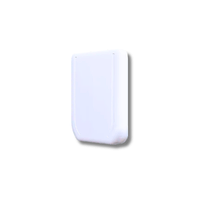
Mitsubishi Electric MAC-588IF-E | Air Conditioner Wi-Fi Control Interface
$131.94
$119.95 ex. GST
Search Results:
Search Results:
Find the best Mitsubishi Electric Split System Air Conditioners here at Sparky Direct. [ Read More ]
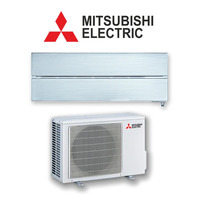
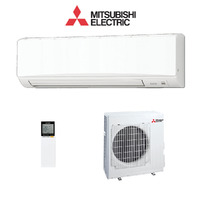
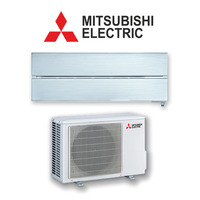
A split system has two main parts. The indoor head sits on an internal wall and pushes conditioned air into the room. The outdoor unit holds the compressor and condenser and sits on a wall bracket, slab, or ground-level pad outside the house.
The two halves are linked by insulated copper refrigerant pipework, a control cable, and a condensate drain. Because the noisy compressor lives outside, the indoor head runs at very low sound levels.
The outdoor unit compresses refrigerant gas, which raises its temperature. That hot gas releases heat to the outdoor air through the condenser coil and condenses into a high-pressure liquid. The liquid then flows through the indoor head, expands, drops in pressure, and turns back into a cold gas.
A fan blows room air across that cold indoor coil. The air gives up its heat to the refrigerant and is pushed back into the room cooled and dehumidified. In heating mode a reversing valve flips the cycle, so heat moves from outdoor air into the room.
The indoor unit contains the evaporator coil, fan, filters, electronic controls, and the infrared receiver for the wireless remote. The outdoor unit contains the compressor, condenser coil, expansion valve, and a fan to dump heat outside.
Connecting them are two copper pipes (suction and liquid lines), a multi-core control cable, and a gravity-fed drain. The pipework typically runs through an external air conditioning duct cover for a tidy finish.
Split systems heat or cool a single room or open zone. Ducted systems use one large hidden unit to push air through a network of insulated ducts to multiple rooms. Each suits different homes.
| Factor | Split System | Ducted System |
|---|---|---|
| Coverage | One room or zone per system | Whole house from one unit |
| Upfront cost | Lower per unit | Higher upfront installation |
| Installation complexity | Half-day for one unit | Multi-day, requires roof space |
| Running cost control | Run only the rooms in use | Zoning required to match efficiency |
| Visual impact indoors | Wall-mounted head visible | Only ceiling vents visible |
| Best suited to | Apartments, additions, single rooms | New builds, large family homes |
Mitsubishi Electric has manufactured air conditioning equipment since 1954 and has been sold in Australia for decades. The brand is known for build quality, conservative engineering, and consistent heat output in cold conditions. It sits at the premium end of the residential market alongside Daikin and Fujitsu.
Sparky Direct stocks the Mitsubishi Electric air conditioner range alongside the related Mitsubishi Heavy Industries brand, which is a separate company with its own product line.
Verified Sparky Direct customer reviews on the Mitsubishi Electric range consistently mention quiet operation, reliable cooling, and clean fit-out. Buyers in coastal Queensland, regional NSW, and metro Victoria report similar results across small and large capacity units.
Expected service life on a well-installed and maintained Mitsubishi Electric split system is 12 to 15 years for the indoor unit and 10 to 15 years for the outdoor compressor. Lifespan depends heavily on installation quality, regular filter cleaning, and outdoor unit location.
The two most-compared premium brands in Australia are Mitsubishi Electric and Daikin. Both offer high efficiency, quiet operation, and strong reverse cycle performance. Daikin tends to lead on smart control integration. Mitsubishi Electric tends to lead on low-temperature heating and quietness in the smaller capacities.
Mid-tier options like Fujitsu and Haier compete on price. Rinnai P and T series units also offer value alternatives. The right choice depends on budget, room size, and how often the unit will run.
Mitsubishi Electric systems perform well across all Australian climate zones. The range is particularly strong in cold-climate heating, where models maintain rated heat output at lower outdoor temperatures than many competitors. They also hold up well in coastal applications when installed with proper outdoor unit clearances.
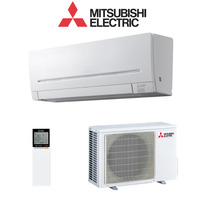
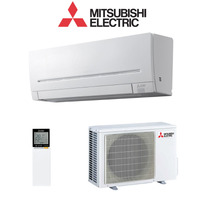
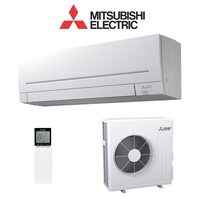
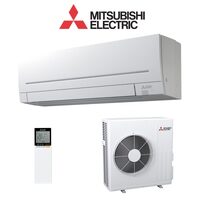
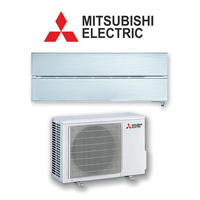
The Mitsubishi Electric range covers two clear tiers. The classic AP series (MSZ-AP) is the value workhorse: clean white finish, reliable inverter performance, and a strong feature set at a sensible price. The premium LN series (MSZ-LN) adds designer finishes, advanced filtration, and 3D i-See Sensor occupancy detection.
Capacity is measured in kilowatts (kW) of cooling output. Small-room systems start at 2.5 kW, suitable for bedrooms and home offices. Mid-range 3.5 to 5.0 kW units suit larger bedrooms, lounges, and small open-plan zones. Large capacity 6.0 to 8.0 kW units cover open-plan living areas and larger lounges.
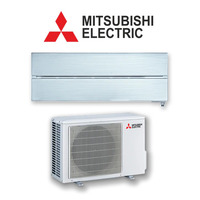
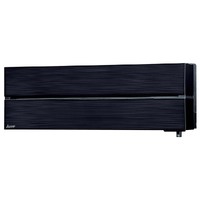
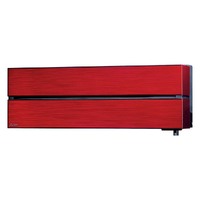
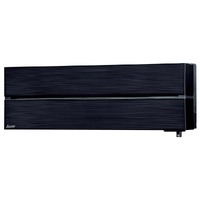
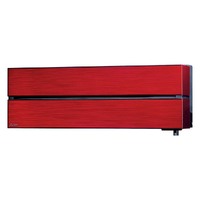
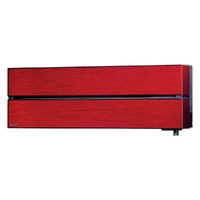
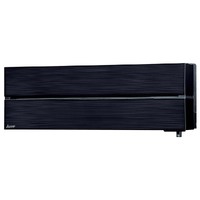
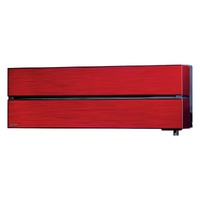
Wall-mounted heads are the standard residential format. Mitsubishi Electric offers them in classic white (AP series) and premium finishes including pearl white, ruby red, natural wood, and onyx black (LN series). Other formats include floor-standing consoles for under-window installation and ceiling cassettes for commercial or large open spaces, available via the broader cassette air conditioner range.
Most current Mitsubishi Electric models support WiFi control through the MELCloud app, either built in or via an optional adapter. The app allows remote on/off, schedule programming, room temperature monitoring, and integration with home automation platforms. WiFi is useful for switching the unit on before arriving home and tracking energy use over time.
For a typical 20 sqm bedroom in southern Australia with insulated walls and standard ceilings, a 2.5 kW cooling capacity unit is usually sufficient. In a north-facing room with large windows or in a hot-climate location like Brisbane or Darwin, step up to 3.5 kW. The MSZ-AP25 and MSZ-AP35 models in the Mitsubishi Electric range cover this size bracket.
Multiply room area by 150 watts per square metre for cooling capacity in a typical insulated room. So a 20 sqm room needs about 3,000 watts (3.0 kW). Add 25 percent for poorly insulated or sun-facing rooms. Reduce by 25 percent for shaded or well-insulated spaces.
Sizing for Australian conditions depends on three things: room area, climate zone, and insulation. The 150W/sqm guide works for most southern and central Australian homes. Tropical and subtropical regions need more capacity to handle humidity load and sustained 35C-plus days.
| Room Size | Bedroom (Cool Climate) | Living Room (Warm Climate) |
|---|---|---|
| 10 to 20 sqm | 2.5 kW | 3.5 kW |
| 20 to 30 sqm | 3.5 kW | 5.0 kW |
| 30 to 45 sqm | 5.0 kW | 7.1 kW |
| 45 to 60 sqm | 6.0 to 7.1 kW | 8.0 kW |
Standard sizing assumes 2.4 m ceilings, ceiling and wall insulation, single-glazed windows, and average shading. Raked ceilings, west-facing glass without shading, uninsulated walls, and roof-space heat loads all push the required capacity up. A high-set Queenslander with poor under-floor insulation will need significantly more capacity than a slab-on-ground brick veneer of the same floor area.
Undersizing is the most common mistake. A unit that runs flat out for hours on hot days uses more energy and wears out faster than a correctly sized unit cycling on its inverter. Oversizing causes its own problems: short-cycling reduces dehumidification and creates an uncomfortable cold-then-stale feel. The right size runs steadily on its inverter at reduced load most of the time.
All current Mitsubishi Electric residential split systems use inverter technology. An inverter compressor varies its speed continuously to match the cooling or heating load. This holds room temperature steady, cuts running costs, and reduces noise. Non-inverter (fixed-speed) units cycle hard on and off, which is louder and less efficient. Inverter is now the standard across all major brands.
Mitsubishi Electric is known for quiet running. Indoor units in the smaller AP and LN models reach as low as 19 dBA on minimum fan speed, which is below the threshold most people can hear in a normal room. Outdoor units typically run between 46 and 52 dBA, which matters most for installations close to bedroom windows or shared boundaries.
The horizontal and vertical louvres on Mitsubishi Electric units swing automatically to spread air evenly through the room. Premium LN models add a 3D i-See Sensor that scans for occupants and directs airflow toward or away from them as the user prefers. This avoids the cold-spot problem common with poorly aimed split systems.
The standard Mitsubishi Electric filter is a washable mesh that traps dust, lint, and pet hair. Premium models add an enzyme filter and Plasma Quad Plus, which targets airborne pollutants including bacteria, allergens, and some viruses. Filters need monthly cleaning during heavy use to maintain airflow and efficiency.
Energy efficiency is shown on the Australian Zoned Energy Rating Label (ZERL) for cooling and heating, with separate scores for hot, mixed, and cool climate zones. More stars means lower running cost for the same output. Most current Mitsubishi Electric residential models score well in the mixed climate zone, where the bulk of Australian homes sit.
Cooling and heating efficiency is also measured by the Coefficient of Performance (COP for heating) and Energy Efficiency Ratio (EER for cooling). A COP of 4.0 means the unit produces 4 kW of heat for every 1 kW of electricity drawn. Higher numbers mean lower bills. The premium Mitsubishi Electric LN series typically rates higher than the value AP series at the same capacity.
A correctly sized 5.0 kW Mitsubishi Electric inverter split system running in cooling mode in a Sydney summer typically draws 0.6 to 1.2 kW of electricity per hour, depending on load. At an average tariff of 30 cents per kWh, that works out to roughly 18 to 36 cents per hour of running. Total daily cost in summer for a single-room evening run sits around $1 to $3.
The biggest controllable factors are setpoint temperature, run time, and door and window discipline. Each degree below 24C in cooling mode adds roughly 10 percent to the running cost. Leaving doors open to unconditioned rooms forces the unit to work against the rest of the house. Closing blinds on west-facing glass in summer is one of the cheapest cost-cutting measures available.
Split system installation in Australia legally requires a licensed electrician for the electrical connection and a person holding an ARCtick refrigerant handling licence for the refrigerant work. DIY installation of a refrigerant-charged system is illegal under the Ozone Protection and Synthetic Greenhouse Gas Management Act. Manufacturer warranty also requires licensed installation.
Compliance note: The electrical side of the install must comply with AS/NZS 3000:2018 (the Wiring Rules). Refrigerant work must comply with AS/NZS 5149 and the Australian Refrigeration Council code of practice. Always engage qualified trades.
A standard back-to-back installation (where the indoor unit sits on an external wall directly opposite the outdoor unit) is the simplest and cheapest option, typically $700 to $1,200 in 2026. Costs rise with longer pipe runs, second-storey work, brick wall penetrations, additional electrical work, and outdoor unit wall brackets. Quotes vary significantly by location and installer.
The indoor head should sit high on a wall, clear of curtains, with no obstacles within 1 metre of the airflow path. Avoid mounting above beds where possible. The outdoor unit needs at least 30 cm clear at the rear, 60 cm at the front, and shade where practical. Coastal installations should keep the outdoor unit clear of direct salt spray.
A standard residential install takes 4 to 6 hours for a single back-to-back system. The installer drills a 65 mm pipe penetration, mounts the indoor and outdoor units, then runs and insulates the copper pipework. The electrical connection follows, then vacuum and pressure testing, refrigerant release, and final commissioning. Bring questions about controller use to the commissioning stage.
Reverse cycle means the system can both cool and heat. A reversing valve in the outdoor unit changes the direction of refrigerant flow, so the indoor coil that absorbed heat in summer now releases heat in winter. All current Mitsubishi Electric residential split systems are reverse cycle.
Reverse cycle heating is the most efficient electric heating method available for residential use. A typical Mitsubishi Electric split system delivers around 4 kW of heat for every 1 kW of electricity it draws. Compare that to a panel heater or fan heater, which gives roughly 1 kW of heat per 1 kW of electricity. Running cost for reverse cycle heating is roughly a quarter of a resistive heater for the same warmth.
Reverse cycle suits all Australian climate zones. In tropical Darwin and subtropical Brisbane, the cooling load dominates and heating is rarely used. In Melbourne, Hobart, and the southern tablelands, the heating load is significant and reverse cycle replaces gas or resistive heating cost-effectively. Mitsubishi Electric models maintain rated heat output well into single-digit outdoor temperatures.
Cooling-only split systems exist but are rarely worth the small upfront saving in Australia, since they remove the option of low-cost winter heating. Window or wall-mount units are an option for installations where pipework runs are not feasible, available via the window/wall mount air conditioners category. For whole-of-house climate control, ducted systems are the alternative.
The Mitsubishi Electric range breaks down into two main series for residential use. The MSZ-AP value range and the MSZ-LN premium range. Both share the same proven inverter compressor platform.
| Model Series | Tier | Best For | Notable Feature |
|---|---|---|---|
| MSZ-AP | Value | Bedrooms, offices, value buyers | Quiet operation, white finish |
| MSZ-LN | Premium | Living areas, design-led homes | 3D i-See Sensor, designer finishes |
| MSZ-EF | Premium Designer | Visible installations | Mirror-finish front panel |
| SRK (Heavy Industries) | Mid to premium | Alternative brand option | Separate company, separate range |
For bedrooms and home offices, the MSZ-AP25 (2.5 kW) and MSZ-AP35 (3.5 kW) are the most popular choices in the range. Both run very quietly on minimum fan speed and use only modest electricity at typical bedroom setpoints. The MSZ-LN25 is the premium alternative for the same room sizes.
The smaller-capacity AP and LN models are the quietest in the range, with indoor sound levels from 19 dBA on minimum fan speed. Larger-capacity units run slightly louder simply because they move more air. For sleeping rooms, the 2.5 kW and 3.5 kW units in either series are hard to beat for quietness.
The MSZ-AP series consistently delivers the best value in the range. It uses the same inverter compressor and core electronics as premium models, just with a simpler finish and fewer extras. For most buyers in most rooms, an AP series unit is the right balance of performance and price.
Mitsubishi Electric split systems sit at the upper end of the residential market. Indicative trade prices in 2026 run from around $1,000 for a 2.5 kW MSZ-AP25 to $3,500-plus for an 8.0 kW MSZ-AP80. Premium LN series pricing typically runs 30 to 50 percent higher than the equivalent AP capacity. Installation is additional and varies by complexity.
The lowest-cost path into the brand is the MSZ-AP25, the smallest unit in the value series. Buyers on tighter budgets who still want premium performance often size down to the smallest unit that suits the room rather than dropping to a mid-tier brand. Sparky Direct also stocks budget-friendly alternatives across the air conditioners range if a different brand fits the budget better.
Premium brands like Mitsubishi Electric typically cost 20 to 40 percent more upfront than mid-tier brands at the same capacity. The case for premium rests on three factors: quieter running, longer expected life, and slightly better energy efficiency. For a unit that runs daily for 10-plus years, the upfront premium often works out cheaper in total cost of ownership.
Buying online from a trade wholesaler removes the retail markup. Sparky Direct ships Mitsubishi Electric units Australia-wide and supports both trade buyers and homeowners arranging their own installation. Buyers should confirm that their chosen installer is happy to install supplied equipment before purchase, as some installers prefer to supply their own.
A well-installed and maintained Mitsubishi Electric split system typically runs 12 to 15 years before major service is needed. Compressors are the most expensive failure point and are usually the determining factor for replacement versus repair past year 10. Indoor electronics and remote control receivers occasionally need attention but are generally cheap to replace.
The single most important user-side maintenance task is cleaning the indoor filters. Pull the front panel up, slide the mesh filters out, vacuum or rinse them, dry, and refit. Once a month during heavy use, every two months otherwise. A clogged filter cuts efficiency, raises running cost, and shortens compressor life.
Schedule a professional service every two to three years, or annually for systems running heavily year-round. The technician will deep-clean the indoor coil and drain pan, check refrigerant pressures, inspect electrical connections, and clean the outdoor coil. This catches small issues before they become compressor failures.
Beyond filters and servicing, keep the outdoor unit clear of leaves, garden debris, and vegetation. Trim back plants that grow within 30 cm of the unit. Wash off salt and dust on coastal installations every few months. Avoid running the system at extreme setpoints (16C cooling, 30C heating) which puts unnecessary load on the compressor.
Start with the room size, climate zone, and how long the unit will run each day. Match capacity to the room first, then pick the AP or LN series based on budget and aesthetic priorities. A heavily-used main living room is the strongest case for premium series. Bedrooms and secondary rooms are generally well-served by the value AP series.
The frequent mistakes are oversizing for "future-proofing", undersizing to save money upfront, choosing on brand recognition without checking model fit, and ignoring installation quality. Pay equal attention to the unit and to who installs it. A premium unit poorly installed performs worse than a mid-tier unit installed correctly.
Most residential split systems up to 7.1 kW run on a standard 10 amp single-phase circuit. Larger units (typically 8.0 kW and above in single-phase, or 9.0 kW-plus three-phase) may need a dedicated circuit and switchboard work. Discuss this with the installing electrician early. The full installation will also need air conditioner installation kits and consumables.
Sparky Direct is an online electrical wholesaler shipping Australia-wide. The Mitsubishi Electric split system air conditioner range includes the full residential capacity range, plus accessories. Trade buyers can also browse competing brands including Rinnai P series, Rinnai T series, and other brand options in the same category.

After receiving good advice and help on line from Sparkys. I selected the Mitsubishi 5kw split system. Once installed, I cannot believe how quiet and perfect the replacement unit has been for my home. Highly recommend it and considering the same system for my adjacent studio apartment.
The two A/C’s I bought had unbeatable prices and the pickup from the warehouse was made easy by the professional staff that assisted getting the gear on my ute. I will definitely be using Sparky Direct again!
Great little system, great price. Brought two of these, one for a spare bedroom and one for a small office. Very quiet.
Quality products in stock • Fast Australia-wide delivery • Competitive trade pricing
Browse Mitsubishi Electric Split Systems → Get Expert Advice →Yes. During cooling mode, Mitsubishi Electric split system air conditioners help reduce excess humidity, improving indoor comfort.
Mitsubishi Electric Split System Air Conditioners are available from Sparky Direct, providing access to genuine products.
Delivery availability depends on the supplier and location, with options commonly available across metropolitan and regional Australia.
Yes, subject to building approvals, outdoor unit placement, and access requirements, which should be assessed by a licensed installer.
Yes. Mitsubishi Electric split system air conditioners are supplied with a manufacturer’s warranty when installed and used in accordance with Australian guidelines.
Consider room size, required capacity, energy efficiency, noise levels, and ensuring installation by licensed professionals.
Yes. Their reverse-cycle design allows Mitsubishi Electric split systems to deliver effective heating and cooling throughout the year.
Power consumption depends on unit size, efficiency rating, thermostat settings, and usage habits. Inverter technology helps reduce unnecessary energy use.
With correct installation and regular maintenance, a Mitsubishi Electric split system air conditioner can provide reliable performance for many years.
Some Mitsubishi Electric split system models offer optional Wi-Fi control, allowing remote operation via compatible smartphone apps.
Larger capacity Mitsubishi Electric split systems can be suitable for open-plan areas when properly sized to the total space.
Yes. Many models are specifically designed for low noise and stable temperature control, making them suitable for sleeping areas.
Annual servicing is generally recommended, with more frequent checks in high-use or dusty environments to maintain performance and efficiency.
A Mitsubishi Electric split system air conditioner uses an indoor unit and an outdoor unit connected by refrigerant pipework to provide efficient heating and cooling for individual rooms or defined spaces.
Most models include user-friendly remote controls with clear temperature, mode, and fan speed settings for everyday convenience.
Yes. Mitsubishi Electric split systems are well regarded for quiet operation, making them suitable for bedrooms, living areas, and study spaces.
Yes. Installation must be carried out by licensed refrigeration and electrical professionals to ensure safety, performance, and regulatory compliance.
Many current Mitsubishi Electric split system models use R32 refrigerant, which has a lower environmental impact compared to older refrigerants.
Many residential Mitsubishi Electric split systems operate on single-phase power, while higher-capacity units may require specific electrical provisions assessed by a licensed electrician.
Yes. Mitsubishi Electric split system air conditioners are reverse-cycle units, providing cooling in summer and heating in winter.
Yes. Most Mitsubishi Electric split systems use advanced inverter technology to regulate compressor speed, helping maintain stable temperatures while reducing energy consumption.
Correct sizing depends on room dimensions, insulation, ceiling height, window exposure, and heat load. A qualified installer can assess these factors and recommend an appropriate capacity.
Energy efficiency ratings vary by model and capacity, with many Mitsubishi Electric split systems achieving high star ratings for both heating and cooling under Australian energy labelling requirements.
Mitsubishi Electric split system air conditioners supplied in Australia are designed to meet relevant AS/NZS electrical and safety standards when correctly installed by licensed professionals.
Yes. Mitsubishi Electric split system air conditioners are designed to operate reliably across a wide range of Australian climate conditions, including high summer temperatures and cooler winter environments.