
Lowest Price
PRICE DROP
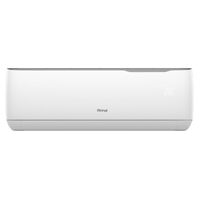
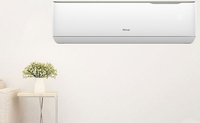
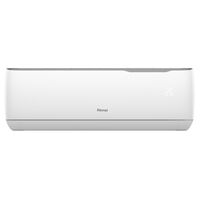
Rinnai HSNRT25B | T Series | 2.6kW Reverse Cycle Split System
Now $658.90
$599.00 ex. GST
Search Results:
Search Results:
A split system separates the noisy compressor from the room-side fan unit. The outdoor unit houses the compressor, condenser coil and fan. The indoor unit holds the evaporator coil, blower and controls. Refrigerant lines and a low-voltage cable run between them. Heat moves from one coil to the other through the refrigerant cycle, which lets the same hardware cool in summer and heat in winter.
The indoor head wall-mounts inside the room and is the part you interact with. The outdoor condenser sits outside on a wall bracket or a slab. Copper pair coil carries refrigerant between the two units, and a drain line removes condensate from the indoor coil. The inverter compressor varies its speed to match the load instead of cycling on and off, which is how modern systems hold a steady room temperature.
Split systems suit Australian housing because they require no ductwork, install in a day, and let you condition only the rooms you use. They handle Queensland humidity well, run quietly enough for bedrooms, and the reverse cycle function replaces a separate heater in winter. For apartments where ducted systems are impractical, a wall-mounted split is often the only viable option.
Rinnai is a Japanese appliance manufacturer with a long Australian presence in hot water and gas heating. Its split system range includes the entry-level T Series, the mid-tier P Series and the premium Q Series. Browse the full Rinnai range at Sparky Direct, including parts and accessories.
The T Series is positioned as the value entry into the Rinnai split system line-up. The Rinnai P Series sits above it with Gold Guard anti-corrosion coating for coastal installations. The Q Series is the top-tier line. For most suburban and inland sites, the T Series covers the same room sizes at a lower price point and includes the same R32 refrigerant and inverter compressor.
Compared to Daikin, Mitsubishi Electric and Fujitsu, the T Series competes mainly on price-to-feature ratio rather than peak energy ratings. The premium Japanese brands typically push higher star ratings and quieter indoor sound levels. The T Series matches them on R32 refrigerant, inverter operation and Wi-Fi control, but at a lower outlay.
The T Series suits bedrooms, home offices, apartments and small-to-medium living areas where the unit runs daily but does not need premium-tier features. It is a strong fit for rental properties, granny flats and second-room installations where you want reliable inverter performance without paying for top-tier sound ratings or coastal coatings.
The T Series spans the standard residential capacity range. Each model is sized for a typical room area, though ceiling height, insulation and window orientation all shift the real-world result.
| Model | Cooling Capacity | Typical Room Size | Best For |
|---|---|---|---|
| HSNRT25B | 2.6kW | Up to 20m² | Bedrooms, small offices |
| HSNRT35B | 3.5kW | 20 to 30m² | Master bedrooms, studies |
| HSNRT50B | 5.2kW | 30 to 45m² | Lounges, family rooms |
| HSNRT70B | 7.0kW | 45 to 60m² | Open-plan kitchen-living |
| HSNRT80B | 8.0kW | 60 to 80m² | Large open-plan areas |
For bedrooms and offices under 20 square metres, the 2.6kW HSNRT25B is the standard pick. An oversized unit in a small room cycles too fast and fails to dehumidify properly, leaving the air clammy. Match the capacity to the room.
For lounges and family rooms in the 30 to 45 square metre range, the 5.2kW HSNRT50B is the workhorse. Open-plan living areas combining kitchen, dining and lounge usually need the 7.0kW or 8.0kW unit, especially in north-facing rooms with large windows.
Airflow throw matters as much as raw capacity. A 5.2kW unit can struggle to push cooled air to the far end of a long, narrow room even when the kilowatt rating looks correct on paper. For rooms longer than about 8 metres, look at louvre direction, or consider a higher-capacity model with stronger fan output.
Sizing starts with the room area in square metres. Multiply length by width, then apply a kilowatts-per-square-metre rule. From there, adjust for ceiling height, insulation quality, window area and orientation, and the climate zone. Get the sizing wrong in either direction and the system will underperform.
A common rule of thumb is 0.13 to 0.15kW per square metre for cooling. So a 25 square metre bedroom needs roughly 3.2 to 3.7kW, which puts it in the 3.5kW HSNRT35B range. This rule assumes standard 2.4 metre ceilings, average insulation and modest window area. Tropical climates and poorly insulated rooms push the number higher.
Queensland and northern New South Wales sit in a hot, humid climate zone. Add 15 to 20 percent to the calculated capacity for these regions, particularly for west-facing rooms or rooms with single-glazed windows. The unit needs the extra headroom to handle peak afternoon loads in summer.
Reverse cycle units list separate ratings for cooling and heating. Heating output is usually slightly higher than cooling output on the same unit. In southern climates with cold winters, size to the heating load rather than the cooling load. In Brisbane and further north, sizing to the cooling load is the safer approach.
Inverter compressors vary speed to match the cooling load. Older fixed-speed units run at full output until the room cools, then switch off entirely, and repeat. Inverter units ramp down once the setpoint is reached and hold a steady temperature on low power, which uses less electricity and produces less temperature swing across the day.
R32 is the current standard refrigerant for new residential split systems in Australia. It has roughly one-third the global warming potential of the older R410A refrigerant, transfers heat more efficiently, and requires a smaller refrigerant charge per kilowatt of capacity. All current T Series models use R32.
Most T Series models ship with Wi-Fi built into the indoor unit. The Rinnai app lets you start, stop and schedule the unit from your phone, set timers, and view runtime data. This is useful for warming up a bedroom before you get home or for confirming the kids actually turned it off after school.
The T Series uses standard washable filters that catch dust and pollen. Most models include a self-clean function that runs the indoor coil through a drying cycle after cooling operation, which reduces mould build-up on the coil and limits the musty smell that older units develop. Filters still need manual cleaning every few weeks during heavy use.
Sleep mode gradually adjusts the setpoint by a degree or two over the night so the room stays comfortable without overcooling. Onboard timers let you set on/off schedules without the app. The unit also responds to the demand response signal (DRED) used by some electricity retailers for peak-load reduction.
Star ratings on the T Series sit in the standard residential band. The smaller capacity units typically rate higher than the larger ones because peak-load efficiency is harder to maintain at scale. Always check the Zoned Energy Rating Label for your climate zone, as a unit rated well in mild zones may rate lower in hot zones.
A 3.5kW inverter split system running about 8 hours a day in summer typically draws between 0.7kW and 1.2kW on average once the room is at setpoint. At a residential rate of around 30 cents per kilowatt-hour, that works out to roughly $1.70 to $2.90 per day during heavy use. Smaller bedrooms and well-insulated rooms run at the lower end of that range.
The gap between an entry-tier inverter and a top-tier inverter is usually 10 to 20 percent on running cost. Over a 10-year service life, that gap can offset the higher upfront price of a premium unit, but only in households that run the system heavily. For occasional use, the upfront price difference rarely pays back.
DRED-capable units can be remotely throttled during peak demand events by participating electricity retailers, in exchange for bill credits. The T Series supports this protocol on the larger capacity models. Whether you can use it depends on your retailer offering a compatible plan in your area.
Licensed installation required: Split system air conditioners must be installed by a licensed electrician for the electrical connection, and a licensed refrigeration mechanic (with an ARC tradesperson licence) for the refrigerant work. DIY installation breaches the Australian Refrigeration Council licensing rules and the requirements of AS/NZS 3000:2018, voids warranty, and may invalidate home insurance.
Standard back-to-back installation in Brisbane (where the indoor unit goes on the outside wall directly behind the outdoor unit) typically runs from $700 to $1,200 for a single split. Add cost for longer pipe runs, extra brackets, second-storey access, electrical sub-circuit upgrades or core-drilled wall penetrations. Always get a written quote that itemises pipe length, materials and electrical work.
Smaller units (2.6 to 5.2kW) usually run from a dedicated 10A or 15A circuit. Larger units (7.0 to 8.0kW) often need a 20A circuit. The installer must verify spare capacity in the switchboard, run the dedicated circuit if needed, and install RCD protection per AS/NZS 3000:2018. A standard general power outlet on a shared circuit is not acceptable for fixed-wired installations.
Indoor units perform best high on an internal wall, away from direct sunlight on the sensor and clear of furniture that blocks airflow. Outdoor units need clear space around them for airflow, a stable mounting surface, shade from afternoon sun where possible, and protection from heavy rain runoff. Avoid mounting outdoor units in sealed enclosures, which trap recirculated air and reduce efficiency.
A standard install takes a single tradesperson 4 to 6 hours, or two tradies for 2 to 3 hours. The work involves drilling a 65mm wall penetration, mounting both units on brackets, and running pair coil and drain line. The installer then vacuums the system, releases refrigerant, connects electrical, and commissions the unit through a test cycle. Plan for some mess from the wall penetration.
A reverse cycle unit uses the same refrigerant circuit for heating and cooling, with a four-way valve that flips the direction of heat transfer. In summer it pulls heat out of the room and dumps it outside. In winter it pulls heat from outside air (even cold air contains some) and releases it inside. This is the same principle as a heat pump.
Reverse cycle heating typically delivers 3 to 4 kilowatts of heat output per kilowatt of electrical input. Electric resistance heaters (panel heaters, fan heaters, oil column heaters) deliver only 1 kilowatt of heat per kilowatt of electricity. Reverse cycle is also cheaper to run than gas heating in most metropolitan electricity and gas markets.
In tropical and subtropical zones (Brisbane, Northern New South Wales, far north), heating demand is light and any inverter unit handles it easily. In temperate zones (Sydney, Melbourne, Adelaide, Perth), heating performance becomes more important. In alpine and inland zones with sub-zero overnight winter temperatures, heating output drops as outdoor temperature falls, and you may need to size up.
If the room is in a southern climate, has poor insulation, or is below ground level, size to the heating capacity rather than the cooling capacity. A 5.2kW cooling unit may only deliver 5.5kW of heating at +7°C ambient, dropping further as the outdoor temperature falls. Choose the next size up if winter heating is the primary use case.
Daikin and Mitsubishi Electric units typically rate half a star to a full star higher on energy efficiency. They also run a few decibels quieter on the lowest fan speed and command a 20 to 40 percent price premium. For light-to-moderate use, the cost difference takes years to recover through energy savings. For heavy daily use in a hot climate, the premium units pay back faster.
| Brand Range | Refrigerant | Wi-Fi | Positioning |
|---|---|---|---|
| Rinnai T Series | R32 | Built-in (most models) | Value entry-tier inverter |
| Daikin Split System | R32 | Adapter or built-in | Premium efficiency-focused |
| Mitsubishi Electric | R32 | Adapter required on most models | Premium build quality |
| Fujitsu Split System | R32 | Adapter required | Mid-to-premium tier |
| Haier Split System | R32 | Built-in (most models) | Value tier with feature parity |
Split systems are quieter, more efficient, and more powerful than window-rattler or portable units of the same nominal capacity. Portables vent through a flexible hose out a window, which leaks conditioned air back out and limits real-world performance. Window units block the window and disrupt insect screens. Split systems avoid both problems.
A single split conditions one room. If you need three or four rooms cooled, you can either install three or four single-split systems or one multi-split system that runs multiple indoor heads off a single outdoor unit. Multi-splits save outdoor wall space but cost more upfront and create a single point of failure if the outdoor compressor fails.
T Series pricing varies by capacity and retailer. The 2.6kW unit sits at the entry of the range, and the 8.0kW unit at the top end. Pricing is generally lower than equivalent Daikin or Mitsubishi Electric models, which is the core market positioning of the line. Check current pricing on the Rinnai T Series category page.
Online electrical wholesalers consistently undercut bricks-and-mortar appliance retailers on split systems. The wholesaler model strips out showroom overhead and brand-tie-up exclusivity. Watch for the difference between supply-only and supply-and-install pricing, which can confuse the comparison.
Installation is often the second-largest line on the total quote after the unit itself. A standard back-to-back install is the cheapest scenario. Expect surcharges for second-storey installs, longer pipe runs (over 5 metres), brick wall penetrations needing core drilling, and switchboard upgrades. Always get the install quote in writing before committing.
Buying the unit online from a trade supplier and arranging your own licensed installer can save 20 to 30 percent compared to a retail bundle. The trade-off is that you coordinate two parties: the supplier delivers the unit, and the installer commissions it. For people comfortable with that coordination, the savings are real.
Total cost of ownership includes the unit, installation, electricity over the service life, filter replacements, and one or two professional services across a 10-year span. The unit price is typically only 35 to 45 percent of the lifetime cost. Cheap units that run inefficiently can cost more over 10 years than premium units that run efficiently.
Pop the front cover of the indoor unit, remove the filters, vacuum off loose dust, and rinse them in warm water with a mild detergent. Let them dry fully before reinstalling. Clean filters every 4 to 6 weeks during heavy use, or monthly if the household has pets or sits in a dusty area. Dirty filters reduce airflow and force the compressor to work harder.
A professional service every 12 to 24 months keeps the system running at rated capacity. The technician chemically cleans the indoor coil, clears the drain line, checks refrigerant pressures, inspects electrical terminations, and tests the capacitor. Skipping service eventually results in reduced output, higher running cost, and water leaks from blocked drains.
Keep the original tax invoice, the installer's commissioning paperwork, and a record of any servicing. Rinnai requires installation by a licensed tradesperson for warranty to apply. Use Rinnai-approved parts for any repairs. Avoid running the system at extreme setpoints (16°C cooling, 30°C heating) which forces the compressor to operate at the edge of its envelope.
Wi-Fi is genuinely useful if you want to pre-cool a room before you arrive home, or if you have a holiday property to manage remotely. Self-clean is useful in humid coastal climates. DRED is only relevant if your retailer offers a participating tariff. Ignore feature lists that do not connect to how you will actually use the unit.
The most common mistake is undersizing to save on the unit price, then running the unit flat-out for years and replacing it early. The second is overspending on premium tier features in a room that gets light use. The third is buying online without confirming local installer availability before delivery, leaving the unit sitting in a box for weeks.
Before you order, decide where the indoor and outdoor units will go. Confirm the wall material (brick, weatherboard, fibre cement) for drilling. Check that the switchboard has spare capacity and a free RCD-protected circuit. Larger units need their own dedicated circuit. Get the installer to walk through the plan with you before purchase.
Order the unit from a trade supplier, take delivery, and arrange installation with a licensed local tradesperson. Confirm the unit model, refrigerant type and warranty terms before checkout. Ask the supplier whether installation kits, brackets, or pair coil are included or sold separately. For installation accessories, browse air conditioning accessories, pair coil, and wall brackets.
Watch Rinnai HSNRA80 | 8.0 KW Reverse Cycle Split System Air conditioner | R410A video
Watch Daikin FTXV25WVMA-KIT | 2.5KW Reverse Cycle Split System Air conditioner R32 video
Watch Mitsubishi Electric Air Conditioner Split System 2.5 KW Cooling - 3.2 Kw Heating | MSZ-AP25VGD video

Once I found Sparky Direct I have never needed to look elsewhere. Fast, reliable, great communication services and most importantly cheapest prices going round. If you see this review you are lucky :) thank you
I have installed several brands of Split systems, The Rinnai not only is it extremely quiet it brings the room to temperature very fast. The price is amazing for the quality system.
I bought this unit a couple of months ago ago so have be3n using it since then so pleased with the cost efficiency quite unit neat I’m now looking to buy another unit
Quality products in stock • Fast Australia-wide delivery • Competitive trade pricing
Browse Rinnai T Series → Get Expert Advice →Yes. During cooling mode, Rinnai T Series units help remove excess moisture from the air, improving indoor comfort.
Rinnai T Series air conditioners are available from Sparky Direct, offering access to genuine products.
Delivery availability depends on the supplier and location, with options commonly available across metropolitan and regional Australia.
Yes, subject to building approvals, outdoor unit placement, and assessment by a licensed installer.
Yes. Rinnai T Series air conditioners are supplied with a manufacturer’s warranty when installed and operated in line with Australian guidelines.
Consider room size, required capacity, energy efficiency, noise levels, and access to licensed installation services.
Yes. Reverse-cycle operation allows the Rinnai T Series to deliver effective heating and cooling throughout the year.
Electricity use depends on system size, energy rating, thermostat settings, and usage habits. Inverter technology helps reduce unnecessary power consumption.
With correct installation and regular maintenance, a Rinnai T Series air conditioner can provide reliable performance for many years.
Some Rinnai T Series models offer optional Wi-Fi control, allowing remote operation via compatible smartphone applications.
Larger capacity Rinnai T Series models can be suitable for open-plan areas when correctly sized for the total space.
Yes. Quiet performance and consistent temperature control make them suitable for sleeping areas.
Routine servicing is generally recommended every 12 months, or more frequently in high-use or dusty environments.
The Rinnai T Series is a range of split system air conditioners designed for residential use, providing reverse-cycle heating and cooling for individual rooms and living areas.
Most models include a user-friendly remote control with clear settings for temperature, fan speed, and operating modes.
Yes. Rinnai T Series air conditioners are designed for low noise operation, making them suitable for bedrooms, living rooms, and study areas.
Yes. Installation must be carried out by licensed refrigeration and electrical professionals to ensure safety, performance, and compliance.
Many Rinnai T Series models use R32 refrigerant, which has a lower global warming potential compared to older refrigerants.
Most residential Rinnai T Series models operate on single-phase power, with electrical requirements confirmed by a licensed electrician.
Yes. Rinnai T Series air conditioners are reverse-cycle systems, providing cooling in summer and heating in winter.
Yes. Rinnai T Series air conditioners use inverter technology to adjust compressor output, improving temperature stability and reducing energy consumption.
Suitable room size depends on the unit’s kilowatt capacity, room dimensions, insulation, ceiling height, and overall heat load.
Energy efficiency varies by model and capacity, with Rinnai T Series units offering competitive energy ratings under Australian energy labelling requirements.
Rinnai T Series air conditioners supplied in Australia are designed to meet applicable AS/NZS electrical and safety standards when installed by licensed professionals.
Yes. Rinnai T Series air conditioners are designed to operate reliably in Australian climates, including hot summers and cooler winter temperatures.