
Search Results:
Search Results:
Search Results:
Search Results:
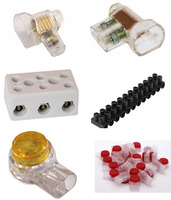
The screw connector family covers several distinct product styles. Each style suits a different cable size, current rating, and installation environment. Choosing by physical size alone is one of the most common specification errors on the trade counter.
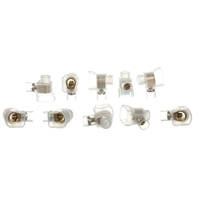
Single screw connectors use one clamping screw per conductor entry. They suit standard active and neutral joins inside junction boxes on residential and light commercial circuits. Single screw connectors commonly carry a 32A rating and accept twin and earth cable sizes used in domestic work. The brass barrel and thermoplastic housing make them reusable and inspectable.
Double screw connectors add a second clamping screw per terminal for improved mechanical retention. The extra contact point reduces conductor pull-out under vibration. Double screw connectors suit earth terminations, heavier cable joins, and locations where the connection may be subject to movement over time. Matching cable size and current rating remains essential.
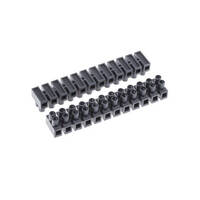
Terminal strips group several screw terminals into a single moulded body. They organise terminations in control panels, switchboards, and equipment enclosures. Strip connectors make labelling, fault-finding, and inspection more straightforward than loose individual connectors. Pole count, terminal pitch, current rating, and enclosure depth all need to match the installation.
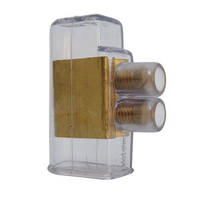
Heavy duty screw connectors handle larger conductor cross-sections and higher current ratings. They appear in three-phase equipment, switchboard tails, workshop wiring, and industrial machinery. Cable sizes from 16mm² through 35mm² and above are common in this range. The rating still has to match the circuit and the protective device upstream.
Ceramic screw connectors use a porcelain or ceramic housing instead of thermoplastic. The ceramic body resists higher operating temperatures and suits installations near certain luminaires, heating elements, and industrial heat sources. Suitability still depends on the connector rating, the enclosure, and the operating environment around the connection.
The term BP connector is Australian trade shorthand for screw-type cable joiners, particularly the blue-point single screw style used in lighting and power work for decades. BP connectors sit inside the broader screw connector family alongside terminal strips, individual connectors, and fixed terminal blocks. Searches under different names often describe the same product.
Selection comes down to current rating, cable capacity, conductor type, housing material, and environment. Working through these in order avoids most field problems.
The connector current rating must equal or exceed the circuit load and the protective device rating upstream. Common ratings in this range include 32A and 40A for single screw connectors. Heavy duty styles climb to 50A, 80A, and above. An undersized connector heats up under load, loosens, and can fail prematurely.
Cable capacity is given in mm² of conductor cross-section. Common Australian residential and light commercial sizes include 1mm², 1.5mm², 2.5mm², 4mm², and 6mm² in twin and earth configurations. The connector must accept the conductor without forcing copper into an undersized barrel. The number of conductors per terminal also has a manufacturer limit.
Screw connectors work with both solid and stranded conductors when correctly rated and installed. Stranded conductors may benefit from a ferrule on fine-stranded flexible cables. The ferrule prevents stray strands from escaping the terminal and produces a more reliable clamp. Termination work on fixed wiring must be carried out by a licensed electrician under AS/NZS 3000.
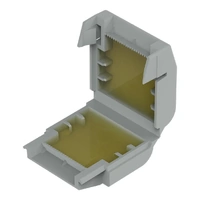
The connector itself is rarely the full environmental protection system. The surrounding junction box or IP-rated enclosure handles moisture and dust ingress. Ceramic housings address higher temperature locations such as roof spaces, plant rooms, and equipment close to heat sources. Gel connectors offer an alternative for damp underground and outdoor joints.
Push-in and lever connectors have grown in popularity for fast lighting and equipment work. Neither style is universally better. The right choice depends on the cable, the current, and the inspection requirements.
Screw connectors suit higher current applications, larger cable sizes, and joins that need to be retightened or inspected over time. They remain familiar to most Australian electricians and produce a verifiable mechanical clamp. Long-service installations and vibration-prone environments tend to favour the screw connection.
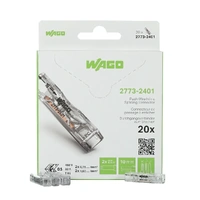
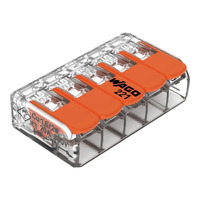
Push-in and WAGO lever connectors can be quicker for fine stranded conductors and tight ceiling junction boxes. They suit lighting circuits, prewired downlights, and compact multi-way connections. Current and conductor ratings on the specific product still need to match the circuit.
Terminal strips organise multiple circuits in one body. They suit control panels, switchboards, and equipment wiring where labels and fault-finding matter. Individual screw connectors remain the simpler choice for one-off joins inside a junction box. A full strip in a small junction box can waste space.
| Connector Style | Best For | Limitation |
|---|---|---|
| Single Screw | Standard active and neutral joins, 32A circuits | One clamp point per conductor |
| Double Screw | Earth bonds, vibration, heavier cable | Larger body, costs more per join |
| Terminal Strip | Control panels, switchboards, labelled circuits | Less suited to single-join junction boxes |
| Heavy Duty | Three-phase, switchboard tails, industrial | Requires deeper enclosures |
| Ceramic | Higher-temperature locations near heat sources | More brittle than thermoplastic |
| Push-In / Lever | Fine stranded, lighting, tight spaces | Current and cable rating limits |
Trust on a category page like this comes from getting the safety position right. Screw connectors are everyday electrical components, but the rules around them are not optional.
Screw connectors can be used in Australian installations when they are correctly rated, correctly enclosed, and installed in accordance with AS/NZS 3000 by a licensed electrician. Connectors must be protected from mechanical damage. They must remain accessible where inspection is required by the wiring rules. Choosing compliant products from reputable suppliers reduces the risk of underrated or non-compliant parts.
Work on fixed electrical wiring in Australia must be carried out by a licensed electrician. Homeowners, apprentices, and trade buyers can purchase screw connectors and related parts. Installation, alteration, and connection of fixed wiring must comply with state and territory licensing legislation.
Correct conductor stripping, screw torque, enclosure selection, and post-installation testing are the responsibility of the installing electrician. Loose terminations and exposed copper outside the connector body are unsafe. This page does not give procedural wiring instructions, by design.
Three mechanisms account for most loose connections. Thermal cycling expands and contracts the conductor inside the barrel. Vibration in commercial and industrial sites slowly works the screw open. Conductor creep, particularly in aluminium, allows the copper to relax under sustained pressure. Discolouration, melting, or a burning smell indicates a connection that needs professional inspection.
Use case drives connector selection more than brand. The same product can be the right answer in a ceiling rose and the wrong answer in a switchboard.
Lighting extensions, power circuit additions, and ceiling junction box repairs make up most domestic screw connector use. 1mm², 1.5mm², and 2.5mm² electrical cables dominate this work. The connector sits inside an accessible junction box rather than buried in plaster.
Heavier-duty connectors and double-screw styles appear at switchboards, earth bars, and main cable joins. Switchboard work is licensed electrical work without exception. Cable sizes step up to 16mm², 25mm², and 35mm² in this part of the installation.
Shop fit-outs, office refurbishments, and lighting grid modifications rely on quick, reusable joins. Screw connectors give the maintenance team an inspectable, retightenable connection. Bulk packs help contractors hold consistent stock across vans and project sites.
Control panels, HVAC plant rooms, and machinery wiring use terminal strips and labelled connection points heavily. Vibration, ambient heat, and conductor count all influence the connector specification. Internal links to cable lugs, crimping tools, and DIN rail components support this side of the trade.
Volume buyers care about three things on a category page: range depth, pack sizes, and how quickly the stock arrives. The points below cover the practical buying side.
Confirm the connector type first: single screw, double screw, strip, heavy duty, or ceramic. Then check current rating, cable capacity, housing material, and pack quantity against the job. Look at brand and compliance documentation. National Light Sources, WAGO, Clipsal, Major Tech, and CABAC are common in the Australian connector aisle.
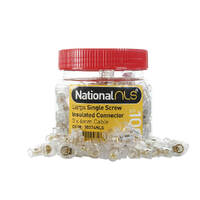
Contractors buy in boxes and jars for a reason. Trade packs of 50 or 100 connectors keep van stock consistent across the team. Bulk pricing reduces the per-unit cost on jobs that consume 20 or more connectors in a day. Fewer supply delays beat saving a few dollars on a single jar.
Electrical wholesalers and online suppliers usually carry a deeper range than general hardware stores. Trade pack quantities, brand depth, and connector-specific specifications tend to be more reliable online. Stock availability across cable sizes and ratings is the more important comparison than headline price alone.
Screw connectors rarely ship alone. Cable glands, electrical tape, and heat shrink tubing often go on the same order. Quick connect terminals, insulation testers, and insulated screwdrivers round out the kit.
Connectors fail in predictable ways. The signs are visible to a tradesperson who knows what to look for.
Screw connectors are generally reusable when undamaged, clean, and mechanically sound. Any connector showing heat damage, thread damage, cracked housing, or corrosion should be replaced. A licensed electrician should assess reuse in fixed wiring. The cost of a new connector is trivial against the risk of a heated join.
The most frequent specification errors are choosing by physical size instead of current rating, using standard thermoplastic in high-heat locations where ceramic is needed, and mixing too many conductors into a single terminal. Buying unknown brands with unclear compliance documentation comes a close fourth. None of these errors save real money on a job.
Safety reminder: Any work on fixed electrical wiring in Australia must be carried out by a licensed electrician. The information on this page supports product selection and specification only. It is not a wiring guide.
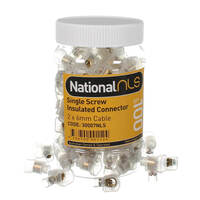
Watch NLS 30007 | Single Screw Cable Connector 32 Amp | (100 Jar) video
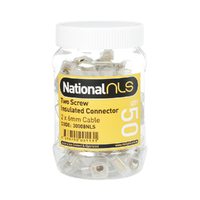
Watch NLS 30008 | Two Screw Insulated Electrical Connector (50 Per Jar) video
Watch NLS 30398 | 2 X 16mm Heavy Duty Double Screw Connector video

Excellent product, good price, versatile usage. Trusted brand. Cables fit in really good. Been using this brand of connector since i know Sparky Direct!
The 16 mm heavy duty connectors were perfect for my solar panel array and are easy to use and well insulated against shorting. Reasonably priced they arrived quickly from interstate . I recommend the seller and the connectors highly.
Another quality product from NLS. Everywhere as good as the more expensive brands and easy to use. Great size pack and a must have for any professional/handyman.
Quality brands in stock • Fast Australia-wide delivery • Competitive trade pricing
Browse Screw Connectors → Get Expert Advice →