
Search Results:
Search Results:
Search Results:
Search Results:
Find the best Clipsal ArcFault Detection products here at Sparky Direct. [ Read More ]

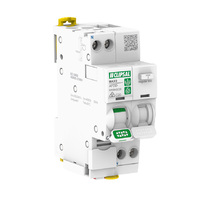
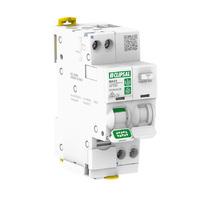
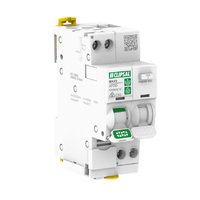
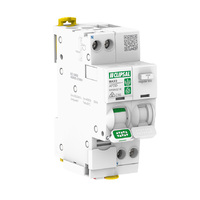
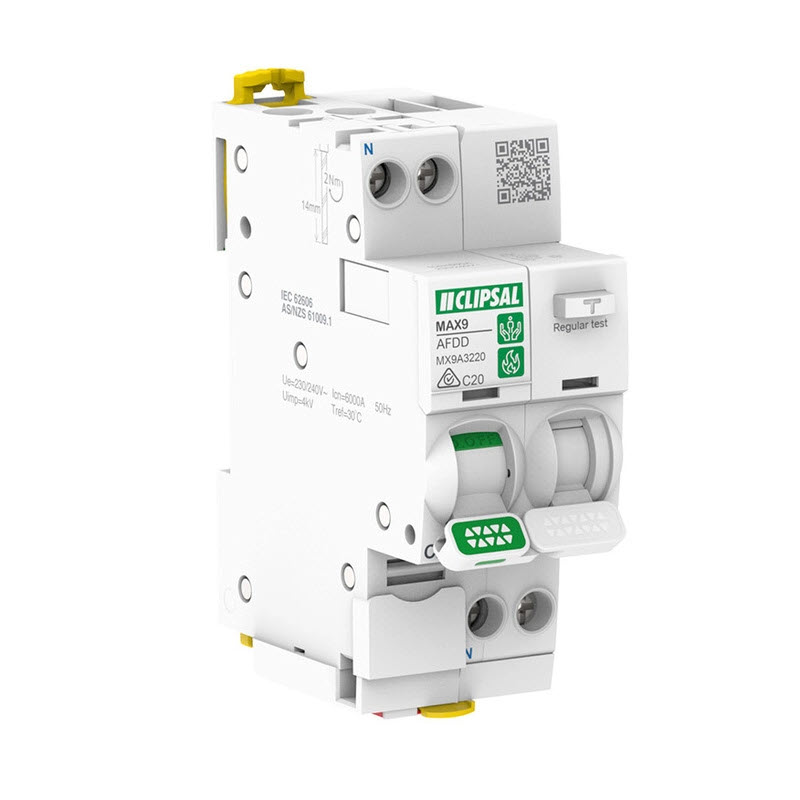
Clipsal AFDDs, sometimes labelled AFDD RCBOs, are DIN rail devices that monitor electrical waveforms and disconnect the affected final subcircuit when a dangerous arc is identified. Unlike standard MAX9 circuit protection, they target the small arcing faults that often precede an electrical fire.
The category suits licensed electricians, switchboard installers and facilities teams comparing fire-safety upgrades for Australian homes, commercial sites and high-risk buildings. These devices are not a DIY product. Selection, installation and testing must be carried out by a licensed electrician working to AS/NZS 3000.
An AFDD is a protective device that monitors current waveforms for arc fault signatures. When a dangerous arc is detected on the final subcircuit, the device trips and isolates the circuit before heat can ignite surrounding materials.
In North American documentation the same device is often called an Arc Fault Circuit Interrupter, or AFCI. The function is similar. The purpose is fire prevention, not personal shock protection or simple overload protection.
A Clipsal AFDD RCBO combines four protection functions in a single DIN rail device. It provides arc fault detection, overload protection, short circuit protection and 30mA residual current protection.
The device continuously analyses current behaviour on the protected circuit. It identifies abnormal high-frequency arc signatures, then trips before sustained heat can ignite cable insulation, terminals or nearby combustible materials. There is no safe way for end users to simulate arc faults at home. Trip testing should follow the manufacturer instructions and be performed by qualified personnel.
Damaged cables, poor terminations, rodent damage, crushed wiring and ageing insulation can create arcing faults below the trip threshold of standard single pole circuit breakers. The fault may smoulder for hours before ignition.
AFDDs are particularly relevant during switchboard upgrades, full or partial rewiring, aged care work, heritage buildings and commercial risk assessments. They are designed to detect the early electrical signatures of a developing fire rather than wait for a large fault current.
MCBs, RCDs, RCBOs and surge protection devices each solve different protection problems. None of them are designed to detect the small, intermittent arcing that often starts an electrical fire. That is the gap an AFDD is intended to close.
Understanding the difference helps electricians and informed buyers decide where AFDDs are worth adding to a switchboard design, and where existing protection is already appropriate.
A series arc fault is arcing in line with a load. Typical causes include damaged conductors inside flexible cords, loose screw terminals on accessories, fractured wiring inside walls and broken strands at connection points.
Series arcs often do not draw enough current to trip a standard MCB. The circuit appears to be operating normally, while the arcing connection is producing localised heat that can ignite nearby insulation, dust or timber.
A parallel arc fault is arcing between active and neutral, or between active and earth. The fault current may be higher than a series arc, with faster ignition potential.
Parallel arcs can be caused by punctured cables, crushed cables, nail or screw penetrations during renovations and degraded insulation. An AFDD aims to detect the unique waveform of an arc rather than rely on overload current alone.
The protection functions break down into clear categories that licensed electricians use during switchboard design.
| Device | Primary protection | What it does not cover |
|---|---|---|
| MCB | Overload and short circuit protection. | Earth leakage and arc faults. |
| RCD | Earth leakage and electric shock protection. | Overload, short circuit and arc faults. |
| RCBO | RCD plus MCB protection in a single device. | Arc faults. |
| AFDD RCBO | Arc fault detection plus RCBO style protection. | Surge events: a separate SPD is still required. |
An AFDD adds fire-risk detection that the other devices are not designed to provide. It does not replace surge protection, and it does not replace good cable selection or proper installation.
AFDDs are not required on every circuit in every building. They are most useful where the consequences of an electrical fire are severe, or where wiring conditions raise the probability of an arc fault developing over time.
Licensed electricians typically recommend AFDDs as part of a wider switchboard protection strategy, alongside Clipsal MAX9 and Resi MAX circuit protection, suitable RCBOs and correctly rated MCBs.
Older homes with deteriorated cable insulation, rodent damage, hidden cable damage from past renovations and ageing appliance cords are common candidates. Switchboard upgrade projects are a natural time to specify AFDDs because the board is already open and the work is scoped.
If a homeowner asks whether arc fault detection is needed for a renovation, the honest answer is risk based. AFDDs are not a blanket Australian requirement for all homes, but they are a sound option where the wiring history is uncertain or the building contents are valuable.
Aged care facilities, supported living homes, dormitories and sleeping accommodation have a higher human risk profile. Occupants may not respond quickly to an electrical fire, particularly at night.
Professional risk assessment should guide specification. The licensed electrician and the facility manager work together to decide which circuits benefit most from AFDD protection, and how the devices integrate with existing fire detection.
Schools, childcare centres, dormitories, restaurants, cinemas, shopping centres, offices and accommodation venues all carry both safety and business continuity risk. An undetected arc fault can cause damage that closes the venue for weeks.
AFDDs on final subcircuits in high-risk areas reduce that exposure. They are commonly added to lighting circuits, general purpose outlets in storage areas and circuits that supply appliances with flexible cords.
Museums, galleries, archives, timber-framed buildings, woodworking workshops, rural buildings and sites storing combustible materials carry severe fire consequences. The contents are often irreplaceable.
AFDDs are useful in these environments because they can detect a developing arc before any visible smoke or smell appears. Specification is usually done as part of a fire engineering review or insurance risk assessment.
Clipsal AFDDs sit within the broader Clipsal MAX9 product family, alongside MAX4 components used in residential and light commercial work. The two ranges share a common DIN rail platform and are designed to integrate with existing Clipsal switchboard components.
Catalogue numbers, stock and compatibility should always be confirmed before ordering. Product datasheets are the definitive source for breaking capacity, curve type and certification.
The MAX4 range covers Clipsal AFDD and RCBO devices suited to residential and light commercial switchboards. Common current ratings include 6A, 10A, 16A, 20A and 25A, matched to typical final subcircuit loads.
MAX4 AFDDs are a natural fit where MAX4 circuit protection components are already used in the board. This keeps the switchboard ecosystem consistent and simplifies future maintenance.
MAX9 AFDD plus RCBO devices are compact DIN rail products aimed at higher specification residential and commercial installations. Catalogue numbers in this family follow the MX9 prefix pattern, including ratings such as MX9A3206, MX9A3210, MX9A3216, MX9A3220 and MX9A3225 where stocked.
Common specifications include 30mA Type A residual current protection, C curve circuit protection where specified, and 6kA breaking capacity where the datasheet confirms it. Final values must be read from the current product datasheet, not assumed from older documents.
The choice between MAX4 and MAX9 depends on the existing switchboard ecosystem, available DIN rail space, current rating, connected load, required circuit protection and project specification. Electrician preference and stock availability also play a role.
Neither range is universally better. The right choice is the one that matches the design current of the protected circuit, the prospective fault current of the installation and the existing Clipsal hardware already in the board.
The Australian regulatory position on AFDDs has been shaped by AS/NZS 3000:2018, including the wording at Clause 2.9 and Appendix O, and by the international standard IEC 62606. Together these define what an AFDD is, how it should be tested and where it should be considered.
Standards change over time. Licensed electricians should confirm the current edition and any amendments before specifying AFDDs on a project.
In Australia, AFDDs are recognised and recommended for certain higher-risk scenarios under AS/NZS 3000:2018. They are not universally mandatory for all homes or all final subcircuits.
New Zealand has different requirements under the same standard. AFDDs are required for specified high-risk locations in New Zealand installations, so the two countries should not be treated as equivalent. Always confirm with the relevant state, territory or national regulator before claiming a legal obligation.
The standard identifies higher-risk locations where AFDDs should be considered. These include sleeping accommodation, fire-propagating structures, areas storing combustible materials, locations with deteriorated wiring and heritage buildings.
Alterations to final subcircuits and full switchboard upgrades are practical decision points. They are the moments when adding an AFDD has minimal additional labour cost compared with retrofitting later.
AFDDs must be installed in the switchboard supplying the protected final subcircuit. They are not appliance-level devices and they are not designed for tenant or homeowner installation.
Selection, installation, testing and fault investigation must be completed by licensed electricians in line with AS/NZS 3000 and relevant state or territory regulations. The board work itself is covered by the same compliance regime as other switchboard installations.
AFDD selection follows the same logic as any DIN rail protective device. The rating must match the circuit design current, the breaking capacity must match the prospective fault current, and the device must integrate with the rest of the switchboard.
The following selection criteria give electricians and informed trade buyers a practical framework. They are not a substitute for the AS/NZS 3000 design process or the manufacturer datasheet.
Current rating must match the circuit design current and the cable protection requirements set by AS/NZS 3000 and AS/NZS 3008. Common rating use cases include 6A and 10A for lighting and light final subcircuits, 16A for selected general purpose circuits, and 20A or 25A for higher load final subcircuits where the design supports it.
Always confirm the product datasheet and the circuit design before purchase. A 20A AFDD specified for a 32A circuit will trip on normal load.
Modern Clipsal AFDD RCBOs incorporate Type A residual current protection. This detects AC and pulsating DC leakage currents, which is important for circuits supplying inverter-driven appliances, LED drivers and modern electronics.
30mA is the standard personal protection sensitivity for RCD and RCBO circuits in Australian installations. The same sensitivity applies in most AFDD RCBO products designed for the Australian market.
6kA breaking capacity is common in Clipsal MAX9 AFDD RCBO products. The installation electrician should confirm the prospective fault current at the switchboard location and select a device with adequate breaking capacity.
DIN rail mounting is standard. Compatibility with the MAX4 or MAX9 ecosystem matters where the board already uses Clipsal busbar systems or matching electrical enclosures. Mixed-brand boards are possible but add design complexity.
Before ordering, confirm the exact catalogue number, amp rating, quantity, current availability, delivery speed and compatibility with the existing board. AFDD models change over time, so old part numbers may be replaced by newer equivalents.
Sparky Direct is an online Australian electrical wholesaler with trade-aligned supply and transparent product information. Catalogue numbers, ratings and stock levels are listed against each product page, which helps reduce the risk of ordering a non-equivalent replacement.
This section is intentionally non-instructional. The purpose is to set the right expectations for the building owner or facilities manager, not to substitute for a licensed electrician.
Switchboard work is not DIY in Australia. State and territory regulations require a licensed electrician for any work inside a switchboard, including the installation of an AFDD.
At a high level, installation involves isolating the supply, fitting the device to the appropriate DIN rail position, connecting the protected subcircuit, labelling the new device and verifying correct operation. The board must be left in a safe, compliant state.
The licensed electrician will also confirm that the new device does not compromise the discrimination strategy of the board, and that downstream cables are appropriately rated for the new protection.
Clipsal AFDDs include a built-in test function. Correct operation must be verified at commissioning, with results recorded as part of compliant electrical work.
Test results and circuit details should be documented. This documentation supports future maintenance, insurance claims and any future modifications to the board.
An AFDD trip may indicate damaged wiring, faulty appliances, poor terminations, damaged flexible leads or other arc-producing conditions. It can also indicate a transient nuisance event, although this is less common with modern devices.
Do not repeatedly reset an AFDD without investigation. A licensed electrician should inspect the affected circuit, the connected equipment and the device itself before the circuit is returned to service.
Electricians compare brands and suppliers for sensible reasons. Datasheet detail, local availability, switchboard ecosystem and after-sales support all influence specification decisions.
The following points cover practical comparison criteria rather than promotional claims. The right device is the one that matches the project, the board and the budget.
Clipsal AFDDs benefit from the established Clipsal switchboard ecosystem, broad availability through Australian wholesalers, compatibility with existing MAX4 and MAX9 boards, clear product documentation, local technical support and high familiarity among Australian electricians.
Other manufacturers including Hager, NHP and Siemens also offer compliant AFDD options. Specification should be driven by the datasheet, not the brand badge. Where a project specifies a particular brand, the matching range should be used.
AFDDs cost more than standard MCBs or basic Clipsal RCBOs. The price difference reflects the arc signal detection electronics that sit alongside the standard circuit protection functions.
Cost should be weighed against risk. Electrical fire prevention in high value properties, ageing wiring, commercial sites with downtime exposure and insurance risk assessments often justify the additional spend. The most cost-efficient time to add AFDDs is usually during a switchboard upgrade or renovation, when the labour is already being incurred.
Buying through reputable Australian electrical wholesalers ensures genuine Clipsal stock, correct compliance documentation, warranty support and accurate product matching. Grey market or parallel imported devices may not be supported by the manufacturer.
Sparky Direct lists Clipsal AFDD stock with current pricing and available ratings. Confirm amp rating and delivery requirements before ordering, particularly for time-critical switchboard upgrades.
Club Clipsal is Australia's largest electrician community offering trade rewards, business support, and exclusive benefits. When you nominate Sparky Direct as your preferred wholesaler, we automatically apply your Clipsal spend points to your Club Clipsal account daily.
Entry-level offering coaching, mentoring, and training discounts
Unlock exclusive industry tools and networking events
Access Toyota fleet offers and business software discounts
Maximum benefits, including VIP experiences and rewards
1. Sign Up: Create your Club Clipsal account at clipsal.com/club-clipsal or via the iCat mobile app
2. Nominate Sparky Direct: Select Sparky Direct from the wholesaler dropdown menu in your profile
3. Add Email: Enter your Sparky Direct account email address in the membership number field
4. Start Earning: Every dollar spent on Clipsal products earns points automatically
Redeem points from the rewards store, including gift cards, tools, and experiences. Access business summits, product training, and industry networking events. Receive early access to new product launches and special promotions. Connect with fellow electricians via the Club Clipsal community app.
Watch Clipsal MX9B112 | MAX9 Busbar 1PN 12 modules video
Watch Clipsal RCBE220/30S | 20AMP RCBO 1P+N 4.5kA Resi MAX video
Watch Clipsal RCBE216/30S | 16AMP RCBO 1P+N 4.5kA Resi MAX video

Finally a double pole, single module 10mA RCBO at a reasonable price, perfect for providing protection for cleaners outlets in a medical installation.
It’s slimline feature is an asset because it helps keep your board neat and tidy which aide’s the ability to fault find if needed. A great product.
These are so easy to install with the Max9 busbar saved so much time with installation of switchboard.
Trusted brands • Expert advice • Fast Australia-wide delivery • Trade pricing
Shop Clipsal ArcFault Detection Devices → Get Expert Advice →