
Search Results:
Search Results:
Search Results:
Search Results:
An RCD constantly compares the current flowing in the active conductor to the current returning through the neutral. Under normal conditions, both values are equal. When a fault sends current to earth (through a person, water, or damaged insulation), the readings no longer match. The RCD detects this imbalance and opens the contacts.
An RCD is a mechanical switching device that disconnects a circuit automatically when residual (leakage) current exceeds a preset value. It is not a fuse or a thermal device. It responds only to earth leakage, not overload. For combined protection, an RCBO is used.
Inside the device, a small toroidal current transformer surrounds the active and neutral conductors. The magnetic fields from the two currents normally cancel out. When leakage occurs, an imbalance is induced in the sense winding, triggering the trip mechanism.
A 30mA RCD will typically trip in under 40 milliseconds at rated residual current. This is fast enough to prevent ventricular fibrillation in most adults. Speed depends on the residual current magnitude and the RCD type (AC, A, B).
RCDs save lives. The Australian Energy Council and Standards Australia treat RCD protection as the single most effective control against shock injury in low-voltage installations.
A current as small as 30mA passing through the body can cause cardiac arrest. A 30mA RCD trips before that current can become lethal in most circumstances. Standard fuses and circuit breakers will not respond to a fault of this size.
Persistent low-level leakage through damaged insulation can heat cables and surrounding materials. An RCD interrupts the circuit before the energy is enough to ignite a fire. This is why RCDs are now mandatory on socket and lighting circuits in residential rebuilds.
A standard MCB protects against overload and short circuit. It will not detect a person touching a live conductor. It also will not detect leakage to earth. This is why both protection types are required: the breaker handles overcurrent, the RCD handles leakage.
Three devices commonly appear on a switchboard. Each does a different job, and they are not interchangeable.
| Device | Protects Against | Typical Use |
|---|---|---|
| RCD (Safety Switch) | Earth leakage only | Group protection on multiple circuits |
| Circuit Breaker (MCB) | Overload and short circuit | Individual circuit overcurrent protection |
| RCBO | Earth leakage, overload, short circuit | Single circuit, full protection in one unit |
An MCB protects the cable from overcurrent. An RCD protects the user from shock. Both functions are required. Many older boards have only the breaker.
An RCBO combines an MCB and an RCD into a single module. It occupies less space than separate devices and isolates faults to one circuit only. A leakage fault on the bedroom circuit does not kill power to the kitchen.
Group RCDs trip the whole bank of circuits they cover. RCBOs trip only the affected circuit. This makes fault finding faster and limits inconvenience. A single-pole RCBO is the standard for most residential final subcircuits.
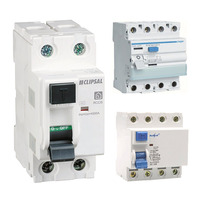
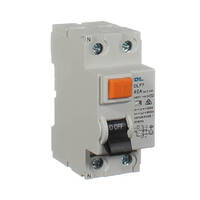
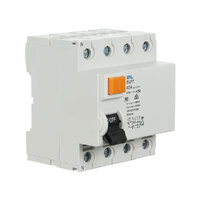
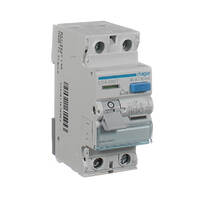
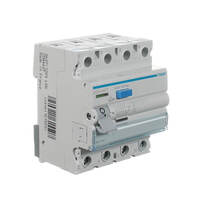
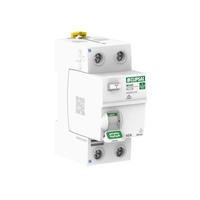
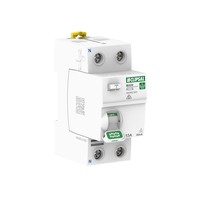
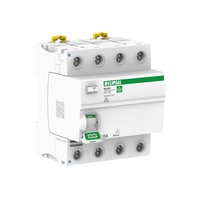
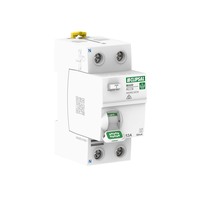
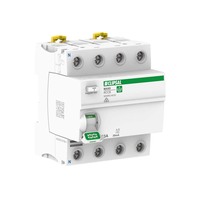
RCDs are made in several physical formats to suit different mounting and use cases.
The full range of switched socket outlet RCD protection is suited to industrial sites, workshops, and outdoor power.
Two values matter when selecting an RCD: the load current rating and the residual current sensitivity.
The current rating must match or exceed the maximum sustained load on the circuit. A 25A device suits a typical lighting board. A 40A or 63A device suits a high-load distribution board feeding multiple final subcircuits.
For personal protection, 30mA is the standard. 10mA devices are used in medical and high-risk wet areas. 100mA and 300mA devices are used for fire protection on distribution circuits and large equipment, where 30mA would cause nuisance tripping.
For socket circuits and lighting, use a 30mA Type A RCD. For solar inverters, EV chargers, and other circuits with DC leakage components, a Type B device may be required. Always confirm the device type against the manufacturer guidance for the connected load.
RCD requirements are set by the Wiring Rules and reinforced by state-based regulations. Compliance is not optional.
AS/NZS 3000:2018 mandates 30mA RCD protection on all final subcircuits supplying socket outlets, lighting, and most fixed equipment in residential installations. Commercial and industrial requirements are similar but have application-specific exceptions.
AS/NZS 3760 sets the in-service inspection and testing intervals for portable equipment, including portable RCDs. The standard defines push-button and timed-trip test frequencies.
Most Australian states require RCDs on socket and lighting circuits before a residential property can be sold or leased. Queensland, Victoria, Western Australia, and Tasmania have specific landlord obligations. Always check the current local regulation before signing a compliance certificate.
Important: Only a licensed electrician can install or replace fixed RCDs in Australia. Unlicensed installation is a serious offence and voids insurance.
Every new home requires 30mA RCD protection on socket and lighting circuits. A typical two-pole RCD covers two or three circuits, but most builders now specify one RCBO per circuit for selectivity.
Offices, retail spaces, and light industry use the same 30mA standard for socket circuits. Heavy industrial equipment may use 100mA or 300mA devices on the supply transformer with 30mA on final subcircuits, creating two layers of protection.
AS/NZS 3012 requires every supply to portable equipment on a construction site to be protected by a 30mA RCD. The site supply, the lead, and the tool can each carry their own RCD layer.
Construction and demolition sites must use 30mA RCD protection on every socket outlet supplying portable tools or extension leads. The standard also sets out test intervals and tagging requirements.
Plug-in RCD adapters provide protection where the fixed installation does not. They are used on hire equipment, mobile generators, and temporary supplies. The unit must be placed at the supply end of the lead, not at the tool end.
Portable RCDs require a push-button test before each shift and a timed trip test every three months under AS/NZS 3760. Records must be kept for safety audits. Failed devices must be tagged out and removed from service.
Select the load current rating to match the circuit breaker upstream, or to suit the maximum total load if the RCD is acting as a group device. Undersizing causes nuisance tripping. Oversizing reduces selectivity.
Bathrooms, pools, and outdoor wet areas justify 10mA devices for the highest level of personal protection. Standard living spaces use 30mA. Distribution and equipment protection uses 100mA or 300mA where personal contact is unlikely.
Residential boards typically use single-phase RCBOs on every circuit. Commercial boards often use group RCDs for cost-efficiency, with 4-pole devices on three-phase supplies. Both approaches are valid when designed against AS/NZS 3000.
Group RCDs and circuits logically: separate lighting from power, and isolate critical loads (refrigeration, security) onto their own RCBOs. This prevents a single fault from disabling essential services. Switchboard enclosures must allow adequate spacing for heat dissipation.
Every circuit and protective device must be permanently labelled. The label must identify the area or equipment served. Clear labelling reduces fault-finding time and makes the board safer for the next electrician.
After installation, every RCD must be tested using an instrument that measures actual trip current and trip time. The push-button test alone does not verify the device meets standard. Results should be recorded on the certificate of compliance.
The owner or occupier should press the test button every three to six months. This confirms the mechanical trip path operates. It does not measure trip current or trip time.
A licensed electrician should perform a calibrated trip-time test annually on residential boards and more frequently on commercial sites. This confirms the device meets AS/NZS 3000 trip-time limits at rated residual current.
Keep records of all push-button and instrument tests, including date, technician, and result. These records are evidence of due diligence under WHS legislation and may be required by insurers after an incident.
The most common cause of RCD tripping is a faulty appliance: damaged kettle elements, water-damaged refrigerators, or aged dishwashers. Identifying the appliance is straightforward by isolation: unplug each device and reset the RCD.
Rodent damage, poor weatherproofing, and aged insulation all cause leakage that trips the RCD. Outdoor lights and pool equipment are the usual suspects. Cable replacement is required, not RCD replacement.
Even healthy appliances leak a small amount of current. When several appliances share an RCD, their combined leakage can exceed 30mA without any single fault. The fix is to redistribute circuits or move to RCBOs with one device per circuit.
Stiff or sluggish trip lever, scorching around terminals, and refusal to reset all indicate end of life. Audible buzzing or a hot enclosure also suggest internal failure.
An RCD that does not trip when the test button is pressed must be replaced immediately. There is no field repair. The unit should be tagged out and removed by a licensed electrician.
Manufacturers typically rate RCDs for ten to fifteen years of normal service. After that, internal contacts wear and trip times drift. Any RCD failing a calibrated trip-time test should be replaced regardless of age.
A board protected only by ceramic fuses or older MCBs offers no shock protection. The occupants of these properties face the same shock risks as homes built before the 1990s. Fire insurance may be voided after an electrical fire if compliance is not current.
Replacing fuses and breakers with Clipsal RCBOs or Hager RCBOs brings the board to current standard, adds shock protection, and improves selectivity. Each circuit gains independent protection.
Most jurisdictions require RCD upgrades when work triggers a defined threshold (alterations, additions, or sale). The requirement is checked against AS/NZS 3000 at the time of the work. The licensed electrician must certify the upgrade.
A Person Conducting a Business or Undertaking has a duty under WHS legislation to provide safe electrical infrastructure. This includes RCD protection on all socket circuits and a documented testing regime.
All commercial workplaces require 30mA RCD protection on socket outlets used by workers. Hostile environments (wet areas, food preparation, workshops) carry additional requirements. Audit failure can trigger workplace closure.
WHS regulators expect to see test records on demand. The minimum record is the date, the device tested, the result, and the name of the tester. Digital records are accepted, paper records are still common in trades.
Most nuisance tripping is caused by cumulative leakage from healthy appliances rather than a fault. Splitting circuits across multiple RCBOs is the most reliable cure. Type A devices reduce nuisance tripping where electronic loads are present.
RCDs derate at high ambient temperature. A board mounted in a hot roof space or a sealed cupboard may trip at less than rated current. Adequate ventilation in the electrical enclosure extends device life.
Annual instrument testing combined with quarterly push-button testing keeps the protection layer reliable for the rated life of the device. Document every test. Replace any device that drifts outside specification.
Sparky Direct stocks the full range of RCDs, three-phase RCD/MCB combinations, and safety switches from Clipsal, Hager, Eaton, NHP, and Siemens. Stock is shipped Australia-wide.
Budget RCDs from unknown brands may meet the standard on day one but drift quickly. Trade-grade devices from CBI-electric, Heinemann, and the major brands hold calibration over the rated service life. The price difference is small over a fifteen-year service life.
Contractors fitting Clipsal MAX9 and Resi MAX systems can order trade quantities through Sparky Direct. Bulk pricing is available on request via the contact page.
If the RCD will not reset, an active fault is still present. Disconnect every load on the affected circuit. If the device still will not reset, the device itself may be at fault.
Frequent unexplained tripping usually points to cumulative leakage or a device failing low. Replace any portable RCD that fails the timed trip test, and split high-leakage circuits.
Use a methodical isolation routine: turn off all final subcircuits, reset the RCD, then restore one circuit at a time. The circuit that trips the device contains the fault. From there, isolate appliances individually.
Club Clipsal is Australia's largest electrician community offering trade rewards, business support, and exclusive benefits. When you nominate Sparky Direct as your preferred wholesaler, we automatically apply your Clipsal spend points to your Club Clipsal account daily.
Entry-level offering coaching, mentoring, and training discounts
Unlock exclusive industry tools and networking events
Access Toyota fleet offers and business software discounts
Maximum benefits, including VIP experiences and rewards
1. Sign Up: Create your Club Clipsal account at clipsal.com/club-clipsal or via the iCat mobile app
2. Nominate Sparky Direct: Select Sparky Direct from the wholesaler dropdown menu in your profile
3. Add Email: Enter your Sparky Direct account email address in the membership number field
4. Start Earning: Every dollar spent on Clipsal products earns points automatically
Redeem points from the rewards store, including gift cards, tools, and experiences. Access business summits, product training, and industry networking events. Receive early access to new product launches and special promotions. Connect with fellow electricians via the Club Clipsal community app.
Watch Fluke ST240+ | RCD Socket Tester With Beeper video
Watch Fluke ST240+ | RCD Socket Tester With Beeper video
Watch Fluke ST240+ | RCD Socket Tester With Beeper video

Wanted to add another power circuit to my full distribution board. The NLS30784 RCBO helped achieved this as I could remove the 3ph RCD and 3 x 16amp CB taken up 7 spaces and replaced them all with 4 x NLS30794 RCBOs. Now giving me the extra circuit plus space for 3 more if ever needed. The extra bonus also is now each circuit has its own RCD, where before you would loss all power circuit with a single RCD trip. During installation I found the NLS30794 having the bottom offset terminal inputs are a good option for wiring multiple devices using a busbar comb, However I didn't require to use this option. If required in the future I will definitely use this device again.
I recently bought 8 Clipsal RCBO's and busbar to refurbish a sub-board, and was very pleased with the result. The way the busbar connects everything together is so much neater than short wire lengths, and the RCBO units are not tripping like the RCD's they replaced. Will be buying again from Sparky Direct, their service is good and their pricing is about 2/3 the cost of buying local. Thanks Guys.
These combination RCD/Breakers are a worthwhile upgrade for houses with no RCD device, or just the one device protecting selected circuits. Sparky Direct supplies these combo units at a price unequalled elsewhere in Australia. Their customer service is also first class during both the ordering process and post purchase.
Quality products in stock • Fast Australia-wide delivery • Competitive trade pricing
Browse RCD Switches → Get Expert Advice →RCDs are designed to trip in milliseconds to help prevent injury.
RCDs are available from Sparky Direct, offering access to compliant electrical safety devices with Australia-wide delivery.
Yes. RCDs are available with fast dispatch and fast delivery Australia wide, including metropolitan and regional areas.
Yes. RCDs are suitable for replacing existing devices or upgrading older switchboards.
Yes. Warranty coverage depends on the manufacturer and supplier, with conditions applying.
Consider current rating, fault sensitivity, switchboard compatibility, and electrician recommendations.
They require no routine maintenance but should be tested and inspected regularly.
Yes. When correctly rated and installed, RCDs are suitable for protecting outdoor power circuits.
Yes. They are commonly installed during switchboard upgrades and renovations to improve safety.
No. RCDs operate silently under normal conditions.
Yes. While designed for long service life, RCDs may require replacement if they no longer trip correctly.
RCDs should be tested regularly using the test button, with inspections carried out during electrical safety checks.
Yes. RCDs usually feature a test button and clear labelling.
An RCD, or Residual Current Device, is a safety device designed to quickly disconnect power when it detects earth leakage that could cause electric shock.
Common causes include faulty appliances, damaged wiring, moisture ingress, or earth leakage faults.
RCDs significantly reduce the risk of serious electric shock by disconnecting power very quickly during a fault.
Yes. Installation and replacement must be carried out by a licensed electrician.
Yes. Once the fault is identified and resolved, an RCD can be reset.
Yes. RCDs are widely used in single-phase residential and commercial electrical systems.
An RCD protects against electric shock, while a circuit breaker protects against overloads and short circuits.
Yes. RCD protection is required on certain circuits in Australian homes under current wiring rules.
An RCD provides protection against electric shock caused by earth leakage faults but does not protect against overloads or short circuits.
RCDs supplied in Australia are designed to meet relevant AS/NZS electrical and safety standards when installed correctly.
RCDs are commonly installed in residential, commercial, and light industrial switchboards to protect power and lighting circuits.
An RCD continuously monitors the flow of electricity and trips when it detects an imbalance, indicating current leaking to earth.