

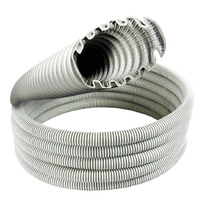
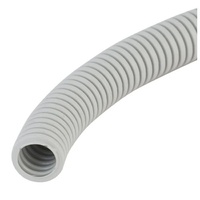
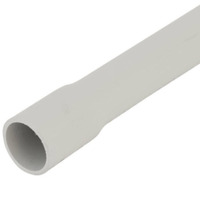
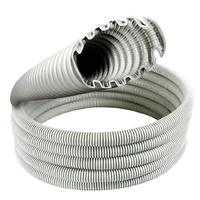
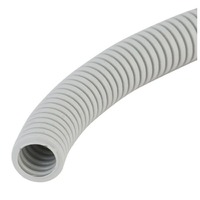
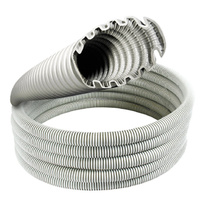
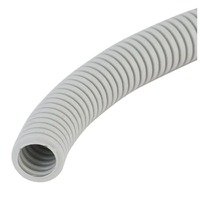
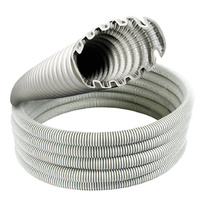
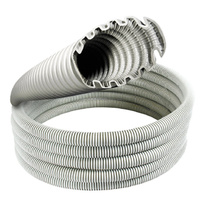
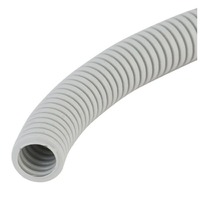
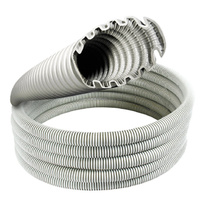
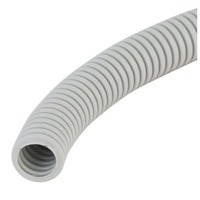
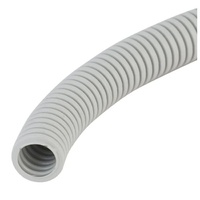
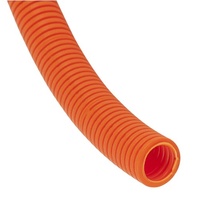
Corrugated conduit is used to conceal or provide mechanical protection for cables.
The product is designed to be easy to install, reduce job time, and use fewer fittings than other products. It is made from PVC with a flame retardant and meets AS/NZS2053 requirements.
Why do electricians and tradespeople use these products?
Electricians and tradespeople tend to use corrugated conduit because it is easy to install, extremely versatile and weatherproof. It can be used for above-ground and underground installations, making them the perfect choice for various projects. Corrugated conduits are a low cost-effective solution to cable protection.
What sizes are available in corrugated conduits?
25 mm corrugated conduit is the most common size sold. 25mm is wide enough to fit a variety of different size cables such as building wire, SDI or TPS (thermoplastic-sheathed).
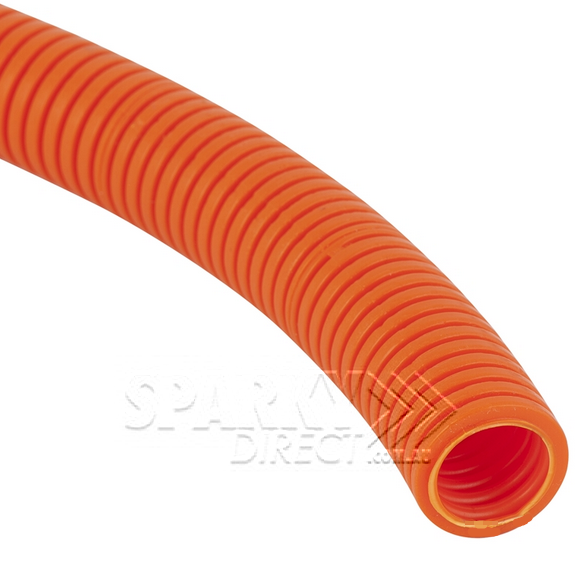
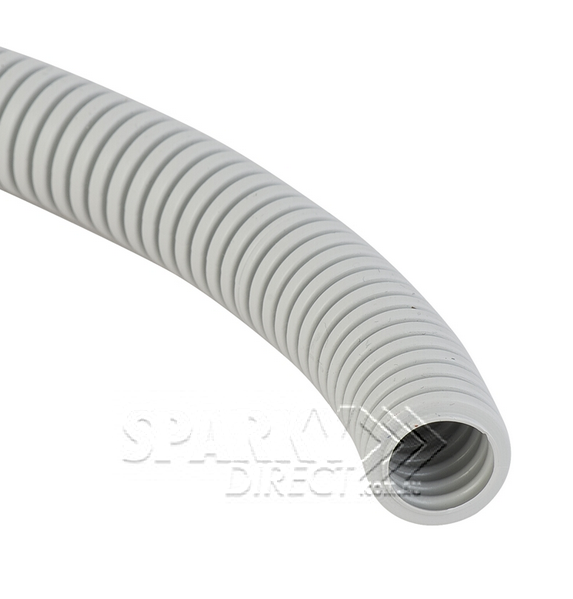
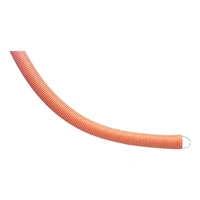
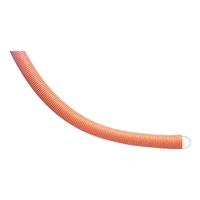
Corrugated conduit comes in 20mm, 25mm, 32mm, 40mm, 50mm in orange (heavy-duty underground) and grey (medium-duty above ground).
We stock quality brands like Clipsal Turbo corrugated conduit and NLS corrugated conduit inc NLS Solar Heavy Duty corrugated conduit.
How to join corrugated conduits?
Conduits can be joined with corrugated conduit fittings and accessories such as couplings, junction boxes, tee junctions, plain to screw adapters. It is best practice to glue the conduits together to prevent moisture from entering and maintain the sealed conduits' protection levels.
Corrugated conduit glue is available as clear glue or blue glue. This glue is typically sold in 250ml or 500ml bottles.
- Blue glue is commonly used for underground conduits
- Clear glue is used for above-ground corrugated medium-duty conduits to provide a neater appearance as you do not see the runoff if the glue is applied liberally.
How to install corrugated conduits?
Corrugated conduits are commonly mounted to walls or ceiling surfaces using either half metal saddles or full metal saddles.
If the conduit is installed in corrosive locations like a beach or near chemicals, many installers will use PVC saddles or galvanised saddles to prevent corrosion.
Saddles are spaced evenly along the length of the corrugated conduit to prevent sagging. (approximately 30cm apart) The saddles are fixed to the wall with either nylon nail in anchors (knock-ins) or green wall plugs and screws.
Many tradespeople choose to use lubricant when installing cables in a conduit. Lubricant helps the cables move smoothly and prevents damage from occurring.
To run the cables inside a corrugated conduit, use a pull-through snake or fish tape.
Some professionals use a vacuum and cable pull line rope to first pull a pull wire through the installed corrugated conduit, and then they tie the cable to the pull line rope to securely get the cable through.
How many cables can I fit inside a medium-duty corro?
As per AS3000:2018, you can fit 2 x 1.5 PVC/PVC V90 Flat twin and earth cables into a 25mm medium-duty grey conduit; please use the graph below as a reference.

How to cut medium-duty or heavy-duty corrugated conduit?
A set of heavy-duty conduit cutters is the easiest way to cut corrugated conduit. They are ergonomically designed for the job and can be carried around in a tool belt or bag. They are safe to use and will last many years.
For those who only need to cut corrugated conduit a few times, use a utility type knife or hacksaw.
5 Quick Facts
- A corrugated conduit is a flexible conduit.
- Medium duty (grey) corrugated conduit is typically used above ground.
- Heavy duty (orange) corrugated conduit is used for underground installations.
- There are many sizes of corrugated conduit available
- All corrugated conduit sold at Sparky Direct is UV stabilized to add extra protection from the elements.
Using corrugated conduit is a great way to protect your electrical wires from heat and cold. It is easy to install and comes in a variety of sizes. Make sure you follow the guidelines above when installing to get the best results.
Corrugated Conduit Frequently Asked Questions
Does corrugated conduit help keep wiring organised?
Yes, it helps group and protect cables neatly within building structures.
Corrugated Conduit near me
Sparky Direct supplies corrugated conduit Australia-wide, offering reliable cable protection solutions with convenient delivery.
How is corrugated conduit delivered?
Corrugated conduit is securely packaged and delivered via standard courier services.
Can unused corrugated conduit be returned?
Unused products are generally eligible for return according to the seller’s returns policy.
What warranty applies to corrugated conduit?
Warranty coverage varies by manufacturer and typically covers defects in materials or workmanship.
Is corrugated conduit sold in different sizes?
Yes, corrugated conduit is available in various diameters to suit different cable requirements.
Should conduit selection be planned carefully?
Yes, choosing the correct size and type ensures proper cable protection.
Does corrugated conduit require maintenance?
Once installed correctly, it generally requires no maintenance.
Is corrugated conduit visible after installation?
It is usually hidden behind walls, ceilings, or other building materials.
Does corrugated conduit take up much space?
It has a compact profile suitable for concealed installations.
Is corrugated conduit lightweight?
Yes, it is lightweight and easy to handle on site.
Can corrugated conduit reduce cable wear?
Yes, it helps prevent cable damage caused by friction or movement.
Is corrugated conduit commonly used in homes?
Yes, it is frequently used in modern residential builds and renovations.
What is corrugated conduit?
A corrugated conduit roll is a flexible conduit that allows for easy installation and is commonly used in various applications, including above-ground and underground use. The medium-duty grey material is typically used for above-ground installations, while the heavy-duty orange material is required for underground installations.
Is corrugated conduit easy to work with?
It is easy to route and position during installation due to its flexible nature.
Why choose corrugated conduit instead of rigid conduit?
Its flexibility makes installation easier in tight or irregular spaces.
Does corrugated conduit protect cables from damage?
Yes, it helps protect cables from abrasion, impact, and movement.
Is corrugated conduit suitable for indoor use?
Yes, it is primarily used indoors, depending on product rating.
Can corrugated conduit be used in commercial projects?
Yes, it is widely used in commercial and light industrial applications.
Is corrugated conduit suitable for residential installations?
Yes, it is commonly used in residential electrical installations.
What materials are corrugated conduits made from?
They are typically made from durable plastic materials designed for electrical use.
Is corrugated conduit flexible?
Yes, its flexible design allows it to bend around corners and obstacles.
Is corrugated conduit suitable for electrical installations?
Yes, it is designed specifically for electrical cable protection and routing.
Does corrugated conduit comply with Australian standards?
Quality corrugated conduit is manufactured to meet relevant AS/NZS electrical and safety standards when used correctly.
What is corrugated conduit commonly used for?
It is commonly used to protect wiring in walls, ceilings, floors, and other concealed spaces.