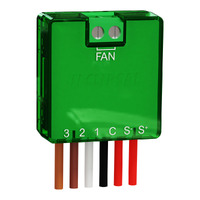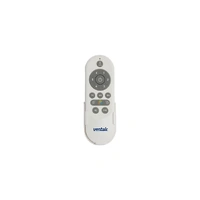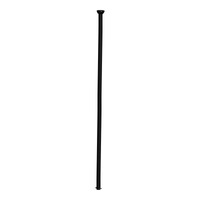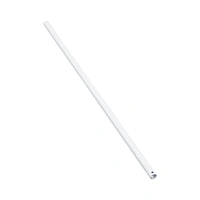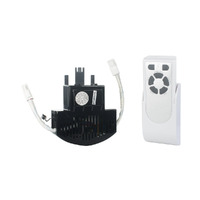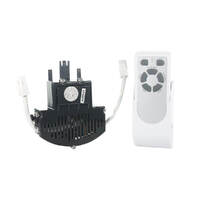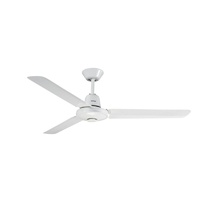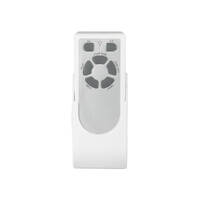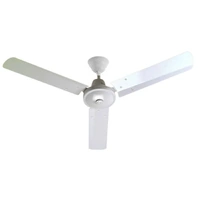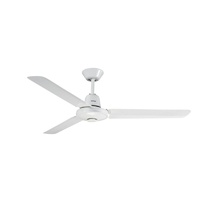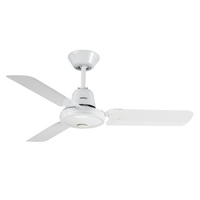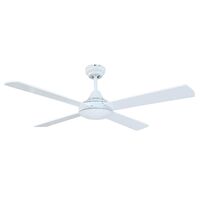



Fan Remote
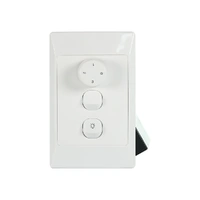
Clipsal XYREMOTE | Airflow DC Ceiling Fan Remote Control for 3 or 4 Blades
$27.92
$25.38 ex. GST
Search Results:
Search Results:
A ceiling fan is a rotating-blade fan suspended from the ceiling. It draws power from the lighting circuit and spins blades to push air downward (in summer mode) or pull air upward (in winter mode). The fan does not lower the air temperature. It moves air across the skin, which speeds evaporation and creates a wind-chill effect of roughly 3 to 4 degrees Celsius on the perceived temperature.
The cooling effect only works on people. An empty room with a fan running gains no benefit. This is why turning a fan off when leaving the room saves energy without sacrificing comfort. In winter, reversing the fan direction pushes warm air down from the ceiling, which improves heating efficiency in rooms with high or vaulted ceilings.
Australian climate conditions suit ceiling fans well. Long, hot summers and high humidity mean that active air movement noticeably improves comfort. Fans run at a fraction of the cost of air conditioning, which makes them a default fixture in living areas, bedrooms, alfresco areas, and patios across the country.
An air conditioner removes heat from the room and lowers the actual air temperature. A ceiling fan moves air to create a cooling sensation on the skin. Air conditioners cost much more to buy, install, and run. Fans cost a fraction of either and require no refrigerant gas, no outdoor unit, and no ducting.
| Feature | Ceiling Fan | Air Conditioner |
|---|---|---|
| Effect | Wind-chill on skin | Lowers air temperature |
| Typical running cost | 1 to 3 cents per hour | 30 to 90 cents per hour |
| Installation cost | Low (single ceiling point) | High (split system or ducted) |
| Works without people | No (cools skin only) | Yes (cools the air) |
For mild to warm conditions (up to about 28 degrees Celsius indoors), a ceiling fan alone is usually enough for comfort. Bedrooms, home offices, and living areas often need nothing more during spring and autumn. Fans also suit short occupancy periods where running the air conditioner is wasteful.
Running a ceiling fan with the air conditioner allows the thermostat to be set 2 to 3 degrees higher with no loss of comfort. This cuts air conditioner energy use by roughly 10 to 20 per cent. The fan circulates the cooled air more evenly through the room, which reduces hot spots and shortens the time the compressor runs.
The standard indoor fan is the workhorse of the category. Most models use a 1200mm to 1400mm blade span and a body designed to suit residential décor. Blade counts of 3, 4, or 5 are common, with 3-blade designs typically more efficient and 5-blade designs slightly quieter at low speed.
Outdoor fans must handle moisture, salt air, and temperature swings. Look for models with an IP44 or higher rating for covered alfresco areas, and IP55 or above for exposed locations. Materials matter as well: powder-coated aluminium and stainless steel hardware resist corrosion better than painted steel.
Smart fans add Wi-Fi or Zigbee control to the standard fan circuit. The owner can schedule speed changes, link the fan to a temperature sensor, or trigger the fan as part of a home automation routine. Most smart fans pair with Google Assistant and Amazon Alexa for voice control.
A fan with an integrated light kit replaces both the existing room light and the fan in a single fixture. Modern versions use LED panels with selectable colour temperatures (typically 3000K, 4000K, and 5000K). This style suits rooms where ceiling space is limited or where a separate pendant would crowd the look. Browse ceiling fan lights for current models.
AC (alternating current) motors are the traditional ceiling fan motor type. They run directly off mains power and use a capacitor to control speed. AC fans are simple, robust, and lower in upfront cost. They typically draw 50 to 75 watts on full speed and offer 3 fixed speed settings.
DC (direct current) motors use an internal converter to step mains power down to low-voltage DC. The motor itself is smaller, lighter, and more energy efficient. DC fans typically draw 20 to 35 watts on full speed (about half the power of an AC fan), offer 6 speed settings, and run noticeably quieter. The trade-off is a higher purchase price and a longer-term reliance on the electronic driver, which can fail before the motor itself.
Brushless DC (BLDC) motors are the newest evolution. They eliminate the carbon brushes used in conventional DC motors, which extends motor life and reduces maintenance. BLDC fans pair well with smart controllers because the motor responds smoothly to variable speed input. Most modern smart and premium DC fans use BLDC technology.
| Feature | AC Ceiling Fan | DC Ceiling Fan |
|---|---|---|
| Power draw (full speed) | 50 to 75 W | 20 to 35 W |
| Speed settings | 3 | 6 |
| Noise at low speed | Audible hum | Near silent |
| Reverse function | Manual switch | Remote toggle |
| Upfront cost | Lower | Higher |
| Long-term running cost | Higher | Lower |
Fan blade span must suit the room. A fan that is too small wastes effort, and one that is too large can dominate the space and feel uncomfortable. Use the following as a starting guide:
| Room Size | Recommended Blade Span | Typical Use |
|---|---|---|
| Up to 9 m² | 900 to 1100 mm | Small bedroom, study |
| 9 to 18 m² | 1200 to 1300 mm | Bedroom, dining area |
| 18 to 27 m² | 1300 to 1400 mm | Living room, master bedroom |
| 27 to 40 m² | 1400 to 1500 mm | Open plan, family room |
| Over 40 m² | 1500 mm or larger (or two fans) | Great room, warehouse |
Blade pitch is the angle the blade sits at relative to horizontal. Most quality ceiling fans use a pitch between 12 and 16 degrees. Steeper pitch moves more air per rotation but draws more power and can strain a weaker motor. Cheap fans often use a flat 8 to 10 degree pitch, which moves very little air regardless of speed.
Common blade materials include timber, plywood, ABS plastic, and aluminium. Timber and plywood offer a quality look but can warp in humid environments. ABS plastic is light, low-cost, and ideal for outdoor use. Aluminium blades are stiff, lightweight, and pair well with high-output DC motors. Blade shape also matters: contoured aerofoil designs move more air than flat blades at the same speed.
For open plan living, vaulted ceilings, or commercial settings, large-format fans (1500mm to 2000mm) deliver the airflow needed to cover the floor area. These fans typically use DC or BLDC motors to keep noise and power draw manageable at scale. Some industrial models reach 3 metres or more and are designed for warehouses, gyms, and showrooms.
Efficiency in a ceiling fan is measured in airflow per watt (cubic metres per minute, divided by power draw). DC and BLDC fans deliver more airflow per watt than AC fans, sometimes by a factor of two. Look for the airflow figure (CFM or m³/min) listed alongside the wattage on the product specification.
At an average Australian rate of around 30 cents per kilowatt hour, a typical ceiling fan running on full speed costs:
Over a hot summer running 8 hours a day for 90 days, a DC ceiling fan adds around 7 dollars to the power bill. A split-system air conditioner used the same way adds 200 to 500 dollars.
Australian Minimum Energy Performance Standards (MEPS) apply to many electrical appliances, but ceiling fans are not currently subject to a mandatory star rating. The Equipment Energy Efficiency (E3) program provides voluntary efficiency benchmarks. When comparing models, the published wattage and airflow figures are the most reliable guide.
Standard mounts use a short downrod (typically 100mm to 200mm) to position the fan blades clear of the ceiling. Low-profile or hugger mounts attach directly to the ceiling and suit rooms with low ceilings (under 2.4 metres). Extended downrods (300mm to 1500mm or longer) are used for vaulted, raked, or high ceilings to bring the fan down to an effective working height.
Raked ceilings need a fan with a raked-ceiling adaptor. Most quality fans support pitches up to 30 degrees as standard. Steeper pitches need a specialist adaptor or a longer extension rod. The blades must clear all surrounding surfaces and stay within safe distance of walls and beams.
A ceiling fan must mount to a fan-rated electrical box or directly to a ceiling joist using approved hardware. A standard light fitting box is not rated for the dynamic load and torque of a fan. Failed mounts are the leading cause of ceiling fan accidents, so the structural fixing matters as much as the wiring.
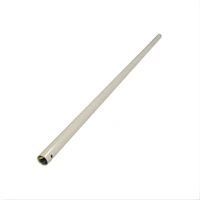
Match the drop rod length to the ceiling height. The blade tip should sit at least 2.1 metres above the floor and at least 300mm below the ceiling for proper airflow. Sparky Direct stocks ceiling fan drop rods in a range of lengths and finishes to match common fan brands.
Outdoor fans carry an Ingress Protection (IP) rating. The first digit covers solids (dust), and the second covers liquids (water). For ceiling fans, the second digit matters most:
Each model specifies its own rating; never assume an outdoor-styled fan is rated for outdoor use without checking the IP figure.
Outdoor fans need corrosion-resistant materials. Stainless steel hardware, marine-grade aluminium bodies, and ABS or treated timber blades hold up best in coastal and humid environments. Avoid painted steel hardware in salt-air environments because corrosion will set in within a season or two.
Australian outdoor conditions vary widely, from coastal salt spray in Sydney and Brisbane to inland heat and dust. Common reliable choices include the Hunter Pacific IP-rated DC range and Ventair models with sealed motor housings. Both brands carry tropical and coastal warranties that recognise Australian conditions.
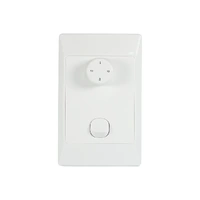
Pull chain control is the simplest method: one chain switches speed, another switches the light kit. Wall controls replace the standard light switch with a fan-rated speed controller. AC fans use capacitor-based controls with 3 fixed speeds. DC fans use an electronic controller paired with the fan driver. Browse the fan speed controllers range for compatible options.
Most modern ceiling fans ship with a hand-held remote. The remote pairs to a receiver mounted in the fan canopy. This avoids the need to run a separate control wire from the fan to a wall switch. Replacement ceiling fan remotes and receivers are available for most major brands.
Smart fans add Wi-Fi or Zigbee to the receiver, exposing the fan to a phone app and a home automation hub. The app can schedule speed changes, react to room temperature, and link the fan to other devices. Most smart fan apps also work with Google Home and Amazon Alexa.
Voice control on a smart fan handles the everyday commands: on, off, faster, slower, reverse, and light on or off. Routines can group the fan with lighting, blinds, and air conditioning so a single voice command (or motion trigger) sets the whole room. Clipsal Iconic switches include dedicated Clipsal Iconic fan controllers that integrate with the wider Iconic and C-Bus ecosystem.
Integrated LED fans build the light source into the fan body. The light is typically a flat LED panel or recessed downlight, with selectable colour temperature (3000K warm white, 4000K cool white, 5000K daylight). The light kit and fan use a shared receiver and remote, which simplifies wiring and control.
Some fan models have an optional light kit that bolts on to the bottom of the motor housing. This suits buyers who want a fan now and may add light later, or owners replacing the existing fan-only model with a fan-light combination without changing the ceiling rose.
LED fan lights need a dimmer rated for LED loads (a TRIAC LED dimmer or the dimmer integrated with the fan remote). Standard incandescent dimmers do not work reliably with LED fan lights and can cause flicker, hum, or driver failure. Most modern smart fan remotes handle dimming directly without a separate wall dimmer.
When comparing ceiling fans, focus on the figures that matter:
Living rooms suit larger fans (1300mm to 1400mm) with strong airflow. Bedrooms favour quieter DC fans at 1200mm with low-speed settings for overnight use. Outdoor areas need IP-rated models. Open plan spaces may need two fans rather than one oversized unit.
For bedrooms, motor noise on the lowest setting matters more than peak airflow. DC fans typically run near-silent on speeds 1 to 3, which makes them ideal for sleep. AC fans tend to produce a faint hum at lower speeds because of the capacitor-controlled circuit. Look for models specifically marketed for bedrooms or with published noise ratings under 40 dB.
Budget fans (under 200 dollars) typically use AC motors, ABS blades, and basic 3-speed pull cord or remote control. Premium fans (300 dollars and up) tend to use DC or BLDC motors, aerofoil blades, integrated lighting, and smart control. The longer-term running cost difference between an AC and a DC fan often closes the price gap within 3 to 5 years for high-use installations.
Living areas need strong, quiet airflow that covers the whole room. A 1300mm to 1400mm DC fan with 6 speeds suits most layouts. For long open plan spaces, two smaller fans spaced evenly along the room beat one oversized fan in the middle.
Bedrooms need a fan that runs all night without disturbing sleep. Choose a DC model with a true low-speed setting (around 50 RPM), an integrated dimmable light, and a remote with a sleep timer. White or matt black bodies suit most modern bedroom décor.
Patios, alfresco areas, and verandahs need IP-rated fans built for moisture exposure. A 1200mm to 1400mm IP55 fan with corrosion-resistant hardware covers most domestic outdoor needs. For coastal locations within 5 km of the ocean, marine-grade or stainless hardware is worth the extra cost.
For rental properties and investment housing, simple, durable AC fans with wall switch control are the practical choice. They cost less to buy, are easy to repair, and use components (capacitors, blades) that any electrician can source. The white ceiling fans with remote range covers most rental fit-out needs.
Buying online gives access to a wider range of models and brands than most physical electrical wholesalers stock. Sparky Direct supplies the major brands (Brilliant Lighting, Hunter Pacific, Mercator, Ventair, CLA, Martec, EGLO, and Clipsal) with stock held in Australia and shipped Australia-wide.
Cheap ceiling fans (under 100 dollars) usually come with hidden costs: weak airflow, noisy operation, short motor life, and poor finish. Mid-range fans (200 to 400 dollars) are the sweet spot for most homes, with reliable AC or DC motors from established brands. Premium fans (500 dollars and up) add smart control, BLDC motors, and designer finishes.
Trade pricing is available for licensed electricians and qualified buyers. Sparky Direct's trade account team can supply pricing for builders fitting out new homes, property developers, and electricians supplying their own materials. Contact us for trade enquiries.
Under Australian electrical regulations, a ceiling fan must be installed by a licensed electrician. The work involves connecting to mains-voltage wiring and securing a moving load to the building structure. Both tasks are restricted electrical work in every state and territory.
AS/NZS 3000:2018 (the Wiring Rules) sets the standard for the electrical installation. Key requirements include correct circuit protection (typically a 10-amp lighting circuit with RCD protection), correct polarity, secure earthing, and adequate clearance from combustible materials.
Beyond the wiring, the installation must meet structural and clearance requirements:
Important: A standard plasterboard light fitting box is not rated for the dynamic load of a ceiling fan. Using one is a major cause of fan failures and ceiling damage. Always confirm the mounting box is fan-rated or fix directly to a joist with the manufacturer's bracket.
Dust on the blades unbalances the fan and reduces airflow. Wipe blades top and bottom with a damp microfibre cloth every 1 to 2 months. Avoid wet cleaning of motor housings or any electronic components. For high or hard-to-reach fans, an extendable fan duster handles routine cleaning without a ladder.
A small amount of wobble is normal at startup as the blades reach speed. Excessive or persistent wobble usually means one or more of the following: dust buildup, a loose blade screw, a warped or unbalanced blade, or a worn motor mount. Tighten all blade screws first, then check for visible warping. Most fan kits include a balance weight set for fine adjustment.
A quality AC ceiling fan typically lasts 15 to 25 years with basic care. DC fans have a similar mechanical life but the electronic driver may need replacement after 7 to 10 years. Common replacement parts include capacitors (AC fans), drivers (DC fans), light kits, remotes, and blades. Replacement ceiling fan switches are available for the wall control side.
A fan that hums but does not spin usually has a failed capacitor (AC fan) or driver (DC fan). Both are user-replaceable parts when the fan is isolated at the switchboard, but the actual replacement should be done by a licensed electrician. A fan that runs slow on all speeds points to a failing motor winding or an out-of-spec capacitor.
Common noise sources include loose blade screws, a loose canopy, a worn motor bearing, or a remote receiver rattling inside the canopy. Tighten everything accessible first. If noise persists with all fixings tight, the bearings or motor mount are likely the cause.
A remote that suddenly stops working usually has a flat battery or a paired receiver that has lost its sync. Replace the battery first. If pairing is the issue, follow the manufacturer's resync procedure (usually a power cycle followed by a button press within 30 seconds).
Club Clipsal is Australia's largest electrician community offering trade rewards, business support, and exclusive benefits. When you nominate Sparky Direct as your preferred wholesaler, we automatically apply your Clipsal spend points to your Club Clipsal account daily.
Entry-level offering coaching, mentoring, and training discounts
Unlock exclusive industry tools and networking events
Access Toyota fleet offers and business software discounts
Maximum benefits, including VIP experiences and rewards
1. Sign Up: Create your Club Clipsal account at clipsal.com/club-clipsal or via the iCat mobile app
2. Nominate Sparky Direct: Select Sparky Direct from the wholesaler dropdown menu in your profile
3. Add Email: Enter your Sparky Direct account email address in the membership number field
4. Start Earning: Every dollar spent on Clipsal products earns points automatically
Redeem points from the rewards store, including gift cards, tools, and experiences. Access business summits, product training, and industry networking events. Receive early access to new product launches and special promotions. Connect with fellow electricians via the Club Clipsal community app.
Sparky Direct stocks ceiling fans from the brands Australian electricians install most often. Each brand has its own strengths and price point:
Watch Clipsal Y3HS1300-WH | Airflow DC Ceiling Fan 3 Blade 1300mm | White video
Watch Hunter Pacific AIP2665 | Aqua 70" IP66 DC Ceiling Fan | Matt Black video
Watch Mercator Ikuu FC620133GBK | Smart Minota DC Ceiling Fan | Black Body | Dark Timber Blades | Wi-Fi video

These fans look lovely and blend effortlessly with our heritage listed house giving it a stylish finish in all rooms. Very quiet and speed level perfect and easily adjusted. No longer need to use the aircon all the time and the family now sleeping with a lovely gentle breeze from the fans. Loving the shape of the blades and so easy to clean with a damp cloth. Highly recommend!! Service was excellent, shipping fast.
I purchased this about a month ago and it's been fantastic. The remote makes it easy to adjust brightness, fan speed, and colour settings, and it looks great in the room. It's also wonderfully quiet, which makes it perfect for the bedroom. Highly recommend if you're after a safe, compact fan that performs well.
Very quick delivery. Ordered on Sunday received on Wed. Installed fan and realised there were screws missing. Contacted the office and the girl was very helpful, unboxed the same model fan at her end to work out which screws were missing. Then sent then to me which I received 2 days later. Brilliant service
Quality products in stock • Fast Australia-wide delivery • Competitive trade pricing
Browse Ceiling Fans → Get Expert Advice →Yes, Sparky Direct sells remotes and wall controllers individually, compatible with many ceiling fans in its range. Always check the specs, description, and/or datasheet on the website for compatibility. Browse ceiling fan remotes.
Yes, you can purchase any ceiling fan online at Sparky Direct and then have it installed by a licensed electrician. This is the safest and legal way to get your fan up and running in Australia.
No. In Australia, any ceiling fan connected to mains power must be installed by a licensed electrician. It’s not legal (or safe) to DIY hardwired electrical work. Always hire a licensed Australian electrician to ensure the job is done right, legal, and compliant.
Go for a DC ceiling fan if you want better energy savings, quieter operation, and more speed options, perfect for bedrooms or long daily use. Choose an AC ceiling fan if you're after a lower upfront cost and a simple wall or remote control. Both are great, but DC fans offer more long-term value.
Make sure the fan is mounted securely, the blades are properly attached, and all wiring is safely connected by a licensed electrician. Installation steps can vary by model. Under Australian law, any hardwired ceiling fan must be installed by a licensed electrician.
Yes, some models have reversible airflow switches (summer and winter settings) so you can push warm air down in winter and cool air in summer.
Many people find DC fans worth it for their energy saving, quiet operation and extra speed settings.
Yes, Sparky Direct provides shipping Australia-wide, with their 100 Day Money Back Guarantee Policy.
Yes, as long as there are safe clearances around the blades. Always engage a licensed electrician for installation.
No, ceiling fans don’t lower the temperature like an air conditioning unit, but they make you feel cooler by moving air across your skin.
Yes, wipe the blades with a soft cloth or duster regularly to keep them dust-free; this helps performance and indoor air quality.
Fans with lights combine air movement and illumination in a single unit, saving space and reducing wiring. Fans without lights focus only on airflow.
AC ceiling fans use a standard motor powered by the mains and cost less upfront. DC ceiling fans use a more efficient motor that uses up to ~70% less energy, runs quieter and often has more speed options.
Yes, a quiet fan with a DC motor can keep air moving without noise, creating a comfortable sleep breeze.
Measure your room’s floor space. Bigger rooms need larger blade spans for good airflow, while smaller spaces do best with mid or small sized fans.
Absolutely. Most branded ceiling fans include a manufacturer's warranty; check the Sparky Direct product page and look for the warranty section on our website.
Fans come in classic white, black, stainless steel and wood finishes to match many interior styles.
Some remote kits and wall controllers sold on the Sparky Direct Ceiling Fans page are compatible with certain fans; always check model details before purchasing.
Controls include remotes, wall controllers and even app or smart voice controls, for easier speed and light adjustments.
Yes, outdoor ceiling fans with moisture-resistant components are offered for patios, porches and alfresco areas.
Yes, ceiling fans typically use much less power than air conditioners, helping reduce electricity bills while keeping air moving.
Yes — many ceiling fans in the range have integrated LED lights, giving both air movement and lighting in one unit.
Larger blade spans (e.g. ~1300–1400 mm) are best for big living rooms or open spaces, while smaller fans (~900–1200 mm) suit bedrooms or compact areas.
Smart ceiling fans connect to Wi-Fi, letting you control speed, light and schedules via smartphone apps or smart home assistants like Alexa or Google Home.