

PRICE DROP
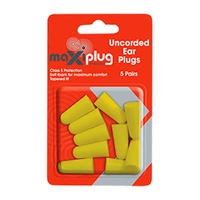
Hearing Protection Maxisafe Maxiplug Uncorded Blister Pack | HEU669
Now $3.81
$3.46 ex. GST
Search Results:
Search Results:
Electrical work is rarely quiet. Chasing walls, drilling masonry, cutting cable tray and working beside generators can all produce hazardous noise. The damage builds slowly and without pain, so many tradespeople only notice it once their hearing has already declined.
Noise-induced hearing loss is permanent: hearing aids can help, but they cannot restore what has been lost. Tinnitus, a constant ringing in the ears, is another common result of long-term exposure.
The model Work Health and Safety (WHS) Regulations set two limits for workplace noise. The first is an average of 85 dB(A) across an eight-hour shift, and the second is a peak of 140 dB(C), a level that can damage hearing instantly.
Decibels work on a logarithmic scale, so each 3 dB rise halves the time before the daily limit is reached. At 88 dB(A) the limit arrives in four hours, and at 91 dB(A) in just two.
Exposure standard: 85 dB(A) averaged over eight hours, or a peak of 140 dB(C). Work above either figure exceeds the exposure standard for noise under the model WHS Regulations.
Power tools drive most of the noise on an electrical job. Hammer drilling with masonry drill bits, grinding with cutting discs and running hole saws through metal enclosures are common sources. Plant rooms, construction sites and neighbouring trades add to the daily dose.
Noise levels change with the tool, the material and the space, so a noise assessment is the only reliable way to confirm the exposure on a particular job.
AS/NZS 1270:2002 is the Australian and New Zealand standard for testing hearing protectors. The test produces an SLC80 figure, which stands for Sound Level Conversion. It estimates the noise reduction, in decibels, that about 80% of wearers can expect in a well-managed hearing protection program.
The SLC80 figure then places the protector in one of five classes, from Class 1 (least protection) to Class 5 (most protection). A companion standard, AS/NZS 1269.3:2005, uses the class to match a protector to a worker's measured eight-hour noise exposure.
| Class | SLC80 range | Eight-hour noise exposure (LAeq,8h) |
|---|---|---|
| Class 1 | 10 to 13 dB | Less than 90 dB(A) |
| Class 2 | 14 to 17 dB | 90 to less than 95 dB(A) |
| Class 3 | 18 to 21 dB | 95 to less than 100 dB(A) |
| Class 4 | 22 to 25 dB | 100 to less than 105 dB(A) |
| Class 5 | 26 dB or greater | 105 to less than 110 dB(A) |
Source: the classification method in AS/NZS 1269.3:2005, as published in WorkSafe Victoria's hearing protection guidance.
No. Regulators warn against over-protection, because an ear plug that blocks far more noise than the job requires can also block alarms, reversing beepers and spoken warnings. Matching the class to the measured exposure gives the safer result.
Protection falls sharply when ear plugs come out, even briefly. WorkSafe Victoria's guidance shows a 30 dB protector delivering only about 18 dB when worn for 98.6% of the exposure. That gap equals roughly seven minutes without protection in an eight-hour shift.
The ear plugs in this range are foam and foam hybrid plugs made for trade and industrial use. The main differences are the fitting method and whether a cord joins the pair.
Disposable foam ear plugs are designed to be replaced, not cleaned. Foam picks up dust, sweat and grime, and fingers carry that dirt into the ear canal on the next fit. A fresh pair at the start of each shift, and whenever a pair is soiled or damaged, keeps the seal and hygiene sound.
Three brands make up the range: Maxisafe, Pro Choice and PIP. The table below sets out the rating, fitting style and pack formats shown on each product listing.
| Ear plug | Rating | Style and pack formats |
|---|---|---|
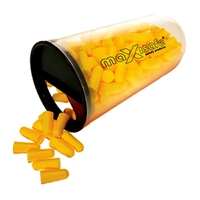
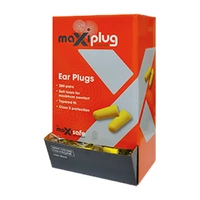
| Maxisafe MaxiPlug Uncorded | Class 5, SLC80 27 dB | Roll-down tapered foam, no cord. 5-pair blister pack or 200-pair dispenser box. |
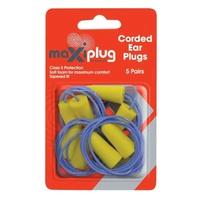
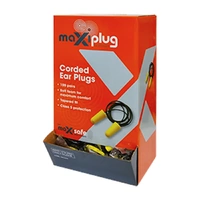
| Maxisafe MaxiPlug Corded | Class 5, SLC80 26 dB | Roll-down tapered foam with cord. 5-pair blister pack or 100-pair dispenser box. |
| Maxisafe MaxiPlug 100 Tradies Pack | Class 5, SLC80 26 dB | Roll-down tapered foam. 100 pairs per pack. |
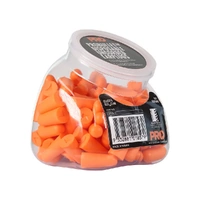
| Pro Choice Pro Bullet (EPOU-50) | Class 5, SLC80 27 dB | Roll-down tapered foam, no cord, hi-vis orange. 50 pack. |
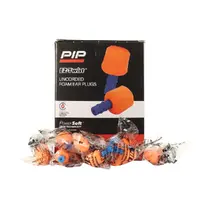
| PIP Powersoft EZ-Twist | Class 4, SLC80 25 dB | Insert-and-twist foam hybrid, no cord, hi-vis orange. 50 pack. |
The Maxisafe and Pro Choice listings state compliance with AS/NZS 1270:2002. Ratings and pack sizes can change, so the class and SLC80 on the product page and packaging should be confirmed before a protector is chosen for a job.
The noise assessment comes first. Under the classification method, exposure of 100 to under 105 dB(A) calls for Class 4, and exposure of 105 to under 110 dB(A) calls for Class 5. The table stops at 110 dB(A), so louder work needs specialist advice.
Corded ear plugs suit stop-start work, because the pair hangs around the neck between cuts and goes back in within seconds. Uncorded ear plugs suit long, continuous exposure and tight spaces where a cord could snag.
Five-pair blister packs keep spare pairs in the ute, tool bag or glovebox. The 50 packs and the 100-pair Tradies Pack suit a sole trader or a small crew. Dispenser boxes of 100 or 200 pairs suit site sheds, workshops and contractors issuing PPE across several jobs.
Bright orange ear plugs make compliance checks simple, because a supervisor can confirm from a distance that hearing protection is in place. The Pro Choice Pro Bullet and PIP Powersoft EZ-Twist ear plugs are both listed in hi-vis orange.
A foam ear plug only reaches its rated protection when it seals the ear canal. WorkSafe Victoria notes that the protection from ear plugs depends heavily on a good fit. The steps below apply to roll-down foam ear plugs.
Twist-fit ear plugs follow a different method: the PIP Powersoft EZ-Twist listing describes an insert-and-twist action. In every case, the fitting instructions on the pack take priority over a general guide.
Foam ear plugs are rolled with the fingers, so grime on the hands ends up in the ear canal. Clean hands before fitting are essential, and any plug that is dirty, torn or hardened should be replaced.
Both protect hearing when matched to the noise and worn correctly, so the choice usually comes down to how long the noise lasts and what other PPE is being worn. Sparky Direct stocks earmuffs alongside ear plugs in the wider ear protection range.
| Factor | Ear plugs | Earmuffs |
|---|---|---|
| Best suited to | Long, steady exposure | Short bursts of noise |
| Fit with other PPE | Sit clear of safety glasses, hard hats and face shields | Arms of safety glasses can break the cushion seal |
| Heat and tight spaces | Cool and compact in roof spaces and risers | Bulkier and warmer in the heat |
| On and off | Slower to fit and need clean hands | Quick to put on and remove |
| Upkeep | Single-use plugs are replaced, not cleaned | Cushions need cleaning and replacing over time |
Yes, where very high protection is needed, but the two ratings do not simply add together. WorkSafe Victoria's guidance estimates the combined protection at about 5 dB above the higher-rated protector.
Under the model WHS Regulations, a business must keep each worker's noise exposure within the exposure standard. Hearing protection sits last in the hierarchy of control, behind quieter tools, barriers, distance from the source and job rotation.
Where ear plugs are still required, the business must supply them and train workers to fit them. Workers who frequently rely on hearing protection must also be provided with audiometric (hearing) testing. Under the model Regulations, testing is due within three months of starting the work and at least every two years after that.
Rules and start dates differ between states and territories, so the local WHS regulator and the Safe Work Australia Code of Practice for managing noise remain the reference points.
General information only: This guide does not replace a workplace noise assessment. A competent person should confirm the noise level and the class of hearing protection required for each job.
Ear plugs are one part of a complete kit, and Sparky Direct stocks a wider range of personal protective equipment for electrical work. Safety glasses guard against dust and debris from the same tools that create the noise. Work gloves protect the hands, knee pads ease long periods on hard floors, and a stocked first aid kit covers the unexpected.
Watch Pro Choice EPOU-50 | PRO Bullet Disposable Uncorded Earplugs | Orange | 50 Pack video
Watch PIP 267-HPF610-50 | Powersoft EZ-Twist Hybrid Earplugs Uncorded | 50 Pack video
Watch Hearing Protection Maxisafe Maxiplug Uncorded | HEU645 video
Quality products in stock • Fast Australia-wide delivery • Competitive trade pricing
Browse Ear Plugs → Get Expert Advice →Safe Work Australia uses the one metre rule. If a worker has to raise their voice to talk to someone one metre away, the noise level is probably too high. The rule is a warning sign only, so a noise assessment is still needed to confirm the exposure.
About 15 minutes. The exposure standard is 85 dB(A) averaged over eight hours, and every 3 dB increase halves the time before that standard is reached. The limit is one hour at 94 dB(A), 30 minutes at 97 dB(A) and 15 minutes at 100 dB(A).
SLC80 is the rating used in Australia and New Zealand under AS/NZS 1270:2002. NRR is the rating used in the United States, and the two are not interchangeable. SafeWork NSW states that hearing protection measured by the NRR system is not acceptable in Australia.
The table shows the tested noise reduction at each frequency band from 125 Hz to 8,000 Hz. It lists the mean attenuation, the standard deviation and the mean minus standard deviation for each band. Noise assessors use these figures in the octave band method, which suits noise with one dominant frequency. The Pro Choice Pro Bullet and PIP Powersoft EZ-Twist listings both include this table.
No. Ear plugs reduce noise by their rated amount and do not create silence. Speech, alarms and machinery can usually still be heard at a lower level. Regulators warn against over-protection, because a protector rated well above the measured noise can mask warning signals.
A loose ear plug usually points to the fit. The foam may not have been rolled thin enough, inserted far enough or held in place while it expanded. Ear canals also differ in size and shape, so a different style, such as a twist-fit ear plug, may seal better for some wearers.
They can if hygiene is poor. WorkSafe Victoria notes that ear plugs may present hygiene issues and potential ear infections, particularly in dirty work environments. Clean hands, a fresh pair of disposable ear plugs and prompt replacement of soiled pairs reduce the risk. Anyone with ear pain or an existing ear condition should seek medical advice before using ear plugs.
Yes, according to regulator guidance. SafeWork NSW advises that all hearing protection should be tested and approved in accordance with AS/NZS 1270:2002, with the test results shown on the packaging. Each ear plug listing at Sparky Direct shows the class and SLC80 rating to check before purchase.
Maxisafe MaxiPlug dispenser boxes hold 200 pairs uncorded or 100 pairs corded, and the blister packs hold five pairs. The listings for these packs state that each pair is packaged in an individual bag. Individual bags keep spare pairs clean in a tool bag, ute or site shed.
No. Ear plugs are personal protective equipment, and anyone can order them. Sparky Direct supplies licensed electricians and trade customers first, and also sells direct to homeowners and renovators.
Yes. Orders ship Australia-wide from Caboolture, Queensland. Customers can also order online and collect from Caboolture. There are no counter sales, so collection orders must be placed online first.
You can buy ear plugs online from Sparky Direct, an Australian-owned electrical wholesaler established in 2005. Sparky Direct supplies ear plugs and hearing protection for electricians, tradespeople, industrial workers, homeowners, and DIYers with competitive pricing, fast dispatch and Australia-wide delivery.