

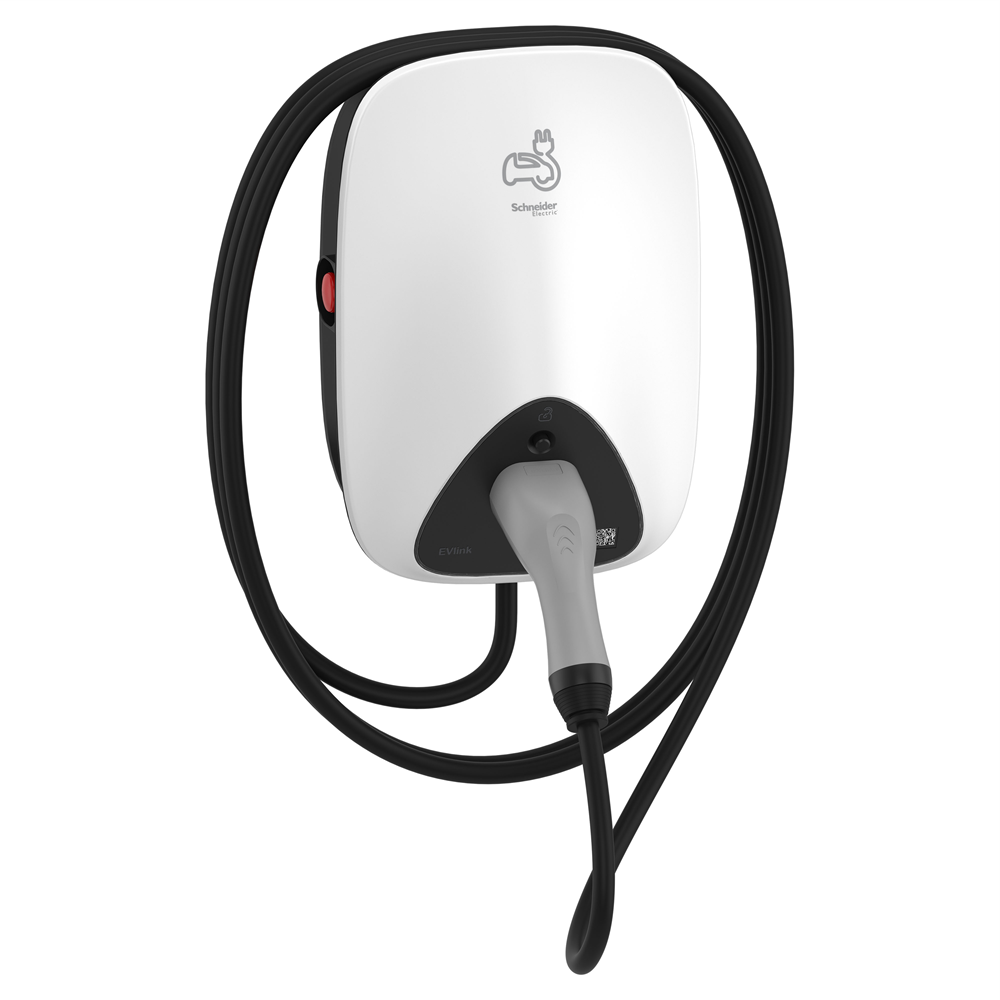



Evlink Home
PRICE DROP
Now $549.99
$499.99 ex. GST
Search Results:
Search Results:
The EVlink Smart Wallbox is a connected, wall-mounted AC charging station built for fixed installation. It serves homes, garages, carports, workplaces, and small commercial sites that need reliable daily charging. Schneider Electric designs and manufactures the range as part of its broader energy management and electrical infrastructure portfolio.
This background matters for buyers comparing brands. Schneider sits in the same product family as the protection devices, busbars, and switchboard equipment that electricians already specify, including Clipsal MAX9 and Resi MAX circuit protection. Sparky Direct also stocks compatible B EV type Acti9 iID residual current circuit breakers and the EVlink Universal Peak Controller for load management.
The wallbox connects to a dedicated circuit at the switchboard. It then delivers controlled AC power to the vehicle through a Type 2 connector. The car's onboard charger converts that AC supply to DC for the battery.
Two-way communication runs between the EV and the wallbox throughout the session. The charger negotiates current limits, monitors safety conditions, and starts or stops charging based on commands from the vehicle, app, or scheduling system. This control loop is what separates a smart charger from a basic socket.
The range suits homeowners with off-street parking who want predictable overnight charging. It also suits electricians specifying EV infrastructure for renovations, new builds, and solar upgrades. Small businesses, workshops, body corporates, and fleet operators benefit from reporting, access control, and managed charging features.
Level 1 charging draws from a standard household socket using a portable cable. Output is low, and a full charge can take more than 24 hours on a large battery. It works for occasional or emergency top-ups, not daily driving.
Level 2 charging uses a dedicated AC wallbox on its own circuit. Output is higher, wiring is fixed, and charge times drop significantly. The EVlink Smart Wallbox sits in the Level 2 category and is built for everyday use.
Basic EVSE units deliver power but stop short on control. They usually lack OCPP support, dynamic load management, RFID access control, and detailed reporting. The EVlink Smart Wallbox adds these layers, which becomes important once a household has solar, a fleet has multiple drivers, or a workplace needs accountability.
| Charging Option | Output | Smart Control | Best For |
|---|---|---|---|
| Standard power point | Low (Level 1) | None | Occasional or emergency charging |
| Basic wall charger | Higher (Level 2) | Limited | Simple home use, no integration |
| EVlink Smart Wallbox | Higher (Level 2) | OCPP, RFID, load aware, solar capable | Homes with solar, commercial sites, fleets |
Users can start, stop, and schedule charging from a mobile app or web platform. Session data covers energy consumption, charge duration, and history. Notifications can flag charge completion, interruptions, or errors where the model and configuration support it.
OCPP, or Open Charge Point Protocol, is a communication standard that lets compatible chargers connect to third-party management platforms. This is valuable for small fleets, managed parking, body corporate sites, and energy management systems. Confirm the exact OCPP version against the specific EVlink model before specifying.
Dynamic load management adjusts charging current based on what else is drawing from the building supply. This reduces the risk of overloading the main circuit during peak household activity. The wallbox can also schedule sessions around off-peak tariffs and align with solar generation windows.
RFID restricts the charger to authorised users. This matters for shared driveways, workplaces, body corporates, and visitor parking. Combined with reporting, access control adds accountability where multiple drivers use the same unit.
The enclosure rating, connector condition, mounting position, and cable management all affect outdoor suitability. Australian garages and carports vary widely in exposure. Coastal locations and west-facing walls bring additional UV and salt-air considerations that should shape mounting decisions and accessory choices, including suitable weatherproof outdoor power points nearby where required.
Single-phase home supply typically supports up to 7.4 kW of AC charging. Three-phase properties may support 11 kW or 22 kW where capacity allows. The vehicle's onboard AC charger sets the ceiling, so a 22 kW wallbox feeds a 7.4 kW vehicle at 7.4 kW only.
These figures assume charging from low to full and a vehicle that supports the wallbox output.
| Battery Size | At 7.4 kW | At 11 kW | At 22 kW |
|---|---|---|---|
| 40 kWh | Approx 5 to 6 hours | Approx 4 hours | Approx 2 hours |
| 60 kWh | Approx 8 hours | Approx 5.5 hours | Approx 3 hours |
| 80 kWh | Approx 10 to 11 hours | Approx 7 to 8 hours | Approx 4 hours |
Actual times vary with starting state of charge, vehicle limits, temperature, cable condition, and load management settings.
AC wallbox charging is designed for predictable, daily, and overnight use. DC fast charging suits public en-route top-ups when time is short. For most home and workplace situations, AC charging is more cost-effective and easier to integrate with solar.
Vehicle onboard charger rating sets the upper limit. Site supply and circuit capacity may further restrict output. Dynamic load management can reduce current when other loads are active. Solar output fluctuates with weather. Temperature affects battery acceptance, especially in cold conditions. Damaged connectors or worn cables can also cap performance.
Type 2 is the dominant AC charging connector for modern EVs and plug-in hybrids sold in Australia. EVlink Smart Wallbox models with Type 2 compatibility suit a broad range of current vehicles. Always check the vehicle owner manual or manufacturer specifications before purchase.
A 22 kW wallbox will not force a vehicle to charge at 22 kW. The onboard AC charger inside the car is the ceiling. Many EVs cap at 7.4 kW or 11 kW on AC, regardless of wallbox capacity. Match charger output to vehicle capability, current supply, and future plans.
A tethered unit has the charging cable attached. It suits daily use with one primary vehicle. The cable is always available, and there is less handling involved.
A socketed unit accepts a separate Type 2 cable supplied by the driver. It suits shared environments, multiple EVs, and sites where users may bring their own cable. Parking position, charge port location, and cable length all influence which option works better.
Electrical work only: EV charger installation in Australia is electrical work. A licensed electrician must complete the installation, including any switchboard alterations, circuit additions, testing, and commissioning. No part of this guide is a substitute for that work.
The job may involve a dedicated circuit, switchboard assessment, protection device selection, cable sizing, earthing checks, and full compliance testing. The electrician is also responsible for relevant Certificates of Compliance for Electrical Work where required by state.
The electrician will first confirm whether the property runs single-phase or three-phase. They will then assess available capacity before selecting a 7.4 kW, 11 kW, or 22 kW configuration. Some sites need a switchboard upgrade, additional circuit protection, load management, or network operator approval, depending on local rules.
Suitable locations include garage walls, carports, sheltered outdoor walls, fleet bays, and commercial parking areas. Key outdoor considerations include enclosure rating, weather exposure, sun exposure, cable reach, vehicle parking orientation, wall substrate, impact risk, and accessibility. For coastal or high-exposure sites, choose a protected mounting position where possible.
Installations must comply with AS/NZS 3000 Wiring Rules and applicable state electrical safety legislation. EV charging equipment standards such as IEC 61851 and IEC 62196 apply to the system and the Type 2 connector. The electrician tests and commissions the installation in line with these standards and the manufacturer's instructions.
A smart charger is not strictly mandatory for solar households, but it adds meaningful control. Smart scheduling can align charging windows with solar generation, off-peak tariffs, or battery storage. The level of solar-aware behaviour depends on compatible hardware, energy monitoring, and configuration by the installer.
Surplus PV can be prioritised for EV charging when the system is set up to do so. Charging current may then adjust based on solar output and other household demand. Midday charging often improves the value of rooftop generation by reducing grid export and import in the same cycle. Sparky Direct also stocks supporting solar supplies and solar isolator switches for these projects.
Smart scheduling can shift charging into lower-cost tariff windows. Tariff structures vary by energy retailer, meter type, and state. Drivers should confirm their plan with their retailer rather than assuming off-peak rates are automatically available on the same circuit.
Session records help estimate running costs, compare grid against solar charging, and plan future upgrades. Small businesses can use the same data to track EV charging as an operating expense and to forecast site demand as fleet sizes grow.
Total project cost is shaped by several factors, not just the hardware price.
Value depends on how often the vehicle charges at home or on-site. For drivers who charge regularly, the wallbox pays back through faster turnaround, smart scheduling, solar alignment, and reduced reliance on public chargers. Electricians often favour a known brand with established support, replacement-part pathways, and Australian distribution.
Rebates and incentives for home and business EV charging change by state, territory, energy retailer, and programme date. Check current state government, local council, energy retailer, and ATO guidance before relying on any rebate or tax treatment. Sparky Direct is not a tax adviser, and this page is general guidance, not legal or financial advice.
For current EVlink Smart Wallbox pricing, model availability, accessories, and dispatch options, view the EVlink Wallbox product grid. Trade buyers comparing variants, project quantities, or stock for residential or small commercial installations can also reach out via the contact page.
Single-phase homes generally point toward 7.4 kW. Three-phase properties may support 11 kW or 22 kW if the vehicle, supply capacity, and installation design all allow it. A licensed electrician should confirm supply capacity before purchase where there is any uncertainty.
Check the maximum AC charging rate in the vehicle specifications. Avoid overbuying output the car cannot use, unless future EVs or a multi-vehicle household are planned. The wallbox stays compatible, but only the car decides how much it accepts.
Tethered units suit single-vehicle daily use. Socketed units suit shared environments, multiple EVs, or drivers who prefer to store the cable separately. Cable reach and parking orientation are key practical factors when choosing between the two.
Project quotes should account for cable holders, load management hardware where required, and protection devices specified by the electrician. Compatible circuit breakers, residual current devices, conduit, glands, and weatherproof isolator switches may also be needed depending on site design.
The EVlink Wallbox suits new builds, garage upgrades, home renovations, solar retrofits, and EV-ready homes. Tidy installation, suitable mounting position, and future-proofing for additional EVs are key planning points. Cable runs, switchboard headroom, and PV system layout often shape the final specification.
Small offices, workshops, warehouses, strata sites, and staff parking benefit from access control, reporting, OCPP, and usage accountability. Site design should account for user access, cable management, parking layout, electrical capacity, and the need for any distribution board upgrades to support the new load.
Builders, electricians, solar installers, and property managers sourcing EV charging hardware should compare model output, stock availability, accessories, warranty support, and delivery timing before specifying. For projects requiring several units, contact Sparky Direct via the contact page to discuss quantities and lead times.
EV charger installation must comply with AS/NZS 3000 and applicable state or territory electrical safety legislation. A licensed electrician is required for installation, alteration, repair, circuit connection, testing, and commissioning. Compliance documentation, such as a Certificate of Compliance for Electrical Work, may also apply depending on jurisdiction.
IEC 61851 covers EV conductive charging systems. IEC 62196 covers Type 2 connectors and related interfaces. These standards address communication, safety, connector compatibility, and charging control. This page is informational, not a technical compliance manual.
EV charging introduces sustained high loads and must be protected correctly. Required protection covers earth fault protection, overcurrent protection, and circuit isolation. The exact arrangement depends on the charger model, site conditions, manufacturer instructions, and the electrician's design. EV-rated devices such as the B EV type residual current circuit breaker are commonly used for these circuits.
Inspect the cable and connector regularly for visible wear, cracks, crushed sections, bent pins, or contamination. Store the cable neatly to prevent trip hazards and strain on the connector. Keep the charger exterior clean and clear of obstructions. Review app or platform alerts after any interrupted session.
Periodic inspection by a licensed electrician is recommended for commercial sites, high-use locations, outdoor installations, and any site where faults occur. Inspection points include mounting integrity, cable condition, protection devices, enclosure condition, and any evidence of heat or water ingress. Users should not open the unit or test electrical components themselves.
Smart chargers may require firmware updates to maintain performance, security, and platform compatibility. Keep login credentials secure and remove app access for users who no longer need it. Stable internet connectivity improves monitoring, reporting, and remote control reliability.
The wallbox sits within the Schneider Electric ecosystem of protection, control, and energy management hardware. This brand continuity matters for electricians who specify across the same switchboard, including main switches and isolators and Clipsal devices. OCPP support and access control extend the range into managed charging environments. Sparky Direct also stocks the alternative Schneider Charge and Ohme EV chargers for buyers comparing options across brands.
Full smart functionality may depend on stable internet connectivity and compatible energy management hardware. Three-phase output is only useful where the property supply and the vehicle onboard charger both support it. Installation cost can rise where switchboard upgrades, long cable runs, or network approvals are involved. Confirm the exact product reference, accessories, and feature set before placing an order.
Club Clipsal is Australia's largest electrician community offering trade rewards, business support, and exclusive benefits. When you nominate Sparky Direct as your preferred wholesaler, we automatically apply your Clipsal spend points to your Club Clipsal account daily.
Entry-level offering coaching, mentoring, and training discounts
Unlock exclusive industry tools and networking events
Access Toyota fleet offers and business software discounts
Maximum benefits, including VIP experiences and rewards
1. Sign Up: Create your Club Clipsal account at clipsal.com/club-clipsal or via the iCat mobile app
2. Nominate Sparky Direct: Select Sparky Direct from the wholesaler dropdown menu in your profile
3. Add Email: Enter your Sparky Direct account email address in the membership number field
4. Start Earning: Every dollar spent on Clipsal products earns points automatically
Redeem points from the rewards store, including gift cards, tools, and experiences. Access business summits, product training, and industry networking events. Receive early access to new product launches and special promotions. Connect with fellow electricians via the Club Clipsal community app.
Watch A9Z51240 Acti9 iID 2P 40A 30mA - B EV type | Residual Current Circuit Breaker | Schneider Electric video
Watch Clipsal RCBE232/30S | 32AMP RCBO 1P+N 4.5kA Resi MAX video
Watch Clipsal Iconic Wiser CLP501902 | Wiser Smart Hub | Zigbee Enabled | Connect to Wiser Iconic App video

Easy to navigate the website and find what I needed, and the item arrived very quickly to Perth WA. Well packaged and protected.
I recently bought 8 Clipsal RCBO's and busbar to refurbish a sub-board, and was very pleased with the result. The way the busbar connects everything together is so much neater than short wire lengths, and the RCBO units are not tripping like the RCD's they replaced. Will be buying again from Sparky Direct, their service is good and their pricing is about 2/3 the cost of buying local. Thanks Guys.
For under 120$ how could you go wrong? A perfect accessory to your solar installation, why? You install this and it is now your work, not to be touched by the next fly by nighter cowboys. It guarantees your work wont be fiddled with as its config locks in main switch, solar and another solar or battery inv cct. You then wire from the main switch off to their existing bus wiring so you spell out what is your work and what is existing. Awesome for compliance because ot shows you care about your work and best bang for buck as it is well priced. Don't stress about hot joints, this bad boy has got you coverrd.
Quality products in stock • Fast Australia-wide delivery • Competitive trade pricing
Browse EVlink Wallbox → Get Expert Advice →