
Search Results:
Search Results:
Search Results:
Search Results:
Standard AC cables used in domestic wiring are designed for mains voltage and protected indoor environments. Solar cables serve a very different role. They carry direct current at voltages that can exceed 1,000V in commercial string arrays, and they do so outdoors, exposed to sunlight, heat, rain, and mechanical stress year after year.
The key differences come down to insulation, conductor design, and rating. Solar cables use XLPE insulation with a cross-linked molecular structure that resists heat, UV radiation, and chemical degradation far better than standard PVC. The conductors are typically fine-stranded tinned copper, which remains flexible across a wide temperature range and resists the corrosion that can develop in outdoor environments over decades.
DC faults in solar systems behave differently from AC faults. A DC arc is harder to extinguish, and undersized or degraded solar cable is a documented cause of rooftop fires. Cable that is not rated for the operating voltage of the system, or that uses non-UV-stabilised materials, can fail in ways that are not immediately visible. Insulation breakdown often develops internally before any external sign appears.
Important: In Australia, solar PV systems must be designed, installed, and tested by a licensed electrician who holds a Clean Energy Council (CEC) accreditation. Cable selection is part of the design obligation and must comply with AS/NZS 5033 and relevant AS/NZS 3000:2018 requirements.
Panel manufacturers typically warrant their products for 25 years of power output. For that warranty to mean anything in practice, every component in the system must last at least as long. Solar cables rated to IEC 62930 are tested to demonstrate they can maintain electrical integrity, insulation resistance, and mechanical strength through extended UV exposure, thermal cycling, and environmental stress equivalent to decades of outdoor service.
Using standard cable to save on upfront cost can result in insulation failure well inside that 25-year window, requiring full cable replacement that costs far more than the original saving.
AS/NZS 4099.1 covers connectors used in photovoltaic systems and sets requirements for compatibility and weatherproofing. While it focuses specifically on connectors, it is part of the broader compliance framework that governs how cables and connections interact in a solar array. Installers must ensure cables and connectors are compatible and that all connections are made and tested to standard.
IEC 62930 is the primary international standard for cables used in PV systems. It specifies requirements for DC-rated cables including voltage ratings, UV resistance, flame retardance, and long-term heat ageing performance. Solar cables certified to IEC 62930 have been independently tested and provide a documented basis for compliance in Australian solar installations.
When specifying cable for a project, checking for IEC 62930 certification is a straightforward way to confirm the cable is engineered for the demands of a solar installation rather than general-purpose outdoor use.
Using non-compliant cable can void the system warranty, affect insurance coverage in the event of a fire or fault, and potentially expose an installing electrician to liability. Network operators and solar installers working under CEC accreditation are expected to use components that meet the relevant standards.
Certified cables are tested for flame propagation and are formulated to limit fire spread if an arc or fault occurs. Combined with properly rated overcurrent protection and correctly sized conductors, they form part of a layered approach to managing the fire risk that is inherent in any high-voltage DC system.
AS/NZS 5033 covers installation and safety requirements for photovoltaic arrays. AS/NZS 3000:2018 (the Wiring Rules) provides the overarching framework for all electrical installations in Australia, including solar. IEC 62930 is the cable-specific standard most commonly referenced on solar cable datasheets and certification documentation.
Single-core solar cable is the most common type used to wire solar panels into strings and connect strings to the inverter. It is available in positive (red) and negative (black) configurations and is designed for direct burial, conduit installation, or surface routing with UV-resistant clips and saddles.
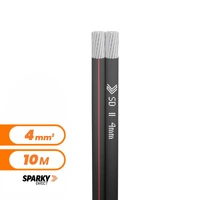
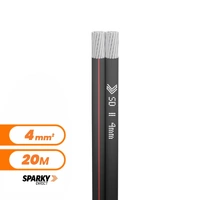
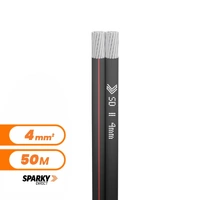
Common sizes for residential string wiring are 4mm² and 6mm², with the correct choice depending on the string current, run length, and acceptable voltage drop for the system.
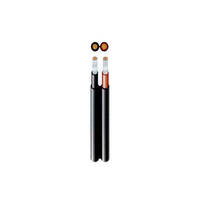
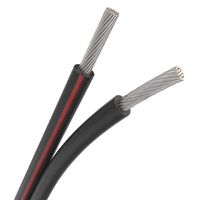
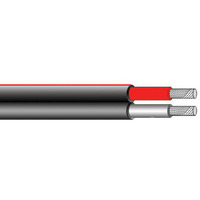
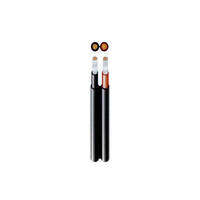
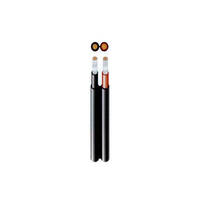
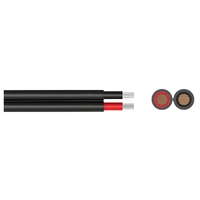
Multi-core solar cable combines positive and negative conductors in a single sheath. This simplifies routing and reduces installation time in applications where both conductors follow the same path. It is commonly used for short runs between panels and combiners, or where cable management is a priority.
Hybrid systems that include battery storage require DC cable between the inverter and the battery bank as well as between the array and the inverter. The cable between the battery and the inverter typically carries high continuous current at lower voltage, so conductor sizing and voltage drop calculations must account for this operating profile. Cables used in this section of the system should be rated for the voltage and current the battery system can produce.
Off-grid systems often have longer cable runs between a rooftop or ground-mounted array and an outbuilding housing the battery bank and inverter. These longer runs make cable sizing more critical because voltage drop accumulates over distance. Larger conductor sizes (6mm² or 10mm²) are commonly required for off-grid applications to keep losses within acceptable limits.
Portable and mobile solar installations on caravans, RVs, and boats require cable that can tolerate repeated flexing and vibration without the insulation cracking or the conductors fatiguing. Flexible solar cable uses a higher strand count than standard solar cable, maintaining integrity through movement. It is rated for the same DC voltages and UV exposure as fixed-installation solar cable.
Cross-linked polyethylene (XLPE) is the insulation material of choice for solar cables because its molecular structure is chemically bonded in three dimensions. This cross-linking gives it significantly higher resistance to heat, UV degradation, and chemical exposure compared to standard PVC. XLPE retains its insulating properties across a much wider temperature range and does not become brittle with prolonged UV exposure in the way that standard cable insulation can.
Halogen-free solar cables use compound formulations that do not contain chlorine or fluorine compounds. In the event of a fire, halogen-free cables produce significantly less toxic smoke and corrosive gas than halogen-containing alternatives. This is particularly relevant in rooftop installations where firefighters may be working in proximity to burning cable.
Solar cables used in roof-mounted installations must tolerate elevated ambient temperatures. The space under a rooftop array can reach 70°C or higher on a hot Australian summer day, and the cable surface temperature adds to this. Cables rated to 90°C or 120°C continuous operating temperature are specified for conditions where standard 70°C-rated cable would be derated or would fail over time.
Finely stranded conductors make solar cable easier to route around obstacles, pull through conduit, and terminate in MC4 connectors. The flexibility also reduces mechanical stress at the point where cable exits a connector or enters a conduit fitting, which is a common location for damage in rigid cable under repeated thermal cycling.
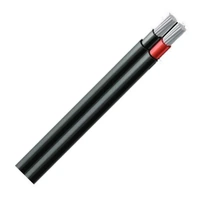
Copper remains the dominant conductor material for solar cable in Australian residential and commercial installations. Copper provides better conductivity per cross-sectional area, is easier to terminate in standard MC4 connectors, and is more resistant to corrosion in outdoor environments. Aluminium cable has a lower material cost and is sometimes used in large commercial arrays for main DC trunk runs, but it requires larger cross-sections to carry the same current and requires compatible termination hardware.
| Property | Copper Solar Cable | Aluminium Solar Cable |
|---|---|---|
| Conductivity | Higher (58 MS/m) | Lower (35 MS/m) |
| Weight | Heavier | Lighter (approx 30%) |
| Material cost | Higher | Lower |
| MC4 compatibility | Direct | Requires correct tooling |
| Corrosion resistance | Excellent | Good (oxide layer forms) |
| Typical application | All residential, most commercial | Large commercial trunk runs |
Solar cable sizing is based on three factors: the maximum continuous current the cable must carry, the acceptable voltage drop over the cable run, and the ambient and installation temperature conditions that affect the cable's current-carrying capacity. AS/NZS 5033 provides guidance on sizing methodology, and most inverter and panel manufacturers publish sizing recommendations for their equipment.
The short-circuit current (Isc) of the panel string is the starting point for sizing the cable, with a safety factor applied because solar arrays can exceed their rated output in certain irradiance conditions. A licensed solar installer or electrician should verify cable sizing for any grid-connected system.
A typical 5kW residential system in Australia uses 4mm² or 6mm² single-core solar cable for the string runs from the roof to the inverter. The correct choice depends on the string current and the cable run length. For runs longer than 10 metres, 6mm² is often specified to keep voltage drop below 1% of the system voltage. For shorter runs with lower string currents, 4mm² may be adequate.
Voltage drop in DC cables converts electrical energy into heat, reducing the amount of power that reaches the inverter. In a solar system, this represents a direct loss of generation. A 3% voltage drop in the DC cables means 3% of the panel output never reaches the inverter. Most designers aim for 1% or less in the DC string wiring. Achieving this in longer runs requires larger cable cross-sections.
Off-grid and rural systems frequently involve cable runs of 20, 30, or even 50 metres between the array and the inverter. At these distances, standard 4mm² or 6mm² cable will produce unacceptable voltage drop. Runs of 30 metres or more often require 10mm² or even 16mm² cable to maintain efficiency. A voltage drop calculation using the actual run length, current, and cable resistance is essential before specifying cable for long-distance installations.
A common and cost-effective approach is to install cable conduit and in some cases oversized conductors at the time of initial installation to allow future expansion without a full cable pull. If a homeowner plans to add battery storage or additional panels in the future, the cabling infrastructure should accommodate that from day one.
MC4 connectors (Multi-Contact 4mm) are the near-universal standard for solar panel connections in Australian residential and commercial installations. They provide a weatherproof, locking connection that can be made without tools and disconnected with a purpose-designed MC4 release tool. The 4mm designation refers to the contact pin diameter, and MC4s are rated for DC voltages up to 1,000V or 1,500V depending on the series.
While MC4 is a standardised form factor, not all MC4 connectors from different manufacturers are fully compatible. Mixing brands is not recommended and is specifically cautioned against in installation guidance. Solar accessories including connectors should be sourced from reputable suppliers with full product specifications.
Amphenol H4 connectors and Staubli MC4 connectors are among the alternatives to generic MC4 found in some panel specifications. Some panel manufacturers ship their products with proprietary connectors and specify that only matching connectors should be used to maintain warranty coverage. Installers should check panel documentation before specifying connectors.
A connector that allows moisture ingress will corrode the contact surfaces and create resistance at the connection point. Increased resistance at a connector generates heat, which accelerates degradation and can eventually produce an arc or a fire. Connectors used in solar installations should be rated to IP67 or IP68 and should be assembled with the correct crimping tool for that connector series.
Major Tech MC4 crimping tools provide the correct crimp profile to ensure reliable long-term connector performance.
Cable routing on a rooftop should minimise the length of exposed cable and protect against mechanical damage from foot traffic, sharp roof edges, and the movement of panels under wind load. UV-rated cable clips and saddles should be used to secure cable at regular intervals. Cable should not be allowed to rest directly on sharp metal edges or to bridge gaps where it could be abraded by movement.
When running cables underground between a rooftop array and a building entry point, or between a ground-mounted array and the inverter building, the cable must be rated for direct burial or be installed in conduit. The burial depth, cable type, and conduit requirements are specified in AS/NZS 3000:2018 and AS/NZS 5033. Direct-burial-rated solar cable with a robust outer sheath offers protection against mechanical damage and moisture.
On rooftops, cable is at risk of damage from equipment during maintenance visits, from animals nesting under panels, and from debris movement during high winds. Corrugated conduit, UV-rated cable ties, and purpose-made cable clips provide mechanical protection. Cable should be routed to avoid areas where foot traffic is likely and secured firmly so it cannot move and abrade against roof surfaces.
UV-resistant cable ties and cable clips are essential accessories for any rooftop installation.
Rodents are a significant and underappreciated cause of solar cable damage in Australian installations. Possums and rats can chew through cable insulation, causing ground faults that may not be immediately obvious but reduce system output and create fire risk. Cable management that keeps cables tight against the underside of the panel frame or inside conduit reduces exposure to wildlife access.
Salt air accelerates corrosion of exposed metal components including cable terminations and connector pins. In coastal locations, tinned copper cable is preferred over bare copper because the tin plating resists corrosion. Connector seals must be in good condition and correctly assembled, and all exposed metal hardware should be stainless steel or appropriately coated.
The structural and electrical grounding requirements for solar arrays are specified in AS/NZS 5033 and AS/NZS 3000:2018. Array frames must be bonded to the main earthing system, and the grounding conductor must be sized and routed appropriately. Some inverters provide integrated grounding functions, but installers must verify that the complete installation meets the relevant standard rather than relying on the inverter alone.
Every conductor has electrical resistance, and when current flows through that resistance, power is lost as heat (P = I² x R). In a solar system, this loss occurs in the cable between the panels and the inverter. The cable resistance is determined by the conductor material, cross-sectional area, and length. A longer run with a smaller conductor produces more resistance and more loss.
For a system producing 5kW, a 3% cable loss means 150W of generation is permanently lost before it reaches the inverter. Over a year of operation, that represents a significant reduction in the energy exported or used.
The industry standard target for voltage drop in DC string wiring is 1% or less of the system open-circuit voltage. For a 600V system, that means no more than 6V of drop across the cable run. Achieving this target in longer runs requires upsizing the cable cross-section. The cost of slightly heavier cable is recovered in additional generation over the life of the system.
In regions with frequent cloud cover, the energy yield of a solar system is lower than in full-sun locations, making cable efficiency relatively more important. When the system is producing only 20% or 30% of its rated output on overcast days, cable losses remain as a fixed percentage of that reduced output. Well-sized cable ensures the maximum possible yield is captured on every day, not just sunny ones.
Australia receives among the highest UV index readings in the world, particularly in Queensland, the Northern Territory, and Western Australia. Standard cable insulation begins to break down under prolonged UV exposure, becoming brittle and eventually cracking. Solar cable formulated with UV stabilisers in the insulation and outer sheath maintains flexibility and electrical integrity through decades of direct sun exposure. IEC 62930-certified cable is required to pass UV exposure testing as part of its certification.
The underside of a rooftop solar array can reach surface temperatures well above 60°C on a summer day in most Australian states. Cable in contact with a metal roof or trapped in a confined space may be exposed to even higher temperatures. Heat accelerates insulation ageing and, if the cable is not rated for the actual operating temperature, can cause premature degradation. High-temperature-rated solar cable (90°C or 120°C) is the correct choice for Australian roof-mounted applications.
Marine environments present combined challenges of UV exposure, salt-laden air, high humidity, and mechanical stress from wind and wave movement. Tinned copper conductors resist the galvanic corrosion that affects bare copper in salt air. Connector seals must be intact and rated to IP67 or higher. Cable entry points into junction boxes and inverters should be sealed with appropriate cable glands to prevent moisture tracking along the cable into electrical equipment.
The Cobalt Solar Energy range includes solar-specific cable glands designed for this purpose.
In desert regions where ambient temperatures regularly exceed 40°C and ground temperatures are even higher, cable current-carrying capacity must be derated for the actual installation temperature. Cables buried in hot soil require derating calculations beyond the standard tabulated values. A conservative approach to cable sizing, combined with IEC 62930-rated cable and UV-stable outer sheathing, is appropriate for these environments.
Solar cables should be inspected visually at intervals of no more than two years as part of routine system maintenance. Inspection should look for cracked, damaged, or discoloured insulation; loose or corroded connectors; cable that has slipped from its securing clips and is resting against sharp edges or abrasive surfaces; and evidence of animal damage or nest building under the array.
Insulation resistance testing with a DC insulation tester (megger) can detect insulation deterioration before it becomes a visible crack or a ground fault. Testing is typically performed at commissioning and should be repeated at intervals of five years or if there is any evidence of physical damage or unexplained performance loss. Test results should be recorded and compared with commissioning values over time.
Infrared thermal imaging is a highly effective maintenance tool for solar installations. A hotspot on a cable or at a connector indicates elevated resistance at that point. Resistance can develop from a degraded connector contact, a pinched or damaged conductor, or a corroded termination. Thermal imaging finds these issues before they escalate to arcing or fire.
A well-installed solar system with correctly rated cable and connectors should require minimal cable maintenance over a 25-year lifespan. The key preventative measures are: correct cable selection at installation, properly installed and torqued connectors, effective cable securing to prevent movement and abrasion, and periodic visual and insulation resistance inspection.
The most common signs that solar cable requires replacement are visible insulation damage (cracking, splitting, or discolouration), a measurable decline in insulation resistance compared to commissioning values, unexplained performance loss that cannot be attributed to panel degradation or shading, and physical damage from animal activity, impact, or roof work.
Systems installed with undersized cable are sometimes upgraded when the owner becomes aware of the voltage drop impact on system performance. Upgrading from 4mm² to 6mm² on a long string run can recover a meaningful percentage of lost generation. The cost-benefit depends on the remaining system life, the length of the run, and the local electricity tariff.
When replacing cable in an existing installation, the new cable must meet current standards (IEC 62930 and AS/NZS 5033). If the original conduit is still intact and in good condition, it may be possible to pull new cable through. If cables were surface-fixed with clips, replacement is straightforward. If cables were buried, careful excavation is required. The replacement is also an opportunity to upsize the conductor if voltage drop was a problem in the original installation. Solar cable supplies are available in standard lengths and on request as cable cuts for specific project requirements.
Solar cable overheating has three primary causes: undersized conductor for the current it is carrying, high resistance at a connector or termination, and cable installed in a location with insufficient ventilation where ambient temperatures exceed the cable's derating allowance. Overheating is identifiable by discolouration of the cable insulation near the hot zone, or by thermal imaging that shows elevated temperatures at a connector or along a cable run.
Voltage drop in DC string cables shows up as a lower-than-expected voltage at the inverter DC input relative to the panel open-circuit voltage. Monitoring inverters typically log DC input voltage, which can be compared with the theoretical voltage for the string at the measured irradiance. A consistent shortfall points to excessive resistance in the string wiring. Measurement at both ends of the cable run, with the system operating, confirms whether the drop is in the cable or at the connectors.
Corroded or poorly assembled MC4 connectors are among the most frequent causes of solar system underperformance and safety incidents. Signs include discolouration of the connector body, visible corrosion at the pin, or a measurable voltage drop across the connector. Connectors that are corroded or have been assembled without the correct crimp should be replaced. Re-terminating with a new connector pair requires cutting back the cable to undamaged insulation and correctly crimping the new pin before inserting it.
Any breach of solar cable insulation creates a potential path for a ground fault or arc. Ground faults in positive and negative conductors at different points in the array can create a situation where the fault current bypasses the overcurrent protection. Many modern inverters include arc fault detection, but the primary defence is correctly installed and undamaged cable. Any cable showing physical damage to the insulation should be replaced before the system is returned to service.
Aluminium cable typically costs 30 to 50 percent less per metre than equivalent copper cable. For large commercial installations with hundreds of metres of trunk cable, this difference is significant. For residential installations with relatively short runs, the saving is modest, and the simpler termination process with copper connectors often offsets the material cost difference.
Upsizing from 4mm² to 6mm² solar cable adds a material cost to the installation, but this is offset by the reduction in voltage drop losses over the life of the system. For a run of 20 metres carrying 10A, the difference in annual energy loss between 4mm² and 6mm² cable is measurable. In most cases, the payback period for the additional cable cost is well under five years.
Installing cable that is marginally adequate at commissioning may create problems as panel output degrades slightly over time, as the system is expanded, or if the cable itself degrades in service. The cost of retrospective cable upgrade (excavation, new cable, re-termination) typically far exceeds the cost of upsizing at the time of original installation. Correct sizing at the outset is always the more economical choice when viewed over the system lifetime.
When selecting solar cable, look for products that carry IEC 62930 certification and are supplied by brands with an established presence in the Australian solar market. Certification documentation should be available on request. The Cobalt Solar Energy range stocked by Sparky Direct is an example of a solar-specific product line with documentation appropriate for Australian installations.
Reputable solar cable manufacturers provide warranties against manufacturing defects and, in some cases, against premature insulation failure under normal solar installation conditions. Warranty terms vary, and installers should confirm warranty documentation is available for the cable used on a project. This documentation may be required if a warranty claim is made against the solar panel or inverter manufacturer and the cable specification is questioned.
Indicators of quality solar cable construction include: fine-stranded tinned copper conductors (check by inspecting a cut cross-section), XLPE insulation with a consistent wall thickness, an outer sheath that does not crack when bent sharply, clear printing of the cable specification on the outer sheath (voltage rating, conductor size, standard), and certification markings that can be verified against the manufacturer's documentation.
An issue noted frequently in online reviews of solar cable sold through non-specialist channels is that the stated conductor cross-section does not match the actual cross-section. Reputable suppliers stock cable where the specification is verified by the manufacturer.
When comparing solar cable suppliers, the relevant factors are: whether the cable carries IEC 62930 certification, whether the stated conductor size is accurate, what the delivery lead time is for the required quantity, whether cable cuts are available for exact project quantities, and the total cost including freight. Sparky Direct stocks solar cables with fast delivery Australia-wide and trade pricing for licensed contractors.
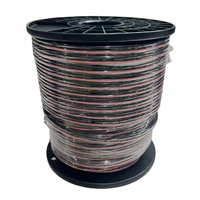
Residential solar installations typically require 4mm² or 6mm² single-core DC solar cable in 20 to 50 metre quantities per installation, depending on the roof layout and inverter location. Standard roll lengths (typically 100m) are available for installers who do multiple jobs, and shorter cable cuts are available for individual projects where a full roll would be wasteful.
Commercial solar projects often require larger quantities, multiple cable sizes, and planned delivery to site. Project managers can contact Sparky Direct to discuss requirements for specific projects, including delivery scheduling and quantity pricing. The solar supplies section of the Sparky Direct website includes the full range of solar cable sizes and accessories available for commercial projects.
Electrical contractors who install solar regularly can benefit from stocking standard cable sizes and reducing per-job procurement time. Bulk roll purchasing is available through Sparky Direct with trade account pricing. CABAC cable accessories including UV-resistant cable ties in bulk packs are also available for volume purchasing alongside solar cable.
Sparky Direct delivers Australia-wide, including to regional and remote areas. Delivery timeframes vary by location, and installers working in remote areas should allow additional lead time. Three-day delivery to Western Australia has been noted by customers for standard orders. For time-critical projects, contacting Sparky Direct directly is the best way to confirm current delivery timeframes to your location.
Sparky Direct's online store provides access to solar cable for customers in Brisbane and all major Australian cities. The Solar Cable Supplies category is stocked with regularly updated inventory. For urgent requirements, checking current stock availability on the website or contacting the team directly is recommended.
For projects requiring unusual quantities or a combination of cable types and accessories, Sparky Direct can provide a quote. Contact the team via the Sparky Direct contact page with project specifications to receive availability confirmation.
Solar cable, by enabling photovoltaic energy generation, directly supports the transition to renewable electricity. The embodied energy and material impact of the cable itself is small relative to the lifetime carbon benefit of the electricity generated by the system it connects. Choosing correctly rated cable that lasts the lifetime of the system avoids the additional material and waste impact of premature replacement.
Copper is one of the most recycled metals in the world, with a well-established recycling infrastructure in Australia. At end of system life, the copper conductors in solar cable can be recovered and recycled. The XLPE insulation is also recoverable in specialist recycling streams, though this is less commonly available at present than copper recovery.
Halogen-free cable formulations reduce the volume of toxic and corrosive gases produced if the cable burns. This is relevant both to firefighter safety and to the protection of electrical equipment in proximity to a fire. In buildings where rooftop solar cable may run in close proximity to occupied spaces, specifying halogen-free cable is consistent with best practice fire safety principles.
The solar industry is progressively moving toward higher DC operating voltages, with 1,500V DC systems becoming standard in large commercial and utility-scale installations. Higher voltage systems require cable rated for the increased voltage, with thicker insulation walls and more rigorous testing requirements. The benefit is that higher voltage allows lower current for the same power level, reducing cable losses and enabling the use of smaller conductor cross-sections over the same run length.
Monitoring systems that track DC string voltage and current at granular levels are becoming more affordable and are being integrated into inverter platforms. These systems can detect the early signatures of connector degradation, insulation resistance decline, and localised shading effects that indicate a cable or connector issue. Predictive maintenance based on continuous monitoring data is more effective and less disruptive than periodic inspection alone.
Cable manufacturers are developing compound formulations with improved UV stability, wider temperature ratings, and enhanced flame resistance without increasing cable weight or reducing flexibility. Some manufacturers are also working on conductor designs that reduce skin effect losses at the higher frequencies associated with inverter switching, though this is more relevant to the AC output side than the DC string wiring in most current installations.
Watch Major Tech CTR0334 | MC4 Solar Crimping Tool video
Watch MC4PR Solar Circular connector Male/Female for 1.5-6mm Cable | Pins Inc | 5 Pack video
Watch Cobalt Solar Energy CSE-ECG25-H3-5.5 | 25mm Solar Nylon Cable Gland With 3 Hole x 5.5mm | Black video

Were helpful with info for product payment from WA. Three Days delivery to WA is excellent. Product was as described and as pointed out by previous purchasers, the cable is actually 6mm2 not significantly smaller as sold by lots of other electrical wholesalers under the guise of "6mm".
Double insulated, good quality, PE sheathed twin core, is actually 6mm2 unlike some on eBay. Fast delivery as always.
If you're not wiring solar up with this then take some pride in your work and start
DC-rated PV cable in stock • Fast Australia-wide delivery • Competitive trade pricing
Browse Solar Cables → Get Expert Advice →Yes, unsuitable cables can cause energy loss, overheating, or safety issues.
Sparky Direct supplies solar cables Australia-wide, offering reliable solar cabling solutions with convenient delivery.
Solar cables are securely packaged and delivered via standard courier services.
Generally, Sparky Direct accepts returns of unused solar cable. Provided they’re in new condition and returned in the original packaging, in line with Sparky Direct’s returns policy.
Warranty coverage varies by manufacturer and typically covers defects in materials or workmanship.
Solar cable is sold in pre-cut lengths or 100M rolls at Sparky Direct.
Yes, solar electrical work must be completed by licensed electricians and accredited solar installers.
Yes, they are commonly used when expanding or modifying existing solar systems.
Once installed correctly, solar cables generally require minimal maintenance.
Solar cable should only be used for its intended purpose to ensure it’s safe, suitable, and reliable.
Installation is straightforward for trained professionals familiar with solar systems.
Solar cables are typically available in standard colours to identify polarity.
Solar cables are used to connect solar panels to inverters, isolators, and other components within a solar power system.
Quality solar cables are designed for long service life in harsh outdoor environments.
Cable size depends on current load, voltage drop requirements, and system design.
They are designed to handle higher DC voltages, UV exposure, and outdoor conditions unique to solar systems.
Solar cables are selected based on system voltage, current rating, and installation requirements.
Many solar cables are designed with fire-retardant properties to improve safety.
Most solar cables feature double insulation for added electrical protection and durability.
Yes, solar cables are designed to be flexible for easier installation around panels and mounting systems.
Solar cables are rated for high DC voltages up to 1500V commonly used in photovoltaic systems.
Yes, they are specifically designed to withstand weather exposure, heat, and environmental conditions.
Solar cables are designed to meet relevant AS/NZS electrical and fire safety standards when specified correctly.
Common types include DC solar cables for panel connections and AC cables used between inverters and switchboards.