
Search Results:
Search Results:
Search Results:
Search Results:
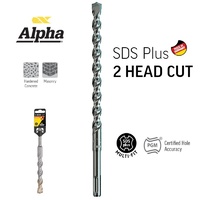
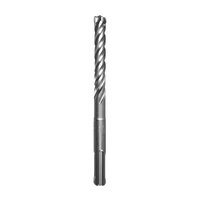
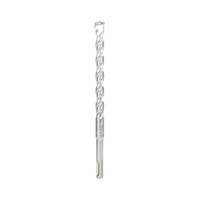
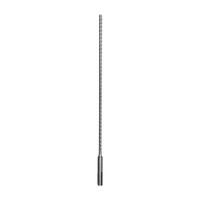
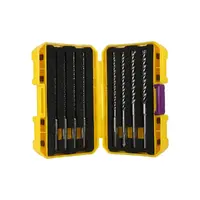
Masonry bits work through a combination of rotation and percussion: they grind and chip through the substrate rather than slicing it the way a wood or metal bit does. The spiral flute design channels dust and debris away from the cutting tip continuously, preventing clogging and reducing heat buildup during drilling. This construction is what separates them from the rest of the drill bits range.
The cutting tip is typically made from tungsten carbide, a compound with a Vickers hardness rating of approximately 1,500 to 2,000 HV, far harder than the 400 to 600 HV of high-speed steel. ISO 5743 certification verifies that a masonry bit meets minimum tip hardness and bond strength standards, providing a reliable quality benchmark when comparing products from brands such as Alpha and Bordo.
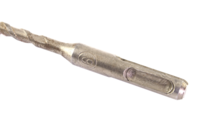
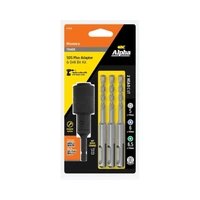
The shank connects the bit to the drill chuck and varies in design depending on the intended drill type. Round and hex shanks suit standard rotary drills, SDS-Plus shanks lock into rotary hammers, and SDS-Max shanks are used in heavy-duty demolition hammers.
Primary substrates include concrete, brick, blockwork, mortar joints, natural stone, slate, and rendered surfaces. Reinforced concrete presents the greatest challenge, since embedded steel rebar requires either a rebar-cutting bit or a deliberate repositioning of the hole. Aerated concrete such as Hebel or AAC block is among the softer masonry materials, and it can be drilled with standard carbide-tipped bits without requiring hammer action.
Each type serves a distinct range of applications, from light DIY work through to heavy-duty construction. Matching the bit type to the job is the first step in avoiding premature failure.
SDS bits transfer impact energy more efficiently because the slotted shank allows axial movement. The full hammer energy reaches the cutting tip rather than being absorbed by shank flex. For high-volume drilling tasks, the higher upfront cost of SDS bits is offset by significantly lower cost-per-hole.
| Bit Type | Typical Holes (10 mm Dia) | Drill Required | Best For |
|---|---|---|---|
| Carbide-tipped twist | 15 to 25 | Rotary or hammer drill | Light DIY, soft brick, mortar |
| SDS-Plus | 60 to 120+ | SDS-Plus rotary hammer | Concrete, anchor installation |
| SDS-Max | 100+ | SDS-Max rotary hammer | Reinforced concrete, dense stone |
| Diamond-tipped | 200+ (with water) | Standard drill, no hammer | Granite, porcelain, engineered stone |
| Multi-purpose | 30 to 50 | Hammer drill | Mixed-material renovation work |
Masonry drill bits are used across construction, trade, and home improvement applications wherever a secure fixing into hard building materials is required.
Drilling into concrete or masonry to install expansion anchors, chemical anchors, and wall plugs is the single most common application for masonry bits. The bit diameter must match the anchor specification precisely. For wall plugs this means using a bit with the same diameter as the plug, while for chemical anchors the hole is typically drilled 2 mm larger than the threaded rod to allow adhesive flow.
Common fixing applications include mounting TV brackets, shelving, balustrades, pergola posts, air conditioning units, and electrical switchboards to masonry walls and concrete slabs. Pair the drilling job with the right anchor screws from the start.
Licensed electricians and plumbers routinely use masonry bits to core through concrete slabs, brick walls, and blockwork. The work routes conduit, pipes, and cable trays between spaces. For larger penetrations, core drill bits with diamond or carbide segments cut pipe sleeves, drainage lines, and HVAC duct penetrations through concrete floors and walls.
Compliance with Australian standards for fire-rated penetrations requires that all service penetrations through fire-rated masonry assemblies be sealed with approved intumescent materials after drilling.
Drilling into heritage brick, sandstone, and limestone requires careful bit selection and technique to avoid spalling or cracking the substrate. A slow-speed carbide-tipped bit without hammer action is typically recommended. Stone benchtops, tile, and ceramic surfaces are drilled with diamond-tipped bits using water cooling. This achieves clean, chip-free holes for fixtures, tapware, and sink cut-outs. Outdoor masonry applications such as pergola footings and fence post anchors typically require SDS-Plus bits in diameters from 12 mm to 20 mm.
Selection requires matching three variables: substrate hardness, drill type, and hole specification. Get these right and you avoid premature bit failure and achieve a clean, accurate result.
Soft masonry such as brick, mortar, aerated concrete, and render can be drilled effectively with standard carbide-tipped bits. Harder substrates including dense concrete, granite, and reinforced concrete demand SDS or diamond-tipped bits. A practical field test is to tap the surface with a screwdriver handle. Brick produces a hollow sound and chips easily, concrete rings sharply and resists chipping, and granite feels cold and completely unyielding under impact.
When the substrate is unknown or suspected to be reinforced, always default to an SDS-Plus bit. This avoids shank fatigue and bit breakage under sustained hammer action.
Standard carbide-tipped masonry bits fit keyless and keyed chucks on corded and cordless hammer drills. They are the only option for drills without an SDS chuck. SDS-Plus bits require a rotary hammer with an SDS-Plus chuck and cannot be used in a standard keyless chuck. Attempting to do so is a safety hazard as the bit will not lock securely. SDS-Max bits require a dedicated SDS-Max rotary hammer, which is typically a larger, heavier machine producing impact energies above 8 joules.
Bit diameter must correspond to the anchor or fastener specification. Flute length, which is the active cutting zone of the bit, must exceed the required hole depth by at least 10 mm. This prevents dust from clogging the tip and stalling the drill. Common masonry bit diameters for residential applications range from 5 mm to 16 mm. The most frequently used sizes for standard wall plug fixings are 6 mm, 8 mm, and 10 mm.
Match the bit to the anchor specification rather than guessing. A bit that is 1 mm oversize can reduce anchor holding strength by 30 to 50 percent. Always verify against the manufacturer datasheet for the specific anchor or wall plug being installed.
Performance and longevity depend heavily on correct drilling technique, appropriate speed settings, and heat management during use. Poor technique can cut bit life in half, regardless of bit quality.
Masonry bits should be operated at lower RPM than wood or metal bits. A general guideline is 300 to 800 RPM for standard carbide-tipped bits, reducing further as diameter increases. Consistent, moderate forward pressure is more effective than forcing the bit, because the carbide tip requires time to abrade the substrate, and excessive pressure accelerates tip wear and increases the risk of bit deflection.
Short drilling bursts of 10 to 15 seconds, with the bit periodically withdrawn to clear dust from the flutes, extend bit life significantly. This also reduces the heat buildup that causes carbide tip delamination.
Heat is the primary cause of premature masonry bit failure. Sustained friction between the carbide tip and substrate generates temperatures that can soften the brazing holding the tip to the shank, causing the tip to detach mid-use. For diamond-tipped bits and solid carbide bits, water cooling is essential: use either a continuous water feed system or periodically dip the bit in a container of water during drilling.
Never run a masonry bit in hammer mode unless it is specifically designed for percussive use. The impact forces will crack or shatter non-percussive bits including solid carbide and diamond-tipped types.
Before drilling into any concrete slab, wall, or column, a rebar detector or cover meter should be used to locate embedded steel reinforcement. Striking rebar with a standard masonry bit will immediately blunt or shatter the carbide tip, so if rebar is unavoidable, a dedicated rebar-cutting bit with a specially hardened tip is required. In structural concrete members, drilling through or adjacent to rebar without engineering approval can compromise structural integrity and may violate building code requirements.
Masonry drill bit performance varies significantly across brands and grades. Professional-grade bits offer measurably longer life and more consistent results than budget alternatives. Brands like Bristol Tool Works and Major Tech sit firmly in the trade-grade tier.
Professional-grade masonry bits use higher-grade tungsten carbide with tighter tolerances on tip geometry. This results in more consistent hole diameters and longer service life compared to economy bits. ISO 5743 certification is the key quality benchmark. It verifies minimum tip hardness of 1,250 HV and adequate bond strength between the carbide tip and steel shank. A quality masonry bit will maintain its tip geometry through repeated use. A worn or low-quality bit will produce oversized, ragged holes as the tip degrades, compromising the holding strength of anchors and fixings.
A masonry bit requires replacement when it produces noticeably slower drilling speeds at the same pressure and RPM settings. This indicates that the carbide tip has worn below its effective cutting geometry. Visible signs of wear include a rounded or asymmetrical tip, chipping or cracking of the carbide, and a blued or discoloured shank indicating overheating. Continuing to use a worn bit increases the risk of the bit binding in the hole. This causes the drill to kick back, a significant safety hazard with larger diameter bits in rotary hammers.
Replace the bit if drilling takes 50 percent longer than when new at the same RPM, if the hole diameter is oversize by more than 0.5 mm, or if the tip shows visible chipping. Keeping a fresh backup bit in the toolbag prevents wasted site time when a worn bit fails.
Safe use of masonry drill bits requires appropriate personal protective equipment, dust management, and awareness of structural and electrical hazards within the substrate. Silica exposure is the single highest long-term health risk associated with this work.
Safety glasses or a full face shield are mandatory when drilling masonry. Carbide tip fragments, concrete chips, and silica dust are ejected at high velocity and can cause serious eye injury. Hearing protection is required when operating rotary hammer drills for extended periods. Sustained noise levels from SDS hammers typically exceed 95 dB(A), well above the 85 dB(A) action level under Australian Work Health and Safety regulations. Respiratory protection is critical when drilling concrete, brick, or stone without dust extraction. Crystalline silica dust generated by masonry drilling is a Group 1 carcinogen and the primary cause of occupational silicosis among construction workers.
Drilling concrete, brick, and stone generates respirable crystalline silica (RCS) dust. This causes silicosis, an irreversible and potentially fatal lung disease, with cumulative exposure over time. On-tool dust extraction using a HEPA-rated vacuum attached directly to the drill is the most effective control measure. It captures dust at the point of generation before it becomes airborne. Safe Work Australia's model WHS regulations require that employers implement engineering controls such as on-tool extraction before relying on respiratory protective equipment as a standalone measure.
Silica safety reminder: Respirable crystalline silica is regulated under Safe Work Australia model WHS regulations. The current workplace exposure standard is 0.05 mg/m³ over an 8-hour shift. On-tool dust extraction with a HEPA vacuum, water suppression, and a P2 respirator are the standard control measures for drilling concrete, brick, and stone on Australian sites.
Before drilling into any wall, floor, or ceiling, a cable and pipe detector should be used to locate concealed electrical conduits, water pipes, and gas lines. Drilling into a live electrical cable is a potentially fatal hazard. If a cable is struck, the drill operator should not withdraw the bit. They should release the drill immediately and isolate the circuit at the switchboard before proceeding. In structural masonry elements such as load-bearing walls, lintels, and concrete columns, drilling locations should be confirmed against building plans or assessed by a structural engineer.
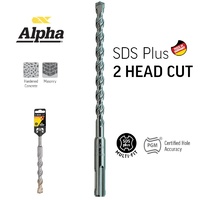
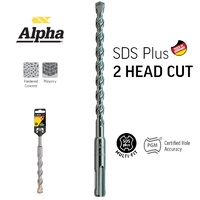
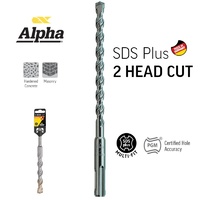
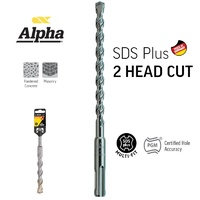
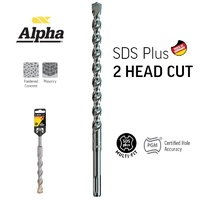
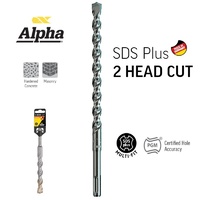
Watch Alpha SP050160G | 5.0 x 160mm SDS Plus German 2 Cutter Masonry Drill Bit video
Watch Alpha SM23ST | ONSITE Step Drill Bit Set 3-13mm² | 23 Bits video
Watch Bristol BTW13M | 13 Piece Metric Drill Set video

Excellent tool. I only use carbide hole saws now. Cuts easier and faster than any other I have owned and lasts longer too
Very high quality drill bit, slices through plaster board like a hot knife through butter.
Handy set of step drills covers the range of 4mm to 30mm in three maximum dimensions (12mm, 20mm and 30mm).
Quality products in stock • Fast Australia-wide delivery • Competitive trade pricing
Browse Masonry Drill Bits → Get Expert Advice →