
Search Results:
Search Results:
Search Results:
Search Results:
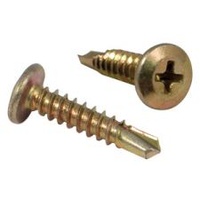
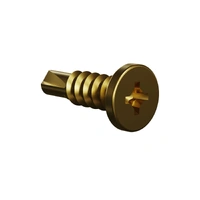
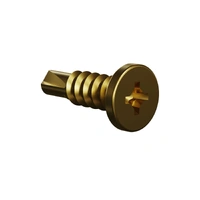
A wafer head screw uses a thin, broad head profile sitting just above the work surface. The head diameter is wide compared with the shank, and the dome height is low. That combination gives a large, flat bearing area that holds thin or lightweight material firmly against the substrate.
The broad head reduces pull-through, which happens when a small screw head punches through soft sheet under load. Wafer heads spread clamping force across more surface area, so the screw stays seated even in thin steel or light panel work.
Wafer head screws also suit jobs where a low, neat finish matters. The head sits flush enough to avoid snagging on cables, covers or adjacent components, but does not need a countersunk recess. That makes wafer heads quicker to install than countersunk screws in many sheet-metal applications.
The screw clamps the top material against the supporting substrate. As the screw drives in, the threads pull the head down. The wide bearing surface then distributes the clamping load across the panel, preventing local crushing or tear-out.
Self-drilling wafer head screws have a small drill-point tip that creates the fixing hole as the screw is driven. They suit suitable light-gauge steel without a pilot hole. Self-tapping wafer head screws form threads in a pre-drilled hole or in a substrate soft enough to accept the thread directly.
Common uses include metal battens, cable tray brackets, light-gauge steel framing, thin sheet metal, and fixing of accessory plates inside electrical enclosures. The broad head suits panels, covers and brackets where pull-through is a real risk with smaller fasteners.
A low-profile head reduces snagging on cable trays, switchboard covers, access panels and exposed fixing points. Compared with pan or hex head screws, wafer heads sit closer to the surface and look neater on finished work. Where a panel must be removed often, the low profile also helps adjacent covers seat flat.
Different head shapes suit different jobs. The right choice depends on profile height, bearing area, finish, and whether the head should sit on top of the material or sink into it.
| Head Style | Profile | Best Use |
|---|---|---|
| Wafer head | Low, broad, flat bearing | Thin metal, cable tray, sheet, low-snag fixing |
| Pan head | Taller, rounded, smaller bearing | General machine and self-tapping fixings |
| Button head | Rounded, often socket drive | Decorative or specialist socket-drive jobs |
| Bugle head | Self-countersinking flare | Plasterboard, timber sheeting, drywall |
| Countersunk | Sinks flush into recess | Flush finish in pre-countersunk material |
Pan heads have a taller rounded profile and a smaller bearing surface. They suit general fixing where profile height is not a concern. Wafer heads are the better pick where pull-through resistance and a low finish matter, such as cable tray brackets or light-gauge steel. For a closer side-by-side look at pan head screws, the dedicated category page covers common gauges and lengths.
Button heads are more rounded and often socket-driven for decorative or specialist use. The Sparky Direct button head screws range is suited to those jobs. Bugle heads are designed to self-countersink into plasterboard, timber or sheeting; the bugle head screws page lists drywall and timber-grade options. Wafer heads are normally chosen when the fastener should sit on top of the material rather than sink into it.
Countersunk screws need a countersunk recess to sit flush. Wafer heads avoid that extra step and are better for thin metal where countersinking may weaken or distort the substrate. Finish requirements and material thickness should drive the choice.
Wafer head screws are stocked in self-drilling, self-tapping and timber-compatible variants. The right type depends on the substrate and whether a pilot hole is needed.
Wafer head screws ship in handy pack sizes for maintenance work and in bulk buckets for new builds, fit-outs and commercial projects. The Sparky Direct screws bucket packs range covers high-volume use. Before ordering, check size, coating, driver type and pack count so the stock matches the job.
Wafer head screws are a daily-use fastener on Australian job sites. The broad head and low profile suit many electrical and light-construction tasks.
Wafer head screws are used for enclosure covers, mounting plates, brackets, cable management supports and accessory fixing. The wide head helps hold thin panels without washers in many non-structural applications. Sparky Direct stocks compatible hardware across the electrical enclosures range, including surface mount enclosures and electric switchboards.
Compliance note: Switchboards and electrical enclosures that involve fixed wiring must be installed or modified by a licensed electrician. Wafer head screws can be used for non-current-carrying cover, panel and bracket fixing only.
The low-profile head avoids snagging cables and interfering with covers. Common uses include cable tray brackets, light-gauge supports and metal batten systems. For related products, see the cable duct category and the wider cable management range. Avoid sharp protrusions or over-driven screws that could damage cable insulation.
Self-drilling wafer head screws are widely used in steel stud, track, bracket and sheet metal work. Match the screw length and drill point to the combined material thickness. Load-bearing structural applications may require engineer-specified fasteners, so check the project specification before ordering.
Wafer head screws are useful for replacing missing screws, securing loose panels, repairing covers and general site maintenance. Match the existing screw type, length, coating and driver profile where possible. Electricians, facility managers and maintenance teams often keep a small range of common sizes on the van.
Choosing the right wafer head screw means matching gauge, length and driver to the job. The information below helps speed up purchase decisions for common trade sizes.
Screw gauge describes the shank diameter. Common trade sizes include 8g and 10g, with 10g often used as a heavier-duty choice for stronger fixing and broader trade use. The correct gauge depends on substrate thickness, load and manufacturer specifications, so check the data sheet before bulk ordering.
Screw length must be long enough to fully engage the base material without protruding too far on the back side. Shorter screws suit sheet-to-sheet fixing. Longer screws suit brackets or thicker material stacks. Measure the total material thickness, then add enough thread engagement for a secure hold.
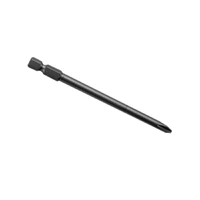
The drive recess type affects torque transfer, cam-out risk and installation speed. Phillips and Pozidriv are common on bucket-pack screws; Torx and hex drives suit higher-torque work. A correct-fit bit reduces stripping and call-backs. Impact drivers need impact-rated bits and controlled torque to avoid over-driving the head.
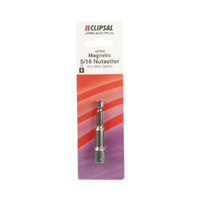
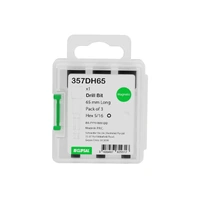
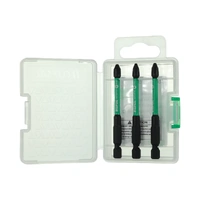
Sparky Direct stocks matched driver bits and a wider drill bits range to suit common wafer head drive types.
Wafer head screws come in zinc plated, galvanised, coated carbon steel and stainless steel options. Coating choice depends on the install environment, especially in coastal and humid Australian sites.
Zinc plating is a cost-effective option for dry internal applications. It is generally not the right choice for exposed outdoor, coastal or highly corrosive locations. Check the coating class against the project specification on commercial work.
Stainless steel is preferred for coastal areas, outdoor installations and corrosive environments. Higher corrosion-resistance grades suit harsher locations such as splash zones or industrial sites. Stainless can be more expensive up front but may reduce maintenance and replacement costs over the life of the install.
Galvanic corrosion can occur when dissimilar metals are mixed. Match the fastener material and coating to the substrate and exposure conditions. Treated timber may also require corrosion-resistant fasteners, since some treatment chemistries attack standard zinc coatings over time.
A short decision framework helps avoid the wrong stock arriving on site. Match the screw to the substrate, the environment and the installation method.
Thin metal, steel framing, timber, plastics and mixed-material assemblies all behave differently. Self-drilling types suit suitable light-gauge metal. Self-tapping types suit pre-drilled or softer substrates. Masonry, concrete and high-load structural applications need different fixing systems such as anchor screws rather than sheet-metal fasteners.
Dry internal, humid internal, outdoor sheltered, coastal and industrial sites all need different coatings. Coating choice should not be based on price alone. Check manufacturer specifications for corrosion class and intended use, especially on long-life installs.
Drill speed, torque control, driver bit fit and pilot holes (where needed) all affect the finished job. Avoid over-driving on thin metal or plastic. For repetitive work, impact drivers paired with magnetic bit holders speed up installs. Correct tooling reduces stripping, misalignment and call-backs.
The notes below cover safe, general fixing practice for trades and informed buyers. They do not replace project-specific engineering or the wiring rules for live electrical work.
Use the correct driver profile and exact bit size. Replace worn bits before they damage screw heads. Apply steady pressure and avoid excessive speed when starting the screw. A correctly seated bit reduces cam-out, especially on small Phillips and Pozidriv heads.
Avoid over-tightening, especially in thin metal or plastic. The broad wafer head should seat firmly without crushing the substrate. Where the panel is very soft or brittle, consider a washer, a larger-head screw, or a different fastener type.
Pick the correct coating for the environment. Avoid mixing incompatible metals in the same assembly. During scheduled maintenance, inspect exposed fasteners in coastal, outdoor and industrial environments. Early replacement of corroded screws is cheaper than fixing damaged panels later.
Online ordering is the fastest way to keep wafer head screw stock available for the next job. Sparky Direct ships self-drilling screws, wafer head packs and bulk buckets nationally for trade and contractor customers.
Confirm screw gauge, length, head style, drive type, tip type, coating and pack size. Confirm whether the job needs self-drilling or self-tapping screws. Check that the product suits the intended substrate, whether that is metal, timber, an enclosure, a batten or a general fixing application.
Bulk buckets are usually more cost-effective than small packs when sizes are used regularly. Standardising on common sizes across enclosure, batten and cable management work simplifies van stock. Keep spare stock on hand for urgent service jobs and regional projects.
Compare unit price, coating class, drive type, pack quantity and supplier reliability rather than headline price alone. Fast dispatch, clear product specifications and consistent stock availability matter for trade buyers on a deadline. Wafer head screws are stocked from brands including Clipsal, Hobson Engineering and TuffStuff Trade Solutions, with related tooling available through the electrical tools range.
Club Clipsal is Australia's largest electrician community offering trade rewards, business support, and exclusive benefits. When you nominate Sparky Direct as your preferred wholesaler, we automatically apply your Clipsal spend points to your Club Clipsal account daily.
Entry-level offering coaching, mentoring, and training discounts
Unlock exclusive industry tools and networking events
Access Toyota fleet offers and business software discounts
Maximum benefits, including VIP experiences and rewards
1. Sign Up: Create your Club Clipsal account at clipsal.com/club-clipsal or via the iCat mobile app
2. Nominate Sparky Direct: Select Sparky Direct from the wholesaler dropdown menu in your profile
3. Add Email: Enter your Sparky Direct account email address in the membership number field
4. Start Earning: Every dollar spent on Clipsal products earns points automatically
Redeem points from the rewards store, including gift cards, tools, and experiences. Access business summits, product training, and industry networking events. Receive early access to new product launches and special promotions. Connect with fellow electricians via the Club Clipsal community app.
Watch Clipsal 357WF30 Self Drilling Screw, Wafer Head, 10G x 30mm, 100 per Packet video
Watch Buildex | Metal Teks 12-14g x 20mm Hex Head CL4 Screws (100 Pack) video
Watch Hobson Engineering MWKXZPP | WALL KATT SCREW (WALLDOG) UNIVERSAL PAN HEAD PHILLIPS (QTY 100) video

These are fantastic for installing a ceiling fan timber in a roof space. With your drill on the low speed you can drill through the truss and into your noggin with confidence
Handy container for the van or Ute, quality is good. Like these for wall mates and the like.
What can I say, but they're screws and they do exactly what you'd expected. Quality is good, happy camper.
Quality products in stock • Fast Australia-wide delivery • Competitive trade pricing
Browse Wafer Head Screws → Get Expert Advice →