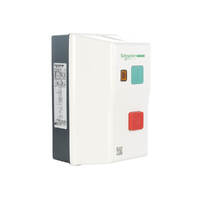

Search Results:
Search Results:
Search Results:
Search Results:
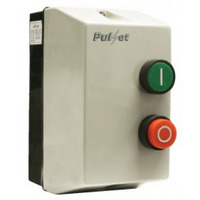
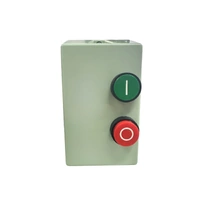
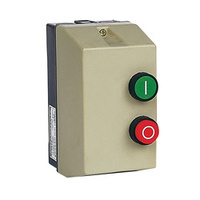
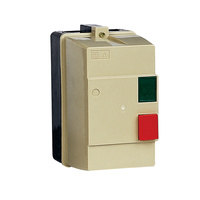
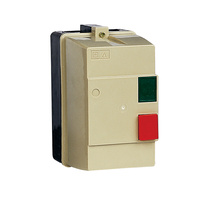
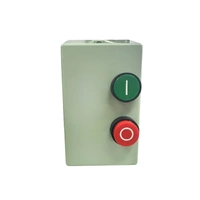
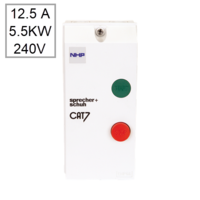
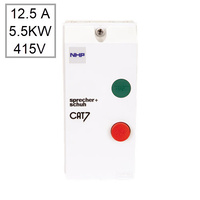
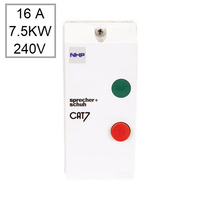
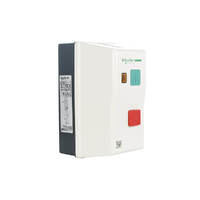
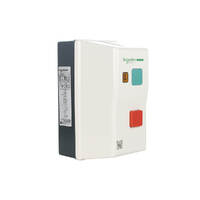
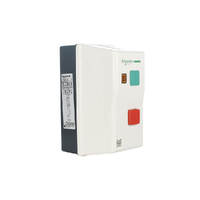
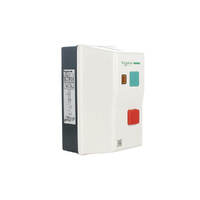
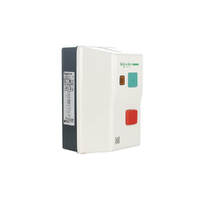
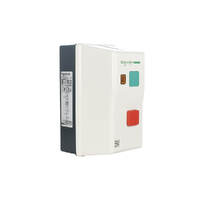
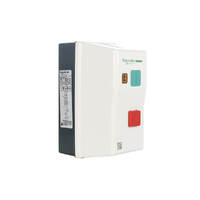
Find the best DOL starters here at Sparky Direct. [ Read More ]
Direct-on-line (DOL) starters use a contactor to switch the full supply voltage directly to a three-phase motor. The starter includes an overload relay that monitors motor current and disconnects the supply if the current exceeds safe limits. These devices are designed for motors that can tolerate the high inrush current that occurs when the motor first starts. DOL starters represent the simplest form of motor control in industrial applications.
When the start button is pressed, a control circuit energises the contactor coil. The contactor closes its main contacts, connecting the three-phase supply directly to the motor terminals. The motor accelerates to full speed almost immediately, drawing a high inrush current during the acceleration phase. An overload relay monitors the motor current and trips if it exceeds the set threshold for more than a few seconds. This protection prevents motor damage from sustained overload conditions.
The DOL starting method applies full line voltage to the motor instantly, causing the motor to develop maximum starting torque. Inrush current typically reaches 5 to 8 times the motor's full-load current for several seconds until the motor reaches operating speed. This surge must be accommodated by both the supply system and the motor windings.
Simple, reliable design with minimal components and few points of failure makes DOL starters attractive for many applications. Low cost compared to more sophisticated motor control systems, such as 3 Pole Switches, ensures widespread adoption. They are suitable for most industrial and commercial motor applications where high inrush current is acceptable and does not affect other equipment on the same supply.
DOL starters are available in sizes ranging from a few kilowatts to several hundred kilowatts. The starter size must match the motor's rated power and full-load current precisely. Undersized starters cannot handle the motor's inrush current and will fail prematurely. Oversized starters are unnecessarily expensive and may not provide adequate overload protection at the motor's actual operating current.
Control circuits typically operate at 24V DC, 110V AC, or 230V AC, depending on the available supply. Lower control voltages (24V) are safer for personnel but require a separate control transformer. Higher control voltages can be taken directly from the main supply but require more careful safety design. Control voltage selection affects both installation cost and operational safety.
Basic DOL starters include only an overload relay for motor protection. Advanced starters may include thermal overload relays, electronic overload relays, or phase failure detection. Some starters incorporate soft-start or variable frequency drive technology for more sophisticated motor control. Selection depends on application requirements and budget constraints.
An electromagnetic switch closes the main contacts to connect the supply to the motor. It must be rated for the motor's full-load current plus a safety margin. The contactor includes auxiliary contacts that provide feedback signals and enable interlocking with other equipment. Contactor quality directly affects starter reliability and service life.
The overload relay monitors the motor current and detects when it exceeds the set threshold. Thermal overload relays use a bimetallic strip that bends when heated by excessive current. Electronic overload relays use current sensors and logic circuits for more precise protection and faster response. Proper overload setting is critical for effective motor protection.
Safety Note: Never bypass or disable overload protection. A motor running without overload protection can overheat and cause fire. Always set the overload relay to trip at a current slightly above the motor's full-load current rating.
A low-power circuit controls the contactor coil, typically operating at a lower voltage than the main circuit. Start and stop pushbuttons allow the operator to control the motor. Auxiliary contacts in the contactor provide feedback to the control circuit, enabling automatic sequencing and interlocking. Control circuit design must ensure safe operation under all conditions.
A thermal overload element heats up when current flows through it. If the motor draws excessive current for more than a few seconds, the thermal element trips and opens the control circuit. The contactor de-energises and the main contacts open, stopping the motor. Reset is typically manual to ensure the operator investigates the cause before restarting.
Centrifugal pumps, positive displacement pumps, and air compressors commonly use DOL starters. The high inrush current is acceptable because the motor accelerates quickly to full speed. Overload protection prevents damage if the pump becomes blocked or the motor is overloaded. Pump applications represent one of the most common uses for DOL starters in Australian industry.
Ventilation fans, cooling tower fans, and industrial blowers typically use DOL starters. The low starting torque requirement of fan loads makes DOL starting appropriate. Overload relays protect against bearing failure or blockage that would cause excessive current draw. Fan applications benefit from the simplicity and reliability of DOL control.
Conveyor belts, bucket elevators, and screw conveyors often use DOL starters. The starter must be sized for the motor's full-load current plus the inrush current during starting. Interlocking with other equipment ensures safe sequencing of multiple motors. Material handling systems often require 4 Pole Changeover Switches for emergency isolation.
Lathes, milling machines, and other machine tools commonly use DOL starters. The simple, reliable design is well-suited to industrial environments with dust, vibration, and temperature extremes. Overload protection prevents damage from tool breakage or jamming. Machine shops throughout Australia rely on DOL starters for reliable motor control.
Simple, robust design with few components and minimal maintenance requirements ensures long service life. Low cost compared to soft starters and variable frequency drives makes them economically attractive. Reliable operation in harsh industrial environments with dust, moisture, and temperature extremes demonstrates their durability. Fast acceleration to full speed is appropriate for many industrial applications where smooth starting is not required.
High inrush current can cause voltage dips that affect other equipment on the same supply. Mechanical shock from rapid acceleration can stress the motor, driven equipment, and mechanical couplings. DOL starters are not suitable for applications where smooth acceleration or variable speed control is required. They may cause nuisance tripping of upstream protection devices if the supply is weak or the inrush current is very high.
| Aspect | DOL Starter | Soft Starter | VFD |
|---|---|---|---|
| Initial Cost | Low | Medium | High |
| Inrush Current | 5-8x FLC | 2-3x FLC | 1.5x FLC |
| Speed Control | No | No | Yes |
| Energy Efficiency | Standard | Standard | High |
| Maintenance | Minimal | Low | Medium |
Motors with low starting torque requirements such as fans and pumps benefit from DOL starting. Applications where high inrush current is acceptable and does not affect other equipment can use DOL starters safely. Situations where simplicity, reliability, and low cost are more important than smooth acceleration make DOL starters the practical choice.
Motors with high starting torque requirements such as loaded conveyors or crushers need soft-start or VFD control. Applications where voltage dips must be minimised to protect sensitive equipment require reduced inrush current. Situations requiring variable speed control or soft acceleration benefit from VFD technology. Installation of 3 Pin Switched Socket Combinations provides flexible control options.
Calculate the motor's full-load current from the motor nameplate or technical specifications. Select a starter rated for at least the full-load current plus a safety margin (typically 10 to 20 percent). Consider the inrush current, which is typically 5 to 8 times the full-load current for three-phase motors. The contactor must handle this current without welding the contacts.
Control voltage must match the available supply at the installation site. 24V DC control circuits are safest for personnel but require a separate control transformer. 110V or 230V AC control circuits can be taken directly from the main supply but require more careful safety design. Control voltage selection affects both cost and safety compliance.
The overload relay must be set to trip at a current slightly above the motor's full-load current. Setting the relay too high provides inadequate protection and allows the motor to overheat. Setting the relay too low causes nuisance tripping and reduces productivity. Correct overload setting requires understanding of the motor's thermal characteristics and operating conditions.
The supply must be capable of delivering the motor's inrush current without excessive voltage drop. A weak supply will cause lights to flicker and may trip upstream protection devices. Calculate the expected voltage drop based on the supply impedance and motor inrush current. If voltage drop exceeds 5 percent, consider a larger supply or alternative starting method.
Mount the starter on a DIN rail or panel in a location that allows adequate ventilation and cooling. Ensure the starter is accessible for operation, maintenance, and emergency disconnection. Protect the starter from excessive vibration, moisture, and temperature extremes. Mounting location affects both cooling efficiency and operational convenience.
Connect the three-phase supply to the starter's input terminals using appropriately sized conductors. Connect the motor to the starter's output terminals using cable sized for the motor's full-load current. Connect the control circuit to the start and stop pushbuttons and any interlocking equipment. All connections must be tight and properly terminated to prevent arcing and overheating.
All metal parts of the starter and motor must be properly earthed to prevent electric shock. The motor frame must be connected to the main earthing conductor. All connections must be tight and secure to prevent arcing and overheating. Earthing compliance is mandatory under AS/NZS 3000 Wiring Rules.
All DOL starter installations must comply with AS/NZS 3000:2018 (Wiring Rules) and be performed by a licensed electrician. Installation work includes mounting, connection of all power and control circuits, earthing, testing, and commissioning. Documentation must include circuit diagrams and as-built drawings.
Test the control circuit to confirm the start and stop buttons operate correctly. Run the motor and confirm it accelerates smoothly to full speed without excessive noise or vibration. Verify that the overload relay trips correctly when the motor is overloaded. Commissioning ensures safe and reliable operation before the installation is handed over.
Confirm that the area around the motor is clear of personnel and obstacles. Press the start button to energise the contactor and begin motor acceleration. Listen and watch for any unusual noise, vibration, or smoke that might indicate a problem. The motor should reach full speed within a few seconds.
Press the stop button to de-energise the contactor and disconnect the supply. Allow the motor to coast to a stop naturally unless emergency stopping is required. Do not attempt to stop the motor by mechanical means such as blocking the shaft. Controlled stopping prevents mechanical damage and ensures safe shutdown.
If the overload relay trips, allow the motor to cool for several minutes before attempting to restart. Investigate the cause of the overload, such as a blocked pump, jammed conveyor, or bearing failure. Do not repeatedly reset the overload relay without addressing the underlying problem. Persistent overload trips indicate a fault that requires immediate attention.
All DOL starters must include an emergency stop button that immediately de-energises the contactor. The emergency stop button must be clearly marked and easily accessible to operators. Emergency stop circuits must be independent of the normal control circuit to ensure they function even if the control circuit fails. Emergency stop functionality is mandatory for compliance with workplace safety regulations.
Inspect the starter visually for signs of overheating, corrosion, or mechanical damage. Check that all electrical connections are tight and free of corrosion. Clean dust and debris from the starter body and cooling fins to maintain proper heat dissipation. Regular maintenance extends service life and prevents unexpected failures.
Inspect the contactor contacts for signs of pitting, erosion, or discolouration that indicate wear. Check that the contactor closes and opens smoothly without hesitation or chatter. Replace worn contacts or the entire contactor if it fails to operate reliably. Contactor maintenance is critical because contact failure can cause motor damage or fire.
Periodically test the overload relay by gradually increasing the motor load until it trips. Confirm that the relay trips at approximately the set current value. If the relay fails to trip or trips at an incorrect current, it must be replaced. Regular testing ensures overload protection remains effective throughout the starter's service life.
A starter that fails to start the motor may have a faulty contactor, broken control circuit, or tripped overload relay. A starter that fails to stop the motor indicates stuck contactor contacts, often caused by welding or excessive arcing. Intermittent operation suggests loose connections, coil voltage fluctuations, or mechanical wear in the contactor. Systematic fault diagnosis prevents unnecessary parts replacement and reduces downtime.
Soft starters limit inrush current to reduce voltage dips and mechanical stress on the motor and driven equipment. They provide smooth acceleration that extends motor and equipment life. Soft starters enable ramp-up and ramp-down control for applications such as conveyor belts and pumps. Cost is typically 2 to 3 times that of a DOL starter.
Variable frequency drives (VFDs) enable variable speed control, allowing the motor to run at the speed required by the application. They significantly reduce energy consumption in applications where full-speed operation is not always necessary. VFDs provide advanced protection and monitoring features including phase failure detection and thermal protection. Cost is typically 3 to 5 times that of a DOL starter, but energy savings often justify the investment.
Applications experiencing voltage dips or nuisance tripping of upstream protection devices benefit from soft-start or VFD control. Situations where smooth acceleration or variable speed control would improve productivity or equipment life justify the additional cost. Energy-intensive applications where variable speed operation would reduce operating costs show rapid payback on VFD investment.
Soft starters and variable frequency drives can often be retrofitted into existing installations with minimal modification. A licensed electrician should assess the installation and recommend the most appropriate upgrade path. Compatibility with existing control circuits and interlocking equipment must be verified before upgrading. Brands including Clipsal, Hager, and Eaton offer compatible upgrade solutions.
All DOL starters must comply with AS/NZS 3000 (Wiring Rules) and relevant product standards. Starters must be selected and installed by licensed electricians to ensure safety and compliance. Regular maintenance and testing help ensure starters continue to provide reliable protection and control. Product compliance marks (RCM, SAA) indicate conformity with Australian standards.
DOL starters must include emergency stop capability and proper interlocking to prevent unsafe operation. All personnel working with DOL starters must receive proper training on safe operation and emergency procedures. Warning labels and safety signage must be clearly visible on all equipment. Workplace safety regulations require documented risk assessment and control measures.
Advances in power electronics are enabling more efficient and intelligent motor control systems. Integration with building management systems and IoT platforms is increasing the sophistication of motor control. Ongoing updates to standards reflect the evolving industrial landscape and emerging safety requirements. DOL starters remain relevant for applications where simplicity and reliability outweigh the benefits of advanced control.
Watch "Dimmer Knob Silver Shadow" | Clipsal Iconic STYL | S40EDIMKB-SH | Single buy video
Watch "Dimmer Knob Silver Shadow" | Clipsal Iconic STYL | S40EDIMKB-SH | Single buy video
Watch "Dimmer Knob White" | Clipsal Iconic | 40EDIMKB-VW | Single buy video

Safety is paramount to everybody, especially in the home but also of importance is the cost. While fire prevention is important, it is not always achievable but the tragedy of loss of life can be much reduced or even prevented by the simple installation of interconnected fire alarms throughout the home. Legislative changes are progressively requiring this but the costs of the 240V installations by electricians is excessive and really unaffordable for many. This makes struggling families gamble unnecessarily with their lives by not installing compliant 240V fire alarms in their homes. I too had been seriously considering, but delaying, upgrading to a 240 volt interconnected fire alarm system throughout the house, because of the cost. Then after research, I became aware of a much more affordable, but equally effective battery powered system that met all Legislative requirements and more. I thought "What a fantastic concept!" The need for a costly 240V smoke alarm installation by an electrician, is removed by this innovative alarm which uses 10 year guaranteed, sealed battery power. This system is the Australian Red Smoke Alarms system where R10RF individual alarms (base plate and removable alarm assy.) are mounted in each room and all are interconnected wirelessly. There is also the optional Red Smoke Alarm RAC wireless remote controller which I now consider "a must" for all installations. This controller was capable of conveniently silencing one or more alarms triggered by accident, without the need to specifically identify which one(s). A real bonus from a small and inconspicuous control that can be unobtrusively wall mounted anywhere for ready access and alarm testing.
Safety is paramount to everybody, especially in the home but also of importance is the cost. While fire prevention is important, it is not always achievable but the tragedy of loss of life can be much reduced or even prevented by the simple installation of interconnected fire alarms throughout the home. Legislative changes are progressively requiring this but the costs of the 240V installations by electricians is excessive and really unaffordable for many. This makes struggling families gamble unnecessarily with their lives by not installing compliant 240V fire alarms in their homes. I too had been seriously considering, but delaying, upgrading to a 240 volt interconnected fire alarm system throughout the house, because of the cost. Then after research, I became aware of a much more affordable, but equally effective battery powered system that met all Legislative requirements and more. I thought "What a fantastic concept!" The need for a costly 240V smoke alarm installation by an electrician, is removed by this innovative alarm which uses 10 year guaranteed, sealed battery power. This system is the Australian Red Smoke Alarms system where R10RF individual alarms (base plate and removable alarm assy.) are mounted in each room and all are interconnected wirelessly. There is also the optional Red Smoke Alarm RAC wireless remote controller which I now consider "a must" for all installations. This controller was capable of conveniently silencing one or more alarms triggered by accident, without the need to specifically identify which one(s). A real bonus from a small and inconspicuous control that can be unobtrusively wall mounted anywhere for ready access and alarm testing.
The NLS 30379 Appliance Inlet is a robust and versatile solution designed to meet the power connection needs of various appliances. With its 3 flat pin configuration and a 15Amp rating, it provides a secure and weatherproof connection, making it suitable for a wide range of applications. This review explores the key features and benefits of the NLS 30379, highlighting its performance and reliability. The appliance inlet features three flat pins, ensuring a stable and secure connection. This design is especially advantageous for appliances requiring a higher current load, as the 15Amp rating allows for efficient power transfer. One of the standout features of the NLS 30379 is its IP66 weatherproof rating. This makes the inlet resistant to dust and powerful water jets, ensuring reliable performance even in challenging environmental conditions. Whether used in outdoor settings or industrial environments, the IP66 rating provides peace of mind regarding the durability and longevity of the appliance inlet. Constructed with high-quality materials, the NLS 30379 is built to withstand the rigors of daily use. The durable housing ensures protection against impact and abrasion, contributing to the overall longevity of the appliance inlet. Installing the NLS 30379 is a straightforward process, thanks to its user-friendly design. The inlet is designed to accommodate easy wiring, and clear markings help users connect the wires correctly.
Quality products in stock • Fast Australia-wide delivery • Competitive trade pricing
Browse 2 Pole Switches → Get Expert Advice →Yes, motors start immediately at full voltage.
Sparky Direct supplies DOL starters Australia-wide, offering reliable motor control solutions with convenient delivery.
DOL starters are securely packaged and delivered via standard courier services.
Unused products are generally eligible for return as long as they are in original packaging and condition, in line with Sparky Direct's Return Policy.
Warranty coverage varies by manufacturer and typically covers defects in materials or workmanship.
Yes, DOL starters are typically sold as complete assemblies ready for installation.
Yes, correct sizing is important for motor performance and protection.
Yes, they are commonly used in workshops, factories, and processing plants.
They are usually housed in control panels or enclosures.
They require minimal maintenance beyond routine inspections.
Yes, they are designed for industrial and commercial conditions.
Yes, they typically feature simple start and stop controls.
Yes, they are commonly used for pumps, fans, and compressors where starting load is manageable.
DOL starters, or Direct On Line starters, are motor control devices used to start and stop electric motors by applying full line voltage directly to the motor.
Yes, they are widely used due to their simplicity and reliability.
They offer a simple, reliable, and cost-effective way to control electric motors.
Yes, they are available in a range of ratings to suit different motor sizes.
Yes, they include overload protection to help prevent motor damage.
Some models are suitable for single-phase motor applications, depending on design.
Yes, they are most commonly used with three-phase motors.
They are best suited to motors that can tolerate high starting current and torque.
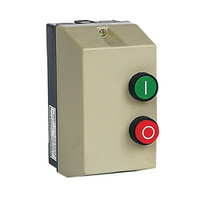
A typical DOL starter includes a contactor, overload protection, and a start/stop control mechanism.
Quality DOL starters are manufactured to meet relevant AS/NZS electrical and safety standards when installed correctly.
A DOL starter applies full supply voltage to the motor terminals, allowing the motor to start quickly and reach full speed.
They are commonly used to control small to medium-sized electric motors in industrial, commercial, and agricultural applications.