


What Are Rigid Conduits and How Do They Protect Electrical Installations?
Table of Contents
- Understanding Rigid Conduit and Its Role
- Types of Rigid Conduit
- Materials and Performance Characteristics
- Sizes, Capacity and Sizing Rules
- Choosing the Right Rigid Conduit
- Applications Across Electrical Installations
- Installation Best Practices
- Rigid Conduit Fittings and Accessories
- Australian Standards and Compliance
- Comparing Rigid Conduit to Alternatives
- Performance, Safety and Long-Term Reliability
- Common Installation Mistakes and Risks
- Pricing, Value and Buying Considerations
- Practical Buying Guidance for Electricians
- Club Clipsal Trade Rewards
- Product Videos
- What Sparky Direct Customers Say
- Quick Summary (TL;DR)
- Frequently Asked Questions about Rigid Conduits
Understanding Rigid Conduit and Its Role
What Rigid Conduit Is and How It Works
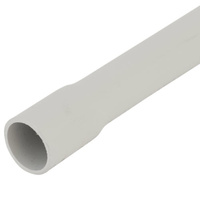
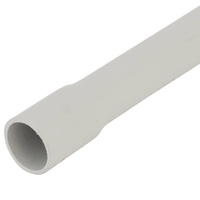
Rigid conduit is a stiff, straight-walled tube manufactured from PVC, steel, or aluminium. It encloses single insulated cables or multi-core wiring and runs continuously between fixed termination points. The conduit itself does not carry current. Its job is mechanical and environmental protection: stopping impact damage, preventing rodent attack, blocking water ingress, and providing a defined raceway that future trades can read at a glance.
Rigid vs Flexible and Semi-Rigid Conduit Explained
Rigid conduit holds its shape under load and resists deformation. Flexible conduit, by contrast, bends by hand and absorbs vibration, which suits motor connections and short equipment tails. Semi-rigid sits between the two: it has memory and can be bent into smooth curves on site without fittings. Each format has a clear use case. Permanent fixed wiring runs use rigid; equipment connections use flexible; short wall-to-fitting drops often use corrugated or semi-rigid.
Why Rigid Conduit Is Used in Permanent Electrical Installations
Permanent installations need cable protection that lasts the life of the building. Rigid PVC and metal conduit deliver decades of service when installed correctly. The straight, stable form factor also lets electricians pull replacement or upgrade cables through the same raceway later, which is a major maintenance advantage over direct-buried or stapled cable.
Role in Mechanical Protection and Electrical Infrastructure
In industrial plant rooms, factories, and outdoor sites, rigid conduit takes the knocks that cable alone could not survive. Forklift strikes, dropped tools, falling debris, and abrasion against steel structures all become non-events when cabling sits inside a rated conduit. The conduit also defines the wiring path for asset management and gives inspectors a clear, traceable route during audits.
Types of Rigid Conduit
Rigid Metal Conduit (RMC)
- Galvanised steel, thick wall
- Highest mechanical protection
- Threaded ends for solid joints
- Suits hazardous and industrial sites
Intermediate Metal Conduit (IMC)
- Lighter than RMC, similar protection
- Galvanised steel construction
- Easier to handle on site
- Common in commercial fit-outs
Rigid PVC Conduit
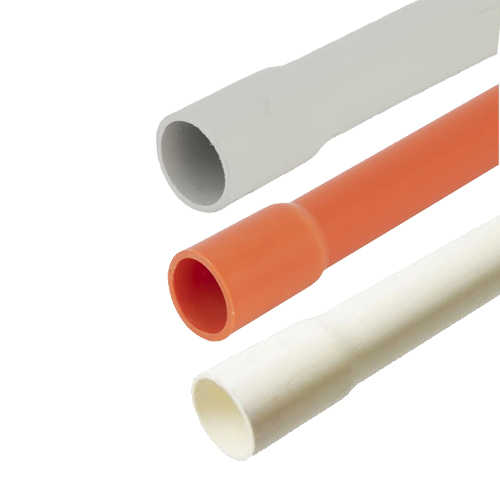
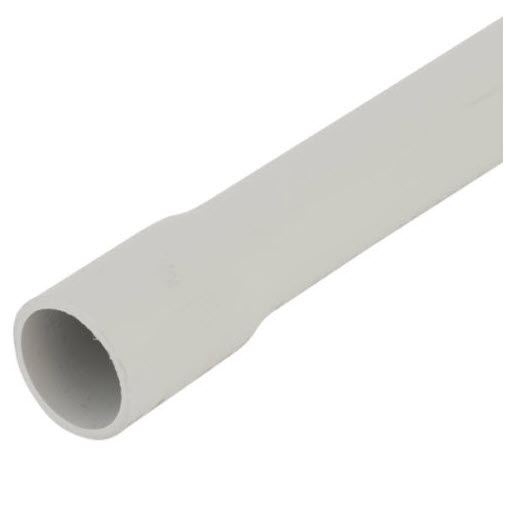
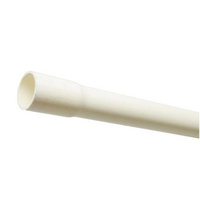
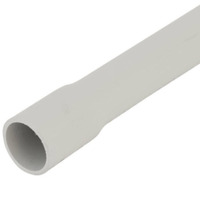
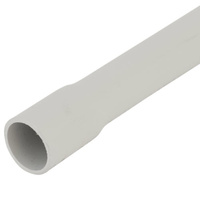
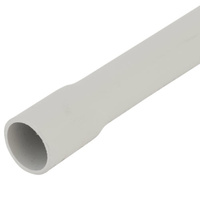
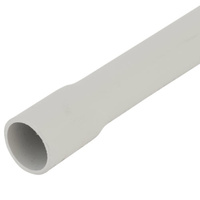
- Medium duty grey for indoor runs
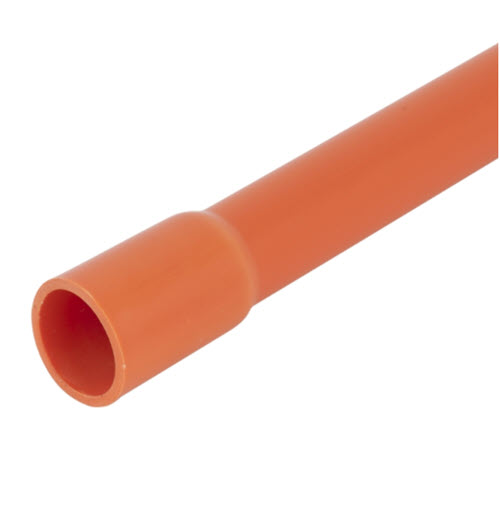
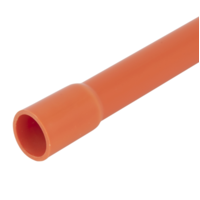
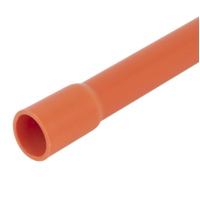
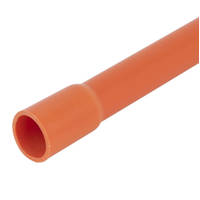
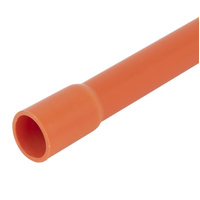
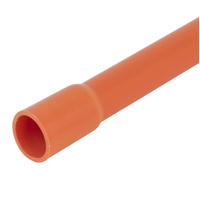
- Heavy duty orange for in-slab and underground
- Corrosion-proof and lightweight
- Solvent-cement joints with PVC glue
Aluminium Rigid Conduit
- Lighter than steel, naturally corrosion resistant
- Good for coastal and chemical sites
- Higher cost than PVC or galvanised
- Specified where weight matters
In Australia the dominant rigid conduit by volume is medium duty grey PVC for general above-ground work and heavy duty orange PVC for slab and underground runs. Metal conduits are specified where mechanical strength, fire performance, or hazardous area classification rules out plastic.
Rigid Communications Conduit
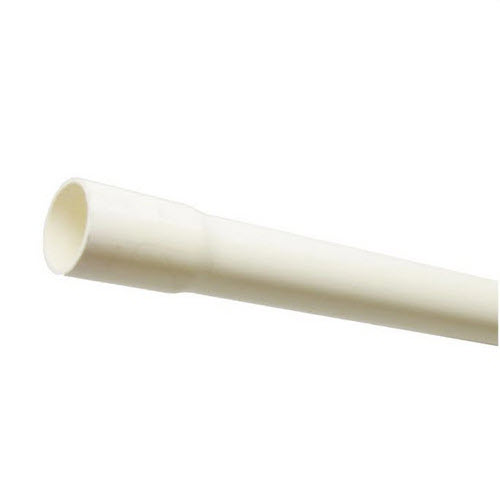
Telecommunications and data installations use a separate white rigid conduit family. The rigid communications conduit range carries Cat 6, fibre, and pay TV cable in colour-coded raceways that any cabler can identify on inspection. Mixing power and data conduit by colour stops accidental cross-connection during fit-out.
Materials and Performance Characteristics
Steel vs PVC Rigid Conduit
Steel conduit accepts higher impact loads, gives better fire performance, and provides an integral earth path. PVC conduit weighs roughly one-tenth of equivalent steel, never rusts, and installs faster with solvent cement. The choice depends on the threat profile: physical impact and fire favour steel; chemical exposure and weight favour PVC.
Corrosion Resistance and Environmental Suitability
PVC handles salt air, acid splash, and most industrial chemicals without coating. Galvanised steel resists weather but corrodes in coastal and chemical environments unless additional protection is applied. Aluminium falls between the two, with natural oxide protection that suits marine work. Always match the conduit material to the worst-case environment the run will see in service.
Mechanical Strength and Impact Resistance
Australian rigid PVC is supplied in two impact ratings. Medium duty handles standard above-ground installation. Heavy duty (orange) accepts the loads of in-slab pours, vehicle traffic over shallow burial depths, and direct backfill compaction. Steel conduit exceeds both PVC grades for impact and crush resistance.
Temperature, UV and Chemical Exposure Considerations
Standard PVC conduit operates between roughly minus 5 and 60 degrees Celsius. UV-stabilised grades hold up under direct sunlight for years; standard PVC may chalk or yellow over time when fully exposed. For ovens, kilns, or high-temperature plant areas, switch to metal conduit. For acid baths or solvent zones, confirm the PVC grade against the specific chemical before specifying.
Quick Material Selector
Indoor general wiring: medium duty grey PVC. In-slab or underground: heavy duty orange PVC. Coastal or chemical exposure: aluminium or UV-stable PVC. High impact, fire-rated, or hazardous areas: galvanised steel.
Sizes, Capacity and Conduit Sizing Rules
Standard Australian Conduit Sizes
Rigid conduit in Australia runs in nominal sizes of 16mm, 20mm, 25mm, 32mm, 40mm, 50mm, 63mm, 80mm, and 100mm. The 20mm and 25mm sizes carry the bulk of domestic and light commercial cabling. The 32mm and 40mm range covers sub-mains and larger circuits. Sizes from 50mm upward serve mains feeders, switchboard interconnections, and infrastructure runs.
Conduit Fill Ratios and the 40 Per Cent Rule
AS/NZS 3000 limits the cross-sectional area of cable inside a conduit to roughly 40 per cent of the internal area for runs containing three or more conductors. The rule prevents overheating, allows future cable pulls, and protects insulation from abrasion damage during installation. Single cables may fill up to 53 per cent; two cables, 31 per cent. Always work the fill calculation before committing to a conduit size.
Matching Conduit Size to Cable Type
Cable diameter, sheathing type, and conductor count all drive the conduit choice. A typical 2.5mm twin and earth circuit fits comfortably in 20mm conduit. A 6mm twin and earth needs 25mm. Sub-mains in 16mm copper run in 32mm or 40mm. Multi-cable bundles for distribution boards push into 50mm and beyond. Build a fill table at design stage and stick to it.
Allowing for Future Expansion and Upgrades
Smart designs leave conduit capacity for the next generation of equipment. Solar, EV charging, sub-metering, and data upgrades all add cable to existing buildings. Up-sizing the main vertical risers and feeder conduits by one nominal step at first fix often costs little and saves a full re-pipe later.
Choosing the Right Rigid Conduit
Matching Conduit Type to Installation Environment
Start with the environment, not the price. Assess UV, water, impact, chemical, fire, and temperature exposure on the run. The toughest condition on the route sets the conduit grade. A run that passes through a plant room will dictate metal even if the rest of the run is benign.
Indoor vs Outdoor vs Underground Applications
Indoor surface runs use medium duty grey PVC with PVC conduit saddles or clips. Outdoor exposed runs need UV-stable grades and stainless or galvanised fixings. Underground and in-slab runs use heavy duty orange PVC, sealed at every joint with conduit glue and protected by warning tape above the trench.
Industrial vs Commercial vs Residential Use
Residential work runs on PVC almost everywhere except meter enclosures and switchboard tails. Commercial fit-outs blend PVC for general circuits with metal in plant areas, kitchens, and risers. Industrial sites lean on heavy-wall metal conduit for resilience under daily plant operation, with PVC in office and amenity zones.
Common Selection Mistakes to Avoid
The most frequent error is using medium duty PVC where heavy duty was specified, particularly for slab pours. The second is mixing grades on a single run, which undermines the lowest-rated section. The third is ignoring UV stability on rooftop runs, leading to embrittlement within a few summers.
Applications Across Electrical Installations
Industrial and Manufacturing Facilities
Plant rooms, factory floors, and processing facilities use rigid conduit to protect motor feeders, control wiring, and instrumentation. Heavy steel conduit absorbs forklift strikes and tool drops without compromise. Industrial wiring benefits from rigid metal conduit because it provides positive earthing continuity, mechanical protection, and a fire-rated raceway in a single product.
Commercial Buildings and Multi-Storey Projects
Offices, retail centres, and high-rise developments rely on rigid conduit for vertical risers, ceiling-space distribution, and switchboard tails. Conduit makes it straightforward to extend or modify circuits as tenants change. The defined raceway also satisfies fire engineering requirements between zones.
Infrastructure and Public Works
Street lighting columns, traffic signals, transport tunnels, and council infrastructure use heavy duty PVC and metal conduit underground. The conduit must survive trench backfill, road compaction, and decades of moisture exposure with minimal maintenance access.
Hazardous Area and High-Risk Installations
Service stations, chemical plants, and grain handling facilities classify as hazardous areas under AS/NZS 60079. These zones require specific conduit and fitting types, with sealed transitions, threaded joints, and certified glands. Rigid PVC is generally not permitted in classified hazardous zones; the work goes to threaded steel.
Installation Best Practices
Bending Rigid Conduit Safely
PVC conduit bends with controlled heat from a conduit heater or hot air gun. The plastic must reach forming temperature evenly across the bend zone. Cold bends crack the wall and weaken the run. For heavy duty PVC and any tight bend, use a factory conduit bend or sweep instead. Steel conduit needs a hickey or hydraulic bender sized to the conduit diameter.
Threading and Joining Conduit Sections
PVC sections join with solvent cement applied to both surfaces and pushed home with a quarter turn. The bond becomes solid within minutes. Threaded metal conduit uses standard pipe threads, with thread compound or PTFE tape to seal moisture out. Verify thread engagement at every coupling: too few turns means a loose joint and a failed earth path.
Supporting and Fixing Conduit Runs
AS/NZS 3000 sets maximum support spacing based on conduit diameter and orientation. As a working guide, 20mm and 25mm horizontal PVC runs need supports every 1.0 to 1.2 metres. Vertical runs allow wider spacing. Use full conduit saddles at every fixing point, not just clips, where the run carries heat or vibration. Skipped fixings are a common audit failure.
Underground and Concrete-Encased Installation
Underground runs need a clean trench bed of sand or crusher dust, a minimum 500mm cover for low voltage circuits, and a yellow warning tape laid 150mm above the conduit. In-slab runs sit clear of the bottom reinforcement and are tied to prevent floating during the pour. Joints must be cement-glued and pressure-checked before the pour starts.
Cable pull preparation: Always run a draw rope through the conduit before joining sections, especially on long runs with multiple bends. Pulling a draw rope through a glued, fitted run after the fact is hard work and risks damaging the cable insulation.
Rigid Conduit Fittings and Accessories
Couplings, Elbows and Conduit Bodies
Standard couplings join two lengths of conduit in a straight line. Solid elbows turn 90 degrees in tight corners. Sweep bends turn the same 90 degrees with a wider radius that lets cable pull through cleanly. Inspection elbows and tees include a removable cover for cable access at branch points.
Junction Boxes and Pull Boxes
Junction boxes provide cable access at branch points, drops, and direction changes. The conduit junction boxes range covers 20mm, 25mm, and 32mm entries in shallow and deep formats. Pull boxes help on long runs by breaking the cable pull into manageable sections, which protects insulation from drag damage.
Transition Fittings and System Integration
Plain-to-screw adapters connect plain-end PVC to screwed metal fittings, so the same circuit can move between rigid PVC and threaded steel where the environment changes. Straight glands and straight tees handle the more complex transitions into enclosures and branch circuits.
Watertight and Hazardous Area Fittings
Outdoor and damp area work calls for IP-rated junction boxes, sealed glands, and gasketed covers. Hazardous area work goes further: certified flameproof fittings, sealed conduit unions, and explosion-proof boxes. Always confirm the IP and Ex ratings against the zone classification before ordering.
Conduit Plugs and Saddles
Unused conduit ends need plugs to keep dust, moisture, and vermin out during the build. Saddles secure the run to walls, ceilings, and structural members at the spacing the standards require.
Australian Standards and Compliance
AS/NZS 2053 and AS/NZS 4352 Requirements
AS/NZS 2053 sets the manufacturing and performance requirements for rigid PVC conduit and fittings used in electrical installations. AS/NZS 4352 covers the requirements for high impact and ultra heavy duty grades. Compliant product carries the AS/NZS marking on the conduit wall or packaging. Always verify the standard reference before purchase, particularly with imported product.
AS/NZS 3000 Wiring Rules
AS/NZS 3000:2018 governs how conduit is selected, installed, supported, and joined. The standard sets the fill ratio limits, minimum bend radii, mechanical protection requirements, and earthing rules. Every licensed installation in Australia must comply, and the standard is the first reference point during any compliance audit.
Hazardous Area Standards (AS/NZS 60079)
Sites with explosive atmospheres fall under AS/NZS 60079. The standard breaks hazardous areas into zones based on the probability of an explosive atmosphere being present. Conduit, fittings, glands, and seal points must all carry certification matching the zone. Compliance failures in hazardous areas can lead to serious incidents and licence action.
Compliance Risks and Certification Requirements
Non-compliant or counterfeit product creates direct legal and safety risk for the licensee who installs it. Failure modes include premature mechanical failure, lost earth continuity in metal runs, and ignition sources in hazardous zones. Buy from suppliers who verify their stock against the standard, keep paperwork on file, and can provide certification on request.
Comparing Rigid Conduit to Alternatives
| System | Best For | Trade-Off |
|---|---|---|
| Rigid PVC conduit | General fixed wiring, indoor and outdoor | Lower impact rating than steel |
| Rigid metal conduit | Industrial, hazardous, high-impact areas | Heavier, slower installation, higher cost |
| Flexible conduit | Equipment connections, motors, vibration zones | Not for permanent buried or in-slab runs |
| Cable tray | Multi-cable risers, plant rooms, data centres | No cable enclosure; needs guarding |
| Direct burial cable | Simple long runs in protected ground | No mechanical protection, hard to upgrade |
Rigid vs Flexible Conduit
Rigid conduit anchors the fixed wiring backbone of a building. Flexible corrugated conduit finishes the last metre into machinery, plant, and lighting drops. Most jobs use both, with rigid feeding the structure and flexible terminating the moving or vibrating parts.
Rigid vs Cable Tray Systems
Cable tray suits high-density runs where many cables share a path. Rigid conduit suits single-circuit and small-bundle runs needing full mechanical enclosure. The two often combine: tray on the riser, conduit dropping to individual outlets.
Rigid vs Surface Cable Runs
Surface-fixed cable on its own is only acceptable in restricted situations. Rigid conduit gives surface cable the mechanical protection it lacks and prevents accidental contact damage in service.
When to Use Each System
Specify rigid conduit for permanent fixed wiring, exposed runs, slab and underground work, and any location where mechanical protection or future upgradeability matters. Use cable tray where many cables share the route. Use flexible only at termination points to motors and movable equipment.
Performance, Safety and Long-Term Reliability
Mechanical Protection and Impact Resistance
The whole reason for conduit is mechanical protection. PVC handles dropped tools and incidental knocks; steel takes deliberate impact. Specify the impact rating against the worst plausible event on the run, then add a safety margin for the unexpected.
Electrical Safety and Earthing Considerations
Metal conduit can serve as the protective earth conductor, provided the joints are tight and the run is electrically continuous from end to end. PVC conduit is non-conductive and requires a separate earth conductor inside the run. Mixing the two on a single circuit needs careful design to maintain earth integrity at every transition.
Durability in Harsh Environments
Coastal salt, industrial chemicals, UV exposure, and freeze-thaw cycling all degrade conduit over time. Match the conduit to the conditions: UV-stable PVC for sun exposure, aluminium or stainless trim for coastal sites, and metal conduit for fire-rated assemblies. Cheap product fails first in harsh conditions.
Maintenance and Inspection Considerations
Visual inspection for cracks, UV chalking, joint separation, and missing saddles catches most failures early. Plan inspection windows for outdoor and rooftop runs, particularly after extreme weather. Replace damaged sections promptly: a cracked conduit no longer protects the cable inside it.
Common Installation Mistakes and Risks
Incorrect Sizing and Overfilled Conduit
- Working past the 40 per cent fill rule
- Cable insulation damage during pull
- No room for upgrades
- Heat build-up in the raceway
Poor Support and Fixing
- Saddles too far apart
- Sagging horizontal runs
- Unsupported drops at junction boxes
- Joints under tension
Incorrect Bending or Threading
- Cold bends cracking PVC
- Heat damage from flame use
- Insufficient thread engagement on metal
- Bend radius below cable minimum
Non-Compliant Materials or Fittings
- Mixing grades on a single run
- Imported product without AS/NZS marking
- Wrong IP rating for the location
- Unrated fittings in hazardous zones
The buyer mistake prevention rule is straightforward: order a single grade for each run, source from a supplier who can show compliance, and follow the wiring rules on bending, fixing, and fill. The sum of those three steps prevents the majority of conduit-related rectification work.
Pricing, Value and Buying Considerations
Rigid Conduit Prices in Australia
Rigid PVC conduit prices vary by size, grade, and bulk volume. Medium duty 20mm and 25mm grey runs at the lower end. Heavy duty orange in the same sizes carries a small premium. Prices climb sharply for 50mm and above, reflecting raw material content. Steel conduit costs several times more than equivalent PVC.
Bulk Buying vs Project Supply
Pricing improves at full-carton and pallet quantities. For larger projects, ordering by the carton against a takeoff often saves a meaningful percentage compared to ad-hoc length-by-length purchases. Plan ahead, calculate the run, and add a sensible offcut allowance.
Cheap vs Compliant Product Risks
Pricing alone does not show product quality. Genuine AS/NZS 2053 conduit costs more to manufacture than non-compliant imports. Cheap, non-compliant conduit fails earlier in service, is unlawful for licensed installation, and creates liability for the installer. Verify the standard mark before bulk ordering unfamiliar brands.
Trade Suppliers vs Retail Channels
Trade suppliers stock the full range of sizes, grades, and accessories needed for compliant work, with the technical support to back specifications. Retail channels often stock only common sizes and may not differentiate between grades clearly. For commercial and industrial work, trade is the only sensible route.
Fast Delivery and Availability
Sparky Direct holds stock of 20mm and 25mm rigid conduit in volume, with fast delivery across Australia. Bulky lengths ship via freight; smaller orders go through standard parcel services. For 25mm rigid conduit and other common sizes, ordering before mid-morning typically means same-day dispatch on stocked items.
Practical Buying Guidance for Electricians
Matching Conduit to Project Requirements
Build the conduit list from the wiring schedule, not from intuition. List every run, the cable inside, the environment, and the standards that apply. The conduit selection falls out of the schedule directly, and the order quantities are accurate first time.
Common Buyer Mistakes to Avoid
Three errors recur on small and medium jobs: under-ordering offcuts and ending up short, mixing medium and heavy duty in the same run, and forgetting to order matching fittings in the same grade. A simple takeoff with a 10 per cent allowance prevents the first; clear marking on each carton prevents the second; ordering fittings against the conduit list prevents the third.
Planning Quantities and Fittings
For every metre of straight conduit, expect to need couplings every three metres (the standard length), a saddle every metre or so, and a bend or elbow at every direction change. Junction boxes go in at branch and access points. A spreadsheet built from the takeoff captures all four in one pass.
Where to Buy Rigid Conduit Online
Online trade supply is the fastest way to assemble a complete conduit order in one transaction. Sparky Direct ships rigid conduit, fittings, glue, saddles, and junction boxes from a single warehouse, and the website carries the technical detail needed to confirm grade and sizing before checkout. The full electrical conduits range covers every common requirement plus specialist items.
Top Brands Available
Trusted brand options include Clipsal (Schneider Electric), HPM, and Rigid Conduit's own range, alongside National Light Sources. Each brand carries the AS/NZS 2053 mark and is supplied through the full size range.
Tradies Join Club Clipsal with Sparky Direct
Club Clipsal is Australia's largest electrician community offering trade rewards, business support, and exclusive benefits. When you nominate Sparky Direct as your preferred wholesaler, we automatically apply your Clipsal spend points to your Club Clipsal account daily.
Four Membership Tiers
Entry-level offering coaching, mentoring, and training discounts
Unlock exclusive industry tools and networking events
Access Toyota fleet offers and business software discounts
Maximum benefits, including VIP experiences and rewards
How It Works
1. Sign Up: Create your Club Clipsal account at clipsal.com/club-clipsal or via the iCat mobile app
2. Nominate Sparky Direct: Select Sparky Direct from the wholesaler dropdown menu in your profile
3. Add Email: Enter your Sparky Direct account email address in the membership number field
4. Start Earning: Every dollar spent on Clipsal products earns points automatically
Exclusive Benefits
Redeem points from the rewards store, including gift cards, tools, and experiences. Access business summits, product training, and industry networking events. Receive early access to new product launches and special promotions. Connect with fellow electricians via the Club Clipsal community app.
Product Videos
Watch NLS SWB32-90 | 32mm PVC Sweep Bend 90 degree orange Heavy Duty video
Watch Clipsal 245-25-GY | 25mm PVC Solid Elbow video
Watch NLS 30076 | 25mm PVC Coupling Plain Grey | TC25 video
What Sparky Direct Customers Say

This is a very compact tee and great if space is limited and looks so much better than the bulk inspection tees. Wires are easy to pass through the branch section, however consideration must be given to wire qty and sizing along with the number of through wires due to the minimal area for the radial turn of the branch wire, This tee was perfect for my job and I had no problem using it at all
This is the second time I am ordering from Sparky and I am satisfied with the prices, the products, the service and the delivery. I used all these products to make a crop protection cage for my backyard crop to protect from birds:)
These coupling just work. I go through hundreds a week on air conditioning drains. They are strong and fit snug. Also the delivery to Sydney was fast. Cheers
- Rigid conduit protects fixed electrical cable from impact, moisture, UV, and chemical attack across residential, commercial, and industrial sites.
- Medium duty grey PVC suits indoor surface runs; heavy duty orange PVC handles in-slab and underground; metal conduit covers high-impact, fire-rated, and hazardous areas.
- Standard Australian sizes run from 16mm to 100mm; the 40 per cent fill rule under AS/NZS 3000 sets the maximum cable area inside any conduit.
- Compliance work references AS/NZS 2053, AS/NZS 4352, AS/NZS 3000:2018, and AS/NZS 60079 for hazardous areas.
- Buy from suppliers who carry the full size and grade range, hold AS/NZS-marked stock, and ship the matching fittings, glue, saddles, and junction boxes in the same order.
Shop Rigid Conduits at Sparky Direct
Quality products in stock • Fast Australia-wide delivery • Competitive trade pricing
Browse Rigid Conduits → Get Expert Advice →Rigid Conduit Frequently Asked Questions
Does rigid conduit make installations look neat?
Yes, it creates clean, straight conduit runs with a professional finish.
Rigid Conduit near me
Sparky Direct supplies rigid conduits, offering durable electrical conduit solutions.
Can rigid conduit be delivered?
No, rigid conduit is a pick-up only item.
Can unused rigid conduit be returned?
Unused products are generally eligible for return according to the seller’s returns policy.
What warranty applies to rigid conduit?
Warranty coverage varies by manufacturer and typically covers defects in materials or workmanship.
Is rigid conduit sold in standard lengths?
Yes, rigid conduit is typically sold in standard 4-meter straight lengths.
Should rigid conduit layout be planned carefully?
Yes, proper planning ensures neat appearance and compliant installation.
Does rigid conduit require maintenance?
Once installed correctly, it generally requires no maintenance.
Can rigid conduit be used in renovations?
Yes, it is often used when upgrading or extending existing wiring systems.
Is rigid conduit visible after installation?
It may be visible in surface-mounted applications or concealed in building structures.
Is rigid conduit easy to work with?
It is straightforward for trained professionals to install using standard fittings.
Does rigid conduit help protect wiring long term?
Yes, it provides long-lasting protection against impact and wear.
Is rigid conduit suitable for surface mounting?
Yes, it is commonly used for surface-mounted electrical wiring.
What is rigid conduit?
Rigid conduit is a solid electrical conduit used to protect and route electrical cables in fixed installations.
Is rigid conduit commonly used by electricians?
Yes, it is a standard product used in many electrical installations.
Why choose rigid conduit over flexible conduit?
Rigid conduit offers greater strength and durability for exposed or permanent installations.
Does rigid conduit protect cables from damage?
Yes, it provides strong mechanical protection for electrical cables.
What sizes are rigid conduits available in?
They are available in common sizes such as 20mm, 25mm, 32mm, 40mm, and 50mm.
Can rigid conduit be used outdoors?
Certain rigid conduit types are suitable for outdoor use when appropriately rated.
Are rigid conduits suitable for indoor use?
Yes, they are commonly used indoors for surface-mounted and concealed wiring.
Can rigid conduit be used in commercial installations?
Yes, rigid conduit is widely used in commercial and light industrial electrical projects.
Are rigid conduits suitable for residential installations?
Yes, they are used in residential settings where durable and exposed cable protection is required.
What materials are rigid conduits made from?
Rigid conduits are typically made from PVC.
Does rigid conduit comply with Australian standards?
Quality rigid conduit is manufactured to meet relevant AS/NZS electrical and safety standards when installed correctly.
What is rigid conduit commonly used for?
It is commonly used for surface-mounted wiring, switchboards, plant rooms, and commercial or industrial installations.