
Search Results:
Search Results:
Search Results:
Search Results:
Mercator exhaust fans are designed to move humid air, odours and steam out of wet rooms before that air settles into ceilings, walls and finishes. Common installation points include bathrooms, ensuites, separate toilets, laundries, kitchens, utility rooms, rental properties and builder-grade residential projects. The brand positions itself as a practical mid-market option for Australian electricians, builders and informed homeowners.
Buyers typically choose between a fan-only model and a fan-light combination based on ceiling layout. Other variables include airflow capacity in cubic metres per hour, ceiling cut-out size, ducting diameter, noise rating, integrated LED lighting and replacement compatibility with existing fittings. Mercator units are available alongside other ventilation options in the broader exhaust fan category for comparison.
The core job of a bathroom exhaust fan is to remove moist air before condensation forms on ceilings, walls and mirrors. Good ventilation lowers the risk of mould growth, paint blistering, swollen skirting boards and that musty smell that lingers in poorly ventilated rooms. An exhaust fan must be correctly sized for the room and correctly ducted to the outside to perform as the manufacturer specifies.
Undersized fans, long flexible ducts and discharge into the roof cavity are the three main reasons a fan that looks fine on the spec sheet fails in practice. Selection and installation matter as much as the unit itself.
Mercator is a commonly stocked Australian electrical and ventilation brand. The range targets the same buyer segment as products like Martec exhaust fans and the Clipsal Airflow exhaust fan range: practical residential ventilation at accessible pricing. The brand also covers ceiling fans and lighting under the broader Mercator brand catalogue.
Comparisons between brands should focus on measurable specs rather than reputation. Airflow rating, duct diameter, noise level, integrated lighting and replacement cut-out are the variables that decide whether a fan suits a specific job.
A ceiling-mounted exhaust fan draws humid air up through the grille, into the fan housing, and discharges it through ducting to a roof or external wall termination. Air pulled out of the room is replaced by make-up air from under the door or nearby openings. Without that replacement air, even a powerful fan will struggle to extract effectively.
Fan placement matters too. A fan installed directly above the door can short-circuit the airflow path, pulling fresh make-up air straight back out before it crosses the wet zone. Better placement positions the fan opposite the door, pulling air across the shower or bath area before it leaves the room.
The Mercator exhaust fan range covers several configurations grouped by use case rather than model name alone. Identifying the configuration first makes individual SKU comparisons faster.
Ceiling-mounted fans are the most common bathroom ventilation choice in Australian homes. They suit rooms with roof cavity access and an external duct path. Typical Mercator ceiling-mount models include round and square grilles in sizes that match standard cut-outs, making them a practical option for like-for-like replacement jobs sourced from the bathroom exhaust fans category.
When comparing models, focus on airflow rating in cubic metres per hour rather than grille size alone. A larger grille does not automatically mean better extraction. The motor, impeller design and outlet diameter matter more than visible dimensions.
Fan-light combination units pair a ceiling exhaust fan with an integrated light source. These suit compact bathrooms, ensuites and renovations where a single ceiling penetration is preferred over separate fan and light cut-outs. Mercator models in this format are popular in apartments, motel-style rooms and small bathrooms where ceiling real estate is limited. The broader exhaust fans with light category includes both fluorescent and LED options for comparison.
Key considerations include lumen output, colour temperature, whether the light source is replaceable, and how the fan and light are switched. Some models use a single switch, others split fan and light onto separate switching for independent control. For three-in-one units that add a heater, the bathroom heater, fan and light units are a related category.
Laundries with clothes dryers generate higher moisture loads than many people expect. A fan sized for a small bathroom is often too small for a busy laundry. Kitchen ventilation has the additional complication of grease, which builds up on grilles and impellers faster than bathroom dust. Kitchen ventilation planning should not assume a standard bathroom fan will perform the same job.
Utility rooms, drying cupboards and small workshops also benefit from constant background ventilation, especially in coastal Australian climates where humidity stays high year-round.
Not every bathroom suits a ceiling-mounted fan. Concrete ceilings, restricted roof cavities, top-floor units and heritage buildings often need an alternative. Wall-mounted exhaust fans like the Airflow wall-mount exhaust fan range push air directly through an external wall, removing the need for a ducted ceiling run.
Inline fans are a third option. These sit hidden in the ceiling cavity with a separate grille at the ceiling and a duct run to an external termination. Inline fans tend to be quieter at the grille, suit longer duct runs and can serve multiple grille points from one motor. Product selection must match the building structure, available duct route and compliance requirements for the room.
Sizing is the single biggest decision in exhaust fan selection. An undersized fan is the most common cause of persistent condensation, mould complaints and warranty callbacks. The calculation itself is straightforward.
Room volume in cubic metres equals length times width times ceiling height. Required fan capacity equals room volume multiplied by target air changes per hour. Bathrooms generally target somewhere between 15 and 25 air changes per hour, depending on use intensity.
Take a 3 metre by 2 metre bathroom with a 2.4 metre ceiling as a worked example. The room volume is 14.4 cubic metres. At 20 air changes per hour, the required airflow is 288 cubic metres per hour. The Australian National Construction Code sets minimum extraction expectations, but effective moisture control may need higher capacity depending on the duct path and how often the room is used.
The table below gives a starting point for typical Australian residential rooms. Always confirm against the specific Mercator model rated airflow.
| Room Type | Typical Volume | Suggested Airflow | Notes |
|---|---|---|---|
| Small ensuite | Up to 8 m³ | Compact fan, lower to mid airflow | Tight cut-out, short duct preferred |
| Standard bathroom | 10 to 16 m³ | Mid-capacity ceiling exhaust fan | Round up for long duct runs |
| Large or family bathroom | 17 m³ or more | Higher airflow or inline option | Consider inline for noise control |
| Laundry or kitchen | Variable | Allow extra capacity | Extra moisture, odour and heat load |
Rounding up is sensible when ducting is long, when 90-degree bends are unavoidable or when the room has high humidity all year. The cost difference between a mid-capacity and a high-capacity fan is small compared to the cost of a callback.
Free-air ratings on a spec sheet do not match installed performance. Duct length, flexible duct sagging, undersized duct diameter and tight 90-degree bends all reduce extraction. A fan rated at 300 cubic metres per hour in open air may deliver 60 per cent of that figure after a long flexible duct run with two bends.
Where the fan and installation allow, 150 mm ducting outperforms 90 mm ducting on longer runs. Keep ducts short, straight, well supported and free of crushed sections. Plan the duct path before selecting the fan size, not the other way around.
Mercator models at similar price points usually differ on noise, motor type, energy use, backdraught shutters, timer or sensor features and housing materials. These features tend to decide whether the room is comfortable to use and whether the fan stays reliable over time.
Bathroom exhaust fan noise is typically measured in decibels or sones. Lower numbers are quieter. Quieter fans are worth specifying for ensuites, bathrooms next to bedrooms and rental properties where comfort matters most. Even a quiet fan can sound noisy when ductwork rattles, vibrates against ceiling timbers or has been crushed during installation, so quiet operation depends on the install as much as the unit.
Wattage and motor efficiency matter most in high-use bathrooms, apartments and rental properties where the fan may run for hours each day. A slightly more efficient motor saves money over years of operation. Adding a timer or humidity sensor reduces unnecessary run time, which often delivers more energy savings than choosing a marginally more efficient fan in the first place.
A backdraught shutter stops cold outside air, insects and odours from drifting back through the duct when the fan is off. This matters in winter and in coastal properties exposed to strong wind. Timer run-on settings keep the fan extracting for a set period after the light is switched off, clearing residual steam from showers. Humidity sensors switch the fan on automatically when moisture levels rise, useful in bathrooms where occupants forget to switch the fan on. Compatible control accessories are available in the electrical timers category.
| Housing Material | Strengths | Trade-offs |
|---|---|---|
| Plastic | Lightweight, corrosion resistant, cost-effective, common in residential bathrooms | Can become brittle over many years of UV or heat exposure |
| Metal | More robust, often preferred in commercial or heat-prone settings | Heavier, may need different fixing approach, can corrode if uncoated |
Housing material should be assessed alongside IP rating, airflow, noise and installation environment. The right housing for a busy commercial laundry is not the same as the right housing for a tidy ensuite renovation.
Slimline, square and round fascia styles are available across the Mercator range. Visible design matters in renovated bathrooms where the fan sits in plain view above the shower or vanity. Low-profile grilles suit ceilings where a discreet finish is preferred. Aesthetics should not override airflow rating or compliance, but among models with similar performance, grille style is a fair tiebreaker.
Mercator exhaust fans connect to fixed wiring in Australian homes. That makes installation work for licensed electricians under AS/NZS 3000 and state or territory electrical safety legislation. This section is planning guidance, not a wiring guide.
Hardwired exhaust fan installation in Australia must be done by a licensed electrician. Wet area electrical work carries additional risk due to moisture and proximity to water sources like showers and basins. Replacement jobs may still require a licensed electrician if any fixed wiring, switching or hardwired connections are involved.
The safest path for homeowners is to plan ventilation goals first, then engage a licensed electrician to confirm product suitability and complete the install.
Fan placement in bathrooms must consider the location of the shower, the layout of bathroom zones and the IP rating of the product. AS/NZS 3000 covers wet area requirements that electricians work to as a matter of course. Buyers should confirm product suitability against the installation location, the manufacturer documentation and the licensed installer's advice rather than guessing.
Replacement buyers must check the existing hole size, ceiling thickness, joist spacing, insulation depth and available roof cavity height before ordering. Forcing an incompatible fan into an existing cut-out compromises mounting security, can introduce vibration, and breaks the seal against the ceiling that stops dust and insulation falling through. For multi-unit jobs or apartment renovations, confirm measurements before ordering quantity.
Exhaust fans must vent to an external wall vent or roof cowl, never into the roof cavity. Discharging into the roof space deposits moisture onto insulation and framing, encouraging condensation, mould, insulation damage and long-term building defects. Ducting should be short, straight, supported and correctly sized.
A licensed electrician will assess circuit suitability, switching arrangements, RCD protection where required, the duct route, fan location and final testing. Discuss ventilation performance goals with the electrician before selecting the fan, especially for high-use bathrooms or rooms with awkward duct paths.
Homeowners should not attempt to open hardwired fan housings, alter switching or run new wiring. Power isolation alone is not enough authority to perform electrical work that requires a licence.
Online purchasing suits electricians and contractors managing multi-room jobs, replacement runs and renovation schedules. The right comparison framework speeds up SKU decisions and reduces wrong-product returns.
An objective comparison covers airflow rating, noise rating, duct diameter, IP rating, integrated lighting, timer or humidity control, warranty period and stock availability. Competing brands like Martec or Clipsal Airflow are referenced in a comparison context, not as a promotional claim. The right brand for a job depends on which spec matters most for that room.
| Comparison Variable | Why It Matters |
|---|---|
| Airflow rating (m³/h) | Decides whether the fan can keep up with room moisture |
| Noise rating | Affects comfort, especially in ensuites and bedrooms-adjacent rooms |
| Duct diameter | Determines real-world airflow and accessory compatibility |
| IP rating | Required for safe placement in wet area zones |
| Integrated lighting | One ceiling cut-out instead of two for small bathrooms |
| Timer or humidity sensing | Improves extraction and reduces wasted run time |
| Warranty and documentation | Supports trade callbacks and project handover packs |
| Price and stock availability | Affects schedule reliability on multi-room jobs |
Cheaper fans suit low-use toilets, small laundries and rental fit-outs where the customer wants basic functional ventilation at the lowest landed cost. High-use family bathrooms, ensuites adjacent to bedrooms and humidity-prone rooms benefit from better airflow, quieter operation, timer functions or humidity sensing.
For trade buyers, the calculation includes upfront product cost, but also condensation complaints, return visits and replacement labour. A slightly more expensive fan that does not generate a callback is the cheaper option in real terms.
Renovation jobs, builder projects, maintenance runs and multi-unit properties benefit from consistent model selection across rooms. Confirm model availability, cut-out compatibility and stock levels before placing a bulk order. Online electrical wholesalers can support product comparison, availability checks and repeat purchasing for common Mercator models, with related accessories available in the exhaust fan accessories category.
Confirm airflow rating in cubic metres per hour. Confirm physical size and ceiling cut-out. Confirm duct outlet diameter. Confirm whether the model is fan-only or fan-light. Confirm colour, grille format and IP rating. Confirm whether a ducting kit, external grille, timer, switch or other accessories are required separately. Five minutes of spec checking saves a return.
Routine maintenance keeps Mercator exhaust fans performing as designed. Most problems trace back to dust, blocked grilles, kinked ducts or end-of-life motors. The fixes range from a quick clean to a full replacement.
Routine cleaning involves removing dust from the grille, keeping openings clear and checking for visible lint build-up that blocks airflow. A soft brush or vacuum attachment handles most grille cleaning. The fan housing itself should not be opened for cleaning when the unit is hardwired. If the fan is noisy, sparking, overheating, visibly damaged or only running intermittently, the next step is inspection by a licensed electrician, not further DIY disassembly.
Common causes of weak extraction include a blocked grille, a dust-coated impeller and a collapsed or kinked flexible duct. Other causes include a duct run that is too long, an undersized duct diameter, a stuck backdraught shutter or a fan that was undersized for the room from day one. Persistent condensation after the fan has been running usually points to one of these issues rather than a faulty motor.
Loose mounting, fan imbalance, dust build-up on the impeller, worn bearings, vibrating ductwork and poor ceiling fixing are the usual culprits when a fan develops a noise it did not have before. Noise that worsens steadily over months often indicates the motor is approaching end of service life. Replacement is usually the right call when the noise persists after cleaning and re-securing the mount.
Replace the fan when it is old, noisy, inefficient, shows poor airflow after cleaning, has signs of heat damage, has a cracked grille or motor, or simply lacks the features the room now needs. Replacement is also an opportunity to upgrade airflow, reduce noise, add LED lighting, fit a timer or add humidity control without the cost of a fresh ceiling cut-out. Check cut-out and duct compatibility before ordering the replacement.
Small bathrooms can still have heavy moisture loads, especially with long hot showers and limited window ventilation. Correct sizing, a run-on timer or humidity sensor, adequate make-up air under the door and regular grille cleaning all help. Mercator fans suit small bathrooms when the model is correctly matched to the room and installed properly.
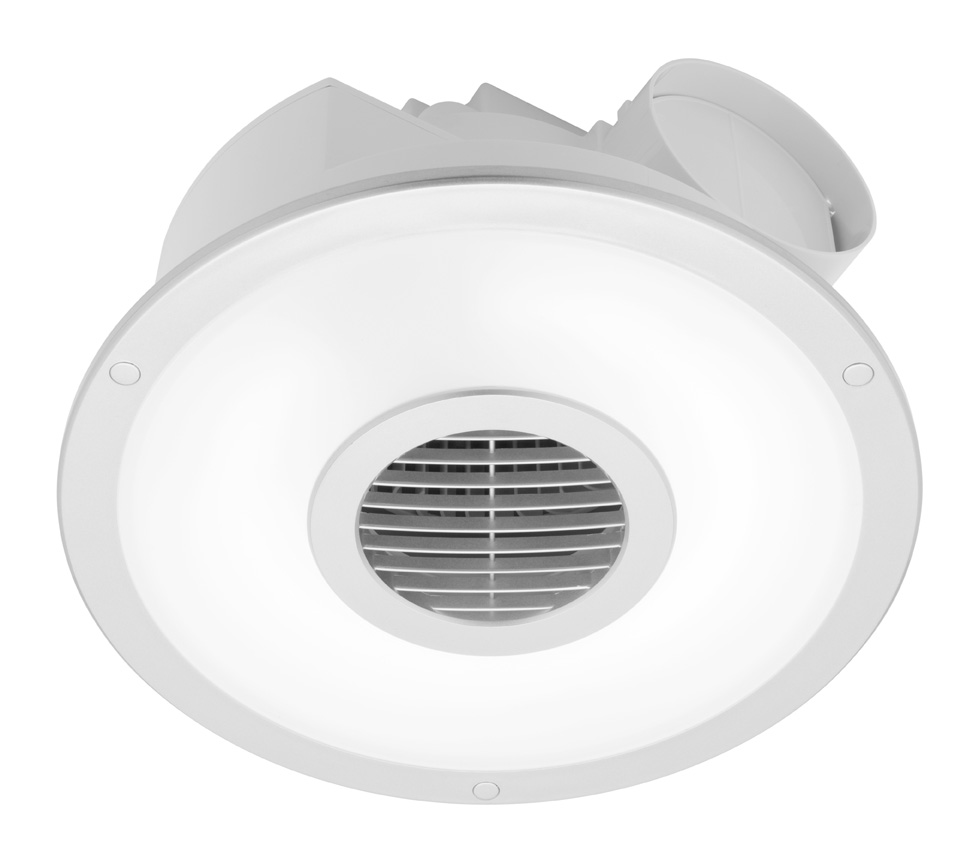
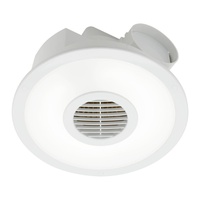
Watch MERCATOR BE220FSPWH | Skyline Round Exhaust Fan With 22W T5 Lamp (White) video
Watch MERCATOR BE220FSPWH | Skyline Round Exhaust Fan With 22W T5 Lamp (White) video
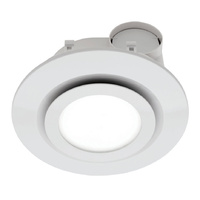
Watch MERCATOR BE3400SPWH | Novaline II Round Exhaust Fan White video

Item was a replacement for my property of the same unit. Install was for WC without a window so having a good light source and fan was important. Unit is quiet for its type and gives good light that's why I bought the same one as a replacement.
Excellent service and delivery for me was next day. That's extraordinary compared to the likes of Amazon or Ebay etc. I could then satisfy my client by replacing their faulty fans within 48 hours.
So happy with 1, I came back to buy another. They are not the quietest fans, not the noisiest either, but they do a great job.
Quality products in stock • Fast Australia-wide delivery • Competitive trade pricing
Browse Mercator Exhaust Fans → Get Expert Advice →