
Search Results:
Search Results:
Search Results:
Search Results:
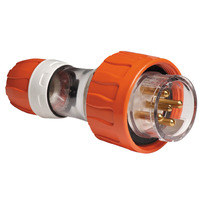
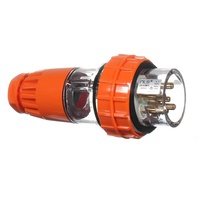
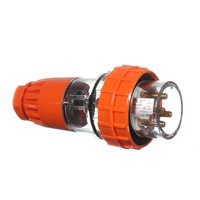
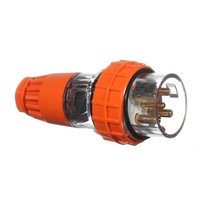
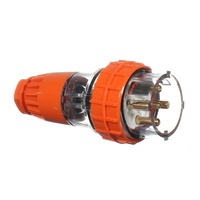
Find the best 5-pin straight plugs here at Sparky Direct. [ Read More ]
Five-pin industrial straight plugs are specified for three-phase power connections in commercial and industrial settings. They appear on workshop machinery, factory production lines, agricultural equipment, construction site distribution, and outdoor plant where the supply is three-phase rather than single-phase. The straight body suits installations where the cable can exit in line with the plug without forcing a tight bend.
This category is aimed at licensed electricians, contractors, maintenance teams, and trade buyers specifying connectors for three-phase loads. The IP66 rating addresses environments with dust, moisture, washdown exposure, or outdoor weather. Selection is about matching the plug to the equipment, the supply, and the site, rather than picking by appearance.
A five-pin industrial connector has three active phase conductors, one neutral, and one earth. The straight-body format routes the cable directly in line with the plug body, which suits drop leads, portable equipment, and open socket positions. The IP66 rating means the assembled connector is dust-tight and resists powerful water jets when seals, glands, and the locking ring are correctly fitted.
An industrial plug mates with a matching industrial socket of the same pin count, current rating, voltage rating, and physical keying. When the locking mechanism is engaged, the seal compresses against the socket face and the cable gland compresses around the cable jacket. The result is a sealed, mechanically retained connection rated for the environment. Termination and assembly must be carried out by a licensed electrician where Australian law requires it.
The five-pin layout provides 3P + N + E: three phases, a neutral reference, and an earth. Equipment that requires a neutral as well as three phases, including some motors, control gear, pumps, and compressors, needs a five-pin connector. A three-pin plug cannot be substituted because it lacks the conductors for the additional phases or the neutral. Equipment such as workshop plant, conveyor drives, and certain industrial control systems is commonly fed through a five-pin connector.
IP66 is one of the higher protection ratings used for industrial plugs and sockets. It addresses two of the most common failure modes on Australian sites: dust ingress in dry, exposed environments, and water ingress from rain, washdown, hose-down cleaning, or splashing. UV exposure, construction dust, factory contaminants, and moisture all shorten the service life of under-specified connectors. A correctly installed IP66 plug is built to resist these conditions across long duty cycles.
The IP66 rating is only delivered when the complete assembly is correct: housing, seals, cable gland, locking ring, and matched socket. A plug rated IP66 still depends on a tight gland fit around the right cable diameter and a fully engaged locking mechanism. If any of these elements are missing, the rating is compromised. The rating also assumes the connector is intact, undamaged, and properly maintained over its service life.
The first digit of the IP code, 6, indicates complete protection against dust ingress. The second digit, 6, indicates protection against powerful water jets from any direction. IP66 does not mean the plug is suitable for continuous submersion; that requires a higher second digit such as IP67 or IP68. The rating is maintained only when the plug, socket, seals, gland, and locking mechanism are correctly selected, assembled, and maintained.
Sealing reduces the risk of dust, moisture, corrosion, contact tracking, and contact degradation reaching the live conductors. That cuts the rate of nuisance faults, reduces unscheduled downtime, and keeps high-demand equipment running. Safety still depends on correct current rating, cable compatibility, upstream circuit protection such as an RCD or residual current device, and licensed installation.
IP66 5 pin plugs are well suited to outdoor equipment, construction sites, food processing lines, manufacturing plant, agriculture, pump stations, car washes, marine-adjacent locations, and wet workshops. They are widely used in wet environments and on outdoor equipment that would damage a lower-rated connector quickly. For sites with continuous submersion, pressurised washdown beyond IP66 limits, or hazardous-area classification, an electrician may need to specify a higher IP rating or a different connector type altogether.
Straight and angled industrial plugs perform the same electrical function. The difference is in cable exit. A straight plug routes the cable inline with the body, which suits open installations, drop leads, and portable equipment. An angled plug exits the cable at roughly 90 degrees to the body. That layout suits installations close to a wall, a piece of plant, or an enclosure where rear clearance is limited. Choosing between the two is a layout decision more than an electrical one.
On a straight plug, the cable leaves the back of the connector along the same axis as the pins. This keeps the cable run simple in open areas and reduces the bend at the connector. Straight plugs are easy to handle, inspect, and replace when access behind the socket is unobstructed.
Neither format is universally better. Straight plugs offer cleaner inline cable routing, simpler fit in open spaces, and easier grip in some layouts. Angled plugs work better where rear clearance is tight or where the cable must drop straight down from the socket. They also help when the plug sits close to a wall, panel, or enclosure. The right choice depends on socket position, equipment layout, expected cable movement, and mechanical strain on the cable. Range options are available in the matching 5 pin angled plug industrial IP66 category for installations where straight cable exit is not practical.
Straight plugs suit portable industrial leads, open workshop outlets, temporary power distribution, and factory floor equipment with clear socket access. They also work well on outdoor machinery where the cable exit is not exposed to impact. The plug should not be forced into a layout where the cable would be repeatedly bent, crushed, or pulled. That kind of strain shortens the life of both the plug and the cable termination.
Five-pin straight plugs appear across a wide range of industrial work. The application drives the choice of current rating, IP rating, durability, cable entry size, and socket compatibility. Contractors specifying for new work and maintenance teams replacing connectors on existing plant face the same checklist: confirm the equipment supply, confirm the socket, confirm the cable, and confirm the environment.
Heavy machinery, pumps, compressors, welders, conveyors, production equipment, and workshop plant commonly run on three-phase supply through five-pin connectors. Heavy-duty selection should consider equipment load, duty cycle, vibration, handling, and environmental exposure. Factories that move equipment between bays often specify durable plugs because connectors take more wear from repeated mating and unplugging cycles than fixed wiring does.
Outdoor temporary power, construction equipment, site sheds, farm machinery, pumps, and weather-exposed commercial equipment all benefit from sealed connectors. Weather exposure raises the importance of intact seals, correct gland fit, UV-stable materials, and routine inspection. Product suitability should be confirmed against the actual site conditions rather than assumed from the IP66 label alone.
Contractors use five-pin plugs for temporary boards, site equipment, portable machines, and maintenance replacement work alongside industrial extension leads. Fast replacement and correct specification reduce downtime, but compliance and safe selection cannot be rushed under time pressure. Project buyers ordering across a fleet or site benefit from sourcing matching ratings and accessories together to keep installations consistent.
Specifying a 5 pin straight plug correctly is the single most important step in the buying process. Pin count alone does not confirm compatibility. The plug must match the connected equipment, the supply, the cable, and the site. The decision criteria below should be checked in order. Where any element is uncertain, a licensed electrician should confirm the selection before purchase.
The plug current rating must match the connected equipment and the circuit design. Common industrial ratings include 10A, 20A, 32A, and 50A, although availability depends on the specific product range. Check the equipment nameplate, the existing plug or socket rating, and the upstream circuit. Motors, machinery, and high starting current loads need extra confirmation by a qualified electrician because inrush current can exceed the steady-state nameplate figure.
Five-pin industrial plugs are commonly associated with three-phase 400V applications and must match the supply and equipment specification. Pin count is not enough on its own. Voltage, current, keying, and socket configuration must all align. A plug should never be assumed compatible because it physically resembles another connector. Compliant industrial connectors are designed to prevent unsafe mismatching when the correct rated parts are used together.
The plug must suit the cable diameter and the conductor size. A poor cable entry fit compromises IP66 sealing and creates strain at the terminals. A correctly sized cable gland is part of the IP66 assembly, and the gland needs to clamp the cable jacket without crushing it. Termination and assembly should be completed by a licensed electrician where required by Australian law.
Durable housings, secure contact design, quality sealing, impact resistance, UV resistance, and corrosion resistance separate trade-grade plugs from cheaper alternatives. Repeated connection cycles, vibration, rough handling, dust, moisture, and sunlight all degrade under-specified connectors faster. Buyers asked to recommend durable 5 pin IP66 industrial plugs should look at housing material, contact design, sealing arrangement, and brand reputation rather than price alone.
A 5 pin plug must match the socket current rating, pin configuration, voltage, and industrial connector format. Compliant plugs and sockets are designed so that incompatible ratings will not mate. Buyers replacing an existing plug should confirm the exact rating and configuration of the socket and equipment, rather than relying on visual similarity. The matching 5 pin IP66 switched socket combinations and 5 pin extension sockets are useful reference points when verifying compatibility.
Pin count is one of the most common points of confusion in industrial connector selection. The difference is not just the number of conductors but the type of supply each plug is designed for. Substituting one for the other is not safe and is not compliant.
| Connector | Conductors | Typical Supply | Common Use |
|---|---|---|---|
| 3 pin IP66 plug | Active, neutral, earth | Single-phase 230V | Single-phase tools, lighting, single-phase equipment |
| 5 pin IP66 plug | 3 phases, neutral, earth | Three-phase 400V with neutral | Three-phase machinery, pumps, compressors, larger plant |
Three-pin industrial plugs are typically used for single-phase applications requiring active, neutral, and earth. They are common on portable single-phase tools and equipment. They are not a replacement for 5 pin three-phase equipment. The matching range is in the IP66 3 pin industrial outlets and sockets category.
Five-pin plugs support three-phase applications requiring three active phases, neutral, and earth. They are typical on heavier industrial equipment and machinery where a neutral reference is required for the load. The five-pin format is also used where control circuits inside the equipment need a neutral.
Equipment specifications, socket type, supply arrangement, and circuit design determine the correct connector. A licensed electrician should confirm the pin count and current rating where there is any uncertainty. Guessing based on physical appearance is unsafe and can damage equipment.
Best value in industrial connectors is not the same as lowest unit price. A cheap plug that fails early, fails the IP66 rating in service, or is wrong for the site costs more than a correctly specified plug across the life of the installation. Value comes from the right electrical rating, suitable IP protection, durable construction, compliance, stock availability, and a service life that matches the site duty cycle.
Value should be measured across the life of the connector. A plug that lasts the duty cycle of the equipment and holds its IP66 rating in service delivers better value than a cheap plug that needs replacement after a season. A reputable wholesaler also matters, because supply chain reliability affects total project cost. Electricians managing repeat purchases benefit from standardising on a smaller set of trusted ratings and brands.
Price matters on construction projects, especially for bulk purchases. Even at lower price points, a plug must meet basic checks. Confirm the correct rating, the IP66 claim, compatible cable entry, robust body construction, supplier documentation, and suitability for site conditions. Low-cost compromises that reduce safety or compliance are not worth the saving.
Selection criteria matter more than rankings. Prioritise IP66 sealing, UV-stable materials, secure locking, strong cable restraint, corrosion-resistant contacts, and availability in the required current rating. Final selection still depends on the equipment, the supply, and the installation environment.
Buying industrial connectors online suits trade and project buyers because product specification, ratings, and compatible accessories can be compared in one place. Australian electrical wholesalers that publish clear specifications make it easier to confirm current rating, voltage, pin configuration, and IP rating before placing an order.
Buyers should use reputable Australian electrical wholesalers or specialist suppliers that provide complete product specifications. Online buying makes it straightforward to compare current ratings, IP rating, plug format, compatible products, and delivery options. Australia-wide purchasing is standard for most established suppliers, but stock availability and delivery times vary by location and product line.
Availability matters for contractors, maintenance teams, and construction sites where downtime carries a real cost. Check product availability, delivery location, and order cut-off details before committing to a job timeline. For replacement work, having a small stock of the most common ratings on hand can reduce repeat ordering and rushed shipping costs.
Electricians, contractors, facility managers, and project buyers regularly purchase plugs in bulk for multiple machines, leads, site boards, or maintenance stock. Consistency of specification across a project keeps installations standard and reduces confusion during maintenance. Ordering matching ratings and compatible accessories together also avoids the cost of split shipments.
Buyers comparing suppliers can use a few practical criteria. These include the clarity of product specifications, the depth of the Australian electrical range, trade pricing options, stock depth, delivery coverage, returns process, and access to compatible plugs and accessories from the same source. Confirming these factors at order time is more useful than relying on brand reputation alone.
The aim of this section is install-aware buyer guidance, not a wiring instruction. Five-pin industrial plugs carry three-phase voltages and earth. Termination, alteration, and installation should be carried out by a licensed electrician where required under Australian law. The IP66 rating depends on every part of the assembly being correct, so a brief overview of what affects safety and compliance helps buyers specify and maintain connectors responsibly.
Electrical termination, alteration, and installation should be performed by a licensed electrician where required under Australian law. Correct installation involves confirming the circuit requirements, matching the plug rating to the load, selecting the correct cable, assembling the gland and seals correctly, and testing the completed work. Terminal-by-terminal wiring instructions are not provided here because safe termination requires direct knowledge of the equipment, the supply, and AS/NZS 3000:2018.
Compliance reminder: Termination of three-phase industrial plugs is licensed electrical work in Australia. Buyers who are not licensed electricians should engage a qualified person for installation, alteration, and electrical testing.
IP66 performance depends on intact seals, correct cable gland compression, secure locking, undamaged housing, and clean contacts. Routine visual inspection should look for cracked housings, worn seals, corrosion, heat marks, loose fittings, and damaged pins. Damaged industrial plugs should be removed from service and assessed or replaced by a qualified person rather than patched in place. Test and tag records help maintenance teams keep inspection cycles consistent across a site.
Safety on a five-pin industrial connection is the combined result of several factors. These include correct rating, secure earthing, suitable ingress protection, mechanical retention, quality termination, and compliant upstream circuit protection. The whole system also depends on a properly designed electrical enclosure. The plug itself is one part of a safe electrical system, not the whole system.
Club Clipsal is Australia's largest electrician community offering trade rewards, business support, and exclusive benefits. When you nominate Sparky Direct as your preferred wholesaler, we automatically apply your Clipsal spend points to your Club Clipsal account daily.
Entry-level offering coaching, mentoring, and training discounts
Unlock exclusive industry tools and networking events
Access Toyota fleet offers and business software discounts
Maximum benefits, including VIP experiences and rewards
1. Sign Up: Create your Club Clipsal account at clipsal.com/club-clipsal or via the iCat mobile app
2. Nominate Sparky Direct: Select Sparky Direct from the wholesaler dropdown menu in your profile
3. Add Email: Enter your Sparky Direct account email address in the membership number field
4. Start Earning: Every dollar spent on Clipsal products earns points automatically
Redeem points from the rewards store, including gift cards, tools, and experiences. Access business summits, product training, and industry networking events. Receive early access to new product launches and special promotions. Connect with fellow electricians via the Club Clipsal community app.
Watch CLIPSAL 56P532 | 5 Pin 32Amp Straight Plug | 56 Series video
Watch NLS 66P520 | 5 Pin 20Amp Straight Plug IP66 | 30476 video
Watch NLS 66P532 | 5 Pin 32Amp Straight Plug IP66 | 30478 video

If you ask me, these are much better than the Clipsal range. I hate the Clipsal locks… these are simple screw type and I prefer using them.
Does the job as required...well constructed allowing for ease of disassembly and reassembly when fitting to cable
The item is great and good value for money. Your picture does not do it justice.
Quality products in stock • Fast Australia-wide delivery • Competitive trade pricing
Browse 5 Pin Straight Plugs → Get Expert Advice →Yes. Straight cable entry offers direct support, making them suitable for fixed or stable cable runs.
5 pin straight plug industrial IP66 products are available from Sparky Direct, offering access to durable industrial electrical connectors with Australia-wide delivery.
Delivery availability depends on the supplier and location, with options across metropolitan and regional Australia.
Yes. They are suitable for new installations, upgrades, and replacing existing industrial plugs.
Warranty coverage depends on the manufacturer and supplier, with conditions applying to correct installation and use.
Consider voltage and current rating, IP rating, cable size, installation environment, and electrician recommendations.
With correct installation and use, they are designed for long service life in harsh conditions.
They generally require minimal maintenance but should be inspected during routine electrical checks.
Yes. They are designed to withstand repeated connection and disconnection in demanding environments.
Yes. They are often used to supply power to fixed or portable industrial machinery.
Yes. They are commonly used in agricultural and rural settings due to their weather resistance.
They feature a robust industrial design that prioritises durability and protection over compact size.
Yes. The IP66 rating makes them suitable for wash-down areas and dusty industrial sites.
A 5 pin straight plug industrial IP66 is a heavy-duty electrical plug designed for three-phase power applications, featuring a straight cable entry and high protection against dust and water.
Yes. They are designed for secure yet straightforward connection by trained personnel.
They provide reliable power connections with strong protection against dust, water, and physical wear.
Yes. Termination and installation must be carried out by a licensed electrician to ensure safety and compliance.
Yes. They are designed to mate with matching 5 pin industrial sockets of the same rating and configuration.
Ratings vary by model and must be selected to suit the electrical system and connected equipment.
Yes. The IP66 rating makes them suitable for outdoor and wash-down environments when installed as specified.
Straight plugs are suitable where there is sufficient clearance and a direct cable run is preferred.
They are commonly used in factories, workshops, agricultural sites, outdoor installations, and industrial machinery connections.
Products supplied in Australia are designed to meet relevant AS/NZS electrical and safety standards when used correctly.
A 5 pin configuration is commonly used for three-phase power systems with active, neutral, and earth connections.
IP66 means the plug is fully protected against dust ingress and resistant to strong water jets, making it suitable for harsh industrial environments.