

EV Charger
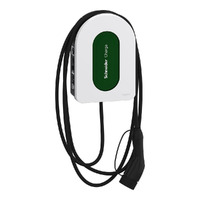
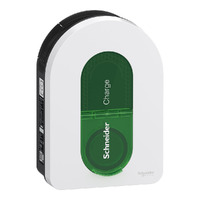
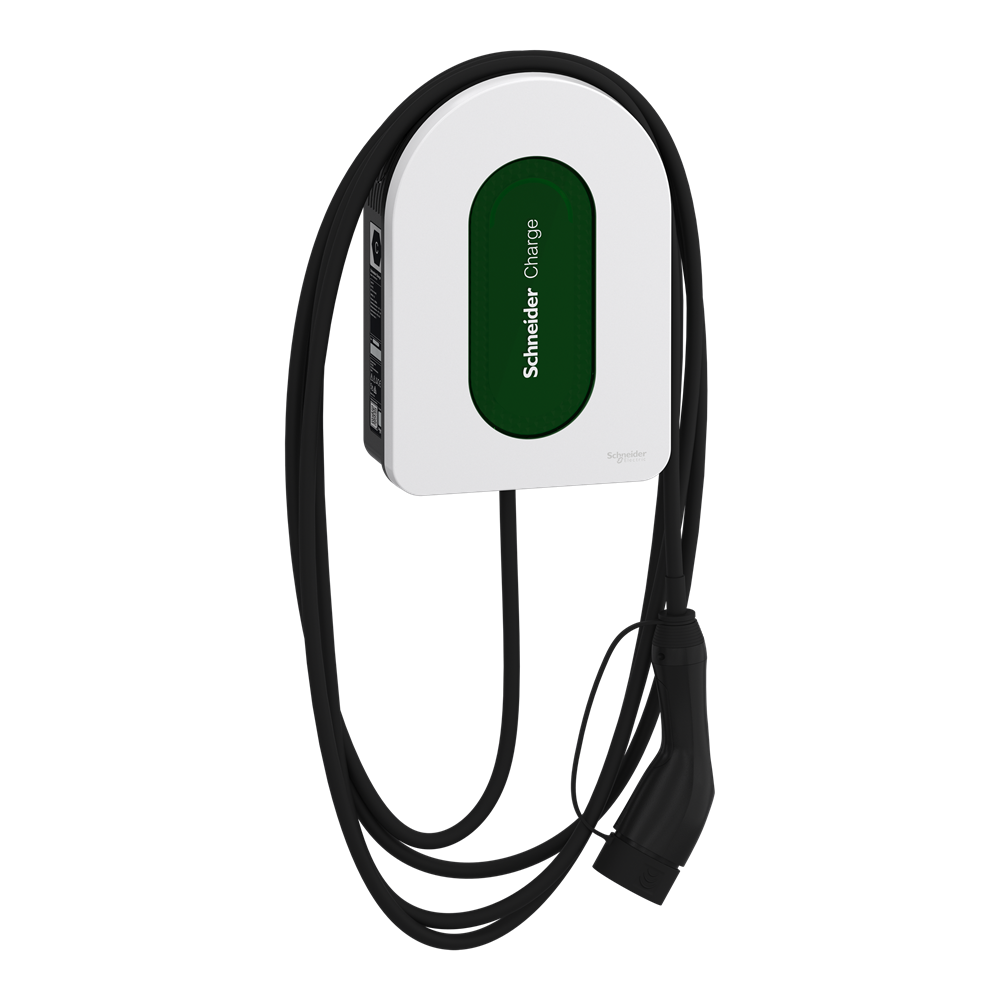
EVH5A07N2C5 | 7.4kW Schneider Charge | 5 Meter Cable | 1P+N 32A | Home Charging Station
$1,450.79
$1,318.90 ex. GST
Search Results:
Search Results:
Find the best Schneider charge products here at Sparky Direct. [ Read More ]

Schneider Charge is a wall-mounted AC EV charging station for private residential garages, carports, outdoor walls, townhouses, and suitable small commercial sites. The range is built around Type 2 connector compatibility, which covers the vast majority of plug-in electric vehicles sold in Australia. Typical use cases include overnight home charging, off-peak charging on time-of-use tariffs, and solar-aligned charging. The range also suits EV fleet-at-home setups where multiple vehicles share a household, and premium residential builds where a permanent wallbox is specified at design stage.
Schneider Charge sits in the Schneider Electric energy ecosystem. It works as a standalone wall charger and can be paired with optional load management hardware. For broader EV charging context, see the full EVlink Wallbox range from Schneider Electric.
For homeowners, Schneider Charge offers reliable daily charging, app-based monitoring, and a known global brand with local support. For electricians and solar installers, it provides clear installation documentation, recognisable parts, and accessories that pair well with the Schneider switchboard ecosystem. Builders and renovators benefit from a charger that fits cleanly into modern energy plans.
Practical trade considerations remain central. Switchboard assessment, available circuit capacity, cable route planning, and load management all sit inside the electrician's scope. For larger or repeat installs, contractors can scope a standardised hardware package that includes the charger, protection devices, and cable management.
| Specification | Detail |
|---|---|
| Single-phase model | 7.4 kW |
| Three-phase models | 11 kW and 22 kW |
| Connector | Type 2 (Mennekes) |
| Cable options | Tethered cable or socket-outlet |
| Enclosure rating | IP55 weather resistance |
| Impact rating | IK10 impact resistance |
| App control | Wiser app connectivity |
| Load management | Optional anti-tripping module |
Final ratings, accessory codes, and cable lengths should always be confirmed on the individual product listing before ordering.
A standard 10 A general purpose outlet is not designed for sustained EV charging loads. Drawing 10 A continuously for many hours each night through a shared lighting or power circuit can stress the wiring, the GPO, and the upstream protection. A dedicated EV charger like Schneider Charge runs on its own circuit, communicates with the vehicle, and manages charging current safely.
The difference matters in daily use. A wallbox delivers far more energy per hour than a 10 A socket. It also handles thermal management, fault detection, and current limiting in ways a passive outlet cannot. Assessment and installation must always be handled by a licensed electrician. Browse the supporting RCBO range often used alongside an EV charger circuit.
Portable EV chargers plug into a household outlet and travel with the car. They suit travel, second homes, low-frequency charging, or backup use when a fixed charger is unavailable. They are slower, depend on the host socket, and require cable handling at every session.
A fixed Schneider Charge wallbox is built for routine daily use. It offers faster charging, neater cable management, scheduling, and tighter integration with household energy planning. For users who charge at home most nights, a fixed unit is the more practical and durable choice.
Comparing AC EV chargers comes down to a small set of practical factors rather than brand loyalty. Useful criteria include smart app capability, solar and load management options, enclosure rating, OCPP support, accessory availability, installer familiarity, and the breadth of the model range. Schneider Charge sits in the Schneider Electric ecosystem alongside Wiser products and modern circuit protection.
The best choice depends on supply type, the EV's AC charging capacity, the installation environment, and the household's wider energy goals. Buyers may also consider alternative Type 2 wallboxes such as the Ohme EV charger range for comparison.
The 7.4 kW single-phase model is typically suited to Australian homes with single-phase supply and suitable circuit capacity. It delivers usable overnight charging speeds for the vast majority of plug-in EVs without requiring an upgrade to three-phase power. Charging speed depends on the EV's onboard AC charger, battery size, current state of charge, and any configured current limit on the wallbox.
For homeowners who drive moderate daily distances and have access to overnight charging windows, a 7.4 kW unit is usually enough. It is also the most common configuration for retrofit installs where the existing supply is single-phase and an upgrade is not in scope.
Three-phase models suit households with three-phase supply, higher daily driving demands, shared vehicles, premium builds, or selected light commercial settings. The 11 kW model offers a useful uplift over single-phase for many EVs. The 22 kW model is the top of the AC range, but it will only deliver the vehicle's maximum supported AC charge rate, which is often lower than 22 kW.
Electricians should verify supply capacity, maximum demand, protection requirements, and switchboard suitability before the product is specified. A three-phase EV charger paired with the right switchboard layout is a clean install. The wrong combination causes nuisance trips and rework. The three-phase meter box range covers common switchboard requirements.
Schneider Charge units are designed for Type 2-equipped plug-in vehicles. This covers most EVs and plug-in hybrids sold in Australia. The maximum charging rate depends on the vehicle's onboard AC charger, not the wallbox alone. A 22 kW unit connected to an EV with a 7 kW onboard charger will still charge at 7 kW.
Before purchase, buyers should check the connector type on the vehicle, confirm the maximum AC charge rate listed in the vehicle manual, and decide between tethered cable and socket-outlet options. Plug-in hybrids generally charge more slowly than full battery EVs because they have smaller onboard AC chargers.
Tethered models include a permanently attached Type 2 charging cable, usually offered in 5 m or 7 m lengths. They are the most convenient choice for a single household vehicle, with no cable handling at the wallbox each session. Cable length should be planned around vehicle parking position and the inlet location on the car.
Socket-outlet models accept a separate Type 2 to Type 2 charging cable. They suit households with multiple EVs that already own suitable cables, shared parking arrangements, or sites where flexible cable use is preferred. The cable lives in the boot of the car rather than on the wall.
Smart functions on the Schneider Charge range cover remote monitoring, charging schedules, charge history, energy visibility, app-based control, and authorisation control where supported. Firmware updates may be applied where the network configuration allows. These features help homeowners manage cost and convenience without physically plugging and unplugging around tariff windows each day.
Smart charging is most useful where the household has a clear daily pattern: predictable departure times, off-peak tariff windows, or solar generation during the day. The wallbox handles scheduling so the EV is ready when needed, without constant manual intervention. Schedules can be adjusted from the app as routines change.
Schneider Charge integrates with the Wiser Home app for monitoring and control. Users can see real-time charging status, session history, and energy consumption. Where compatible Schneider devices are installed in the home, broader household energy visibility is also possible through the same app environment.
Initial setup and commissioning should follow Schneider Electric documentation. The installer typically completes the network pairing and verifies app communication during handover. The Wiser ecosystem is shared with the Clipsal Iconic Wiser range of smart switches and dimmers.
Scheduled charging supports time-of-use tariffs, off-peak charging windows, and predictable daily departure times. Common examples include charging after the evening peak when household demand drops, charging during cheaper overnight tariff windows, and setting separate weekday and weekend schedules. The app holds the schedule, so the user only needs to plug the cable in.
Solar-aware charging aims to direct surplus rooftop solar generation into the EV during the day rather than exporting it to the grid. This depends on the wider Schneider and Wiser ecosystem, suitable monitoring hardware, the inverter setup, and the local tariff structure. The result varies between sites and is not automatic for every installation.
Electricians and solar installers should confirm compatibility with the household's energy monitoring setup before committing to a configuration. Where solar-aware charging is in scope, it usually involves a current transformer or compatible meter at the main switchboard, alongside the wallbox itself. Suitable three-phase kilowatt hour meters may also feature in the energy plan.
OCPP 1.6 is an open protocol that lets a charger connect with compatible third-party charging management platforms. This matters for tech-savvy homeowners, small fleets, property managers, and any site that may later need centralised reporting or demand-response participation. OCPP support keeps future options open.
Platform features always depend on the chosen service, the charger firmware, and local network configuration. Buyers should not assume every advertised platform feature works in every region or with every firmware version. Confirm intended use cases with the platform provider before committing.
The anti-tripping or load management module monitors household load and reduces the charging output when other high-demand appliances are operating. Practical examples include the oven, ducted air conditioning, electric hot water systems, pool pumps, and other large loads switching on at the same time as the EV. The module helps the household stay within available supply capacity.
The aim is to avoid nuisance trips on the main switch or the EV circuit, particularly during evening peak periods when household demand stacks up. Without load management, a home may need to size the EV circuit conservatively or risk repeated tripping under combined loads.
Load management is especially useful for homes with limited supply capacity, single-phase connections, large existing appliances, solar generation, or future plans for home batteries. It is not a universal requirement, but on tight supplies it can be the difference between a smooth install and recurring callbacks. Where supply is generous and loads are modest, a standard EV circuit may be sufficient.
Electricians should assess maximum demand, switchboard capacity, existing protection devices, and likely load growth before deciding. The cost of the load management module is usually small compared with the cost of an unplanned switchboard or supply upgrade later. The EVlink Universal Peak Controller is one option in this space.
Future-proofing matters when an EV charger is going in. A second EV, a home battery installation, solar expansion, a switchboard upgrade, or a change of tariff can all shift the energy picture within a few years. Choosing the right charger, conduit pathway, and switchboard layout at install time reduces rework later.
Useful future-proofing items include leaving spare conduit capacity and sizing the EV circuit with a small margin where supply allows. It also helps to choose a wallbox that supports load management even if the feature is not enabled on day one. The Clipsal MAX9 and Resi MAX circuit protection range is a common pairing in modern switchboards.
Yes. EV charger installation in Australia must be carried out by a licensed electrician. The work includes running a dedicated circuit, selecting and fitting protection devices, terminating cables, testing, commissioning, and issuing the required compliance documentation. None of this is consumer DIY work.
Attempting EV charger installation without a licence is unsafe, illegal under state and territory electrical safety legislation, and may void insurance on the property and the vehicle. The cost of professional installation is small compared with the risks of getting it wrong.
This page provides scope guidance rather than step-by-step wiring instructions. The Schneider Electric installation manual and the relevant Australian standards are the authoritative sources for the live work. The wallbox supports flexible cable entry, common mounting patterns, and the accessory selection typical of modern EV installs.
Topics covered in the manufacturer documentation include mounting flexibility, cable entry options, accessory selection, commissioning steps, testing requirements, and Australian compliance obligations. This page does not include terminal layouts, torque values, or live-work procedures. Those belong in the manual and in the installer's own work practices.
Indoor mounting in a garage offers protection from weather, easier cable management, and simpler Wi-Fi coverage from the house network. Outdoor mounting on a carport, driveway wall, or external garage wall is also supported by the IP55 enclosure rating, but requires more thought about UV exposure, cable reach, vehicle parking alignment, and impact protection.
For exposed locations, consider trip hazards from the cable, sun exposure on the housing, and how the user will store the connector when not in use. Cable holders or wall hooks are useful accessories on most outdoor installs. Cable length should be decided with the installer before purchasing accessories.
The installer should test the circuit and the charger in line with Australian electrical requirements and Schneider Electric commissioning guidance. High-level test items include polarity, earth continuity, insulation resistance, RCD operation, and final charger configuration. User handover should cover starting and stopping a session, app pairing, and what to do if the unit faults.
Compliance documentation is issued by the electrician on completion. This documentation is also relevant to manufacturer warranty conditions, so the homeowner should keep a copy with proof of purchase.
Useful accessories cluster around three areas: load management, cable handling, and the protection and cabling that sits between the switchboard and the wallbox. The anti-tripping or load management module is the headline accessory for homes with limited supply. Type 2 charging cables are needed for socket-outlet models. Cable holders or wall hooks keep the install tidy.
Installer-selected items typically include a dedicated RCBO or RCD, a suitable isolator, conduit and glands, cable management on the run, and any mounting fixings required for the wall surface. Suitable parts can be drawn from the RCD range and cable management range.
A trade-ready EV install considers the full package, not just the charger. Cable path, weatherproofing, mounting surface, vehicle parking position, and future maintenance access all influence the final result. Planning these items up front avoids messy retrofits later.
Professional installers commonly order the charger, protection gear, conduit, glands, fixings, and cable management together. This reduces site delays from missing parts and keeps the install on schedule. For the connection at the switchboard, suitable conduit saddles support a tidy run.
Schneider Electric is a long-established global brand in energy management. The Schneider Charge wallbox is built around suitable enclosure ratings, modern firmware, and an app environment that ties into the wider Schneider ecosystem. In practice, most reliability outcomes are decided by the install rather than the charger itself.
Common drivers of poor reliability include a weak Wi-Fi signal at the mounting location, marginal supply capacity that causes recurring trips, and mismatched protection upstream. Other factors include exposure that the chosen mounting position did not properly account for, and unsupported network or app configurations. Schneider Charge units installed by a licensed electrician with proper site planning are typically straightforward in daily use.
Safety features on a modern AC EV wallbox include controlled vehicle communication, managed charging current, residual DC fault detection where included on the model, the enclosure rating, and impact resistance. These features work alongside the protection chosen by the electrician at the switchboard. The two layers together form the safety envelope for the installation.
The electrician confirms the final protection arrangement for the site, including any required RCD or RCBO type, any local code requirements, and how the EV circuit interacts with the rest of the switchboard. Suitable protection often comes from the circuit protection range, with surge devices drawn from the surge protection device range.
Buyers typically want to know about manufacturer warranty conditions, Australian support channels, product documentation, installation manuals, firmware and app support, proof of purchase requirements, and the link between correct installation and warranty validity. Most manufacturer warranties on electrical hardware require professional installation by a licensed contractor.
Current warranty terms should be confirmed on the individual product listing or in the Schneider Electric documentation rather than assumed from general industry expectations. Keep the original purchase receipt, the electrician's compliance documentation, and any commissioning notes together in case warranty support is later required.
Typical setup issues users raise include the charger not appearing in the app and weak Wi-Fi signal at the mounting location. Charging may also be slower than expected because the vehicle's onboard AC charger is the limit. Other common reports include circuit trips during high household load, cable reach problems where the vehicle parking position changed, and a socket-outlet model paired with the wrong Type 2 cable. Most of these are diagnostic rather than electrical.
Direct electrical faults, repeated tripping, heat at the unit, visible damage, or water ingress should always be referred to a licensed electrician. Do not attempt to open or service the wallbox. App-side issues such as login, schedule editing, or pairing usually sit with the user rather than the electrician.
Comparing prices fairly means comparing like for like. Exact model reference, power rating, cable length, socket versus tethered, included accessories, GST treatment, delivery, and stock status all change the total cost of an EV charger purchase. A headline price that excludes a load management module or assumes a shorter cable can look cheaper than it really is.
Where bundles are advertised, check what is in the bundle. A wallbox that includes load management or a cable holder is not directly comparable with a bare unit at a lower price. Confirm the exact model with the electrician before ordering, since substituting a similar-looking unit at the last minute can affect protection sizing or mounting plans.
The cheapest unit is not the best value if it does not suit the vehicle, the supply, or the install environment. The buying decision is built from a small set of practical points. These include single-phase versus three-phase supply, the appropriate power rating, the right cable length, socket versus tethered configuration, accessory requirements, and realistic delivery timing for the install schedule.
Working backwards from the install date and the electrician's specification usually produces a cleaner outcome than working forwards from the lowest visible price. A correctly specified Schneider Charge model paired with the right protection devices is the more useful comparison, not raw unit price.
Current availability is best confirmed on the individual product listings rather than from general claims. Check the Schneider EV charging category for live stock, model references, pricing, and delivery options. Electricians and project buyers should verify quantities and accessories before placing larger orders.
Trade and light commercial settings include small fleet charging at home addresses, townhouse and apartment block readiness work, and premium residential developments. They also cover builder-specified EV-ready electrical plans, facility upgrades, and repeat installs across electrical contractor jobs. Schneider Charge fits the residential and light commercial end of this spectrum.
Larger commercial EV charging installations, public charging hubs, or high-throughput sites generally call for dedicated commercial EV charging products with different power, network, and reporting capabilities. Scope the project type first, then choose the hardware to match rather than stretching a residential wallbox into a role it is not designed for.
Order readiness reduces site delays. Check stock status on the chosen model and confirm the model reference with the electrician. Add the accessories and protection gear specified for the install. Confirm the delivery address and timing against the site schedule, and consider bulk or repeat orders for contractors running multiple installs. Buyers can also contact Sparky Direct via contact us for project-level enquiries.
Club Clipsal is Australia's largest electrician community offering trade rewards, business support, and exclusive benefits. When you nominate Sparky Direct as your preferred wholesaler, we automatically apply your Clipsal spend points to your Club Clipsal account daily.
Entry-level offering coaching, mentoring, and training discounts
Unlock exclusive industry tools and networking events
Access Toyota fleet offers and business software discounts
Maximum benefits, including VIP experiences and rewards
1. Sign Up: Create your Club Clipsal account at clipsal.com/club-clipsal or via the iCat mobile app
2. Nominate Sparky Direct: Select Sparky Direct from the wholesaler dropdown menu in your profile
3. Add Email: Enter your Sparky Direct account email address in the membership number field
4. Start Earning: Every dollar spent on Clipsal products earns points automatically
Redeem points from the rewards store, including gift cards, tools, and experiences. Access business summits, product training, and industry networking events. Receive early access to new product launches and special promotions. Connect with fellow electricians via the Club Clipsal community app.

This is very neat busbar for 3 phase applications specially where space is limited and you want to use many many slim RCBOs in one bar. You can shorten the bar as required. Some modifications (off label) also possible if you want to add additional 3 phase MCBs to the bar. Another version of this bar is available in a unique kit form (MX9K318PP) ideal for residential application where you can neatly integrate ev charging, solar and battery storage. This is a brilliant design that should be incorporated into the meter box of all modern residential electrical wiring.
The Wiser hub is required to use Clipsal Iconic light switches and cameras etc via WiFi. It is overpriced in my view, but does a great job and connects every time, from anywhere in the world. If you want to control Clipsal/PDL light switch, towel rails, fans and cameras remotely, you need this hub, or they only communicate locally via bluetooth. The app is Wiser SE, warning it is time consuming and tricky to set up, but once you get it up and running, it is faultless.
Easy to navigate the website and find what I needed, and the item arrived very quickly to Perth WA. Well packaged and protected.
Quality products in stock • Fast Australia-wide delivery • Competitive trade pricing
Browse Schneider EV Chargers → Get Expert Advice →