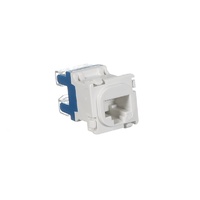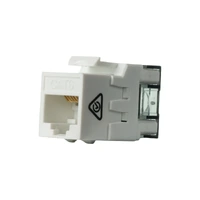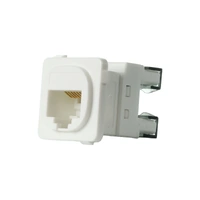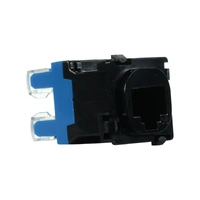

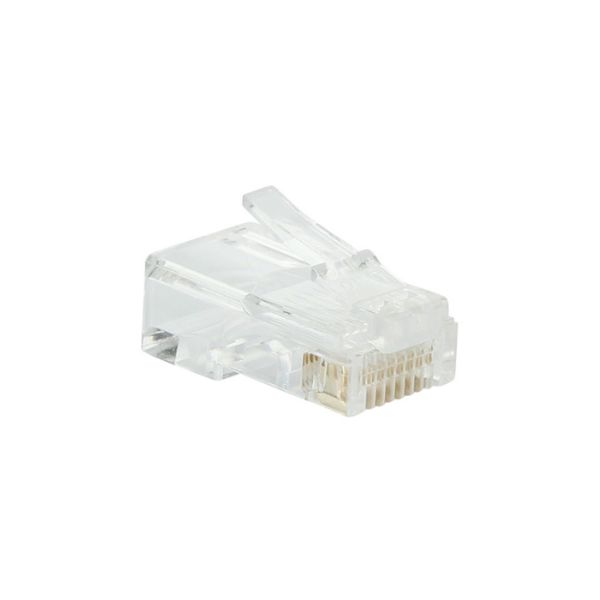
50 Pack
NEW
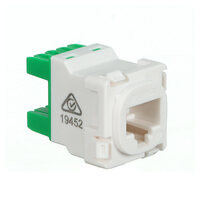
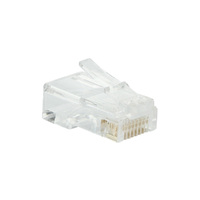
Klein Tools VDV826-702 | Pass-Thru Modular Data Plug | RJ45-CAT5E | 50 Pack
$0.00
$0.00 ex. GST
Search Results:
Search Results:
A wire connector creates a low-resistance mechanical and electrical bond between two or more conductors. Once the wires are clamped or spliced inside the housing, current passes through a metal contact (usually brass, copper, or tinned copper) that holds the conductors against each other under spring or screw pressure. The plastic body insulates the join and keeps it isolated from neighbouring wires inside the enclosure.
Every circuit needs reliable joins at switches, lights, GPOs, and junction boxes. A wire connector replaces the older method of twisting bare copper and taping it. The connector keeps the contact area constant, prevents conductors from pulling apart, and stops accidental contact with earth or live parts.
Splicing joins two cable ends so they act as one continuous conductor. Termination ends a conductor at a fitting, lug, or terminal. A connection refers to any join between conductors or between a conductor and a device. Most wire connectors handle splices and inline joins; cable lugs and quick-connect terminals handle terminations.
A good connector keeps contact resistance below 1 milliohm at the rated current. That is achieved through correct conductor preparation, the right size connector for the cable, and a clamping mechanism that stays under tension over years of thermal cycling. When any of those fail, the join heats up, oxidises, and eventually arcs.
Wire connector failure is one of the most common causes of fixture and switchboard fires. The join is small, often hidden, and rarely inspected after installation. Picking the right connector and installing it correctly is the difference between a safe job and a callback.
A loose or undersized connector develops resistance at the contact point. That resistance produces heat. Heat oxidises the copper, which raises resistance further. The join eventually arcs across the gap and ignites the surrounding insulation. This is why under-torqued screw terminals and oversized push-in connectors are dangerous, even when the circuit appears to work at first.
A connector must hold the conductor mechanically so that vibration, thermal expansion, or pulling cannot loosen it. The same clamp must keep the electrical contact area constant. Spring-cage connectors achieve this with a stainless spring; screw types rely on the installer reaching the correct torque. Both work when used inside their rated range.
All electrical work in Australia must comply with AS/NZS 3000:2018 (the Wiring Rules). Connectors must also meet AS/NZS 60998 for low-voltage household and similar applications. In every state and territory, fixed wiring and switchboard work must be performed by a licensed electrician. DIY connector work on mains-voltage circuits is illegal.
Licensed work only: Wire connector installation on mains circuits is restricted to licensed electrical contractors under state electrical safety laws. This page provides product and selection information for trade buyers, not installation instructions for unlicensed users.
Wire connectors fall into four main families based on how they grip the conductor: screw clamp, lever or push-in spring, crimp, and insulation displacement. Each family has strengths in different applications.
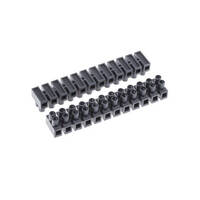
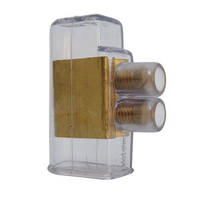
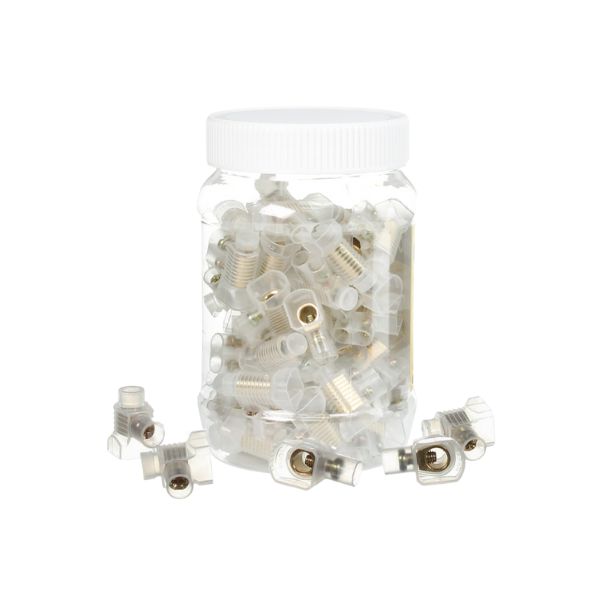
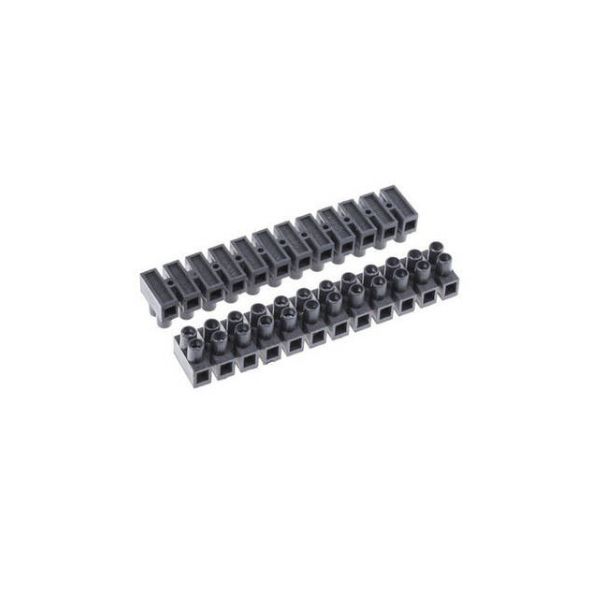
Terminal blocks (often called BP or barrier strips) use grub screws to clamp the conductor against a brass barrel. They are reusable, take a wide range of cable sizes, and stay common for sub-circuit joins. Sparky Direct stocks single screw connectors for general lighting work and double screw connectors for higher-current joins where a single screw may rotate the conductor.
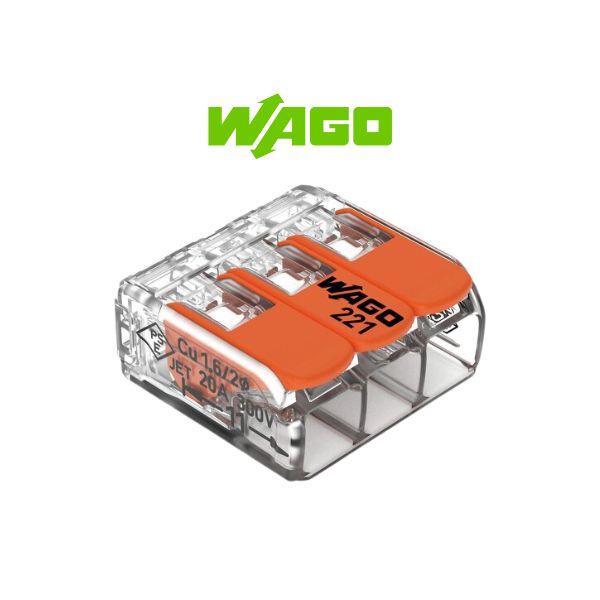
Lever connectors clamp the wire with a stainless steel cage held by a hinged plastic lever. Lift the lever, insert the stripped conductor, and close the lever. WAGO 221 series connectors are the most common in Australian trade vans. They handle 0.2–4 mm² conductors at 32A in the standard models, and 6 mm² in the larger 221-6 series.
Crimp connectors deform the metal sleeve around the conductor to create a gas-tight cold weld. They cannot be undone without destroying the connector. Butt splices join two conductors end-to-end; ring terminals, spades, and pin terminals end a conductor for screw-down attachment. A calibrated crimping tool is essential, as hand pliers cannot reach the required pressure.
Ring terminals slide onto a stud and are bolted in place. Spade or fork terminals slide between two washers without removing the screw, which speeds up panel maintenance. Pin terminals (also called bootlace ferrules) cap stranded conductors before insertion into a screw terminal block, preventing the strands from spreading.
The clamping mechanism determines how the connector behaves over time, how forgiving it is of installer technique, and which conductor types it accepts.
A screw clamp depends on the installer reaching and holding the correct torque. Under-torque means a high-resistance join; over-torque crushes the strands and breaks them off. A spring-cage connector applies a constant force set at the factory, so it does not loosen over thermal cycles and does not need re-torque.
| Feature | Screw Clamp | Spring Cage |
|---|---|---|
| Installation speed | Slower, needs screwdriver | Faster, tool-free or insert tool |
| Vibration tolerance | Can loosen over time | Constant spring pressure |
| Re-torque required | Yes, on high-current joins | No |
| Cost per join | Lower | Higher |
| Conductor types | Solid and stranded | Solid, stranded, and flexible |
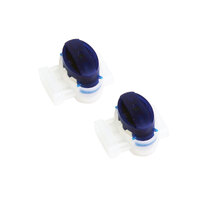
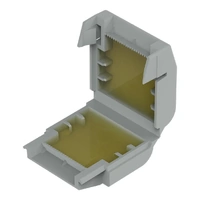
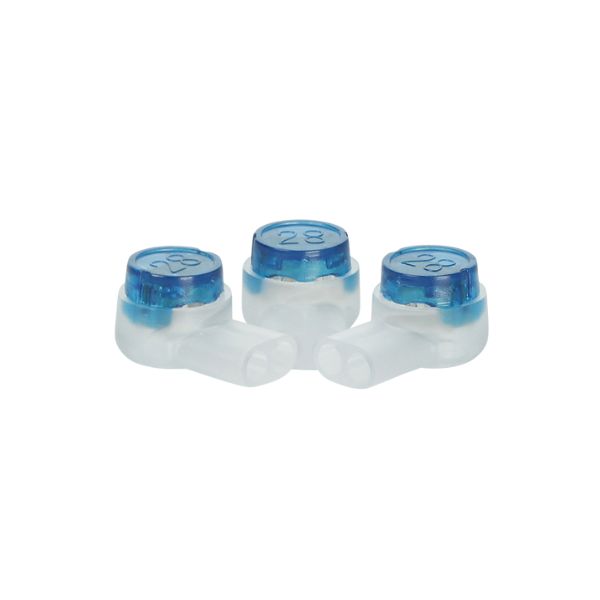
IDC connectors cut through the insulation as the conductor is pressed in, making contact without stripping. Common in data, telecoms, and some lighting applications. Gel-filled IDC connectors (often called gel connectors) seal the join against moisture, which suits direct-burial and outdoor work.
Above 16 mm², most installations use crimp or mechanical lugs bolted to bus bars. Mechanical lugs use a screw to clamp the conductor inside a tinned copper barrel. Crimp lugs are pressed onto the conductor with a hydraulic tool and offer lower resistance but cannot be reused. Sparky Direct stocks the full cable lugs range from 1.5 mm² up to 240 mm².
Three specifications drive connector selection: voltage rating, current rating, and conductor compatibility. Get any one wrong and the connector will fail, even if the circuit works at first.
The connector's voltage rating must equal or exceed the circuit voltage. For Australian fixed wiring at 230/400V, look for connectors rated 450V or 600V. Current rating must exceed the circuit's protection rating (the upstream MCB or fuse) with a small safety margin. A WAGO 221-412 is rated 32A; it suits a 20A or 25A lighting or sub-circuit but should not be used on a 32A radial without checking the de-rating.
Most Australian building wire is solid copper to AS/NZS 5000.1. Connectors are designed around copper. Mixing aluminium and copper without a transition connector causes galvanic corrosion at the join. The connector body also has to physically accept the conductor cross-section, which is printed on every reputable connector along with the voltage and current rating.
Solid conductors fit any connector. Stranded conductors need a connector designed for them; otherwise the strands deform under the screw and the contact area drops. Flexible cores (Class 5 or 6) need a ferrule or a connector explicitly rated for flexible cable. WAGO 221 connectors handle all three without ferrules, which is part of why they have replaced traditional terminal blocks on many sites.
Read the connector body. The cross-section range, voltage rating, and current rating are printed on every compliant connector. If any of those numbers do not match the circuit, pick a different connector.
The same connector that works inside a junction box will fail outdoors or buried in damp soil. Environmental rating drives the housing material, the seal, and whether a gel or grease fill is needed.
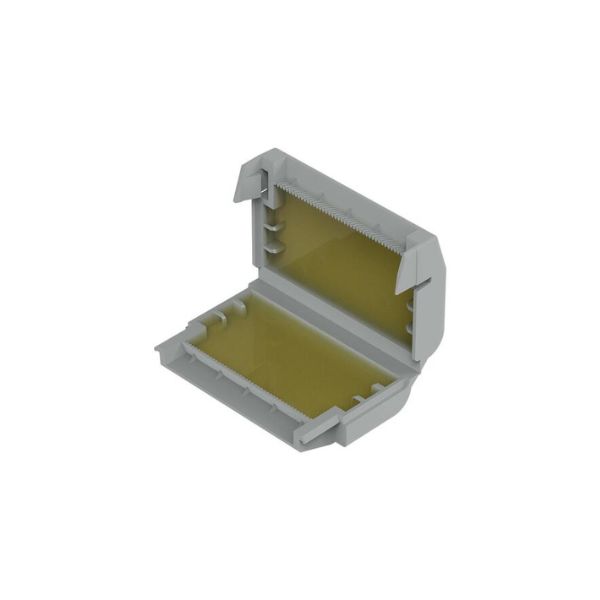
Standard polyamide connectors are rated for clean, dry indoor use. Outdoor and damp environments need an IP-rated enclosure or a sealed connector. Gelbox connectors are WAGO 221 connectors inside a sealed gel-filled box; this combination achieves IPX8 and is suitable for direct burial.
Brass screw bodies tarnish in salt air; tinned copper resists corrosion much longer. Polyamide housings tolerate around 105°C continuous; for higher temperatures, look for ceramic or high-temp plastic bodies, common in oven, hot water, and luminaire wiring.
Vibration loosens screw terminals over time. Spring-cage connectors do not loosen, which is why they dominate in rolling stock, marine, and industrial applications. For very high vibration, crimp lugs or factory-terminated assemblies are preferred over field-installed connectors.
The shift from screw-type connectors to lever connectors has been the biggest change in Australian residential wiring practice in the last decade. Both have a place, and choosing between them depends on speed, the cable type, and how much the join might be reworked.
A WAGO 221 splice takes about three seconds per conductor: lift, insert, close. The same join with a screw connector takes 20 to 30 seconds and a screwdriver. On a job with 50 light points, that adds up to roughly an hour saved.
Spring-cage connectors maintain constant pressure as the cable expands and contracts with current load. Screw terminals can loosen, particularly on aluminium-to-copper joins or under heavy thermal cycling. For lighting circuits the difference is small; for high-current sub-mains, the difference is significant.
Lever connectors are bulkier than the equivalent screw connector at very small cross-sections, which can be a problem in cramped luminaires. Above 6 mm², lever options thin out and lugs or terminal blocks take over. For one-off temporary joins on a test bench, a screw connector is often more practical because it can be tightened gradually.
Industrial connectors are sized, sealed, and certified for environments that domestic connectors cannot handle. Hazardous areas, submersible installations, and high-current bus connections all use specialised connector families.
For currents above 100A, mechanical or crimp lugs bolted to a bus bar are standard. Sparky Direct stocks heavy-duty screw connectors up to 35 mm² and copper lugs up to 240 mm² for switchboard and sub-mains work.
Hazardous areas (Zones 1, 2, 21, 22) require Ex-rated connectors that prevent the join from igniting a flammable atmosphere. These are heavy-walled, often metal-bodied, and certified to IECEx or ATEX. Selection should follow AS/NZS 60079 and the area classification document for the site.
Direct burial, pond pumps, and outdoor lighting use IPX8 connectors. Gel-filled inline splices are the most common solution for buried mains and irrigation work. The seal must be intact before commissioning; a damaged gel boot defeats the rating.
The connector specification gets a job to standard; installer technique decides whether it stays at standard for 30 years.
Strip length is printed on every quality connector body. Too short and the contact area is reduced. Too long and bare conductor sits outside the housing, creating a shock and short risk. A calibrated wire stripper set to the conductor cross-section gives consistent strip lengths and avoids nicking the copper.
Screw terminals have a torque value, usually printed on the device or in the data sheet. A torque screwdriver set to the value gets every screw to spec. Spring-cage connectors do not need torque; the spring sets the pressure.
Continuity testing confirms the join is electrically sound. Insulation resistance testing confirms the join is insulated from earth. Both are mandatory before energising under AS/NZS 3000:2018. A thermal scan under load picks up any high-resistance joins that passed initial testing.
Most connector failures come from a small number of repeating mistakes. Avoiding these covers the majority of callbacks.
Pushing 6 mm² building wire into a connector rated for 4 mm² is the most common mistake. The conductor will not seat fully, the contact area is reduced, and the join runs hot under load. Always read the cross-section range printed on the body.
Aluminium and copper joined directly form a galvanic cell that corrodes both metals over time. Use a transition lug or a connector specifically rated CU/AL. The rating is printed on the body; do not assume.
A 32A connector on a 32A circuit leaves no headroom. Real loads include inrush spikes, harmonic content, and ambient temperature rises that the steady-state rating does not cover. Picking a connector with a current rating 25 to 50 percent above the circuit rating gives that headroom.
Most residential lighting uses 1.5 mm² and 2.5 mm² building wire. WAGO 221-412 and 221-413 connectors handle the vast majority of light-point and switch-leg joins. BP connectors remain common in older installations and are still used where a screw join is preferred.
Automotive looms and 12V/24V systems use crimp connectors almost exclusively. The vibration environment rules out screw terminals, and the small conductor sizes do not justify lever connectors. Sealed butt splices with adhesive heat-shrink linings are standard for marine and outdoor automotive work.
Commercial fit-outs mix lever connectors for lighting and small power with mechanical lugs and terminal strips for sub-mains and motor connections. Three-phase distribution boards almost always use bolted lug connections to bus bars.
A connector chosen and installed correctly should outlast the cable it joins. Failures usually trace back to one of three causes.
Heat is both a cause and a symptom of a failing connector. Sized correctly, run within rating, and installed with the right strip length and torque, a connector should run within a few degrees of the surrounding cable. Anything warmer points to a problem.
Cables move with thermal expansion and vibration. The connector has to hold the conductor through that movement. Spring-cage connectors handle this passively; screw connectors need correct torque at install and may need re-torquing on heavy industrial joins.
Compliant connectors carry a brand name, a printed rating, and reference an Australian or international standard. Generic unbranded connectors from auction sites often miss one or all three, and the internal contact area is frequently smaller than the labelling suggests.
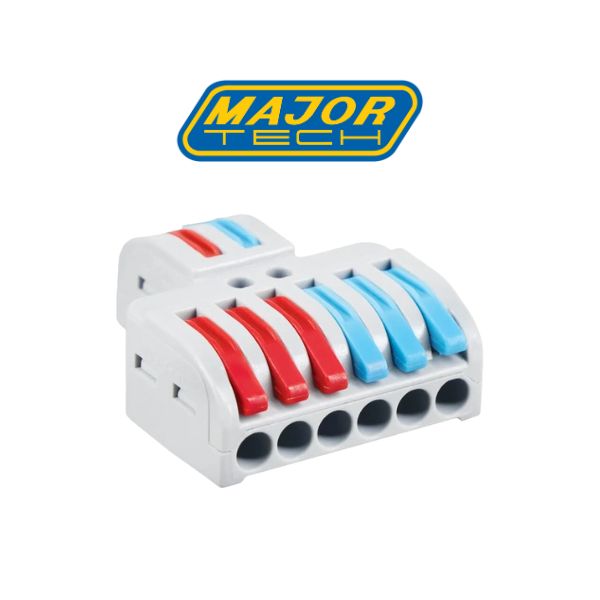
Sparky Direct ships the full connector range Australia-wide, including WAGO, NLS, Clipsal, CABAC, and Major Tech. Trade buyers can order via the website or open an account for net 30 terms.
Discount auction-site connectors often skip the certification testing. The plastic may be a lower-grade polymer, the contact may be a thinner pressing, and the cross-section claims may be optimistic. For licensed work, the cost of a callback far exceeds the saving on a cheap connector.
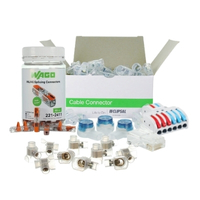
Buying jars of 50 or 100 connectors saves around 30 to 50 percent over single-pack pricing. Sparky Direct stocks bulk packs of WAGO splicing connectors and screw connector strips for trade contractors. TuffStuff and 3M bulk lugs are also stocked for switchboard and sub-mains work.
An intermittent fault in a circuit usually traces to a loose connector somewhere along the run. Symptoms include flickering lights, RCD trips under load, and burning smells without visible fire. Open the nearest junction box, check each connector for heat marking, and re-terminate with a fresh connector.
Browning or blackening of the connector body indicates the join has been running hot. The connector has been compromised even if the circuit still works. Replace the connector and check whether the load matches the circuit design.
Green powder around the conductor entry indicates copper corrosion, usually from moisture ingress. Replace the connector with an IP-rated version or move the join into a sealed enclosure. White powder on aluminium suggests galvanic corrosion from a copper-aluminium join; replace with a CU/AL transition connector.
Club Clipsal is Australia's largest electrician community offering trade rewards, business support, and exclusive benefits. When you nominate Sparky Direct as your preferred wholesaler, we automatically apply your Clipsal spend points to your Club Clipsal account daily.
Entry-level offering coaching, mentoring, and training discounts
Unlock exclusive industry tools and networking events
Access Toyota fleet offers and business software discounts
Maximum benefits, including VIP experiences and rewards
1. Sign Up: Create your Club Clipsal account at clipsal.com/club-clipsal or via the iCat mobile app
2. Nominate Sparky Direct: Select Sparky Direct from the wholesaler dropdown menu in your profile
3. Add Email: Enter your Sparky Direct account email address in the membership number field
4. Start Earning: Every dollar spent on Clipsal products earns points automatically
Redeem points from the rewards store, including gift cards, tools, and experiences. Access business summits, product training, and industry networking events. Receive early access to new product launches and special promotions. Connect with fellow electricians via the Club Clipsal community app.
Watch Wago 221-412 | 4mm² 2-Way Compact Splicing Connector | Jar of 100 video
Watch NLS 30007 | Single Screw Cable Connector 32 Amp | (100 Jar) video
Watch TuffStuff CL708F | Flared Entry Copper Lug | 70mm² - 8.0mm Stud video

Easy to use. Strong connections and compliant - happy to keep carpal tunnel a few more years away!
Excellent product, good price, versatile usage. Trusted brand. Cables fit in really good. Been using this brand of connector since i know Sparky Direct!
Excellent quality lug, the flared entry certainly makes it easier to insert fine stranded flexible conductors.
Quality products in stock • Fast Australia-wide delivery • Competitive trade pricing
Browse Wire Connectors → Get Expert Advice →Yes, they help simplify wiring and keep connections organised.
Sparky Direct supplies electrical connectors Australia-wide, offering reliable connection solutions with convenient delivery.
Connectors are securely packaged and delivered via standard courier services.
Unused products are generally eligible for return according to the seller’s returns policy.
Warranty coverage varies by manufacturer and typically covers defects in materials or workmanship.
Yes, connectors are typically sold individually or in packs.
Yes, correct selection ensures safety, compliance, and reliability.
Once installed correctly, they generally require no maintenance.
Yes, they are commonly used when modifying or extending wiring.
They are usually concealed within junction boxes or enclosures.
Quality connectors are designed for long-term performance.
Yes, quality connectors help maintain firm and stable connections.
They are straightforward for licensed professionals to use correctly.
Electrical connectors are components used to join, terminate, or connect electrical cables and conductors safely.
Yes, they are a standard component in almost all electrical installations.
They ensure safe, reliable, and consistent electrical connections.
Yes, connectors are commonly used inside junction boxes and enclosures.
Many connectors include insulation to help protect against accidental contact.
Yes, most connectors are designed for use with copper conductors.
Yes, connectors are available to suit a wide range of conductor sizes.
Yes, they are suitable for residential, commercial, and light industrial applications.
Yes, they are widely used in residential electrical installations.
Common types include screw connectors, crimp connectors, push-in connectors, and terminal blocks.
Yes, quality connectors are manufactured to meet relevant AS/NZS electrical and safety standards when used correctly.
They are used to create secure electrical connections in wiring, appliances, switchboards, and equipment.