
Search Results:
Search Results:
Search Results:
Search Results:
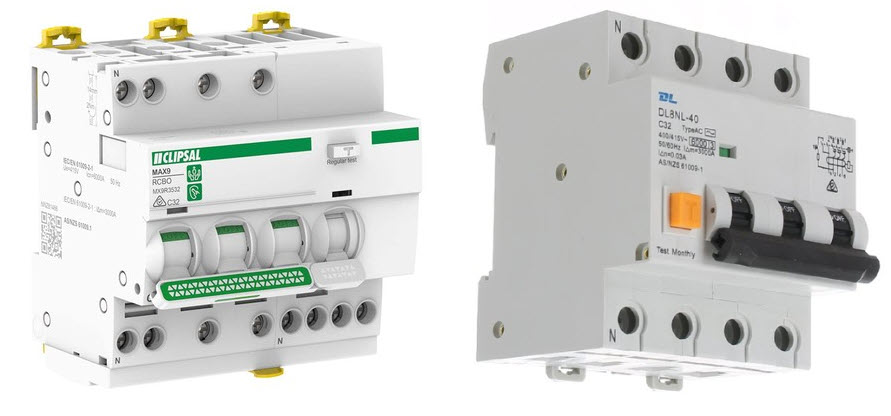
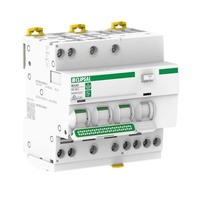
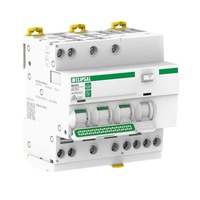
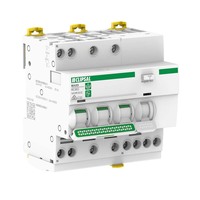
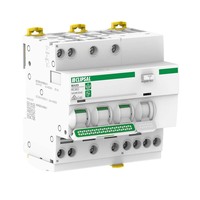
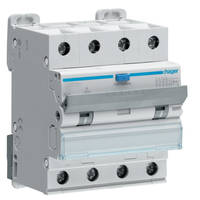
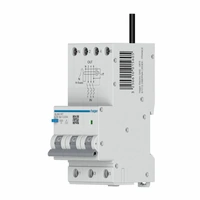
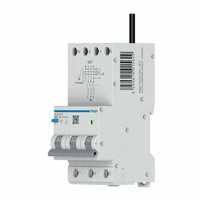
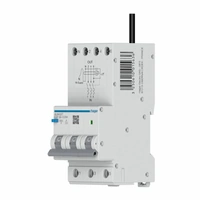
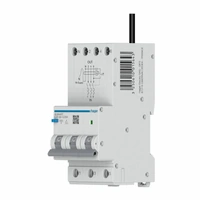
Find the best 4-pole MCB/RCD combinations here at Sparky Direct. [ Read More ]
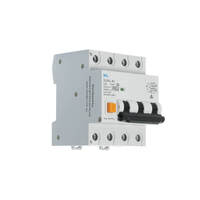
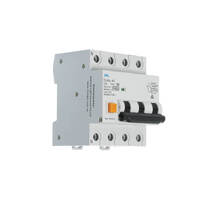
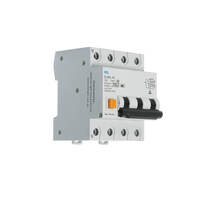
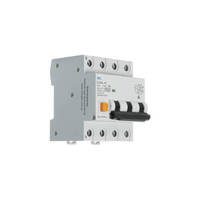
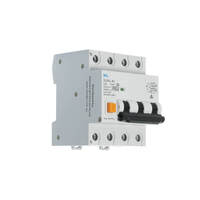
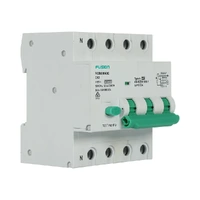
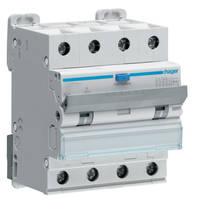
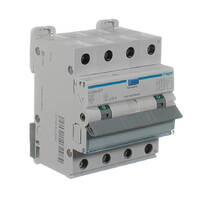
A 4 pole RCBO replaces a separate circuit breaker and RCD with one switchboard module. The unit monitors L1, L2, L3, and neutral across a complete three phase circuit. Electricians, contractors, facilities teams, and apprentices use this device class on commercial and industrial circuits where space and circuit isolation matter.
A 4 pole MCB/RCD combination provides two protection functions inside one DIN rail module. The MCB element responds to overload and short circuit faults, and the RCD element responds to earth leakage and residual current faults.
The device is built for 3 phase circuits rather than ordinary single phase final sub circuits. Common search terms for the same product class include 4 pole RCBO, 3 phase RCBO, 4 pole RCD combination, and three phase safety switch breaker.
The RCD element measures the vector sum of current across the three actives and neutral, and a balanced circuit returns a sum near zero. A residual current above the trip threshold signals an earth fault, and the device then disconnects the affected circuit from supply.
The MCB element uses a thermal trip for sustained overload and a magnetic trip for short circuit faults. The two elements operate independently inside one module and share a common trip mechanism that opens all poles together.
A 4 pole device isolates all live conductors and the neutral on a fault, which supports safer maintenance planning and cleaner fault diagnosis for service teams. Three phase loads include HVAC plant, motors, commercial kitchen equipment, pumps, and industrial machinery, and a licensed electrician must confirm pole configuration against the circuit design.
Pole count, conductor coverage, and device width separate these protection formats. Selecting the wrong format produces wiring errors, non compliant boards, and returned product.
A single pole RCBO protects one active conductor on a single phase final sub circuit. A 4 pole RCBO protects a full three phase circuit with neutral. Single pole devices are not suitable substitutes for three phase equipment that requires phase plus neutral isolation.
2 pole RCDs cover one active and one neutral on single phase circuits, while 4 pole devices monitor three actives plus the neutral conductor on three phase circuits. Single phase appliance circuits typically use 2 pole RCDs, and three phase plant and three phase final sub circuits use 4 pole devices instead.
| Comparison Point | 4 Pole RCBO (Combined Unit) | Separate MCB and 4 Pole RCD |
|---|---|---|
| DIN rail space | Lower module count | Higher module count |
| Wiring complexity | Single device per circuit | Two devices and interconnects |
| Fault isolation | Per circuit selectivity | Shared RCD across grouped circuits |
| Replacement cost | Whole unit per fault | Replace MCB or RCD as required |
| Typical use | Final sub circuits and dedicated loads | Grouped circuits in larger boards |
Larger distribution boards may still specify separate MCB and RCD arrangements. The design decision depends on circuit count, selectivity requirements, and compliance documentation.
Four specification fields drive the buying decision: current rating, trip curve, residual current sensitivity, and breaking capacity. Each field must match the circuit design and project documentation.
Stocked ratings cover 16A, 20A, 25A, 32A, 40A, and 63A, while higher ratings such as 80A, 100A, and 125A are available for larger applications and project specifications. Current rating must align with cable capacity, design current, and load demand, because oversizing the protective device can leave the cables under protected against thermal damage.
Nuisance tripping often points to incorrect curve selection or accumulated leakage rather than a faulty device.
30mA sensitivity covers personal protection on most final sub circuits, while 100mA and 300mA settings cover equipment or fire protection where permitted by the project design. Sensitivity selection must follow AS/NZS 3000 and the specific project specification rather than a generic default value.
Breaking capacity is the maximum prospective fault current that the device can interrupt safely without sustaining internal damage. 6kA covers many residential and small commercial boards, while 10kA is common in larger commercial installations with higher fault levels. Confirm fault level with the electrical designer or network data before specification rather than guessing from board size.
Three phase circuits appear in plant rooms, workshops, kitchens, and switchboards across Australia. The application drives the trip curve, sensitivity, and RCD type selection.
3 phase air conditioning, pump sets, compressors, and motor circuits draw high inrush current at start up. Trip curve selection must allow that inrush without producing nuisance tripping in normal service. The combined device covers overload, short circuit, and earth leakage protection in one switchboard footprint, which simplifies layout and procurement.
3 phase ovens, welders, production machinery, and small industrial plant benefit from per circuit selectivity. A fault on one circuit isolates that circuit without dropping unrelated loads in the rest of the board. This matters for maintenance teams managing kitchen service hours, workshop schedules, and continuous production runs.
Larger homes increasingly run on three phase supply for ducted air conditioning, EV charging, and large appliance circuits across the household. Apartment three phase meter box installations also use 4 pole devices on shared loads, and final specification must be confirmed by a licensed electrician against the local supply arrangement.
Some three phase inverter circuits require specific RCD type selection because of the DC residual content produced by modern power electronics. EV chargers, solar inverters, and variable speed drives may introduce DC or high frequency residual current into the circuit. Check the inverter manufacturer documentation and the electrical design before specification.
Australian wiring and switchboard work is governed by AS/NZS 3000, while RCBO product compliance is governed by AS/NZS 61009-1. Both standards apply to 4 pole devices used in Australian installations.
AS/NZS 3000 sets the installation requirements for RCD protection on final sub circuits across Australian wiring systems. Protection requirements depend on installation type, location, and connected load, and all fixed wiring and switchboard work must be completed by a licensed electrician under state regulations.
RCBOs sold for Australian installations should comply with AS/NZS 61009-1 and carry appropriate Australian certification such as RCM. Imported or uncertified products should not be used in Australian switchboards, and purchasing through a reputable Australian electrical wholesaler reduces compliance and warranty risk on the project.
| RCD Type | Typical Use |
|---|---|
| Type AC | Basic AC residual currents only |
| Type A | AC and pulsating DC residual currents |
| Type F | Type A plus mixed frequencies from single phase inverters |
| Type B | Type F plus smooth DC residual currents |
Modern electronic loads, variable speed drives, inverters, and EV charging circuits may require more than a basic AC type device. Check the equipment manufacturer instructions and the design documentation before specification to confirm whether Type A, Type F, or Type B sensing is appropriate.
4 pole RCBOs share DIN rail mounting, but busbars, phase barriers, and accessories vary across manufacturer ranges. Brand selection often follows the installed switchboard ecosystem on a given site.
Common brands in the Australian market include Hager, Clipsal by Schneider Electric, and National Light Sources (NLS). Brand choice is often driven by switchboard ecosystem, busbar compatibility, current rating availability, and technical documentation for the device. Higher current ratings can have longer lead times during procurement.
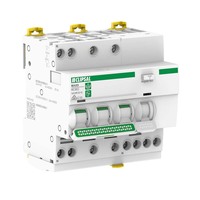
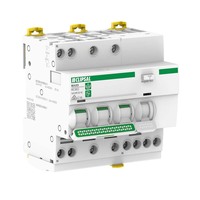
For Clipsal users, the Clipsal MAX9 and Resi MAX range covers slim 1PN and 3PN RCBO modules with Type A sensing. Hager devices are available through the Hager RCBO range, and the full RCBO range at Sparky Direct includes single pole, two pole, and 4 pole units.
DIN rail mounting is standard across most brands sold in Australia, but insulated busbars, phase barriers, and end caps are not always cross brand compatible. Match accessories from the same manufacturer range where possible, and confirm board layout, module width, and busbar fit before placing the order.
Sparky Direct supplies trade and retail buyers without a trade account requirement, and stocked ratings ship Australia wide and include regional delivery to remote project sites. Check stock before committing to project schedules, especially for higher current ratings, and bulk orders for switchboard builders and electrical contractors are supported through the contact line.
Club Clipsal is Australia's largest electrician community offering trade rewards, business support, and exclusive benefits. When you nominate Sparky Direct as your preferred wholesaler, we automatically apply your Clipsal spend points to your Club Clipsal account daily.
Entry-level offering coaching, mentoring, and training discounts
Unlock exclusive industry tools and networking events
Access Toyota fleet offers and business software discounts
Maximum benefits, including VIP experiences and rewards
1. Sign Up: Create your Club Clipsal account at clipsal.com/club-clipsal or via the iCat mobile app
2. Nominate Sparky Direct: Select Sparky Direct from the wholesaler dropdown menu in your profile
3. Add Email: Enter your Sparky Direct account email address in the membership number field
4. Start Earning: Every dollar spent on Clipsal products earns points automatically
Redeem points from the rewards store, including gift cards, tools, and experiences. Access business summits, product training, and industry networking events. Receive early access to new product launches and special promotions. Connect with fellow electricians via the Club Clipsal community app.
4 pole MCB/RCD installation is switchboard work on fixed wiring, and the work is not suitable for DIY under any circumstances. Selection, installation, testing, and certification must be carried out by a licensed electrician in line with state and territory regulations.
Switchboard work falls under licensed electrical work in every Australian state and territory, with no consumer exemption available. The electrician must verify pole configuration, current rating, trip curve, RCD type, and breaking capacity against the circuit design before energising the board.
RCBOs must be tested after installation using calibrated test equipment that confirms trip current and trip time against the device rating. The integral test button is a functional check rather than a substitute for formal verification, and test records and compliance documentation should be retained for the project file.
Regular test button operation should follow manufacturer and regulatory guidance for the installation type. Common causes of nuisance tripping include accumulated leakage across multiple loads, incorrect RCD type, wrong trip curve, insulation faults, or shared neutrals on a downstream circuit. Persistent tripping should be investigated by a licensed electrician rather than bypassed by uprating the device.
Wrong orders and non compliant installations often trace back to four recurring mistakes. A pre purchase check against the design avoids most returns.
Selecting a 2 pole or 3 pole device for a circuit that requires three actives plus neutral creates an incomplete protection envelope across the load. The required pole configuration depends on the circuit design and the isolation requirements set by the project specification.
Oversizing the device can leave cables under protected against thermal damage, and undersizing or selecting the wrong trip curve causes nuisance tripping under normal inrush conditions. Motor and transformer circuits often need a C or D curve rather than a B curve to ride through the start up surge without tripping out.
Modern equipment produces leakage waveforms that basic Type AC devices may not detect correctly, especially on inverter and EV loads. Accumulated leakage across multiple loads on one RCD also drives nuisance trips, so check the equipment datasheets and the design documentation before ordering the device.
DIN rail mounting is standard across most brands sold in Australia, but busbar systems, phase barriers, terminal orientation, module width, and enclosure capacity are not standard across brands. Confirm physical compatibility before ordering, especially when adding devices to an existing board from a different manufacturer.
A short pre order check reduces returns and supports compliant procurement. Each item should be confirmed against the design documentation or manufacturer datasheets.
Three phase or three phase plus neutral. Resistive, inductive, motor, transformer, HVAC, or inverter load. Any special requirements from the equipment manufacturer.
Current rating, residual current sensitivity, RCD type, trip curve, breaking capacity, and voltage rating. Cross check against the cable and the load.
DIN rail space, module width, busbar compatibility, terminal orientation, and the switchboard brand or accessory range.
Stock availability, datasheet availability, RCM or equivalent certification, and delivery timeframe for the project location.
Watch NLS 30821 | 20Amp 6kA | 4 Pole RCBO | Type A video
Watch NLS 30822 | 25Amp 6kA | 4 Pole RCBO | Type A video
Watch NLS 30823 | 32Amp 6kA | 4 Pole RCBO | Type A video

Outstanding quality product, Super fast delivery, Perfect fitment. I researched before I ordered this product - the service and ease of ordering on the Sparky Direct site was one of the best I've experienced. The products were in stock, exactly as described, and a premium quality product that fitted... and they arrived ahead of time too! The overall customer experience was excellent. Sparky Direct do what they say and outshine others who pale by comparison. I couldn't be happier and would highly recommend to all.
Sparky Direct have come through everytime I've used them. Their prices are second to none. I've never had any issues receiving my purchases and even though I live in rural north west Queensland, my items are delivered on time every time. Thank You
Great rcd/mcb combo for switch board breaks downs to replace existing failed 2 pole units or as a single replacement in a caravan inlet safety switch rcd/mcb the Hagar products with stand the test of time and insure your safety
Quality products in stock • Fast Australia-wide delivery • Competitive trade pricing
Browse 4 Pole MCB/RCD Combinations → Get Expert Advice →