
Search Results:
Search Results:
Search Results:
Search Results:
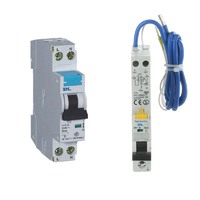
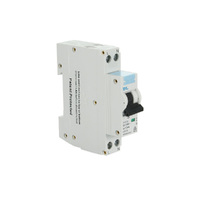
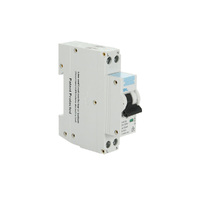
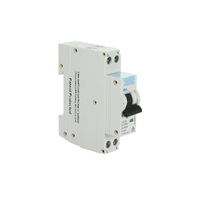
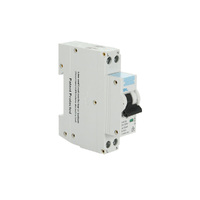
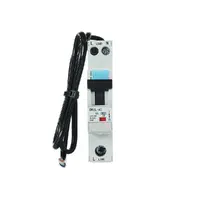
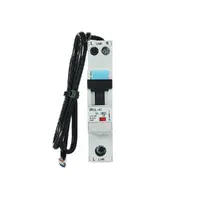
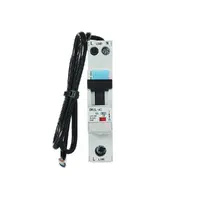
An RCBO is a residual current circuit breaker with overcurrent protection. It combines the functions of an RCD and an MCB into a single DIN rail module. The NLS single pole range is built for individual final subcircuits, so each circuit gets its own dedicated earth leakage, overload, and short circuit protection.
This category suits electricians upgrading electric switchboards, replacing older protection devices, or specifying new compliant boards for residential and light commercial work.
The device continuously monitors active and neutral current flow, and when earth leakage exceeds the 30mA sensitivity threshold the RCBO disconnects within milliseconds. Overload protection responds to sustained currents above the rated amperage, while short circuit protection reacts to fault currents using a fast magnetic trip mechanism.
This combined action protects conductors and connected circuits from overheating, insulation damage, and fault energy. The explanation here is conceptual; switchboard installation and wiring must be carried out by a licensed electrician.
Protecting each circuit independently delivers several practical advantages, since a fault on the kitchen GPOs no longer takes out the lighting circuit at the same time. Fault finding also becomes clearer because the tripped device points directly to the affected circuit, which speeds up repair time.
The single module DIN format matters in space-constrained boards, and NLS suits cost-conscious residential and light commercial protection work where the specification matches the installation requirement.
The NLS single pole RCBO range covers common circuit sizes used in Australian boards, with typical ratings of 10A, 16A, 20A, 25A, 32A, and 40A. Lower ratings such as 10A suit lighting circuits, 16A and 20A cover general power and appliance circuits, and higher ratings such as 25A, 32A, and 40A handle selected larger load circuits.
The RCBO rating must match the cable size, load demand, circuit design, and applicable wiring rules. Oversizing a protective device defeats the purpose of overload protection and can leave conductors unprotected against sustained fault conditions.
30mA is the standard residual current sensitivity used for personal protection on most Australian final subcircuits, and the level aligns with the requirements set by AS/NZS 3000 for general purpose outlets and similar circuits. A 30mA RCBO disconnects when dangerous leakage current is detected, providing fast protection against electric shock during a fault event.
Repeat tripping can indicate a genuine fault, accumulated leakage across multiple appliances, an appliance issue, or a wiring problem in the fixed installation. Persistent trips need investigation by a licensed electrician rather than repeated resetting.
Breaking capacity is the maximum prospective fault current the device can safely interrupt, and the NLS range covers both 4.5kA and 6kA options. 4.5kA can suit standard residential applications with lower prospective fault currents, while 6kA may be preferred or required where fault levels are higher or where project specification calls for the higher rating.
Electricians should confirm prospective short circuit current at the switchboard before selecting the device, and the data sheet for each model lists the verified breaking capacity for reference.
NLS single pole RCBOs mount on standard 35mm DIN rail, and the compact single module footprint suits boards where space is at a premium. Compatibility with the chosen enclosure, busbar arrangement, and protective device layout should be checked against the manufacturer data sheet before any device is ordered.
Space planning, neat labelling, and a clear circuit schedule make future maintenance faster for everyone involved. Always confirm exact dimensions, terminal positions, and neutral arrangements before ordering, and browse the full single pole RCBO range to compare specifications side by side.
Type A RCBOs detect both sinusoidal AC residual currents and pulsating DC residual currents, which is the key difference compared with older Type AC devices that detect AC residual current only. The current NLS single pole RCBO range is Type A rated across all amperages stocked at Sparky Direct.
Modern appliances, LED drivers, inverters, electronic controls, and switch-mode power supplies can produce pulsating DC leakage, and Type A protection responds correctly under those conditions. Buyers should confirm the Type A classification when sourcing RCBOs for current Australian work.
AS/NZS 3000 governs installation requirements for electrical work in Australia and New Zealand, while AS/NZS 61009 covers the performance requirements for RCBOs as products. The two standards work together: the product complies with 61009, and the installation complies with 3000.
Switchboard work must be carried out by a licensed electrician, and compliant devices, correct documentation, and supply from a reputable Australian channel give the homeowner, business owner, and certifier confidence in the finished work.
The Regulatory Compliance Mark, or RCM, indicates the product meets the relevant Australian compliance requirements, and Victorian electricians should also check current Energy Safe Victoria requirements where they apply to the work.
Always check the data sheet, the current compliance status, and any approved product register that applies to the device. Sourcing from established Australian electrical wholesalers gives access to genuine products, accurate documentation, and trade support when questions arise.
An MCB, or miniature single pole circuit breaker, protects against overload and short circuit only. An RCBO adds residual current protection for earth leakage. Replacing an MCB with an RCBO may be required during compliant switchboard upgrades, circuit alterations, or where additional circuits are added under current wiring rules.
A separate RCD and MCB arrangement shares one RCD across multiple circuits, while a single pole RCBO gives each circuit its own dedicated earth leakage and overcurrent protection. The independent approach prevents one circuit fault from disconnecting multiple unrelated circuits at the same time.
Switchboard upgrade advantages apply across homes, rental properties, workshops, and small commercial premises. Each project is different, and the right choice depends on the existing board, the available DIN space, and the scope of the upgrade work being done.
A single pole RCBO interrupts the active conductor and shares the neutral through a separate connection, while a double pole RCBO disconnects both active and neutral together. Double pole or all-pole disconnection may be required for specific installations such as caravans, marine work, certain equipment, and circuits where the standards call for full isolation.
Confirm the circuit type, earthing arrangement, and applicable standards before choosing single pole over double pole for any given installation.
The Australian market includes several established switchboard brands, and they should be compared on practical selection factors: compliance, availability, amp ratings, breaking capacity, switchboard compatibility, data sheet access, warranty, and price. NLS sits as a practical, value-focused option for projects where the specification matches the installation requirement.
Clipsal and Hager sit at higher price points with broader switchboard ecosystems, and Eaton offers another option for circuit protection. The right choice depends on the board, the budget, and the project scope.
Circuit selection follows a clear framework: load demand, cable size, protective device rating, and circuit schedule. As a general guide, 10A suits lighting circuits, 16A and 20A cover general power and appliance circuits, and 25A through 40A handle larger dedicated loads, but these are common patterns rather than universal rules.
Final selection is the responsibility of the licensed electrician designing the installation, and the relevant section of AS/NZS 3000 sets out the calculation method for matching the device to the circuit.
Fault level determines the choice between 4.5kA and 6kA breaking capacity. Where the prospective short circuit current at the board is low, 4.5kA can be sufficient, while project specifications calling for higher capacity or commercial and higher fault-current environments often require the 6kA rating.
Verify the prospective fault current and confirm the data sheet rating before ordering, and the higher-rated device should be used wherever doubt exists about the actual fault level at the installation.
Physical fit and compliance must both be verified, so check DIN rail space, terminal position, neutral arrangement, busbar compatibility, and enclosure requirements before placing an order. A neat, well-labelled enclosure with an accurate circuit schedule makes future maintenance straightforward.
Manufacturer documentation should be checked before substituting devices, and the terminal layout and width can vary between models, even within the same brand family.
Trade buyers, electricians, builders, maintenance teams, and switchboard contractors all benefit from standardising on common ratings, and stocking 10A, 16A, 20A, and 25A devices covers most residential switchboard upgrade work. Bulk ordering can reduce delays on project sites and improve job profitability through better stock control.
For three-phase work, the 4 pole MCB/RCD combinations range covers different requirements and sits alongside the single pole stock.
Older fuse boards, grouped RCD arrangements, and MCB-only circuits often need replacement during compliant switchboard upgrades. NLS single pole RCBOs cover individual final subcircuits such as lighting, GPOs, kitchen, laundry, and dedicated appliance circuits. Switchboard upgrade work must be carried out by a licensed electrician.
Electricians often specify individual RCBOs for new homes, extensions, and major renovations, and the arrangement gives improved circuit separation, easier fault finding, and simpler future maintenance. Documentation and a clear circuit schedule should always be handed over at completion of the work.
Value-focused buyers searching for home renovation circuit protection should still prioritise compliance and correct specification ahead of price alone when making the purchase decision.
Small shops, offices, workshops, warehouses, and service businesses gain real benefits from per-circuit fault isolation, since refrigeration, security systems, point-of-sale equipment, lighting, and office power can each sit on a dedicated RCBO. A fault on one circuit no longer disrupts the rest of the operation.
Match breaking capacity and circuit design to the installation environment, since commercial premises may require 6kA devices and the project specification should always be checked against the actual switchboard conditions.
An RCBO may need replacement when the test button fails, when heat or mechanical damage is visible, or when unexplained repeated tripping cannot be resolved through other means. Like-for-like replacement matching the original specification is the usual starting point for compliant repair work.
The cause of failure should be reviewed before replacement so that the underlying problem is not repeated. Keep all hazardous fault finding inside the switchboard with licensed electricians who have the right test equipment and training.
Licensed work only: Installation or replacement of an RCBO in an Australian switchboard must be performed by a licensed electrician. This page does not provide DIY wiring instructions.
Switchboards contain live electrical hazards. Incorrect installation can create fire, shock, and compliance risks. Australian law requires switchboard work to be performed by a licensed electrician, with the installation tested and documented before being returned to service.
If you need an installation guide, the correct path is to engage a licensed electrician who will plan the work, supply the right device, complete the installation, test it, and provide the relevant documentation.
RCBOs must be tested after installation and during commissioning. Electricians use the integral test button and dedicated RCD test equipment to verify trip time, trip current, and correct disconnection. Results are recorded in line with the relevant requirements.
Testing matters because a device that has been installed correctly can still have a manufacturing fault, a wiring fault, or a transit damage issue. The test confirms the protection is working before the circuit is placed into service.
The integral test button should be operated periodically as part of basic maintenance. Manufacturer and electrician guidance covers how often this should occur. Homeowners, facility managers, and landlords should follow that guidance.
Signs of possible device or circuit issues include repeated tripping, failure to reset, buzzing sounds, heat marks, unusual odour, or visible damage. Repeated resetting is not the answer. Arrange a professional inspection instead.
Tripping is a protective function, not just an inconvenience. Common causes include an appliance fault, water ingress on outdoor circuits, damaged cable, an overloaded circuit, a neutral-earth fault, accumulated leakage from multiple appliances, or a defective device.
The safe first step is to disconnect any suspect plug-in appliance from the affected circuit. If the RCBO still trips, or if the fault is in fixed wiring, call a licensed electrician. Detailed fault finding inside the switchboard is not a DIY task.
Occasional trips from a faulty appliance are different from repeated trips that point to a persistent issue. Accumulated leakage from many appliances can sometimes push a sensitive circuit over the 30mA threshold. Moisture-prone circuits in outdoor outlets, laundries, kitchens, and garages are particularly common sources.
Never bypass an RCBO. Never replace it with a higher rated device just to stop the tripping. Both actions remove the protection that the device exists to provide.
A failed test button, physical damage, heat damage, or inconsistent operation may indicate the device needs replacement. The replacement should match or exceed the original specification and comply with current standards.
Keep product and installation documentation for warranty, project records, and future maintenance. Licensed electrician involvement remains essential.
Run through a short pre-purchase check: amp rating, breaking capacity (4.5kA or 6kA), Type A classification, 30mA sensitivity, DIN rail compatibility, module width, and data sheet availability. Confirm the product is genuine, compliant, and supplied through an Australian electrical wholesaler.
Check stock availability before booking electrical work so the project does not get held up by parts on backorder.
Sparky Direct stocks the NLS single pole RCBO range alongside other circuit protection categories. Online navigation is organised by category, brand, and rating so that locating the correct device is quick. Trade-friendly categorisation suits electricians, sole traders, maintenance teams, and informed buyers ordering for switchboard work.
For wider circuit protection needs, the full RCBO range and the broader circuit breaker range sit within the same section of the site. Fast Australia-wide dispatch supports time-sensitive switchboard projects.
Price comparison matters, but lowest price alone is not the whole picture. Balance price against compliance, availability, warranty, data sheet access, and correct specification. Bulk buying common ratings such as 10A, 16A, 20A, and 25A makes sense for trade buyers running repeat switchboard upgrade work.
If a quote looks unusually low, verify the device is genuine, Type A, and supplied with current Australian compliance documentation.
Product data sheets confirm rating, dimensions, applicable standards, terminal layout, operating conditions, and breaking capacity. They form part of the buying decision and should be retained for project records, maintenance, and future compliance verification.
Keep the data sheet with the rest of the switchboard documentation. A clear record makes any future fault investigation or upgrade much faster.
Watch NLS 30793 | 10A 4.5kA Single Pole RCBO Type A video
Watch NLS 30820 | 25 amp 4.5KA Single Pole RCBO * NEW A TYPE * video
Watch NLS 30861 | Single Pole RCBO 6kA | 40Amp A-Type video

Wanted to add another power circuit to my full distribution board. The NLS30784 RCBO helped achieved this as I could remove the 3ph RCD and 3 x 16amp CB taken up 7 spaces and replaced them all with 4 x NLS30794 RCBOs. Now giving me the extra circuit plus space for 3 more if ever needed. The extra bonus also is now each circuit has its own RCD, where before you would loss all power circuit with a single RCD trip. During installation I found the NLS30794 having the bottom offset terminal inputs are a good option for wiring multiple devices using a busbar comb, However I didn't require to use this option. If required in the future I will definitely use this device again.
Have been using this brand of RCBO whether it be 3, 4.5 or6 kVa for a very long time and found them to be very reliable and competitively priced. No need to change to another brand!!
Great product! Competitively priced and arrived within days. Entire order was correct and job completed as planned. I'm excited to use Sparky direct again.
Quality products in stock • Fast Australia-wide delivery • Competitive trade pricing
Browse NLS Single Pole RCBO → Get Expert Advice →