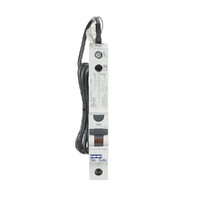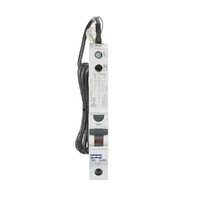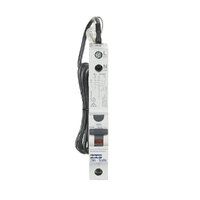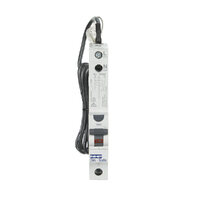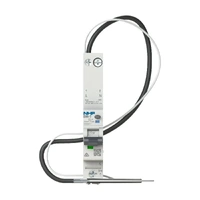

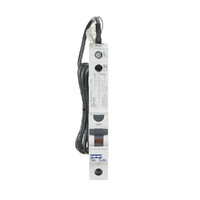

1 Pole
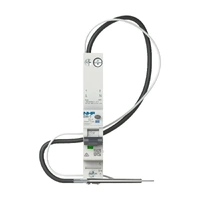
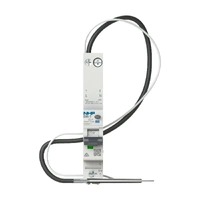
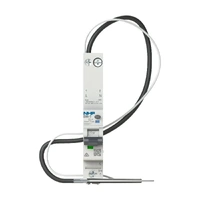
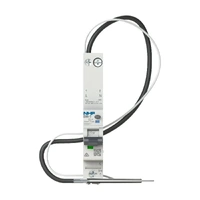
Terasaki Din-Safe DSRCBH1030A | 10 Amp RCBO 1P+N 10kA 30mA.. Discontinued
$106.01
$96.37 ex. GST
Search Results:
Search Results:
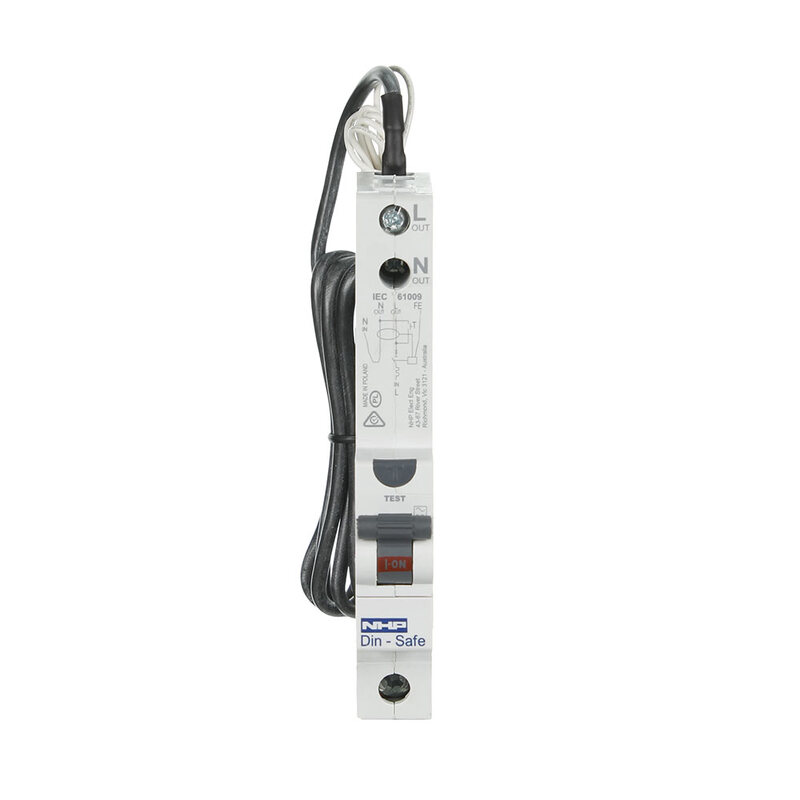
Find the best Terasaki RCBO's here at Sparky Direct. [ Read More ]
RCBO stands for Residual Current Breaker with Overcurrent protection. The device combines two safety functions in one unit. The first is overcurrent protection, which guards a circuit against overload and short circuit faults. The second is residual current protection, which trips the circuit when earth leakage exceeds a set threshold.
Terasaki manufactures the DIN-SAFE range, and NHP Electrical supplies it across Australia through wholesalers like Sparky Direct. The DSRCBH model designation identifies the single pole, 1P+N variants designed for slim DIN rail installation.
A single pole RCBO continuously monitors the current flowing through the active conductor and returning through the neutral. In a healthy circuit those two currents stay balanced. An imbalance indicates that current is escaping to earth, often through a person, damaged insulation, or wet equipment.
When the imbalance reaches the trip threshold, typically 30mA for personal protection, the device disconnects the supply within tens of milliseconds. Higher-sensitivity 10mA versions cut the threshold further and suit specific high-risk applications. The overcurrent element trips separately when sustained overload or short-circuit current exceeds the rated value.
Many traditional RCBOs occupy two modules of DIN rail because they carry residual current electronics alongside the active and neutral terminations. The DIN-SAFE single pole format compresses these functions into an 18mm single module footprint.
That space saving is significant in older domestic boards where module count is the limiting factor. A switchboard upgrade that adds individual RCBO protection on every circuit can quickly run out of rail space. The compact module lets electricians retrofit RCBO protection without replacing the whole enclosure. Compared to separate RCD plus MCB combinations, the single pole RCBO halves or thirds the rail length needed.
The DSRCBH range covers the most commonly specified residential and light commercial ampere ratings. Stocked current ratings typically include 10A, 16A, 20A, 25A, 32A, and 40A devices. A 10A unit normally protects lighting circuits and other low demand dedicated loads.
The 16A and 20A devices suit general power outlets and small appliance circuits, subject to cable capacity and circuit design. Higher 25A, 32A, and 40A ratings cover dedicated appliance circuits, instantaneous hot water units, and other heavy loads where compliant. Final rating selection must be made by a licensed electrician based on cable size, fault level, ambient conditions, and installation design.
Most final sub-circuits in Australian residential and light commercial work run on 30mA personal protection. This level disconnects the supply quickly enough to prevent ventricular fibrillation if a person makes contact with a live conductor.
A 10mA RCBO offers higher sensitivity and suits specific applications such as medical environments, paediatric areas, and circuits feeding equipment used in damp conditions. The trade-off is nuisance tripping risk. Long cable runs, multiple electronic appliances, or older wiring can produce small amounts of standing earth leakage. That leakage may sit comfortably below the 30mA threshold but trip a 10mA device intermittently.
Type A RCBOs detect both alternating residual currents and pulsating direct current residual waveforms. That capability matters because modern appliances use switch-mode power supplies, LED drivers, variable speed motor controllers, and inverter electronics. These loads can produce DC components in any earth leakage.
A Type AC device cannot reliably detect that DC component and may fail to trip on a real fault. Type A protection has become the modern default specification for most Australian installations. The DSRCBH range provides Type A detection across its DIN-SAFE single pole models.
Breaking capacity describes the highest prospective short-circuit current a device can safely interrupt. The DSRCBH range carries a 10kA short-circuit breaking capacity, suitable for most domestic and light commercial supply conditions.
The C curve trip characteristic handles the moderate inrush current produced by general lighting, power, and standard appliance loads. High inrush equipment, such as variable frequency drives and certain motor starters, may need a different trip curve or additional design review. The compact body mounts on standard 35mm top-hat DIN rail used in NHP and Terasaki panelboards. Electricians should confirm chassis, busbar, and accessory compatibility against the relevant datasheet before ordering.
Residual current operated circuit breakers with integral overcurrent protection are covered by AS/NZS 61009 in Australia. Devices supplied for installation in Australian switchboards should carry the Regulatory Compliance Mark and trace back to that standard.
NHP publishes datasheets, declarations, and approval details for the DSRCBH range through its technical documentation. Electricians and specifiers should confirm the current revision of the datasheet before issuing a purchase order. The product label, batch traceability, and approval markings should match the documentation supplied with the device.
The Australian wiring rules in AS/NZS 3000 require residual current protection across many final sub-circuits in modern installations. New domestic work and many alteration projects fall within the scope of those rules.
RCBOs are widely specified because they provide both circuit protection and personal protection on a per-circuit basis. Compliance interpretation, applicable clauses, and exemptions for specific installations are matters for the licensed electrician carrying out the design. Electricians should refer to the current published edition of AS/NZS 3000 for definitive wording.
Switchboard work, including RCBO installation and replacement, must be carried out by a licensed electrician under state and territory regulations. Commissioning requires the use of suitable electrical test equipment to verify trip time, trip current, and earth fault loop impedance.
The test button on the front of the RCBO confirms internal mechanism operation only. It is not a substitute for periodic instrumented testing performed during commissioning or routine maintenance. Building owners, facility managers, and tenants should never attempt to install, modify, or wire RCBO devices themselves.
A miniature circuit breaker, or MCB, protects a circuit against overload current and short-circuit current. It does not detect or respond to earth leakage faults. A standalone single pole circuit breaker sits on the DIN rail and breaks the active conductor when the overload or short-circuit threshold is exceeded.
An RCBO performs the same overcurrent function and adds residual current detection in the same module. Designers specify an RCBO where both cable protection and personal protection against earth leakage are required at the circuit level.
A residual current device, or RCD, detects earth leakage and disconnects the supply when the leakage exceeds the trip threshold. It does not detect overload or short-circuit conditions and cannot protect a cable on its own.
An RCD must operate together with an upstream circuit breaker or fuse that provides overcurrent protection. The RCBO removes that two-device dependency by combining both functions in a single DIN rail module.
A traditional installation may use one or two shared safety switches that cover multiple final sub-circuits. A fault on any one circuit trips the shared device and removes power from every protected circuit at once.
Individual RCBO protection isolates the fault to the affected circuit only. Refrigeration, freezer rooms, office workstations, home medical equipment, and security systems can continue operating while the faulty circuit is investigated. Fault finding is also faster because the tripped circuit is identified immediately at the switchboard.
Single pole RCBOs are commonly specified for Australian single-phase final sub-circuits where the wiring rules permit. The active conductor is switched and broken by the device, while the neutral connection passes through the residual current sensor.
Two pole and multi-pole RCBOs disconnect both active and neutral conductors when they trip. These are required in specific installation conditions and on certain three-phase or multi-phase circuits. Three-phase distribution boards generally use three pole or four pole MCB and RCD combination devices that handle three actives and a switched neutral. Final pole configuration is part of the electrical design and should follow the relevant clauses of AS/NZS 3000.
New residential builds increasingly default to individual RCBO protection on each final sub-circuit. This avoids the cascading inconvenience of shared RCD nuisance trips and creates better separation between circuits.
Renovation projects often add new circuits, separate appliance loads, or upgrade existing protection to current standards. Compact single pole RCBOs let electricians fit those new circuits within the existing enclosure footprint. A bathroom renovation, kitchen upgrade, or split-system air conditioner installation can usually be protected without changing the switchboard. Electric switchboard upgrades on older properties also benefit from the compact module count.
Offices, small workshops, retail tenancies, and service businesses share a common need for circuit-level continuity. A tripped shared RCD that shuts down an entire EFTPOS, lighting, or refrigeration network during business hours has direct revenue impact.
Individual RCBO protection contains the disruption to the affected circuit. Maintenance contractors carrying out scheduled testing can isolate one circuit at a time without taking the whole tenancy offline. The compact single pole footprint suits the limited switchboard space found in commercial leased fitouts and small switchrooms.
Terasaki DIN-SAFE devices are commonly sourced through the broader NHP product ecosystem in Australia. That ecosystem includes Terasaki panelboards, chassis, modular accessories, and a wide range of complementary distribution products.
Electricians should confirm DIN rail spacing, chassis fixing centres, and busbar compatibility before mixing devices from different ranges. Datasheets published by NHP list the compatible accessories and busbar arrangements for the DIN-SAFE range. Mixing devices across manufacturers without checking compatibility can compromise the certified performance of the assembly.
The current rating of the RCBO must protect the cable installed on the circuit, not just match the load demand. A 32A device protecting a 2.5mm² cable would not provide proper overload protection for that cable.
Indicative examples used in residential work include 10A for lighting, 16A or 20A for general power outlets, and 32A or 40A for fixed appliances. These are starting points only. The final rating depends on cable size, installation method, ambient temperature, derating factors, run length, and prospective fault current. All these inputs are the responsibility of the licensed electrician carrying out the circuit design.
Most general circuits use 30mA personal protection because it balances safety with reliable operation under normal conditions. A 10mA device is considered where the application warrants higher sensitivity.
Medical procedure rooms, paediatric environments, wet area equipment, and certain industrial process circuits are typical examples. Specifiers should weigh the higher sensitivity against the increased risk of nuisance tripping on cables and appliances with normal standing leakage.
The C trip curve covers the moderate inrush current generated by general lighting, power, and standard residential or commercial loads. High inrush equipment behaves differently.
Variable speed drives, large motor starters, transformer-based supplies, and certain inverter-fed equipment can draw brief currents many times the rated value during start-up. These loads may need a D curve device, a different breaking capacity, or additional upstream protection. NHP technical support and the published Terasaki datasheets are the right reference points for non-standard load decisions.
Compact single pole RCBOs offer obvious space advantages, but physical fit goes beyond module width. Board depth must accommodate the device body and the bending radius of the connected conductors. Terminal capacity needs to suit the cable size selected by the circuit design.
Insulated busbars shorten installation time and improve termination consistency, provided the busbar pitch matches the device modules. Stock availability and indent lead times should be confirmed early on projects that combine slim DIN-SAFE devices with other circuit protection components.
Repeated tripping on the same circuit usually indicates an underlying electrical problem rather than a faulty device. Common causes include genuine earth leakage in a connected appliance or cable, a sustained overload, or a short-circuit fault.
Other contributing factors are moisture ingress in outdoor fittings, shared neutral conductors, deteriorated insulation, and accumulated leakage across multiple appliances on one circuit. Some modern electronic loads can also generate leakage waveforms that older devices struggle to handle correctly. Any pattern of repeated tripping should be diagnosed by a licensed electrician using appropriate test instruments.
Older switchboards often carry decades of accumulated wiring history. When those boards are upgraded to per-circuit RCBO protection, latent issues that previously went unnoticed can start tripping the new devices.
Common findings include borrowed or shared neutral conductors, perished cable insulation in roof spaces, moisture in outdoor fittings, and old appliances with significant earth leakage. None of these are faults of the RCBO. A licensed electrician will use insulation resistance testing, earth fault loop impedance checks, and load segregation to isolate the source.
Variable frequency drives, motor starting circuits, electric vehicle charging equipment, and inverter-based renewable systems each present specific challenges. They can produce inrush currents, harmonic content, and DC residual currents that affect RCBO performance.
Manufacturer installation guidance for these loads usually specifies required RCBO type, sensitivity, and breaking capacity. Where guidance conflicts or non-standard loads are involved, technical support from NHP or the equipment manufacturer should be consulted before specifying the protection.
Several attributes should be confirmed before any RCBO order is placed. Current rating, residual current sensitivity, and trip curve must match the circuit design. Type A classification, breaking capacity, and pole configuration must suit the installation.
Datasheet revision, approval markings, and switchboard compatibility round out the technical checks. Stock availability and any indent lead times for non-standard ratings should be confirmed before construction milestones are committed.
Small renovation jobs typically need a handful of mixed ratings to suit specific circuits being added or replaced. Contractors managing repeat residential or light commercial work benefit from stocking a small standard kit of common ratings.
A typical kit covers 10A, 16A, 20A, 25A, 32A, and 40A devices in the most often specified sensitivity and trip curve. Bulk ordering on regular intervals smooths supply, reduces freight costs, and helps with consistent pricing across jobs.
Sparky Direct lists current stock status and product detail on every category and product page. That visibility helps contractors decide whether to commit to a project timeline or plan around an indent.
Online ordering is available for both trade and retail buyers, and orders ship Australia-wide for regional and metropolitan sites. Urgent project needs can usually be filled from in-stock ranges, with same-day or next-day dispatch on suitable orders.
Watch Terasaki Din-Safe DSRCBH2030A | 20 Amp RCBO 1P+N 10kA 30mA video
Watch HAGER ADC916T | 16Amp 6 kA Single Pole RCBO video
Watch Clipsal RCBE232/30S | 32AMP RCBO 1P+N 4.5kA Resi MAX video

This type A breaker was exactly what I was after for my EV charger and it works perfectly. Installation was quick and easy and compliments my other breakers on my switchboard.
Finally a double pole, single module 10mA RCBO at a reasonable price, perfect for providing protection for cleaners outlets in a medical installation
Used this ELCB for the lighting (previously there was common ELCB for light and power- which was very inconvenient).
Trusted brands • Expert advice • Fast Australia-wide delivery • Trade pricing
Shop Terasaki DIN-SAFE Single Pole RCBOs → Get Expert Advice →