

German Made
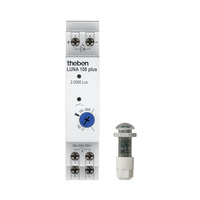
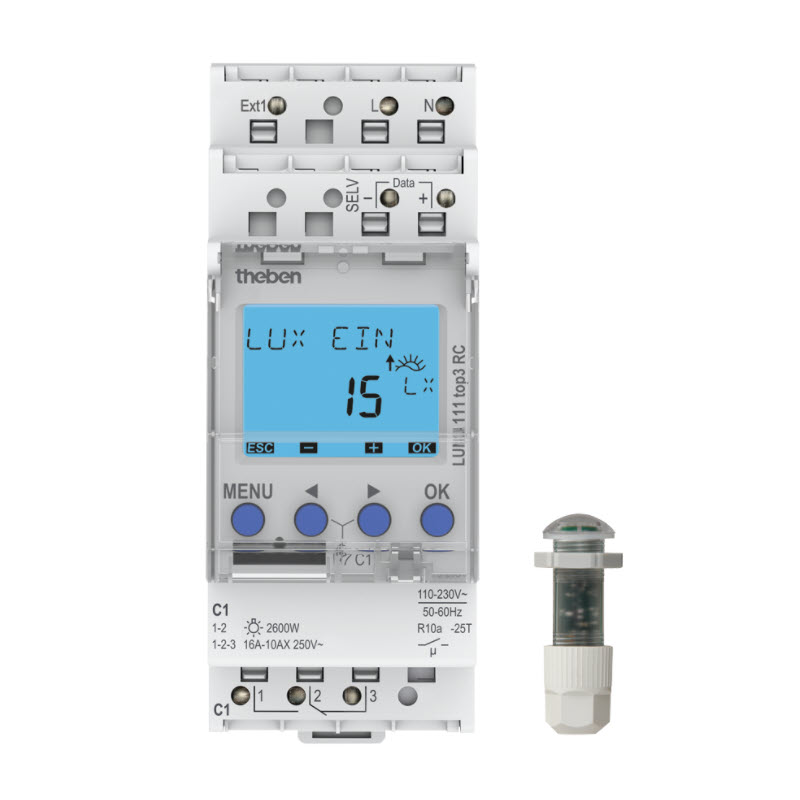
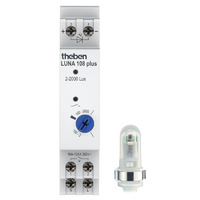
THEBEN LUNA108PLUSAL | Analogue Surface-mounted light sensor | External Light Sensor
$105.55
$95.95 ex. GST
Search Results:
Search Results:
Twilight switches automate lighting by responding to real-time ambient light levels rather than a fixed clock schedule. This makes them the standard control choice for outdoor, security, garden, commercial and common-area lighting where consistent dusk-to-dawn operation is required. The category covers everything from basic twilight switches for small outdoor circuits through to weatherproof sunset switches and DIN rail models for switchboards.
A twilight switch is a light-level sensing control device built around a photocell or photosensor. It detects ambient lux levels at the sensor head and operates an internal relay to energise the connected lighting circuit. When daylight falls below the configured threshold the relay closes and the lights turn on, then opens again at dawn when light levels rise. Typical applications include LED floodlights, garden lights, carpark luminaires, illuminated signage and perimeter lighting.
The photocell continuously monitors ambient light and feeds a signal to the internal switching circuit. When ambient lux drops below the set point, the relay closes and energises the load. Most units include an adjustable sensitivity dial so installers can tune the trigger point to suit the location. A built-in time delay holds the state for a short period to prevent nuisance switching from vehicle headlights, passing clouds, swaying foliage or temporary shadows. The delay typically operates in both directions to stop short flicks in either state.
A photocell is the light-sensing component itself, usually a cadmium sulphide cell or silicon photodiode. A twilight switch is the complete control device that combines the photocell, signal processing and relay output in one enclosure or DIN rail module. Dusk-to-dawn sensor is the common consumer phrase for the same function, while sunset switch and photoelectric switch appear on many product datasheets. All these terms describe the same operating principle: light in, switched load out.
Twilight switches are specified anywhere lighting must operate consistently without relying on manual switching or seasonal clock adjustment. The dusk-to-dawn pattern suits residential, commercial and industrial sites and reduces the chance of lights being left on during daylight. Applications range from a single weatherproof sensor on a domestic verandah through to switchboard-mounted units controlling banks of LED floodlights across a commercial yard.
Homeowners use twilight switches for garden lighting, entry lighting, driveway lights, external wall fittings and outdoor entertaining areas. The benefit is convenience and safety: pathways and entries light up automatically at dusk and switch off at dawn without homeowner intervention. Outdoor lighting work that involves fixed wiring must be completed by a licensed electrician under Australian electrical safety legislation, so plug-in or hardwired choice depends on the installation point.
Commercial and industrial sites use twilight switches across warehouses, workshops, apartment complexes, schools, carparks, loading bays and service yards. Dusk-to-dawn operation supports overnight safety and visibility, supplements CCTV coverage and avoids manual switch-on by site staff. For maintenance contractors managing multiple sites, standardising on one or two twilight switch models simplifies stock-holding and reduces the time spent diagnosing site-specific faults.
Illuminated signs, building facades, common-area lighting and retail frontages all benefit from automatic dusk operation. A common configuration pairs a twilight switch with a downstream digital timer so signage turns on at dusk but switches off at a set hour overnight to reduce energy use. This combination removes the need for staff to operate signage manually and gives consistent presentation across the trading week.
Large lighting loads in carparks, perimeter floods and street-style fittings often exceed the direct switching rating of a twilight sensor. The standard approach is to use the twilight switch to operate the coil of a downstream contactor, with the contactor handling the actual lighting load. This protects the sensor relay from inrush currents and supports the higher amperage ratings required for councils, facility managers and commercial maintenance contractors managing bulk lighting.
Twilight switches are grouped by how they are installed and how they control the load. Picking the correct format depends on whether the lighting is portable or fixed, the size of the load, and whether the sensor can sit at the lighting location or needs to be remote. Each format suits a specific application profile.
Plug-in units suit temporary, portable or low-load domestic lighting connected to a standard weatherproof GPO. Common uses include lamps, small garden lighting setups, festive lighting and portable decorative fittings. They are not suitable for permanent switchboard-controlled commercial lighting and do not provide the load capacity needed for floodlight banks or carpark fittings.
DIN rail-mounted twilight switches install in electric switchboards and distribution boards. They suit permanent lighting circuits, commercial projects and installations with multiple luminaires. Common features include an adjustable lux range, manual override, delay timer settings and a separate input for a remote outdoor photocell. Switchboard installation is licensed electrical work in Australia and must comply with AS/NZS 3000.
Some installations separate the sensor from the switching device. The photocell is mounted externally to read true ambient light, while the relay or contactor sits inside the board. This setup suits large buildings, warehouses, carparks and switchrooms that have no natural light at the board location. External sensor positioning also reduces false triggering from interior lighting or shadow effects.
Some control systems combine photocell input with smart lighting, building management systems, timers or energy management modules. These suit larger commercial buildings and premium residential installations that need scheduling, monitoring or remote control. For straightforward dusk-to-dawn switching of a single circuit, a simple twilight switch is usually lower cost, more reliable and easier to commission than a networked system.
The right twilight switch depends on the connected load, the lighting type, the mounting location and weather exposure. A robust selection framework covers load capacity, LED compatibility, lux adjustment, IP rating and sensor position. Applying these criteria up front prevents nuisance switching, premature failure and warranty issues down the track.
The switch rating must comfortably exceed the total connected lighting load including inrush. LED drivers, fluorescent ballasts and HID fittings can draw inrush currents several times the running current at switch-on. Where the lighting circuit approaches or exceeds the twilight switch's direct rating, the standard solution is to drive a modular contactor from the sensor output. The contactor then handles the lighting load instead of the sensor relay.
Not every older twilight switch behaves well with modern low-wattage LED loads. Possible symptoms include flickering at switch-on, failure to switch off reliably, nuisance cycling or a faint glow when the lights should be fully off. The datasheet should confirm LED load rating, inrush rating and any minimum load requirement. For mixed LED and legacy fittings, sizing the sensor for the dominant LED load and verifying minimum load compatibility is the safest approach.
Lux measures ambient illuminance, and a lower lux setting means a darker condition is required before the switch turns lights on. Typical outdoor settings sit roughly in the 5 to 50 lux range, though actual calibration depends on site conditions, surrounding light pollution and the specific photocell response curve. Adjustable sensitivity helps tune operation for shaded sites, bright streets and exposed locations where ambient conditions vary significantly between seasons.
Outdoor-mounted sensors need ingress protection that matches the installation environment. IP44 is a general splash-resistant reference for protected eaves and verandahs, while IP65 or higher suits exposed, coastal, dusty or high-humidity environments. Australian weather conditions including heavy rain, UV exposure and salt-laden coastal air degrade lower-rated enclosures quickly, so specifying ahead of the worst-case site conditions is good practice.
The photocell should receive natural ambient light but avoid direct artificial light from the luminaires it controls. Common positioning problems include sensors mounted under eaves that miss morning light, sensors facing reflective surfaces, and sensors aimed at headlight paths or nearby streetlights. Poor sensor positioning is one of the most common reasons for unreliable operation and is usually cheaper to fix than the sensor is to replace.
Fixed electrical installation work in Australia is licensed work under state and territory electrical safety legislation. That includes switchboard installation, hardwired outdoor sensors and any modification to lighting circuits at the board. Buyers can plan and specify confidently, but the physical wiring belongs to a licensed electrician working to AS/NZS 3000 and the relevant manufacturer instructions.
DIN rail twilight switches, fixed outdoor sensors and hardwired lighting controls must be installed by a licensed electrician under Australian electrical safety laws. AS/NZS 3000 (the Wiring Rules) governs fixed electrical installation work nationwide, and the installer is responsible for circuit design, protection coordination and final testing. DIY wiring of mains-voltage lighting controls is unlawful and unsafe regardless of how straightforward the product appears.
A twilight switch may switch a small load directly through its internal relay or operate the coil of a downstream contactor for larger loads. Contactor integration is standard for carparks, signage banks, perimeter floods and commercial lighting circuits where the connected current exceeds the direct rating. The installing electrician plans circuit protection, isolation, labelling and any required contactor accessories.
The installer should verify operation using a test mode or commissioning at dusk where practical. Recording the lux setting, load details and sensor location supports future maintenance and simplifies fault diagnosis years later. Routine checks confirm that outdoor lighting does not stay on during the day and reliably activates at night, which is especially important on multi-site portfolios where small drifts in calibration go unnoticed for months.
Twilight switches are one of several lighting control options, and choosing between them depends on the operational pattern required. The fundamental distinction is between time-based control, light-level control and motion-based control. Each method suits different applications, and combinations are common on larger sites.
| Control Type | Trigger | Best Use |
|---|---|---|
| Twilight switch | Ambient light level | Dusk-to-dawn lighting, security, signage |
| Timer switch | Clock schedule | Fixed-time operation, late-night sign shutoff |
| Motion sensor | Detected movement | Triggered security lighting, occupied areas |
| Astronomical timer | Calculated sunrise and sunset | Sites where sensor mounting is difficult |
| Smart lighting system | App, schedule or sensor input | Large commercial sites and integrated BMS |
Timer switches operate on a fixed clock schedule, while twilight switches respond to real ambient light conditions. The seasonal advantage of a twilight switch is that no manual adjustment is needed for summer and winter daylight changes, which can shift by an hour or more across the year. Timers remain useful when lights need to turn off at a set time after dusk, such as overnight signage shutoff, and many installations pair both functions.
Motion sensors activate only when movement is detected, while twilight switches provide continuous dusk-to-dawn operation. For pathways, security perimeters and signage that need constant illumination overnight, twilight switches are the correct choice. A common hybrid strategy uses a twilight switch to enable a lighting circuit only after dark, then a motion sensor within that circuit to boost output or trigger additional fittings when activity is detected.
Astronomical timers calculate sunrise and sunset times from the date and geographic location, while twilight switches detect real ambient light at the sensor. Astronomical timers suit sites where physical sensor mounting is difficult or impractical, since they need no light path to the photocell. Twilight switches respond to actual conditions including cloudy or stormy weather, which can shift dusk effectively earlier by 30 to 60 minutes.
Smart systems add app control, scheduling, monitoring and integration with building management. Twilight switches are simpler, lower cost and not dependent on networks or cloud services. For a single circuit of outdoor lighting, a basic twilight switch is usually the more reliable choice. Smart systems and BMS integration are typically worth the additional cost on larger sites where reporting, remote override or multi-zone scheduling deliver real operational value.
Most twilight switch faults trace back to sensor placement, threshold settings, LED compatibility or environmental damage. Working through the likely causes in order saves replacement cost on units that are working correctly but configured poorly. Fixed wiring faults and component failures require a licensed electrician for safe diagnosis and replacement.
Likely causes include a lux threshold set too low, sensor obstruction by leaves or debris, poor positioning under deep eaves, a faulty photocell or a wiring issue at the load side. Checking for shadows, debris and artificial light interference on the sensor face is the fastest first step. Where the cause is suspected to be in fixed wiring or a failed component, a licensed electrician should test the circuit and replace any hardwired parts.
Daytime activation usually indicates a dirty or shaded sensor, a failed photocell, a threshold set too high, or sensor placement where artificial light reaches the lens at night and confuses the morning reset. Outdoor sensors can degrade from UV exposure, moisture ingress and coastal corrosion over several years. Inspecting and cleaning the sensor lens where safe to do so is the simple first check before assuming a failure.
Cycling is often a feedback loop where the sensor sees the light it controls, triggering the off cycle and starting again. Other causes include vehicle headlights sweeping past the sensor at the trigger point, fast-moving cloud cover and an inadequate delay setting. LED incompatibility and minimum-load issues can also cause cycling, particularly with older sensors driving modern low-wattage LED fittings.
Signs that replacement is more practical than recalibration include a cracked housing, visible water ingress, corroded terminals, intermittent switching despite a clean sensor and non-adjustable older units that pre-date current LED loads. Replacing an older unit with a weather-rated, LED-compatible model sourced from a reputable Australian supplier usually costs less than the labour spent on repeated recalibration visits.
Selecting the right model depends on the application profile rather than headline features. The following guidance covers the most common Australian use cases and points to compatible product families and adjacent categories without claiming a specific top-rated model. Real ranking depends on the specific load, location and installer preference.
For garden lighting a compact outdoor-rated sensor or a low-load plug-in option is the usual fit, depending on whether the lighting is fixed or portable. LED compatibility and an adjustable lux range are the main selection criteria, since residential gardens typically include mixed LED fittings on staged switching circuits. HPM and Ensa both offer residential-grade options, and you can also browse related LED spotlights and outdoor wall lights for compatible fixtures.
Driveway and security lighting needs weatherproof sensors with reliable time delay and confirmed LED floodlight compatibility. Sensor positioning away from the controlled floodlight is especially important on driveways, where headlight sweep can otherwise create cycling. Weatherproof sunset switches from CABAC and Matelec are common picks. Pair with appropriately rated LED highbays for commercial driveways or marine flood lights in coastal locations where corrosion resistance matters.
Commercial projects favour DIN rail or remote sensor designs that drive contactors rather than switching loads directly. Trade priorities include stock availability, repeatable specification across multiple sites, accessible datasheets, manufacturer warranty support and fast dispatch. European brands like Theben specialise in time and light control gear suited to switchboard mounting. Look at electrical timers and electrical contactors for complementary control components.
Online procurement of twilight switches works well when the buyer can confirm the technical fit before ordering. Voltage, load rating, LED compatibility, lux adjustment range, IP rating, mounting type and remote sensor options should all match the application. Trade buyers typically also consider pack quantities, repeat availability and warranty terms when committing to a model across multiple sites.
Confirm voltage compatibility, the connected load including inrush, LED compatibility, lux adjustment range, IP rating, mounting format and whether a remote sensor is required. Trade buyers should review the manufacturer datasheet before quoting or installing, and bulk projects benefit from standardising on a compatible model that simplifies spares holding. The right pre-purchase checklist prevents return shipping and wasted truck rolls when the wrong format arrives on site.
Practical procurement factors include pack quantities, repeat availability for replacement units, delivery speed and warranty support. Sparky Direct is an online Australian electrical wholesaler offering trade-priced access to twilight switches and related lighting controls for licensed electricians, contractors and informed buyers. Bulk maintenance buyers can plan around consistent SKU availability across sites, with related lines like sensor lights stocked alongside.
Watch Cabac HSC110SS | Weatherproof Sunset Switch video
Watch Matelec FSW-12220 | HDAD Weatherproof 15Amp Programmable Sunset Switch video
Watch Matelec FSW-12207-L | Sunset Switch With Sensor Extension LR50 video

This switch is of high quality at the best price. Connection is simple and the sensitivity adjustment caters for any ambient light condition. I'm using it to switch a battery charger for a repeater site to supplement solar at night. No power worries here.
This is an extremely solid piece of kit. I like the functionality whereby times etc are set by changing the dip switches. It fitted perfectly over the old HPM base. Highly recommended. Fast delivery.
Found Sparky Direct online and what I was looking for at a competitive price. Item was exactly as descriibed and in the product pohotograph. Delivery was very prompt, only a few days from date I placed my order. It is now installed controlling my front gate lamps. I look forward to future purchases with Sparky Direct.
Quality products in stock • Fast Australia-wide delivery • Competitive trade pricing
Browse Twilight Switches → Get Expert Advice →