
Search Results:
Search Results:
Search Results:
Search Results:
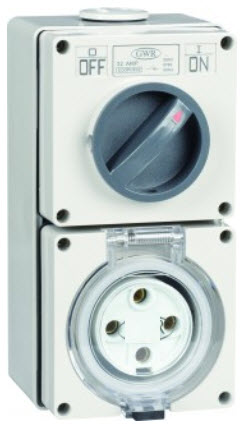
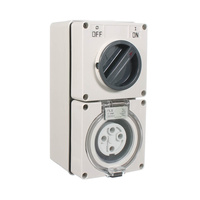
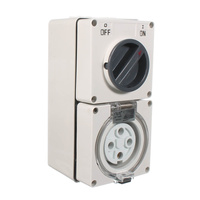
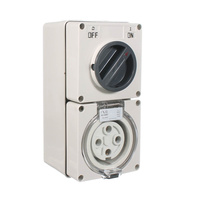
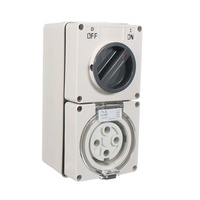
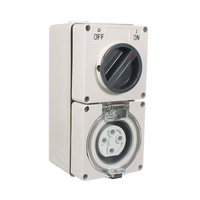
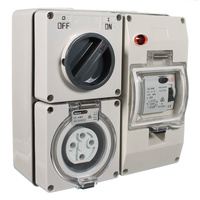
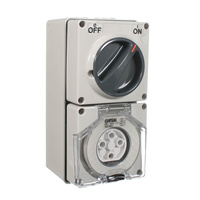
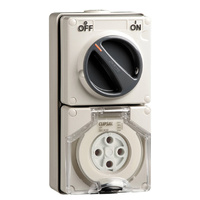
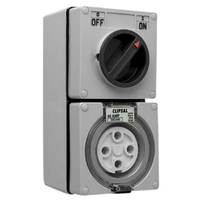
Find the best 4-pin switched socket combinations here at Sparky Direct. [ Read More ]
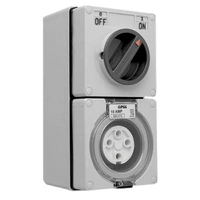
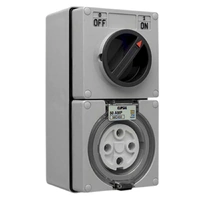
A switched socket combination is a single enclosure that houses an industrial socket and an integrated isolating switch. The switch sits in series with the socket. It allows safe electrical isolation before plugging or unplugging equipment. This eliminates the practice of pulling a live three-phase plug under load, which can produce arcing and contact damage.
The combination unit packages three functions into one mounting position. It provides a connection point for a portable lead. It includes an on/off switch that breaks all phases simultaneously. It seals both components against dust and water using a single shared gasket arrangement. The result is a fully enclosed, IP66-rated outlet ready for outdoor or washdown service.
Mechanical interlocking links the switch to the socket. Many models prevent the plug from being inserted or removed unless the switch is in the OFF position. This forces a safe sequence: switch off, plug in, switch on. It removes the risk of human error during connection and disconnection.
Combination outlets reduce the parts count on a worksite. One enclosure replaces a separate isolator and a separate socket. The wiring path is shorter. The number of cable glands is halved. Compliance with main switches and isolators requirements becomes simpler when isolation is built into the outlet itself.
IP66 is a two-digit ingress protection code. It defines how well an enclosure resists solid objects and liquids. The first digit (6) is the highest dust rating: completely dust-tight. The second digit (6) covers powerful jets of water from any direction without harmful ingress.
The dust digit (6) means no particle can enter the enclosure. The water digit (6) is tested using a 12.5mm nozzle delivering 100 litres per minute at a pressure of 100 kPa, sprayed for at least three minutes. An IP66 outlet survives wash-down hoses, monsoon rain, and surf-zone spray without internal water entry.
| Rating | Dust Protection | Water Protection | Typical Use |
|---|---|---|---|
| IP44 | Solids over 1mm | Splashing water | Sheltered indoor |
| IP55 | Limited dust ingress | Low-pressure jets | Light outdoor |
| IP66 | Dust-tight | Powerful water jets | Industrial, outdoor |
| IP67 | Dust-tight | Temporary submersion | Submersible only |
IP66 sits one step below IP67 in liquid resistance. It does not survive submersion. For above-ground industrial use it is the industry baseline.
IP66 is mandatory wherever the outlet is exposed to weather, hose-down cleaning, or airborne dust. This covers construction sites, external building walls, food and beverage processing lines, animal husbandry sheds, mining workshops, and marina installations. The weatherproof switches range follows the same rating logic. Indoor dry-area outlets can use lower-rated enclosures, but the cost difference is small enough that many specifiers default to IP66 across the board.
Industrial sockets are stocked by electrical wholesalers, online specialist suppliers, and major hardware chains. Trade buyers usually prioritise stock depth, technical accuracy of listings, and same-day dispatch over lowest price.
Traditional wholesalers offer counter pickup and account terms. Online suppliers offer wider catalogue depth, transparent pricing, and direct delivery to site. The line between the two is blurring. Sparky Direct operates as an online wholesaler with full trade pricing, stocking the major industrial socket brands in one ordering channel.
Stock data should be accurate and updated continuously. Product listings should publish the exact catalogue number, current rating, pin count, and IP rating. Compliance certificates should be available on request. Lead times should be stated upfront, not after the order is placed.
Project work often requires matching outlets across dozens of locations. Bulk pricing and reliable stock holding matter more than the headline single-unit price. Sparky Direct ships Australia-wide with same-day dispatch on in-stock items ordered before the daily cut-off. Combine outlets with matching 4 pin straight plugs and 4 pin extension sockets for complete connection sets.
The unit accepts a 4 pin plug at the front face. Internally, the plug pins make contact with sprung terminals wired to the load side of the integrated switch. Operating the switch breaks all three phases together, isolating the connected equipment from supply.
The four pins carry the three line conductors and the protective earth. There is no neutral pin. This is the standard configuration for delta-connected loads or three-phase motors that do not require a neutral return. The pins are arranged in a fixed pattern that prevents incorrect mating with 3 pin or 5 pin plugs.
The interlock is a physical detent or shutter that links the plug position to the switch position. With the switch ON, the plug is locked in place and cannot be withdrawn. Switching OFF releases the plug and breaks the supply at the same time. This is sometimes called a "no-load disconnect" arrangement and is the central safety feature of combination outlets.
For routine maintenance, the equipment can be isolated by switching the outlet OFF without removing the plug. This protects the plug pins and socket contacts from arc damage. It also keeps the connection point sealed during the maintenance window, preserving the IP66 rating throughout.
Pin configuration is determined by the load. Choosing the wrong configuration is the most common specification error in industrial socket selection.
A 4 pin system carries three phases plus earth. A 5 pin system adds a neutral conductor. The choice depends entirely on whether the load needs a neutral. Three-phase induction motors usually do not. Three-phase loads with single-phase auxiliaries (control circuits, lights, heaters) usually do. The 5 pin IP66 switched socket combinations page covers the alternative when neutral is required.
Pure three-phase delta motors, three-phase resistive heaters wired delta, three-phase pumps, and three-phase compressors typically have no neutral connection. For these loads, the 4 pin outlet is the correct choice. It saves a conductor in the supply lead and reduces socket cost.
Fitting a 4 pin outlet to a load that needs neutral leaves auxiliary circuits unreferenced. Fitting a 5 pin outlet where only three phases plus earth are available leaves the neutral pin unused and unmarked, creating a hazard for the next person who connects to it. Always verify the load's pin requirement against the equipment nameplate before specifying the outlet.
Industrial sockets are sized to the maximum continuous load current plus a safety margin. Australian three-phase distribution operates at 400/415V. Standard ratings for 4 pin outlets are 10A, 20A, 32A, and 40A, with 50A and 63A available for heavier loads.
The 20A rating suits small three-phase tools, portable welders, and light pumps. The 32A rating covers larger compressors, mid-size motors, and many concrete-mixer outputs. The 63A rating handles heavy machinery, large compressors, and three-phase site distribution boards. Match the outlet rating to the upstream protective device.
Socket current rating must equal or exceed the load's full-load current. The integrated switch carries the same rating as the socket on combination units. Upstream protection (MCB, fuse, or RCBO) should be sized to the cable, not the socket. Oversizing the socket relative to the cable creates a fire risk.
Australian three-phase nominal voltage is 400V phase-to-phase, often quoted as 415V from the older standard. Industrial outlets sold in Australia carry a 500V insulation rating to provide adequate margin. The RCD residual current devices range provides upstream protection for these circuits where required.
Combination outlets include an integrated switch. Plain socket outlets do not. The choice affects safety, compliance, and cost.
An integrated switch removes the need for a separate upstream isolator near the outlet. It places the isolation point at the equipment connection, where the operator works. This satisfies the AS/NZS 3000 requirement for an accessible isolating point on circuits feeding industrial equipment.
Construction sites under AS/NZS 3012 require local isolation at every outlet feeding portable equipment. Combination outlets satisfy this requirement directly. Plain sockets need a separate isolator panel mounted nearby, adding cost, wiring, and another potential leak path.
Unswitched outlets remain appropriate where isolation is provided by an upstream switchboard switch within easy reach, or where the connected equipment has its own integrated isolator. They are also used in fixed-distribution arrangements where the outlet is not switched in service.
Industrial sockets must survive UV exposure, chemical splash, mechanical impact, and constant outdoor cycling. Material choice and construction quality determine service life.
Polycarbonate offers high impact resistance, UV stability with stabilisers, and good electrical properties. Glass-reinforced nylon adds dimensional stability and resistance to chemical attack. Both materials carry the V-2 or V-0 flame rating used on industrial enclosures. Metal housings are available for impact-critical applications but cost more and require earthing of the body.
The IP66 rating depends on the gasket between the lid and the body, plus the cable gland seals at every entry. Silicone and EPDM gaskets retain elasticity for years. Cheap nitrile gaskets harden and crack within months of UV exposure. Inspect gaskets for compression set during routine maintenance.
Installation method directly affects the IP66 performance of the finished assembly. Cutting corners on glands or gaskets defeats the rating.
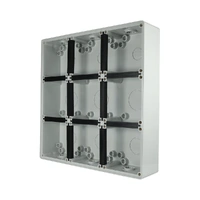
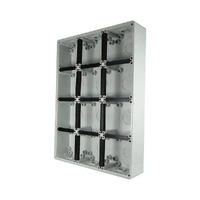
Surface mounting is the standard method for industrial outlets. The body sits proud of the wall with cable entries through glands. Flush mounting requires a recessed enclosure box and is rare for IP66 outlets because the seal path is harder to maintain. Surface mount enclosures are available where additional weather protection or vandal resistance is needed.
Cable entries must be sealed with the correct gland for the cable diameter. Use IP66-rated metric or PG-thread glands matched to the cable's outer jacket. Knock-out plugs in unused entries must remain in place. A single open entry drops the whole enclosure to IP00.
Installation seal check: After tightening the lid, run a finger around the gasket to confirm continuous compression. Check that all glands are torqued to spec, that the cable jacket extends fully through the gland, and that no internal conductors are pinched at the lid line. A failed seal at install time will not pass site commissioning.
Installation, alteration, and connection of three-phase outlets in Australia is restricted to licensed electrical workers under state and territory law. End-users may not legally connect or modify these outlets. The electrical range is supplied for licensed trade use.
Industrial outlets sold in Australia must comply with several overlapping standards. Compliance is signalled by the Regulatory Compliance Mark (RCM) and supplier-issued certificates.
AS/NZS 3000:2018 (the Wiring Rules) sets the installation requirements for socket outlets, including isolation, RCD protection where required, and earthing. Outlet placement, height, and circuit protection follow these rules. Every Australian electrical installation must comply.
AS/NZS 3123 covers the construction and performance of industrial plugs and sockets. It defines pin patterns, current ratings, voltage ratings, mechanical strength, and IP testing. Outlets carrying RCM marks comply with this standard by definition.
AS/NZS 3012 specifies electrical installations on construction and demolition sites. It mandates RCD protection on all socket outlets supplying portable equipment, scheduled testing of the protection, and minimum IP ratings for outlets in exposed locations. Combination outlets with integrated RCD models satisfy this directly.
The RCM logo on the outlet body confirms the supplier has lodged compliance evidence with the relevant electrical equipment safety regulator. Outlets without RCM marks must not be sold or installed in Australia.
4 pin IP66 switched outlets appear wherever three-phase equipment connects on a portable or semi-portable basis. The rating set covers most outdoor and washdown trades.
Site distribution boards feed 4 pin outlets for compressors, mixers, hoists, and welders. The IP66 rating handles dust, rain, and accidental hose contact. The integrated switch provides the local isolation required by AS/NZS 3012 without a separate isolator.
Production lines use 4 pin outlets for portable three-phase equipment, dust extraction, and rework stations. The switched format allows safe equipment changeover during shift transitions. Industrial supplies for these environments include matched plug, extension, and accessory components.
Mine sites and heavy-industry plant use 4 pin outlets for portable pumps, ventilation fans, and inspection equipment. The combination of IP66 sealing and integrated isolation suits the harsh environment, where dust and water are constant and isolation must be local.
Food processing requires daily wash-down with high-pressure hoses and sanitising chemicals. IP66 outlets survive this routine. The smooth polymer housings shed water and resist bacterial growth on the surface. The integrated switch removes the need for a second sealed device on the wall.
Selection comes down to four parameters: load current, environment, switching feature set, and pin pattern. Get all four right and the outlet will give years of trouble-free service.
Read the equipment nameplate. Identify the full-load current. Choose an outlet rated at or above this value. Round up to the next standard rating where the equipment current sits between two ratings. Do not undersize on the assumption of intermittent load.
Coastal sites need stainless steel screws and salt-tolerant gaskets. Hot environments need a polymer rated to the maximum service temperature. Chemical environments need a resistance check against the specific agents present. The weatherproof GPO range shows how the same logic applies to single-phase outdoor outlets.
Standard combinations include a basic mechanical interlock. Models with integrated RCD protection add earth-leakage detection. Key-lockable variants prevent unauthorised switching. Specify the feature set against the site's compliance and security requirements.
Two outlets at the same nominal rating can have very different real-world service life. Quality shows up in the details.
Industrial switches are rated in operating cycles. A quality unit handles 10,000 to 20,000 full-load operations before contact wear becomes significant. Cheaper units may struggle past 1,000 cycles. Where the outlet is operated daily, switch life dominates total service life.
Pin contacts must hold pressure over years of insertion cycles. Phosphor bronze and beryllium copper hold tension better than plain brass. Heat resistance in the thermoplastic body matters where contacts run warm under continuous full-rated load.
Service life outdoors is set by the slowest-failing component. UV degradation of the housing, gasket compression set, screw corrosion, and gland deterioration all contribute. Brands with long Australian market history have proven their compounds against local conditions.
Established brands like NLS National Light Sources, Clipsal, 4Cabling, Hager, and Legrand publish their compliance evidence and back the products with stated warranties. Off-brand imports without RCM marks fall outside the regulatory framework and should not be installed.
Field failures fall into a small number of repeating patterns. Recognising the failure mode points directly to the corrective action.
Symptoms: visible moisture inside the enclosure, corrosion on terminals, RCD trips after rain. Causes: gasket compression set, missing or undersized cable gland, lid screws not torqued, blanking plug missing. Action: dry the enclosure, replace the gasket, refit glands, retorque the lid.
Symptoms: discolouration around terminals, a smell of hot plastic, intermittent supply. Causes: terminal screws not retorqued after initial loading, undersized conductor, copper migration under cyclic heat. Action: isolate, inspect, retorque to specification, replace the outlet if heat damage is visible.
Symptoms: equipment will not start, neutral voltage on body, repeated RCD trips. Causes: 4 pin outlet supplying a load that requires neutral, or 5 pin outlet wired without neutral connection. Action: confirm the load's pin requirement, replace the outlet with the correct configuration, do not use adapters.
Symptoms: gritty switch action, partial isolation, the switch sticks between positions. Causes: end of mechanical life, contamination from missing seals, or arcing damage from switching under heavy load. Action: replace the entire combination unit. Switch mechanisms inside sealed combinations are not field-serviceable.
Regular inspection extends service life and catches small problems before they become outages. A simple visual check at every site visit costs nothing.
Look at the outlet body for cracks, UV chalking, and impact damage. Check that the lid sits flush. Confirm no gland is loose or weeping. Note any insect or moisture intrusion through unused entries.
Open the lid in dry conditions. Check the gasket for compression marks, cracks, and dirt. Operate the switch through several cycles, listening for clean snap action. A reluctant switch is approaching end of life.
Annual retorque is good practice on heavily loaded outlets. Use a calibrated torque screwdriver set to the manufacturer's specification. Watch for terminal discolouration that indicates past overheating.
Replace the outlet if the body is cracked, the gasket is hardened, the switch is sticking, terminals are heat-discoloured, or the IP rating cannot be guaranteed. Service life under typical Australian outdoor exposure is 8 to 15 years for quality units.
Trade buyers approach industrial sockets differently from one-off purchasers. The buying criteria reflect repeat-use patterns and project economics.
Electricians fitting 4 pin combinations need consistent stock, accurate part numbers, and matched accessories. Brand and current rating must be repeatable across multi-outlet projects. Sparky Direct's catalogue lists exact part numbers and current stock status for predictable specification.
Contractors equipping site distribution boards need outlets that match the site's plug fleet. Mixing 4 pin and 5 pin systems on one site invites errors. Pick one pattern at the design stage and stock matching 4 pin angled plugs for the lead inventory.
Facility teams replace failing outlets in service. Lead time matters more than purchase price. Same-day dispatch on common ratings keeps production downtime to a few hours instead of days.
Project quantities of 20 or more units justify bulk pricing. Sparky Direct prices in line with branch trade pricing and ships project quantities directly to site. Match outlets with RCD-protected switched socket outlets where the project specification calls for earth-leakage protection at every outlet.
Industrial socket pricing covers a wide range. Cheap imports can sit alongside premium brands at four times the price. The economics rarely favour the cheapest option.
Budget outlets without RCM marks cannot legally be installed in Australia. Certified entry-level brands such as NLS sit at the affordable end of the certified range. Premium brands such as Clipsal sit at the upper end with longer warranties and broader accessory ecosystems. The choice depends on duty cycle and project standards.
An outlet failure on a working site causes downtime, callout cost, and replacement cost. The hourly rate of an idle crew dwarfs the price difference between a budget and premium outlet. For high-cycle or critical-line outlets, premium specification pays back quickly.
Pricing tiers favour quantity. Twenty units priced as a single line item beat twenty separate orders on freight, admin time, and unit price. Confirm stock depth before placing the order.
A 12-year service life on a $120 outlet works out at $10 per year. A 4-year service life on a $40 outlet works out at $10 per year, before counting the replacement labour and downtime. The long-life option usually wins when fully costed.
Watch NLS 66CV410 | 4 Pin 10Amp Switched Socket Outlet IP66 | 30536 video
Watch NLS 66CV420 | 4 Pin 20Amp Switched Socket Outlet IP66 | 30491 video
Watch NLS 66CV420RCD | 4 Pin 20Amp Switched Socket Outlet Earth Leakage Protected IP66 video

Great product easy to deal with. Fast post no difference to the experience brands
Very good quality and very reasonably prices happy with delivery time and iteam quality
Fast Service and great quality product. I ordered this in the afternoon and it was shipped within less than 20 minutes, Australia express post delivered it the next day! Very reliable and will have confidence to use again!
Quality products in stock • Fast Australia-wide delivery • Competitive trade pricing
Browse IP66 4 Pin Switched Socket Outlets → Get Expert Advice →Yes. The switch is designed for clear visibility and straightforward operation, even in industrial environments.
4 pin switched socket combination industrial outlets IP66 are available from Sparky Direct, offering access to durable industrial electrical products with Australia-wide delivery.
Delivery availability depends on the supplier and location, with options across metropolitan and regional Australia.
Yes. They are suitable for new installations, upgrades, and replacing existing industrial outlets.
Warranty coverage depends on the manufacturer and supplier, with conditions applying to correct installation and use.
Consider voltage and current ratings, IP rating, mounting requirements, and electrician recommendations.
With correct installation and use, they are designed for long service life in harsh conditions.
They generally require minimal maintenance but should be inspected during routine electrical checks.
Yes. They are designed for repeated switching and connection in demanding environments.
Yes. They are often used to supply power to fixed industrial machinery and equipment.
Yes. They are commonly used in agricultural and rural settings due to their weather resistance.
They have a robust, industrial design that prioritises durability and protection.
Yes. The IP66 rating makes them suitable for dusty, wet, and wash-down areas.
They are heavy-duty industrial outlets that combine a 4 pin socket with an integrated on/off switch, designed for high protection against dust and water.
Yes. Being able to turn power off at the socket helps reduce the risk of accidental operation during maintenance.
The integrated switch allows power to be safely isolated at the outlet, improving control and safety.
Yes. Installation must be carried out by a licensed electrician to ensure safety and compliance.
Most models are surface mounted, making them suitable for exposed industrial installations.
Yes. They are designed to mate with corresponding 4 pin industrial plugs of the same rating and configuration.
Ratings vary by model and must be selected to match the electrical system and equipment requirements.
Yes. The IP66 rating makes them suitable for outdoor and wash-down environments when installed as specified.
They are commonly used in factories, workshops, agricultural sites, outdoor installations, and industrial facilities.
Products supplied in Australia are designed to meet relevant AS/NZS electrical and safety standards when installed correctly.
A 4 pin configuration is typically used for three-phase power with an earth connection, supporting industrial power requirements.
IP66 means the outlet is fully protected against dust ingress and resistant to strong water jets, making it suitable for harsh environments.